Visiting Kyushu Island in Japan: Must-sees from Fukuoka to Kagoshima!
Visiting Kyushu is an opportunity to discover an exceptional island... From the dynamism of Fukuoka to the wild beauty of Yakushima
Visiting Kyushu is an opportunity to discover an exceptional island... From the dynamism of Fukuoka to the wild beauty of Yakushima: explore the 7 prefectures of the third largest island in Japan - and uncover all its riches, away from the crowds of Honshu, between history, nature and traditions...
Visiting Kyushu in 7 stages
1. Fukuoka Prefecture
Located in the north of the island, Fukuoka is the largest city in Kyushu. Connected to Honshu island by the Shimonoseki Strait, it also serves as the gateway to Kyūshū-jima...
Iconic neighborhoods
Nakasu: this dynamic district is renowned for its nightlife. Located between the Hakata and Naka rivers, it offers a peaceful atmosphere, perfect for having a drink and going out in the evening...
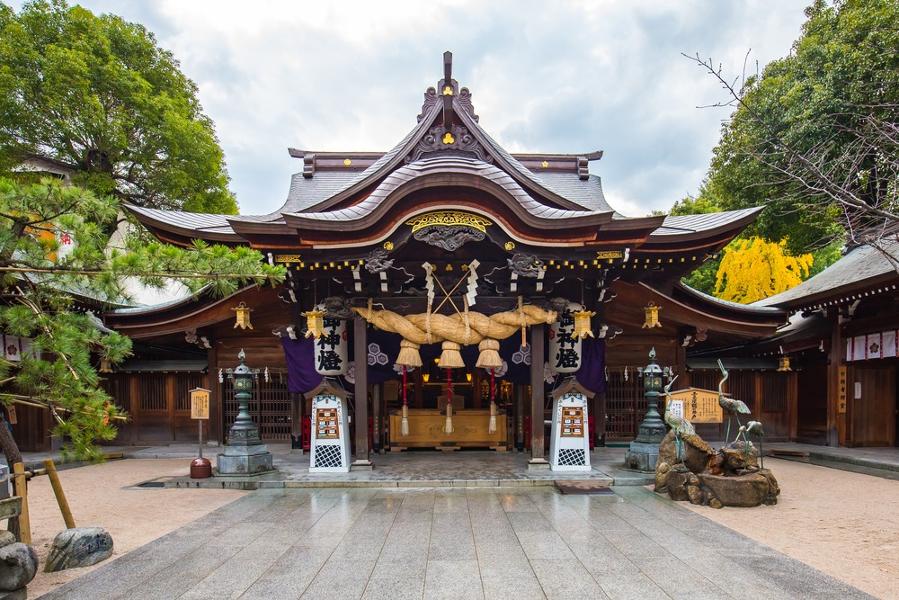
Hakata: the historic heart of Fukuoka, this neighborhood is home to many temples dating back several centuries (such as the Kushida-jinja shrine, dear to the local population). Hakata is also renowned for its traditional markets, witnesses to the city's commercial past.
The Yatai
During your wanderings, indulge in these Japanese street food stalls. More than simple mobile vendors, yatais are a legacy of World War II, as they fed the population then, starved by food restrictions. These stalls, noisy and warm (but considered unhygienic by the Japanese government) tend to disappear... Fukuoka's yatais are the last in the country.
Must-see attractions
Fukuoka Tower: standing at 234 meters tall, this stunning modern tower offers a 360° view of the city and bay. On clear days, you can also admire the mountains. It's also one of the best vantage points in the city to watch the sunset.
ACROS: inaugurated in 1995, the Asian Cross Road Over the Sea is a cultural center recognizable by its atypical architecture. One of its facades is covered with vegetation, where stairs seem engulfed by plants! Even if you don't enter the building, take a detour to admire this masterpiece of ecological architecture, located at 1 Chome-1-1 Tenjin, Chuo Ward, Fukuoka, 810-0001.
Canal City Hakata: just steps away from ACROS, don't miss the city's central shopping complex. This impressive 230,000 m² complex was built around an artificial canal, animated by fountains... Ideal for taking a break between shopping sessions (and mingling with locals who love the place).
Ruins of Fukuoka Castle: built in the early 17th century in Maizuru Park, this historic site is accessible after a 20-minute walk through nature. During cherry blossom season, locals flock here to admire the beauty of the flowering trees...
Nanzoïn Temple: this religious building is renowned for its giant reclining Buddha on its roof. Lying down for 41 meters long, this bronze statue represents the world's largest Buddha! Beneath its feet, you can read Buddhist engravings.
How to get there? Fukuoka is accessible by Shinkansen from several major cities in Honshu, as well as by plane (domestic flights). |
2. Saga Prefecture
The pottery region
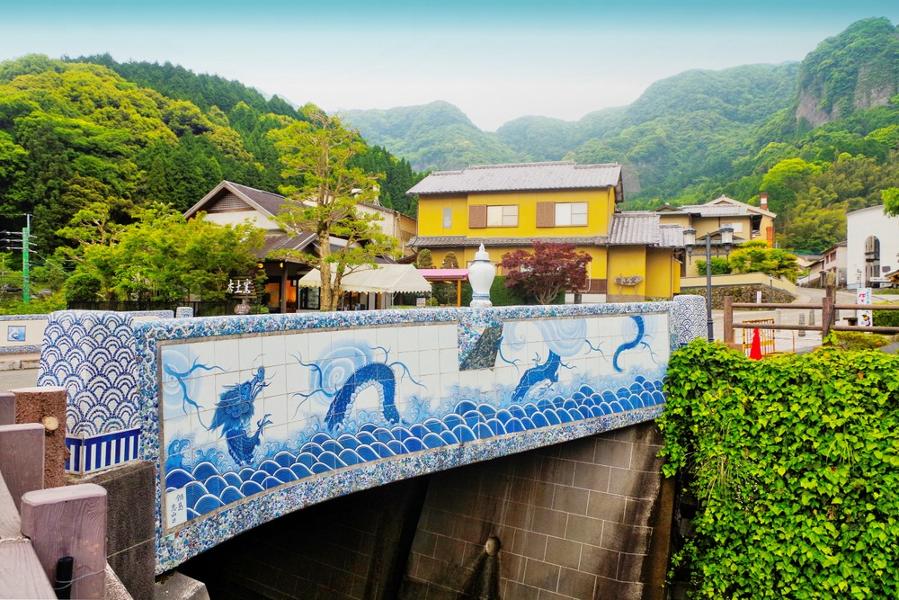
About an hour's drive south of Fukuoka, head off to discover Saga. Located in the prefecture of the same name, this city is renowned for its pottery manufacturing. The two main producing cities are Imari and Arita (the latter long produced ceramics intended for the Japanese elite).
During your strolls, you can admire many murals nestled in the heart of the alleyways, as well as old kilns. Higher up, in the mountains, you'll find the village of Okawachiyama. Founded by a samurai clan in the 17th century, it is also a historic landmark of this traditional Japanese art.
Saga Castle
Reputed to be one of the most imposing castles in Japan, this palace is an example of a "plain castle", unlike most other castles of the time, which were built on heights for strategic reasons. Its architecture is different from other buildings - with, for example, fewer fortifications. The castle was restored in the 2020s and today houses a history museum.
How to get there? The towns of Arita and Imari are located near Saga Station (which connects Fukuoka to Nagasaki). The journey takes about forty minutes. Okawachiyama is accessible in 15 minutes by train from Imari Station. |
3. Nagasaki Prefecture
Southwest of Saga, the Kyūshū visit continues with a stop in Nagasaki. Sadly famous for being victim of the atomic bomb during World War II, the city, which has risen from its ashes, is today a place of many facets...
Visiting Dejima Island
This small artificial island of 0.12 km², in the port of Nagasaki, has a fascinating history... Between 1635 and 1853, the Tokugawa shogunate instituted sakoku, in other words the "period of isolation": a policy aimed at limiting foreign influence on Japanese society.
However, to allow trade, the government created the island of Dejima. The objective? To keep foreigners confined to this enclave, so as to continue commercial exchanges while preserving the country's cultural isolation! The island is located less than 15 minutes' walk from Nagasaki Station.
Historic monuments
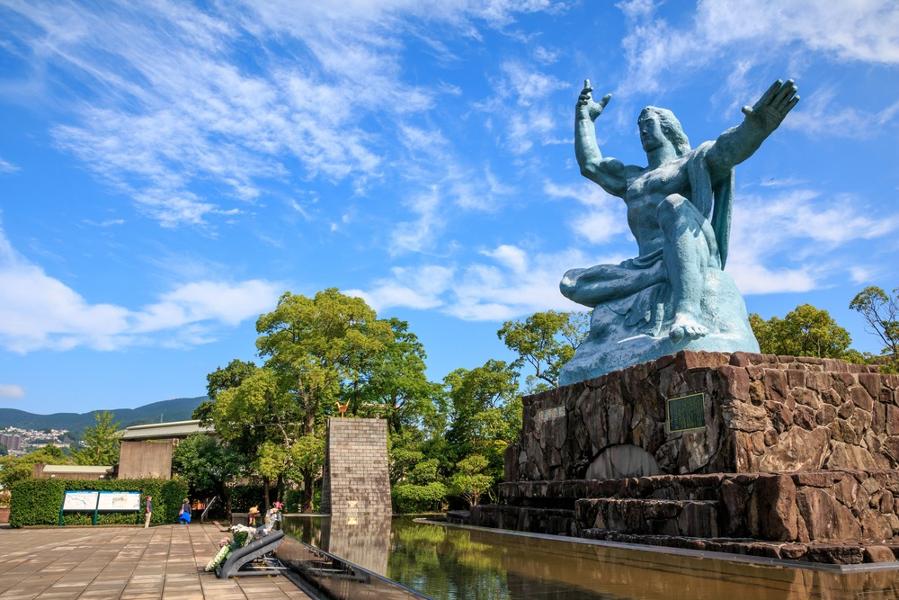
Nagasaki Peace Park: inaugurated in 1955, the site commemorates the 1945 atomic bombing. The park houses a 10-meter-high bronze statue. It represents a man neither totally Western nor totally Oriental, to symbolize cultural diversity (an allegory of Universal Peace). Every year, on August 9, the Peace Ceremony welcomes visitors from around the world.
Atomic Bomb Museum: to know and understand Nagasaki's history, don't hesitate to visit the museum, located just steps away from the park. It allows you to gauge the devastating consequences of the bombing, through exhibitions, archives and testimonies.
Mount Inasa
Standing at over 300 meters altitude, Mount Inasayama offers spectacular views of the city and port. Accessible by bus or cable car, it is reputed to be the most beautiful viewpoint in Nagasaki… In spring? Flowering cherry blossoms and azaleas offer a sublime 360° panorama of nature coming alive! On fine days, many festivals are organized there.
Hot springs of Mount Unzen
To the east of Nagasaki, don't miss the Mount Unzen and discover its onsens - pleasant hot spring waters from the volcanic activity of the mountain. The Unzen hot spring resort (active since 1910), is a high place of relaxation... Perfect before continuing your journey on Kyūshū island...
How to get there? The easiest way to get to Mount Unzen from Nagasaki is by bus from the station of the same name. Allow approximately 1h30 of travel time. A tip? Don't hesitate to hike to the summit to admire the fumaroles of the still-active volcano. If you don't have time, you can also take the cable car. |
4. Kumamoto Prefecture
Located in the southwest of Kyūshū, Kumamoto is separated from Nagasaki by the Ariake Sea. To reach this prefecture, two options are possible:
Take a ferry from the port of Shimabara (located approximately 25 km from Mount Unzen) to the port of Aso (in Kumamoto Prefecture). There are several ferry companies, such as Kumamoto Ferry Co and Kyusho Ferry Co. Allow approximately 40 minutes for the crossing.
Take the bus from Nagasaki Station to Kumamoto Station. The journey takes approximately 3h30 to cover the 210 km.
Kurokawa Onsen hot spring resort
Kurokawa Onsen is a thermal village nestled in the heart of the mountains of Kumamoto, near Mount Aso. It is an old feudal town, founded during the Edo period (1603-1868), when samurai came to recharge in the pools...
Today? The resort is one of the most renowned in Japan - every year more than 400,000 visitors come to recharge in its rotenburos (hot baths of volcanic origin)! Kurokawa Onsen is also a perfect place for hiking and discovering the beauty of the Japanese hinterland.
Staying in a ryokan
Located approximately 1h45 drive from the city of the same name, the Kurokawa hot spring resort is nestled in a remote spot. Therefore, it is advisable to stay overnight, after a walk and a hot bath.
The ryokans of Kurokawa are located along the Tonoharu river. Tradition dictates that visitors move from one ryokan to another - each inn having its own atmosphere and services. Luggage logistics are handled by the establishments.
At certain times of the year, such as Golden Week, ferries and accommodations can be overwhelmed. It is therefore recommended to book in advance to ensure you have a place.
5. Kagoshima Prefecture
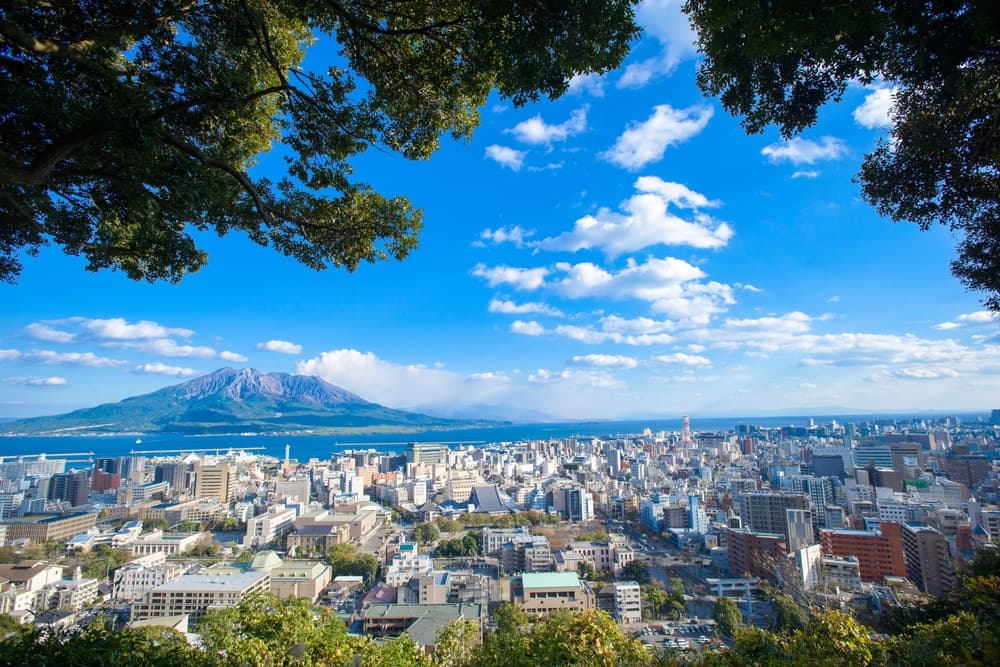
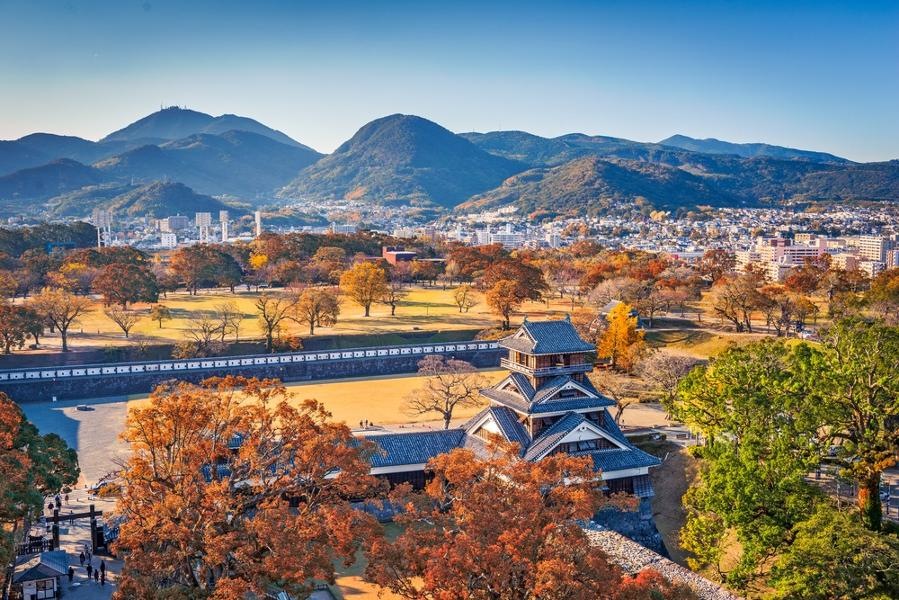
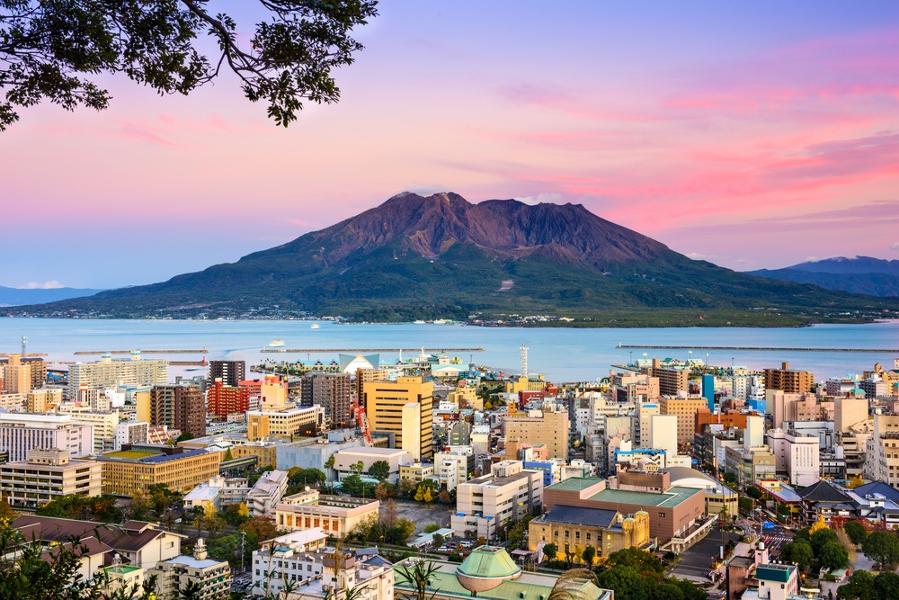
Located at the extreme south of Kyūshū, Kagoshima Prefecture is renowned for its volcanic landscapes and subtropical climate. Dominated by the Sakurajima volcano, this part of the island offers beautiful nature excursions and stunning panoramas.
Kagoshima boasts beautiful national parks. Among them: Kirishima National Park - divided between Kagoshima and Miyazaki prefectures. Nature lovers can hike through lunar landscapes, but also admire the flowering of trees and many bird species.
How to get there? To go from Kumamoto to Kagoshima, you can take the Shinkansen train (Kyushu line), for about 50 minutes of travel; or a "long-distance bus" line (approximately 3h30 of travel). It is also possible to rent a car and take the Kyushu Expressway (3 hours of travel). Please note that you must have an international driving permit (issued by French authorities and an official translation into Japanese). For more information, consult the website of the Embassy of Japan in France. |
6. Miyazaki Prefecture
On the southeast coast of the island, head to Miyazaki, for the continuation of our road trip in Kyūshū. Popular for its spectacular landscapes, this prefecture is also appreciated for its cultural heritage…
Takachiho Gorges
In the north of the prefecture rise the famous Takachiho Gorges. Renowned for their ancestral beauty, these treasures of nature offer impressive landscapes. Carved into the rock (by an ancient lava flow from Mount Aso), these basalt walls rise on either side of the Gokase river...
To discover these superb rock walls? There is a designated hiking trail - but the best way is to rent a boat, to be in the heart of this exceptional nature (and admire the Manai waterfall up close)!
Udo-jingū Sanctuary
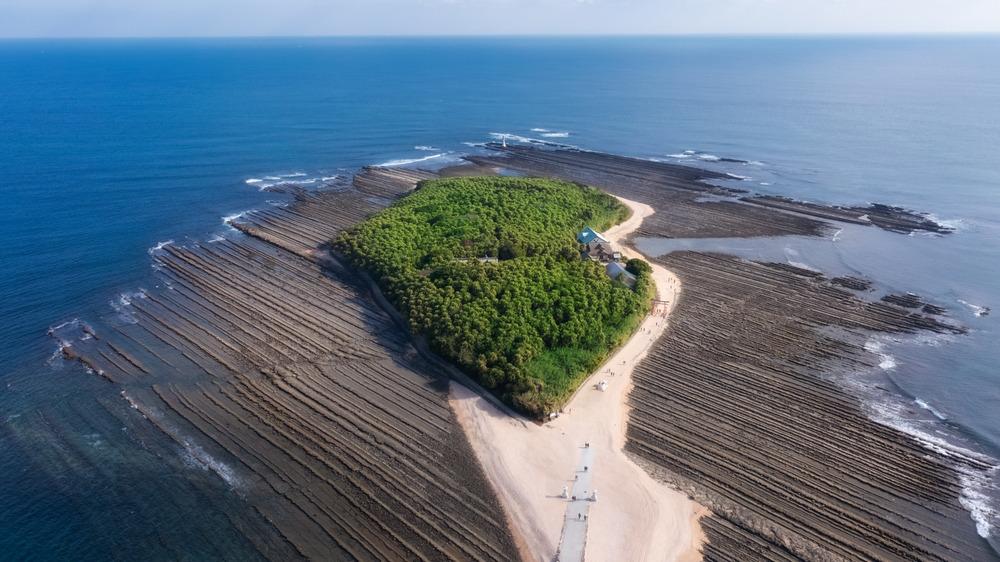
Further south, in the town of Nichinan, head to the superb Udo-jingū sanctuary. Designed along a cliff face in 1711, this stunning Shinto building offers breathtaking views over the Pacific Ocean! To get there? Just take the dedicated bus line.
Once there, don't hesitate to buy ceramic balls (undama) to engage in the local custom: throw them into the designated rocky area within a sacred rope. Each ball thrown within the designated area is a promise of a wish fulfilled...
How to get there? To go from Kagoshima to Miyazaki, you can take the Kirishima Limited Express (3h30 of travel) or a "long-distance bus" (3h30) |
7. Ōita Prefecture
Located in the northeast of Kyūshū, Ōita Prefecture is considered the Japanese capital of onsens! Shaped by volcanic activity, it is home to many natural pools, as well as rugged landscapes.
Beppu and Yufuin hot spring resorts
Thanks to the region's geothermal activity, these two resorts are dotted with warm and relaxing pools. At Beppu, the "hells" (Jigoku) refer to a set of spectacular basins with colored and steaming waters - off-limits for bathing! The surroundings of the resorts also offer several hiking trails.
The Kunisaki Peninsula
Less touristy than the major hot spring resorts, the Kunisaki Peninsula is a more peaceful place, marked by a strong spiritual dimension… This part of the island is distinguished by its rural landscapes, its terraced rice paddies and its spiritual culture, blending Buddhism and Shintoism. There are many temples here, perched on mountainsides, as well as religious remains hidden in nature.
Islands to explore around Kyushu
Although geographically distant, certain islands are administratively attached to Kyūshū. Among this string of islets, the island of Yakushima (located at the extreme south) and Fukue Island (the main island of the Gotō islands, located in the northwest)…
Yakushima (Kagoshima Prefecture)
Yakushima is a subtropical island of 500 km2, located 60 km off the coast of Kagoshima. Covered 90% with forest, it is nicknamed the "Alps of the Ocean". The island is full of natural attractions, including:
Jōmon Sugi Forest: named so because of its ancient Jōmon Sugi cedars (listed as UNESCO World Heritage), this part of the island has many hiking trails through lush nature. For walks in marked areas, there is no need to be accompanied. On the other hand, a real hike through the luxuriant forest requires the presence of a guide, as a safety measure.
Okonotaki Waterfalls: at 88 meters high, this waterfall counts among the 100 most beautiful in Japan!
Shiratani Unsui Gorge
Inakahama Beach: with a superb white sand bank, Inakahama beach is also a wildlife observation spot. In spring and summer, you can witness sea turtles nesting.
How to get there? There are three ways to get to the island from Kagoshima ● By ferry (approximately 3 hours of crossing, €80) ● By express ferry (approximately 4 hours of crossing, €40) ● By plane [from Kagoshima Airport (KOJ) to Yakushima Airport (KUM)], approximately 40 minutes flight, €120). Given the travel time by sea and the cost by air: it is recommended to stay at least 4 or 5 days on site. |
Fukue Island (Nagasaki Prefecture)
Fukue Island is the main island of the Goto Islands, located off the coast of Nagasaki. It is renowned for its pleasant climate, paradisiacal beaches and volcanic landscapes.
Visit the churches: former refuge of exiled Christians (when Christianity was banned in Japan during the Edo era), the island is home to many religious buildings.
Explore the cliff and Osezaki lighthouse, to enjoy the panoramic view over the ocean.
Discover the volcanic landscapes around the Onidake and Tadakariyama volcanoes.
How to get there? The island is accessible by ferry or plane from Nagasaki. The ferry crossing takes 4 hours, while the plane journey takes about 40 minutes from Nagasaki or Fukuoka. |
Cultural experiences to enjoy on Kyushu Island
Attend a kagura dance at Takachiho
Kagura is a traditional dance practiced since the 12th century, to thank the kami (Shinto deities) for the year's harvests.
The village of Takachiho is the ideal place to witness this ceremony, as it is classified as an "intangible folk cultural property of Japan"!
Each year, in November, this four-act ritual is performed by villagers, who wear masks representing deities, and dance to the rhythm of traditional music.
Taste the culinary specialties of Kyūshū
Kyūshū island also stands out for its cuisine with multiple influences. Its dishes, shaped by commercial history and landscape diversity, highlight the region's fresh products…
Fukuoka: game-ni
With its fertile lands and mild climate, Fukuoka is a major agricultural center, renowned for the quality of its fruits and vegetables. Its specialty is game-ni: a chicken dish simmered, cooked in a lightly sweet-salty broth.
Saga: ika-no-ikizukuri
Saga is renowned for the freshness and quality of its seafood. Its must-try dish? Ika-no-ikizukuri: a traditional recipe that consists of cutting a live squid on the plate!
Nagasaki: castella cake and shippoku ryori
The region's culinary culture is marked by the period of isolation, when missionaries made stops to trade... In Nagasaki, don't leave without having tasted castella, a soft cake of Portuguese origin, which has become a true local emblem! You can also enjoy shippoku-ryori, a typical dish, blending Chinese and Western influences.
Traditional tea tasting
Kyūshū is also an emblematic place for tea tasting. In addition to discovering the famous tea ceremony - during festivals such as the Ureshino Tea Mitto Festival or the Yame Tea Festival, it is also possible to visit plantations and discover the production stages. The most renowned plantations are located around Yame, Ureshino and Kurume.
Frequently asked questions
To visit the 7 main prefectures of Kyushu — Fukuoka, Saga, Nagasaki, Kumamoto, Kagoshima, Miyazaki and Ōita — it is recommended to plan between 10 and 14 days minimum. If you also wish to include islands such as Yakushima (ideally 4-5 days on site), plan rather 16 to 21 days to enjoy the island as a whole without rushing.
Spring (March-April) is ideal for admiring cherry blossoms, particularly at Fukuoka Castle. Autumn (October-November) offers stunning landscapes of red leaves. Summer (June-August) is hot and humid, with risks of typhoons. Winter is relatively mild in Kyushu compared to the rest of Japan. Avoid Golden Week (late April-early May) if possible, as accommodations and ferries are often fully booked.
The Kyushu Shinkansen rapidly connects major cities such as Fukuoka, Kumamoto and Kagoshima. For more rural areas, long-distance buses and local lines are available. Car rental is convenient for exploring the countryside (international driving permit required). The Kyushu Rail Pass offers unlimited train travel for a defined duration, at an advantageous rate for foreign travelers.
French nationals benefit from visa exemption for Japan for tourist stays up to 90 days. You only need a valid passport. From 2025, the JESTA system (Japanese equivalent of ETIAS) could be implemented: check the conditions in force with the Embassy of Japan in France before your departure.
From Kagoshima, three options are possible to reach Yakushima: by ferry (approximately 3 hours, ~€80), by express ferry (approximately 4 hours, ~€40), or by plane from Kagoshima Airport (KOJ) to Yakushima Airport (KUM) in approximately 40 minutes (~€120). It is recommended to spend at least 4 to 5 days on the island to fully enjoy its thousand-year-old forests and hiking.
Kyushu abounds in regional specialties: in Fukuoka, taste game-ni (chicken simmered in sweet-salty broth) and Hakata ramen. In Saga, ika-no-ikizukuri (live squid cut on the plate) is a must-try. In Nagasaki, don't leave without trying castella (soft cake of Portuguese origin) and shippoku-ryori with Chinese and Western influences. And throughout the island, onsens are often accompanied by fresh local products!