Shukubo, Japanese Temple Inns
Shukubo, Japanese Temple Inns
Sleep in a Japanese Buddhist temple: morning rituals, vegetarian shojin ryori cuisine, traditional architecture. Guide to shukubo from Mount Koya to Nagano.
Shukubo, literally "sleeping with the monks," refers to monastic accommodations attached to a Buddhist temple or Shinto shrine. Open to travelers regardless of faith, they allow you to spend one or two nights sharing the daily life of a religious community, surrounded by morning rituals, vegetarian cuisine, and traditional architecture.
Why stay in a shukubo
Originally, shukubo welcomed pilgrims coming to pray at Buddhist temples. During the Heian period (794-1185), high-ranking officials, samurai, and then ordinary travelers began to frequent sacred sites. The Edo period (1603-1868) saw the birth of a genuine tourism economy around the Oise Mairi, the pilgrimage to the Ise-jingu shrine, and around the Zenko-ji temple in Nagano. Some annexed buildings of major temples then transformed into accommodations, a function they maintain to this day.
Staying here goes beyond simple tourism: it is an opportunity to observe from within Japanese monastic life, its codified gestures and its relationship with silence. The shukubo thus distinguishes itself from a traditional ryokan by its assumed religious dimension and by the possibility of participating in the monks' practices.
The atmosphere of a stay
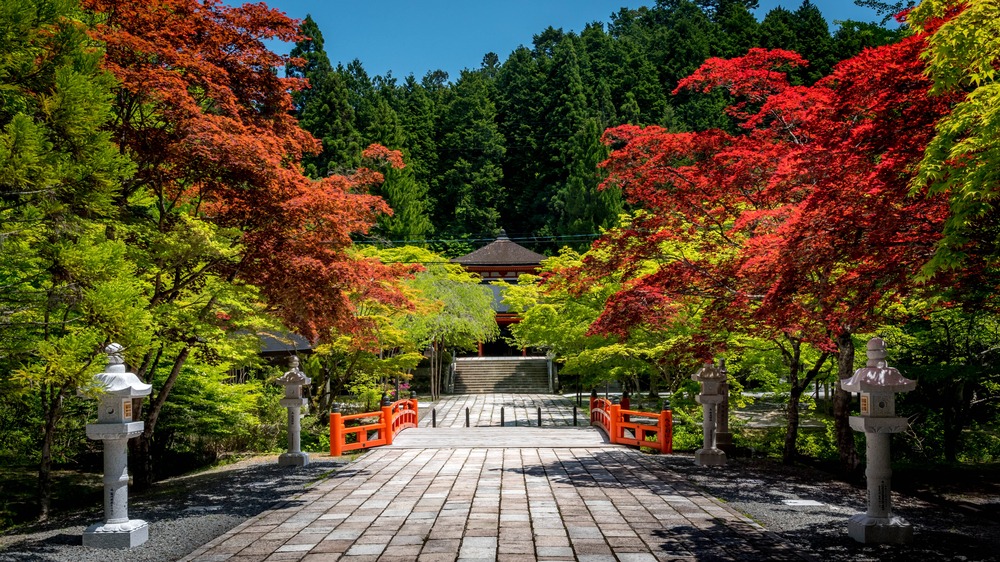
The gateways vary according to the era and function of the temple, but the interior follows common logic. The Hondo, the main hall, houses Buddhist statues and religious objects. In the oldest establishments, the fusuma – painted sliding doors – bear the signature of Japanese masters. The rooms are built on the classic trio: tatami flooring, futon laid out in the evening, and sober decoration. The gardens, designed by landscape architects, often frame the entire complex.
The day begins before sunrise. The monks ring the bowls, incense rises in the Hondo, and guests are invited, without obligation, to join the morning prayer. Several practices may be offered depending on the temple: ajikan (visual meditation), the fire ritual specific to esoteric Buddhism, shakyo – calligraphy consisting of copying sutras – or meditative walking in the gardens. The meals are based on shojin ryori, devotional vegetarian cuisine composed of tempura, tofu, seasonal vegetables, and konnyaku (often called "devil's jelly").
Services and comfort
Comfort remains intentionally spare, but most shukubo have heating and air conditioning; some offer television, telephone, and wifi. Bathrooms are shared, sometimes equipped with an onsen. The service generally includes dinner and shojin ryori breakfast, as well as access to morning ceremonies. A few rules apply:
- Remove shoes at the temple entrance.
- Adopt modest attire during ceremonies (avoid shorts, low necklines, tight clothing).
- Respect schedules: wake-up time, curfew, bathing, meals, and rituals.
- Speak softly, use headphones, and ask permission before taking any photographs.
Where to find a shukubo
Central-western Japan concentrates a significant share of the offering. Mount Koya, in Wakayama Prefecture, remains the most visited destination. Birthplace of Shingon Buddhism and a UNESCO World Heritage site, it hosts more than a hundred active temples, about thirty of which welcome travelers.
In Nagano Prefecture, around forty lodges surround the Zenko-ji temple, some at rates comparable to those of a youth hostel. The monks of the Tendai sect lead the morning rituals: the O-juzu choudai (rosary procession) and the oasaji (dawn prayer). Also in Nagano, the Togakushi Shrine, mentioned in the Kojiki, is associated with many Shinto deities; its nearby ski slopes make it a winter stopover.
At the northernmost tip of Honshu, in Aomori Prefecture, the Shukubo Kichijo Kaku has an onsen fed by a hot spring renowned for its relaxing properties. In Saitama Prefecture, the Taiyoji Temple, set into a mountainside, opens onto the Chichibu-Tama-Kai National Park; it was ranked at the top of a classification published by the Nikkei Shinbun. Finally, near Kyoto, the Jorengein Temple offers zazen meditation, vegetarian cuisine, and artistic activities in a mountainous setting.
To stay within an approach to temple lodging, these addresses can be combined with a night in a machiya in Kyoto to vary your experiences.
When to go
The shukubo suits all seasons, with variations depending on the region. Mount Koya takes on a particular atmosphere in winter, under snow, despite cool temperatures in the wooden buildings. Autumn (October-November) remains the most sought-after time for the gardens, particularly in Saitama and around Kyoto. At Togakushi, winter allows you to combine a spiritual retreat with skiing. In summer, at altitude, you will find a pleasant freshness compared to major cities.
Organize your stay
The shukubo experience integrates naturally into a cultural itinerary in Japan. To build a stay combining temples, mountains, and historic cities, consult our suggestions for trips to Japan.
Fancy staying here?
We can book this accommodation for you.