Himeji Castle
Himeji Castle
Nicknamed the White Heron Castle, Himeji-jo is Japan's best-preserved feudal castle. UNESCO World Heritage site just 30 minutes from Osaka by shinkansen.
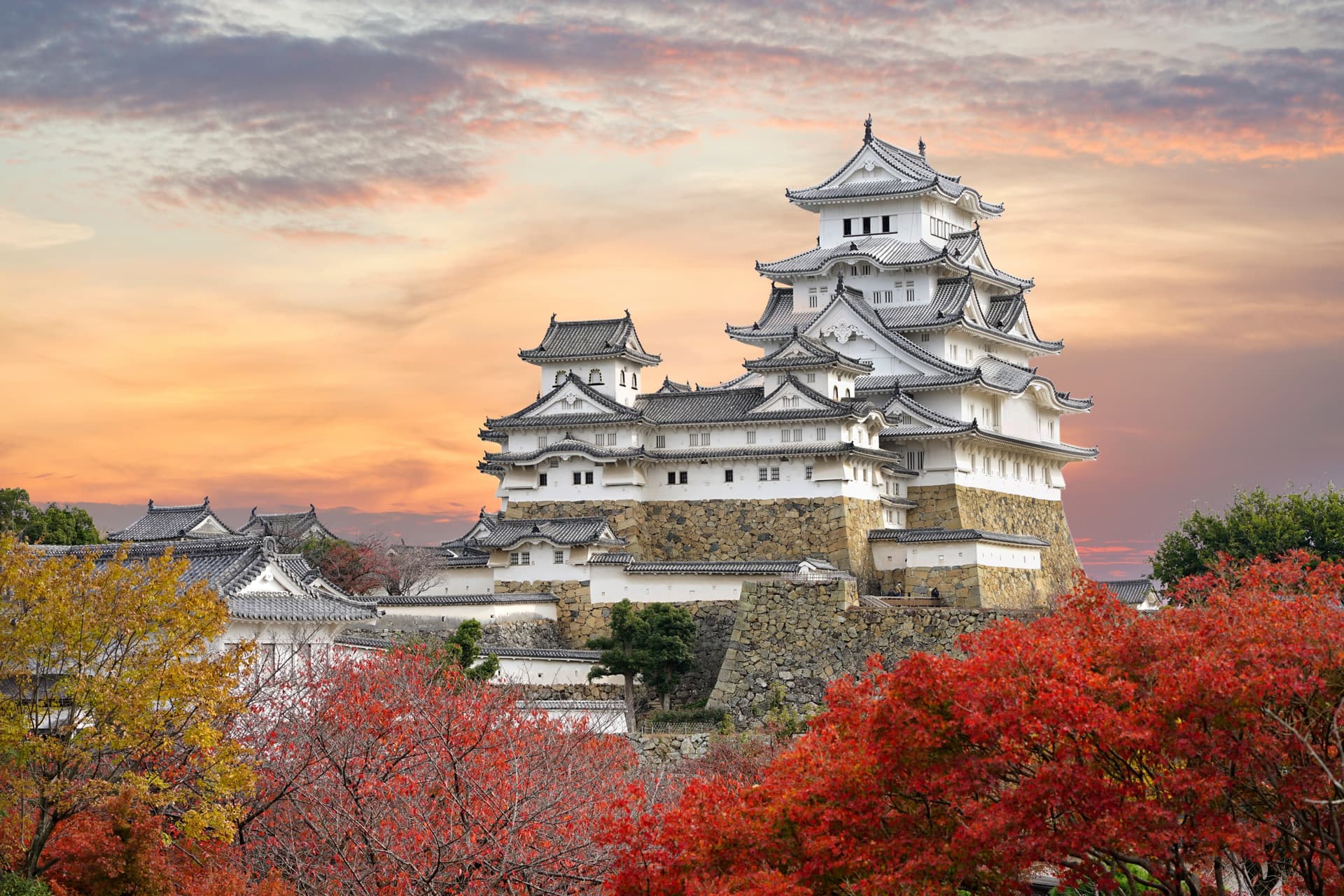
Himeji Castle (Himeji-jo) stands at the heart of the city of Himeji, in Hyōgo Prefecture, 30-40 minutes by shinkansen from Osaka. Recognizable by its whitewashed walls and slender silhouette, it earned the nickname the "White Heron Castle" in reference to its bird-like appearance, as though poised for flight. Inscribed on UNESCO's World Heritage List since 1993, it is regarded as the largest and best-preserved feudal Japanese castle still standing today.
Why visit Himeji Castle
Himeji-jo is one of the rare medieval Japanese castles to have survived to the present in its original state. It escaped the auction that followed the Meiji Restoration in 1868, repeated earthquakes, and World War II bombing raids. This continuity makes it a rare architectural testament in Japan, where most ancient fortresses were rebuilt in concrete during the twentieth century.
The complex comprises 83 buildings, the majority of which are designated as Important Cultural Properties. Its popularity is such that in 2023, the site welcomed 1.48 million visitors; to preserve the structures and smooth visitor flow, access to the donjon is capped at 15,000 people per day.
Castle history
The site's history begins in 1333, when the Akamatsu clan built a fort on Himeyama Hill. In 1581, Hideyoshi Toyotomi constructed a three-story castle there. It was under Terumasa Ikeda, son-in-law of shogun Ieyasu Tokugawa, that the building took its current form: a main donjon flanked by three smaller towers, with expansion work completed in 1609.
After the fall of the feudal system in 1868, Himeji-jo narrowly escaped an auction that would have led to its demolition. The castle subsequently weathered wars and natural disasters with no major damage. Cinema discovered it in the twentieth century: Akira Kurosawa filmed two of his films there, the Shogun series used it as a backdrop, and the building appeared in the James Bond film You Only Live Twice. A major restoration, launched in 2010, officially concluded on March 27, 2015, restoring the walls to their original whiteness.
What to see on site
The outer fortifications
The castle is surrounded by moats and stone walls fitted with loopholes. To reach the donjon, visitors navigate a maze of paths, successive gates, and steep staircases, designed to slow and disorient attackers. This progression, which multiplies vantage points over the city and surrounding mountains, is itself an important part of the visit.
The main donjon
The donjon has five stories visible from the outside (six interior levels including the basement). It is climbed by steep, dark wooden staircases. At each level, exhibitions display ancient weapons, samurai armor, and structural elements. At the summit, a small Shinto shrine and panoramic views over Himeji and the surrounding plains reward the climb. The interior, austere and sparse, contrasts with the brilliant whiteness of the façades.
Koko-en garden
Adjacent to the castle, Koko-en garden is arranged according to Edo period garden design principles. It is divided into nine distinct sections, each in its own style: pine garden, bamboo garden, koi pond, tea garden. Tea houses, waterfalls, and wooden bridges unfold in a route designed for contemplative strolling. The combined ticket for castle and Koko-en offers discounted entry to both.
Practical information
- Admission: moderate entrance fee for adults, reduced rate for school-age visitors. Combined ticket available with Koko-en garden.
- Hours: morning opening through late afternoon, with extended hours during peak summer season. Annual closure at year-end December.
- Duration: allow 2 to 3 hours for the castle; an additional hour if you include the garden.
- Crowds: daily quota of 15,000 visitors; early morning arrival recommended during peak season.
When to visit
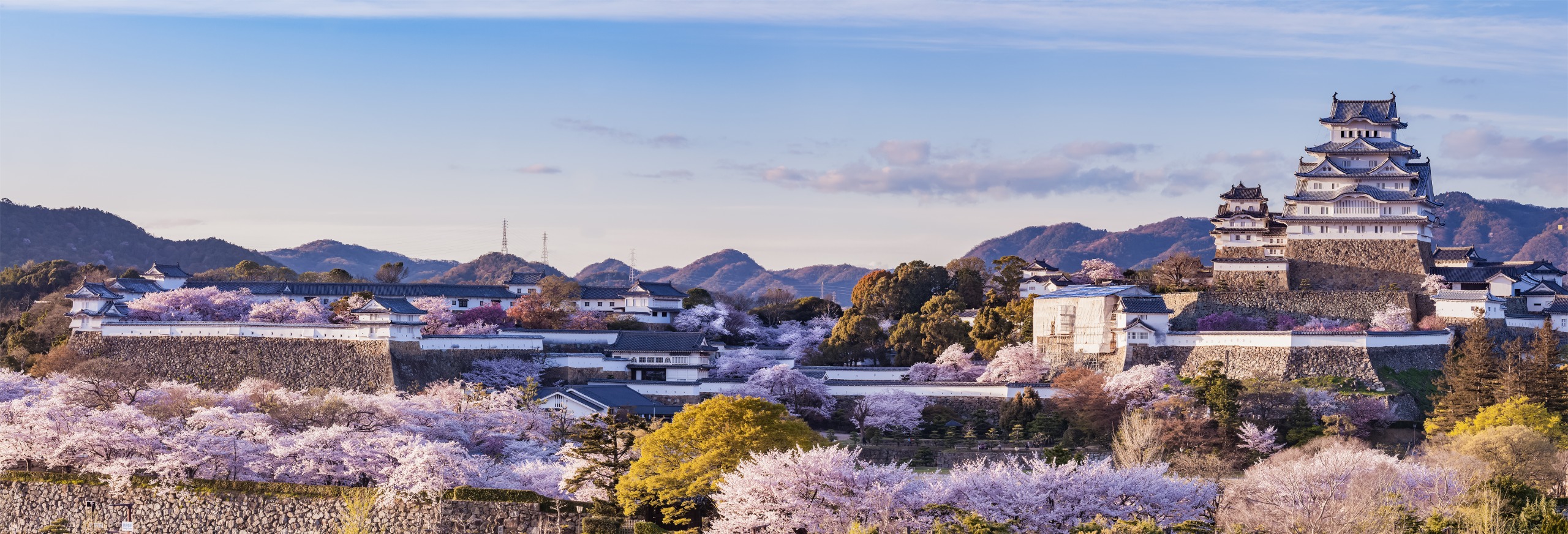
The castle is open year-round, but two seasons attract particularly large numbers of visitors. Late March through early April, cherry blossoms transform the grounds into one of Japan's most photographed hanami spots: white walls stand out against the pink flowers of Sannomaru Park. In autumn, the maples in Koko-en garden turn red and gold between mid-November and early December. Winter offers crisp light and fewer crowds; summer is more humid and busier during Japanese school holidays.
How to get there
Himeji Station is served by shinkansen from Tokyo, Kyoto, Osaka, and Hiroshima. From Osaka, expect 30 to 40 minutes of travel. From the north exit of the station, Otemae Avenue leads in a straight line to the castle's main entrance: 10 to 15 minutes on foot, or a few minutes by city bus.
Nearby attractions
The castle lends itself to a day trip from Kansai, but the region offers other worthwhile stops for extending your stay:
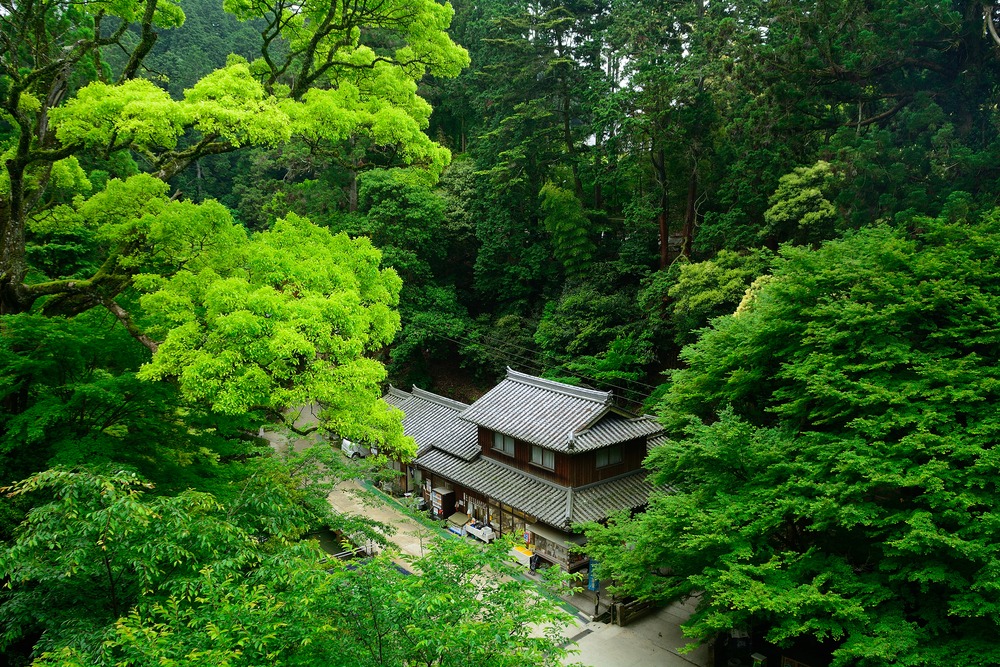
- Mount Kōya, a major center of Shingon Buddhism, accessible from Osaka.
- Mount Hiei, which overlooks Kyoto and houses the Enryaku-ji monastic complex.
- Arita, the birthplace of Japanese porcelain, on the island of Kyushu.
Frequently asked questions
Frequently asked questions
Allow 2 to 3 hours to explore the fortifications and climb to the top of the donjon. If you include Koko-en garden, plan for a full half-day.
Access to the donjon is capped at 15,000 visitors per day. During cherry blossom season or Japanese school holidays, the quota can be reached by midday. An early morning arrival remains the best option.
The nickname Shirasagi-jo refers to the castle's silhouette perched on its hill, whose whitewashed walls and upturned roof eaves evoke a white heron spreading its wings.
The outer grounds are partially accessible, but the interior of the donjon features very steep and narrow wooden staircases with no elevator. The historic structure does not permit full accessibility modifications.
Yes. Himeji works well as a day trip from Osaka (30-40 min by shinkansen) or Kyoto (45-50 min). Many travelers include the stop on the Tokaido-Sanyo line between Tokyo and Hiroshima.
Plan your trip
Himeji Castle fits into a broader itinerary between Kansai and Chugoku. To build a custom journey including this stop, consult our Japan travel suggestions.
Interested in this visit?
We can include it in your personalised itinerary.