Matsumoto Castle (The Black Raven)
Matsumoto Castle (The Black Raven)
Nicknamed the Black Raven, Matsumoto Castle is one of the rare original wooden keeps in Japan, designated a national treasure since 1936.
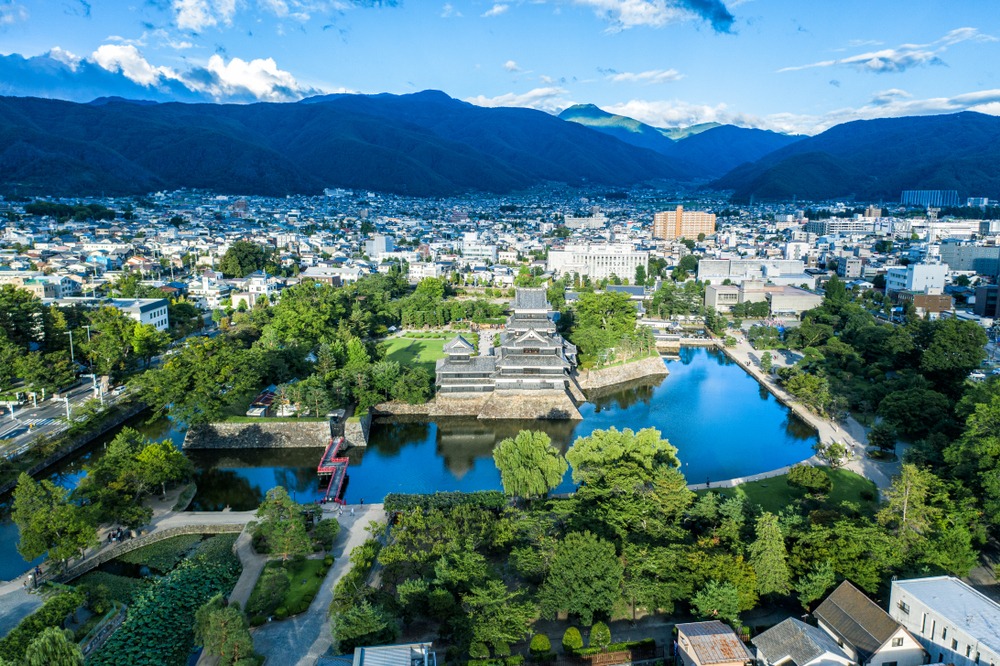
Matsumoto Castle, nicknamed the Black Raven for its dark facades, ranks among Japan's best-preserved feudal castles. Located in the heart of Matsumoto, in Nagano Prefecture, it offers a rare glimpse into 16th-century Japanese defensive architecture.
Why visit Matsumoto Castle
Built in the late 16th century and designated a national treasure in 1936, Matsumoto Castle distinguishes itself through its original wooden keep, unlike many other Japanese castles rebuilt in concrete during the 20th century (such as Osaka Castle). Its black silhouette reflected in moats still filled with water, its six interior levels, and the view of the Japanese Alps from the top floor make it a major stop on any itinerary through central Honshū.
History of the Black Raven
The site's history begins in 1504, when the Ogasawara clan, then dominant in the region, constructed a small fortress there. In 1593, feudal lord Ishikawa redesigned the structure and gave it the form it retains today, complete with its main keep and adjacent towers.
Designed for warfare, the castle combines defensive elements comparable to medieval European fortresses: wide moats, thick walls, minute windows, arrow slits and gun ports for musketeers. The fundamental difference lies in its materials: like most Japanese castles, Matsumoto is built primarily in wood, and it has retained its original structure. Recognized for this authenticity, it has been designated a national treasure since 1936.
What to see on-site
The exterior and moats
The castle is surrounded by wide moats fed by water, among the rare examples of such scale to have been preserved in Japan. The contrast between the dark lacquered facades, grey roofing, and the park's pine trees creates a distinctive silhouette, particularly photogenic from the red Uzumibashi bridge.
The keep and its six levels
The main tower rises over six interior levels (appearing as five stories from outside). Access is via original wooden staircases, narrow and steep, which echo the building's defensive purpose: to slow down a potential attacker. Plan to wear easy-to-remove shoes, as entry requires removing footwear or wearing socks.
Inside, a collection of historic weapons and armor is displayed, accompanied by panels tracing the castle's history, its successive lords, and the samurai who defended it. The arrow and gun slits offer framed views over the city. From the top floor, the panorama opens onto the Japanese Northern Alps, which frame the horizon.
When to visit
The castle is open year-round, and each season substantially changes the site's atmosphere:
- Spring (late March - early April): cherry blossoms bloom around the moats, the busiest season. Evening illuminations typically occur during peak bloom.
- Summer (June - August): dense vegetation, longer days, and extended visiting hours. Heat remains moderate thanks to Matsumoto's altitude.
- Autumn (October - November): red maples in contrast with the dark facades, one of the finest seasons for photography.
- Winter (December - February): snow on roofs and the Alps in the background, lighter crowds.
To avoid crowds, arrive during opening hours, especially in spring and autumn weekends.
Practical information
- Hours: daytime opening year-round, with extended hours in summer and during Golden Week. Brief closure around New Year. Check official website for hours before your visit.
- Admission: paid entry at moderate rates, combination ticket available with Matsumoto Municipal Museum.
- Duration: allow 1 to 2 hours; longer during peak season due to queues in the keep.
- To bring: socks (barefoot entry in the keep), easy-to-remove shoes, warm clothing in winter.
How to get there
The castle is located approximately 15 minutes on foot from JR Matsumoto Station. The Town Sneaker loop bus also serves the site in just a few minutes from the station.
To reach Matsumoto:
- From Tokyo: JR trains departing from Shinjuku Station (Azusa/Super Azusa line).
- From Nagoya or Nagano: JR Shinano line (limited express).
- From Takayama: no direct rail connection; the only public transport option is long-distance bus.
Nearby attractions
Matsumoto is an excellent base for exploring central Honshū. From the city, you can extend your itinerary to other mountains and cultural sites such as Mount Tsukuba, a major pilgrimage site in the Kantō region, or Mount Kōya, the center of Shingon Buddhism. Further south, Mount Hiei, overlooking Kyoto, rounds out a discovery of the country's major religious sites.
Frequently asked questions
Frequently asked questions
Include Matsumoto in your journey
Matsumoto Castle fits naturally into an itinerary combining Tokyo, the Japanese Alps, and the Kyoto region. To build a custom trip including this stop, consult our Japon journeys.
Interested in this visit?
We can include it in your personalised itinerary.