Osaka Castle, the Golden Fortress
Osaka Castle, the Golden Fortress
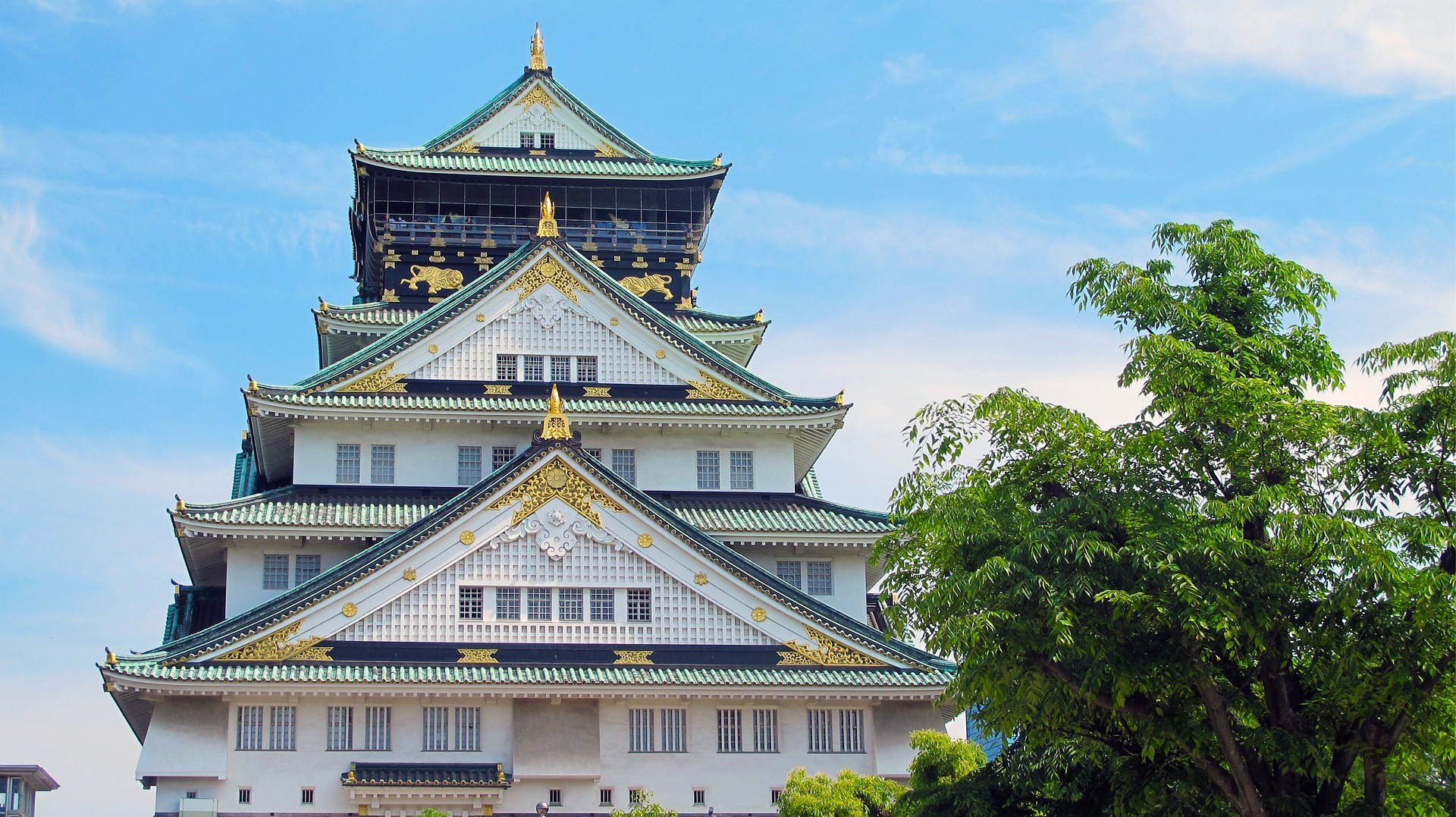
A fortress of Toyotomi Hideyoshi rebuilt in the 20th century, Osaka Castle combines a donjon-museum, panoramic observatory and a 2 km² urban park.
Osaka Castle (Ōsaka-jō), the emblematic fortress of Chuo-ku ward, encompasses more than four centuries of Japanese military history. Built in the late 16th century by Toyotomi Hideyoshi, ravaged, reconstructed, bombed and then renovated, it now occupies a vast urban park at the heart of Japan's second major economic metropolis.
Why visit Osaka Castle
The site offers several complementary attractions: an instantly recognizable architectural silhouette, with its white donjon ringed in golden ornaments perched upon a massive stone base; an urban park spanning nearly 2 km² where locals and visitors converge through the changing seasons; a museum housed within the main tower, tracing the epic of Hideyoshi and the Sengoku period; and finally an observatory on the top floor offering sweeping views over the city. A single visit thus combines history, architecture, leisurely exploration and urban panorama in one location.
History of the castle
Toyotomi Hideyoshi had the castle built in 1583 on the site of the former Ishiyama Hongan-ji temple. The donjon was completed in 1585: a five-story structure resting on a stone base that concealed three underground levels. At the time, the building embodied the power of the Toyotomi clan and their project to unify the country.
The Keichō-Fushimi earthquake of 1596 weakened parts of the buildings. Hideyoshi died in 1598. His rival Tokugawa Ieyasu became shogun in 1603 and initiated the dismantling of Toyotomi power. In 1615, during the Siege of Osaka, Tokugawa forces took the stronghold and a fire destroyed much of the castle. Reconstructed by the Tokugawa, the donjon was again reduced to ash after being struck by lightning in 1665.
During the Meiji Restoration in 1868, battles further damaged the site and many buildings disappeared. The city of Osaka undertook in 1928 the reconstruction of the donjon in reinforced concrete, completed by the end of the 1920s. American aerial raids during World War II again struck the castle. A major renovation, completed in 1997, restored the main tower and modernized its interior facilities.
What to see on site
The main tower and museum
The donjon features five exterior levels and eight interior floors. It houses the castle museum, which brings together samurai weapons and armor, folding screens, historical documents and dioramas dedicated to the life of Toyotomi Hideyoshi and Osaka during the Edo period. An elevator serves all floors, making the visit accessible to people with reduced mobility.
The 8th-floor observatory
The top level is fitted as a panoramic viewing platform. Views extend over the moats, the park, the business districts of Chuo-ku and, on clear days, the hills framing the Kansai plain.
Osakajō Kōen park and Nishinomaru garden
The castle sits at the center of Osakajō Kōen park, which spans approximately 2 km². Access is via the Otemon and Sakuramon gates, after skirting the moats and stone ramparts. Within the enclosure, the Nishinomaru garden brings together some 600 cherry trees and ranks as one of Osaka's most-visited hanami sites. Immediately adjacent to the castle, the Hōkoku-jinja shrine is dedicated to Toyotomi Hideyoshi, and the Ōsaka-jō Hall, a multi-purpose venue, hosts concerts and sporting events.
Practical information
- Visit duration: allow 2 to 3 hours to combine the park, donjon and museum; a half-day if you add the Nishinomaru garden and Hōkoku shrine.
- Admission fees: access to Osakajō Kōen park is free. Entry to the donjon (museum + observatory) is charged at a moderate rate. The Nishinomaru garden applies a separate entrance fee, slightly higher in the evening during cherry blossom season.
- Hours: the donjon opens during daytime hours, with last admission approximately 30 minutes before closing. Hours are extended during spring and autumn illumination periods. Annual closure around New Year.
- Accessibility: interior elevator, ramps and adapted restrooms.
When to visit
Two periods stand out. In late March and early April, cherry blossoms transform the Nishinomaru garden and park into massively frequented picnic spots; arrive early morning or late afternoon to avoid crowds. In autumn, from mid-November to early December, maples turn brilliant red and the castle benefits from nighttime illuminations. Summer is hot and humid, winter clear but cool: both seasons offer quieter visits. Japanese weekends and public holidays are best avoided if you want quick donjon access.
How to get there
- Metro: Tanimachi or Chūō lines, Tanimachi 4-chōme station. Morinomiya station (Chūō line) and Ōsakajōkōen-mae are also park entry points.
- JR train: Osaka Loop line, Ōsakajōkōen station, a few minutes' walk from the enclosure.
- On foot: from the Ōtemae business district, allow 15 to 20 minutes' walk.
Nearby
Once your visit is complete, several Kansai sites extend your exploration. Mount Hiei, between Kyoto and Lake Biwa, houses the Enryaku-ji monastic complex, contemporary with Hideyoshi's political ambitions. Mount Kōya, further south, is one of the foremost centers of Shingon Buddhism. To stay in an urban setting, the Dōtonbori district and Sumiyoshi-taisha shrine round out a day in Osaka.
Frequently asked questions
Frequently asked questions
Prepare your trip
Osaka Castle fits naturally into an itinerary through Kansai, between Kyoto, Nara and Kobe. To build a cohesive journey across the archipelago, consult our tailor-made Japan travel ideas.

Interested in this visit?
We can include it in your personalised itinerary.