Lake Ashi
Lake Ashi
A crater lake at 723 m altitude in the caldera of Hakone volcano, Lake Ashi is one of the best vantage points for viewing Mount Fuji from Tokyo.
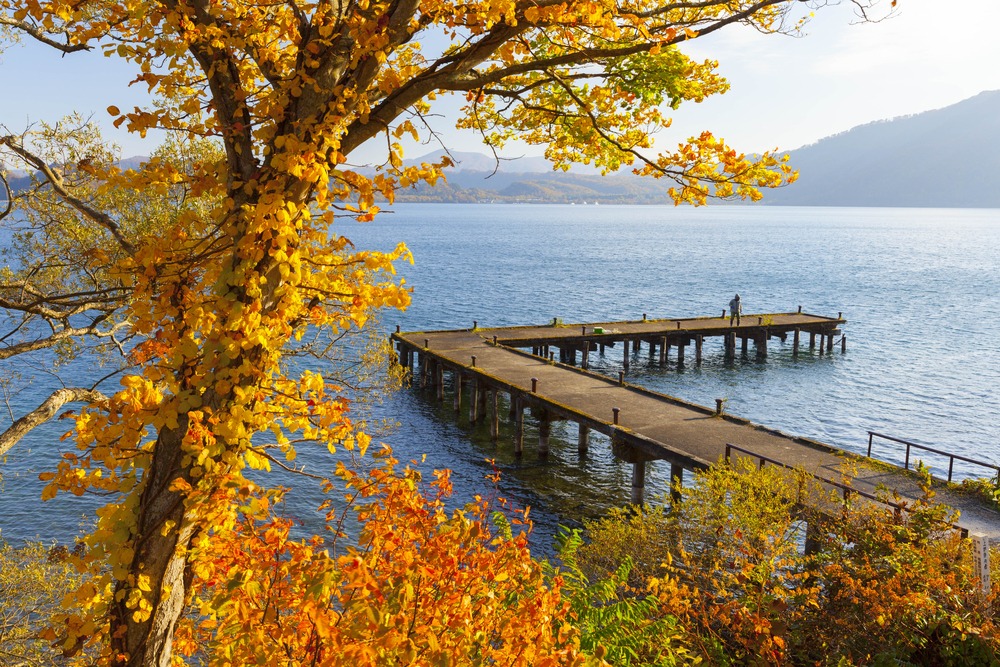
Lake Ashi spreads across 7.2 km² within the caldera of Hakone volcano, at 723 meters altitude. With its 21 km circumference, this crater lake ranks among Japan's most photographed bodies of water, particularly for the reflection of Mount Fuji it offers on clear days. The shores welcome shrines, hot springs, and a network of boats that make it one of the anchoring points of the Hakone region.
Why visit Lake Ashi
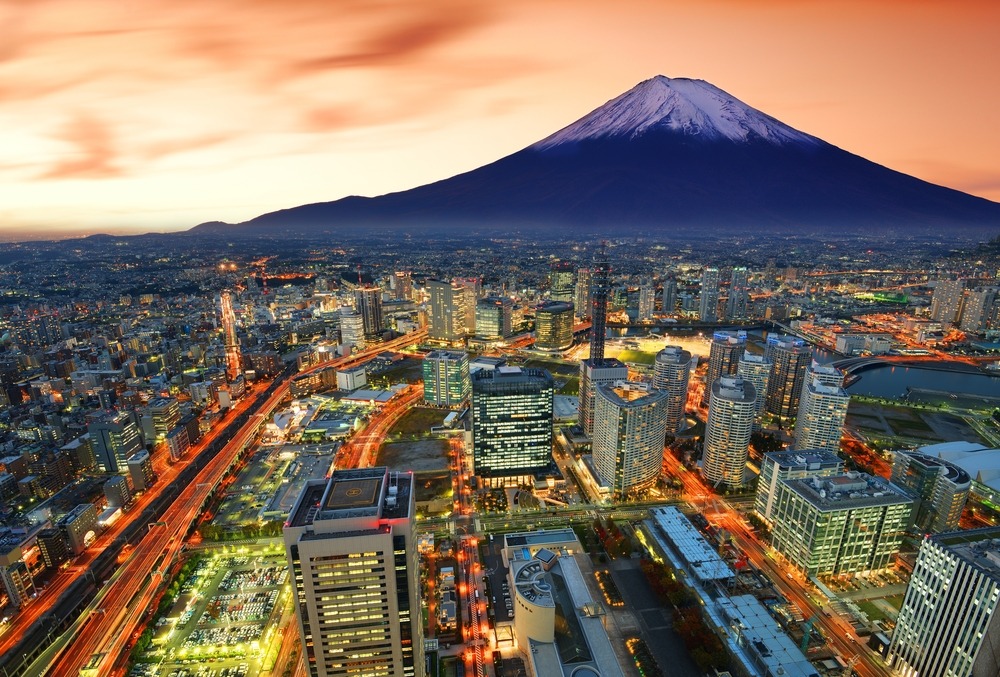
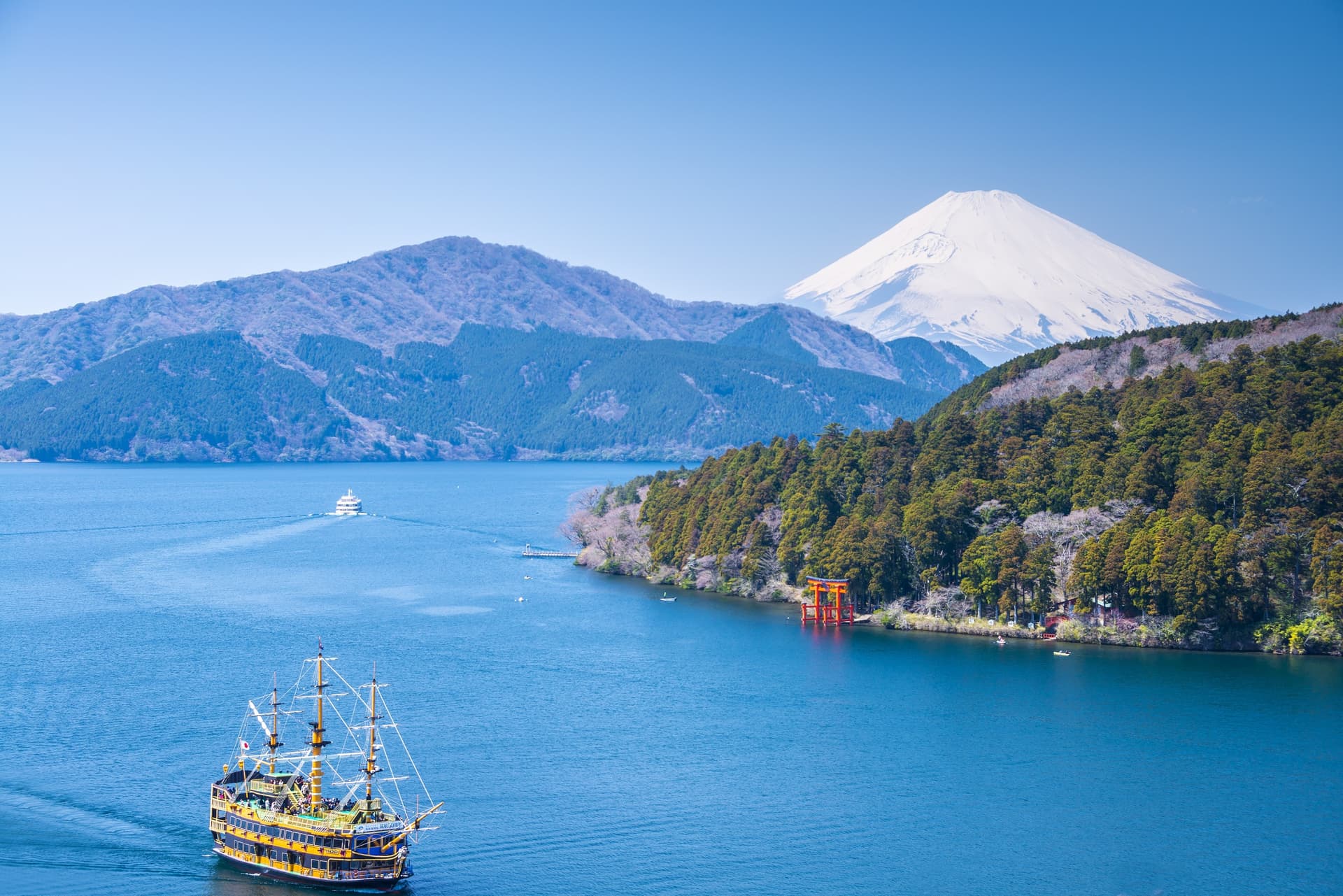
Lake Ashi combines several rare assets in a single location. First, it is one of the best vantage points for viewing Mount Fuji from the Tokyo region, with the summit appearing on the horizon on clear days. It is also a major Shinto pilgrimage site, home to Hakone-jinja shrine and its famous red torii gate planted in the water. Finally, it is a playful destination where galleons, swan boats, and amphibious buses replace the usual sightseeing boats.
The lake is also known to anime enthusiasts: the fictional city of Tokyo-3 in Neon Genesis Evangelion is situated on its shores.
A caldera and a legend
Lake Ashi formed approximately 3,000 years ago, following a phreatic explosion that caused the partial collapse of Mount Kami. The resulting crater gradually filled with water to create the present-day lake.
Local tradition recounts that during the Nara period (710-794), a nine-headed dragon named Kuzuryu terrorized the inhabitants of the lake. According to legend, human sacrifices were offered to appease the creature, until a Buddhist monk succeeded in chaining it to the lake bottom. The dragon, converted, became a protective deity still venerated today in Kuzuryu shrine.
What to see and do on Lake Ashi
Cruises and watercraft
Crossing the lake is the flagship experience. Three piers dot the shores:
- Togendai, to the north, connected to Hakone's cable car
- Hakone-machi, to the south
- Moto-Hakone, to the southeast, near the floating torii
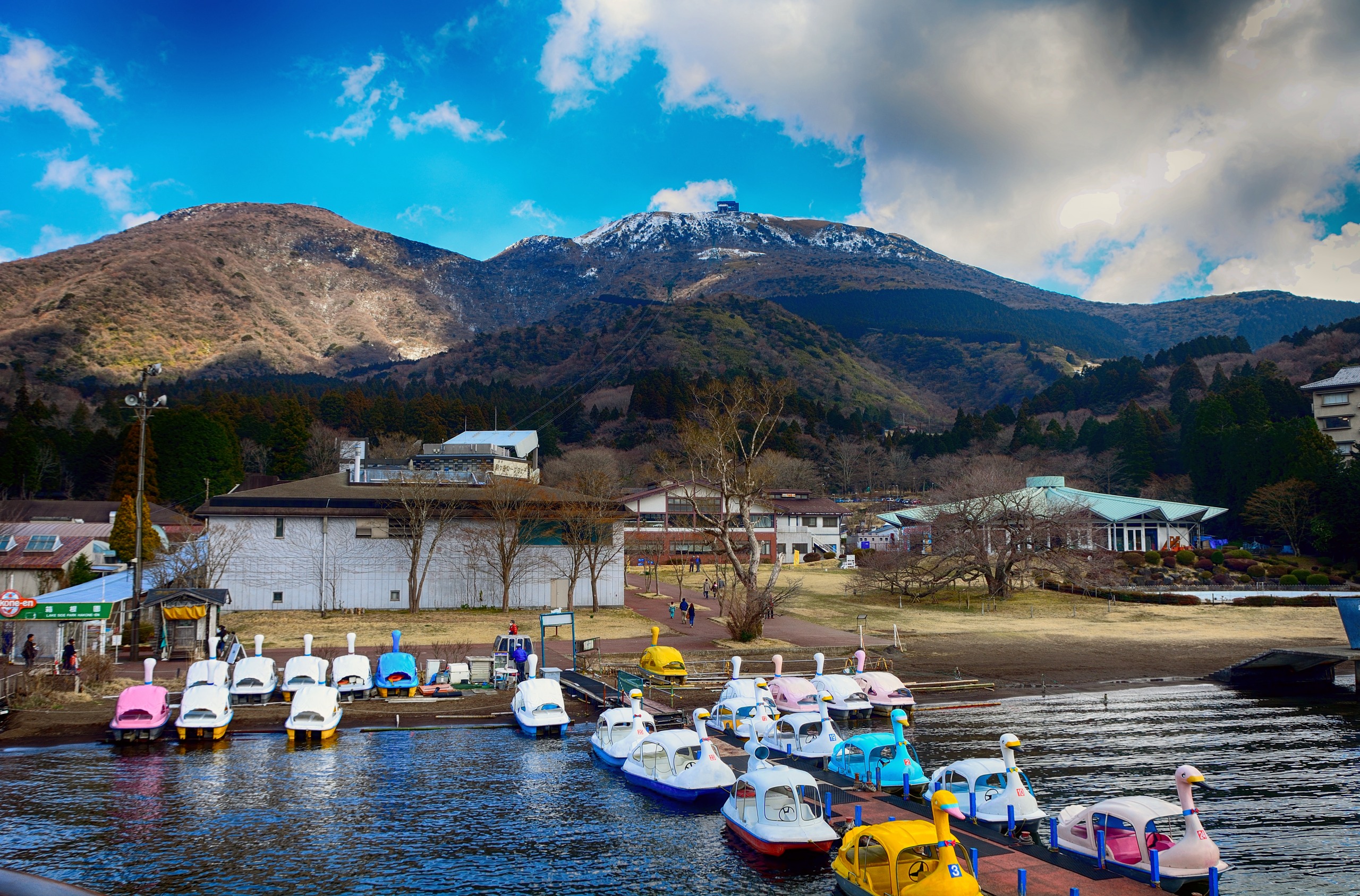
The boats circulating between these points adopt unexpected shapes: galleons inspired by 17th-century European vessels, swan boats, or amphibious buses. Seibu Company additionally offers connections from Hakone-en pier. Departures are frequent, approximately every 30 minutes, at moderate fares depending on distance.
The floating torii and Hakone-jinja shrine
The large red torii gate planted in the water to the southeast of the lake, near Moto-Hakone, is the site's most recognizable feature. It marks the entrance to Hakone-jinja shrine, nestled in a forest of century-old cedar trees along the shore. The shrine houses several pavilions and an access path winding through shaded undergrowth.
Mount Komagatake and Kuzuryu shrine
The cable car connects the shoreline to the summit of Mount Komagatake, from where the panorama encompasses the lake and, on clear days, Mount Fuji. At the summit stands Hakone-jinja Mototsumiya, considered the original Hakone shrine.
On the shore, approximately 20 minutes' walk from Hakone-en, Kuzuryu shrine is dedicated to the dragon of legend. Its submerged torii is visible from a pontoon near the main pavilion. The shrine is visited each February 14 by young women praying for their romances, as the dragon has also become a protective deity of romantic relationships.
The old Tokaido road and Hakone Check Point
The southern shore preserves a protected section of the old Tokaido road, the historic route connecting Edo (Tokyo) to Kyoto. You will encounter the Hakone Check Point (Hakone Sekisho), a reconstructed control post that screened travelers during the Edo period. Nearby, the Kyu Hakone Riukyu park occupies the site of the former summer palace of the imperial family, with a path offering sweeping views over the lake.
Kimono and tea ceremony
Opposite the Hakone Sekisho-ato pier, the Sekisho Tabimonogatari Kan facility houses souvenir shops and restaurants. Its first floor offers kimono rentals with obi dressing, followed by a traditional tea ceremony. The complete experience allows you to wander in traditional clothing through the lakeside lanes.
Practical information
- Visit duration: allow half a day for a cruise and the southern shore, a full day to combine Hakone-jinja, Komagatake, and Kuzuryu
- Activities: cruises, canoeing, fishing, hiking, kimono rentals
- Getting around: walking, boats between piers, cable car to Komagatake
- Prices: moderate for crossings, higher for kimono plus tea experiences
When to visit Lake Ashi
Temperatures on the lake range between 3°C in November and 27°C in August. The altitude keeps the air cooler than Tokyo, something to factor into your packing.
- November: autumn foliage in surrounding forests, often clear skies, ideal conditions for spotting Mount Fuji
- December to February: dry, crisp air, best visibility of snow-capped Fuji, but low temperatures
- April-May: cherry blossoms and fresh greenery, high visitor numbers
- Summer: mild climate compared to Tokyo but rainy season in June-July, frequent mist on the lake
Since Fuji visibility is unpredictable, favor early mornings and cloudless skies.
How to reach Lake Ashi
Lake Ashi is located in the town of Hakone, in Kanagawa prefecture.
- From Hakone-Yumoto station, gateway to the region: approximately 1 hour by bus
- From Odawara station: approximately 30 minutes by bus
- From Shinjuku (Tokyo): approximately 2 hours 30 minutes by highway bus, west exit of the station
If you arrive by long-distance bus from Tokyo, it is best to plan your lake visit early in the day to make the most of the best light on Fuji.
Nearby
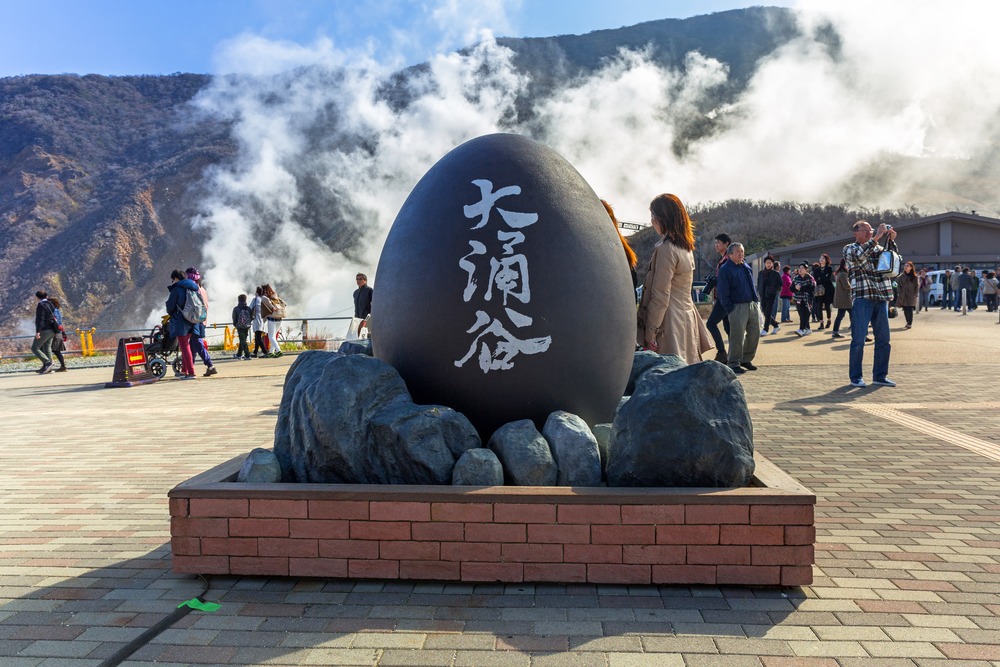
Lake Ashi fits into the tourist ecosystem of Hakone, famous for its hot springs (onsen), open-air museum, and Owakudani volcanic valley accessible by cable car. The region lends itself to a two- to three-day stay combining thermal relaxation and walks.
To extend your exploration of Japanese lakes and mountains, you might consider Mount Tsukuba north of Tokyo, Mount Hiei near Kyoto, or Mount Inasa in Nagasaki, all characteristic panoramic viewpoints.
Frequently asked questions
Frequently asked questions
Include Lake Ashi in your trip
Lake Ashi combines ideally with a hot spring stay in Hakone and a stop in Tokyo or Kyoto. To build a custom itinerary integrating this volcanic region, consult our suggestions for travel to Japan.
Interested in this visit?
We can include it in your personalised itinerary.