Momochihama Seaside Park
Momochihama Seaside Park
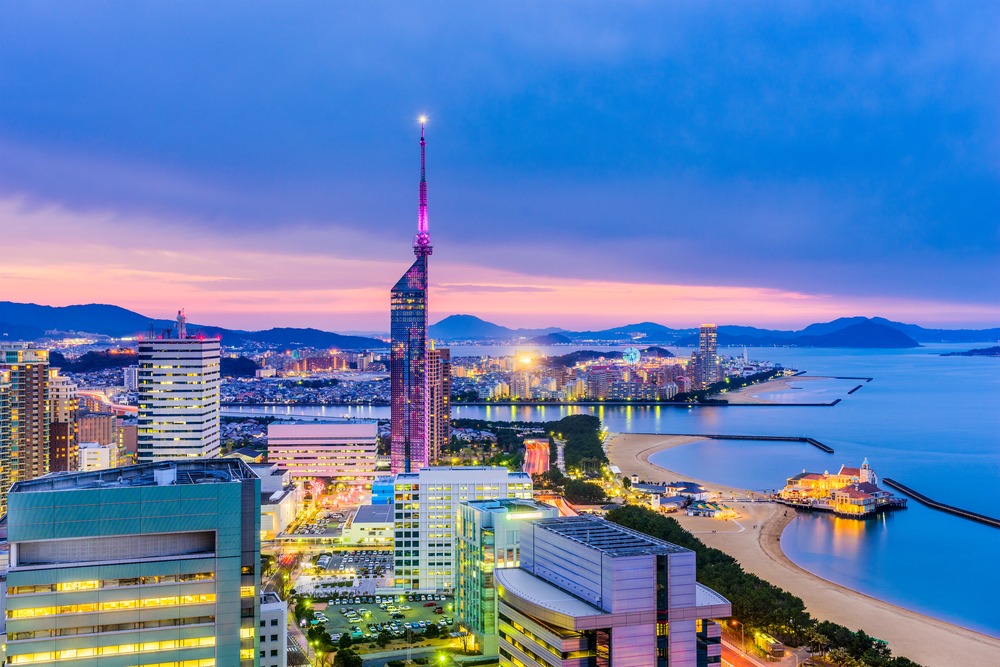
Fukuoka's waterfront development, Momochihama Seaside Park brings together Fukuoka Tower, a one-kilometer artificial beach, the Dome and the municipal museum.
Momochihama Seaside Park occupies the waterfront of the Momochi district in Fukuoka, on the northern coast of Kyushu island. Born from a major development project in the late 1980s, this seaside park combines an artificial beach, modern skyscrapers, sports facilities and cultural institutions across roughly one kilometer of coastline.
Why visit Momochihama Seaside Park
The park concentrates several of Fukuoka's major facilities in one area: Fukuoka Tower (234 m), Momochihama urban beach, the Fukuoka Dome and the Fukuoka City Museum. This clustering allows you to experience contemporary architecture, seasonal bathing, spectator sports and heritage all in a single half-day. Urban planning enthusiasts will find it a textbook case of development on reclaimed land, comparable to Tokyo Waterfront Subcenter.
The district's history
Fukuoka hosted the Asia-Pacific Expo in 1989, an event that served as a catalyst for transforming this stretch of coastline. Momochihama Seaside Park was initiated on this occasion as a development zone on land reclaimed from the sea, facing Hakata Bay. The project called for the creation of an artificial beach, waterfront leisure spaces and buildings with symbolic purpose, including Fukuoka Tower, completed that same year.
Historically, Fukuoka thrived as a commercial crossroads between Japan and Korea, a legacy still visible in the municipal museum's collections and the bay's port function.
What to see and do
Fukuoka Tower
At 234 m tall, Fukuoka Tower is presented as Japan's tallest seaside tower. Its mirrored façade reflects daylight and illuminates at night. At its summit, a panoramic observatory houses a "lovers' shrine," a prized vantage point over the bay and city.
Momochihama Beach
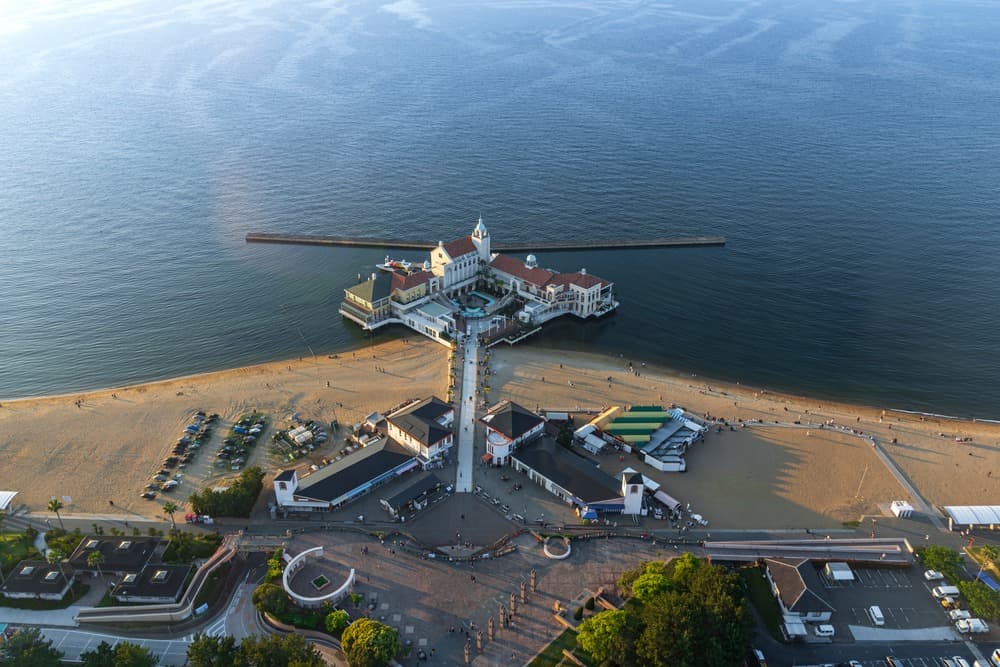
The artificial beach stretches roughly one kilometer at the foot of the Tower. Swimming is only permitted in July and August. Outside this season, the sand remains accessible for walking, beach volleyball, beach soccer or water sports (jet-skiing, wakeboarding, banana boats). Yakisoba and grilled food stalls set up along the embankment during peak season.
At the beach's center, the commercial complex Marizon, accessed by a pier, houses shops, dining and a wedding hall with a church-like appearance. Marizon also serves as a departure point for cruises across Hakata Bay and to Uminonakamichi, a former military base converted into a large landscaped park.
Fukuoka Dome
Opened in 1993, Fukuoka Dome is the home field of baseball team Fukuoka SoftBank Hawks. It is Japan's first stadium with a retractable roof. Outside of games, the venue regularly hosts concerts; artists who have performed here include Madonna, Bon Jovi, The Rolling Stones and Frank Sinatra. Next door, Hawks Town Mall houses restaurants, shops and a Namco game center.
Fukuoka City Museum
The museum traces Fukuoka's history as a port of exchange between the Japanese archipelago and the continent. Its centerpiece is the Kin'in, a gold seal designated a national treasure, whose replicas are among the most sought-after souvenirs. The permanent collection also features the Nihongo spear and includes a Touch and Experience room where visitors can handle various Asian instruments.
Practical information
- Visit duration: allow half a day to combine Tower, beach and museum; a full day if you add a cruise to Uminonakamichi.
- Prices: free access to the park and beach; paid entry to Fukuoka Tower, the museum and Dome events.
- Swimming: permitted only in July and August.
- What to bring: sun protection in summer, windproof clothing the rest of the year (the waterfront is exposed).
When to visit
Southern Japan's climate is mild: temperatures rarely drop below 20°C in winter, and summer is usually warm and humid, with frequent rain especially during June's rainy season. To enjoy the park in the best conditions, choose late spring (May) or early autumn (September-October), when temperatures are pleasant and crowds moderate. If swimming is your goal, aim for July or August.
How to get there
- From Tenjin Station: 10 to 20 minutes by bus.
- From Hakata Station: approximately 30 minutes by bus.
- From Nishijin or Tojinmachi metro stations: approximately 15 minutes on foot or by bus.
- From Uminonakamichi: ferry across Hakata Bay, with departures several hours apart during the day.
Fukuoka has no direct flights from France; access is via a connection through Tokyo or Osaka, followed by a domestic flight or Shinkansen journey to Hakata Station.
Nearby
The park makes a good base for exploring Kyushu and beyond. Several Japanese sites complement an itinerary around nature, urban panoramas and heritage themes:
- Mount Inasa: renowned night views over Nagasaki.
- Mount Hiei: a major center of Japanese Buddhism near Kyoto.
- Mount Tsukuba: an iconic peak in the Kanto region.
- Kinosaki museums: a cultural stopover in a hot spring town.
Frequently asked questions
Frequently asked questions
Planning your trip
Momochihama Seaside Park fits easily into a Kyushu itinerary, alongside Nagasaki, Kumamoto or Beppu. To build a customized itinerary including Fukuoka and its surroundings, consult our Japan travel suggestions.
Interested in this visit?
We can include it in your personalised itinerary.