Mount Hiei
Mount Hiei
Northeast of Kyoto, Mount Hiei is home to Enryaku-ji, the birthplace of Tendai Buddhism and a UNESCO World Heritage site, nestled among forests, ancient trails and panoramic views of Lake Biwa.
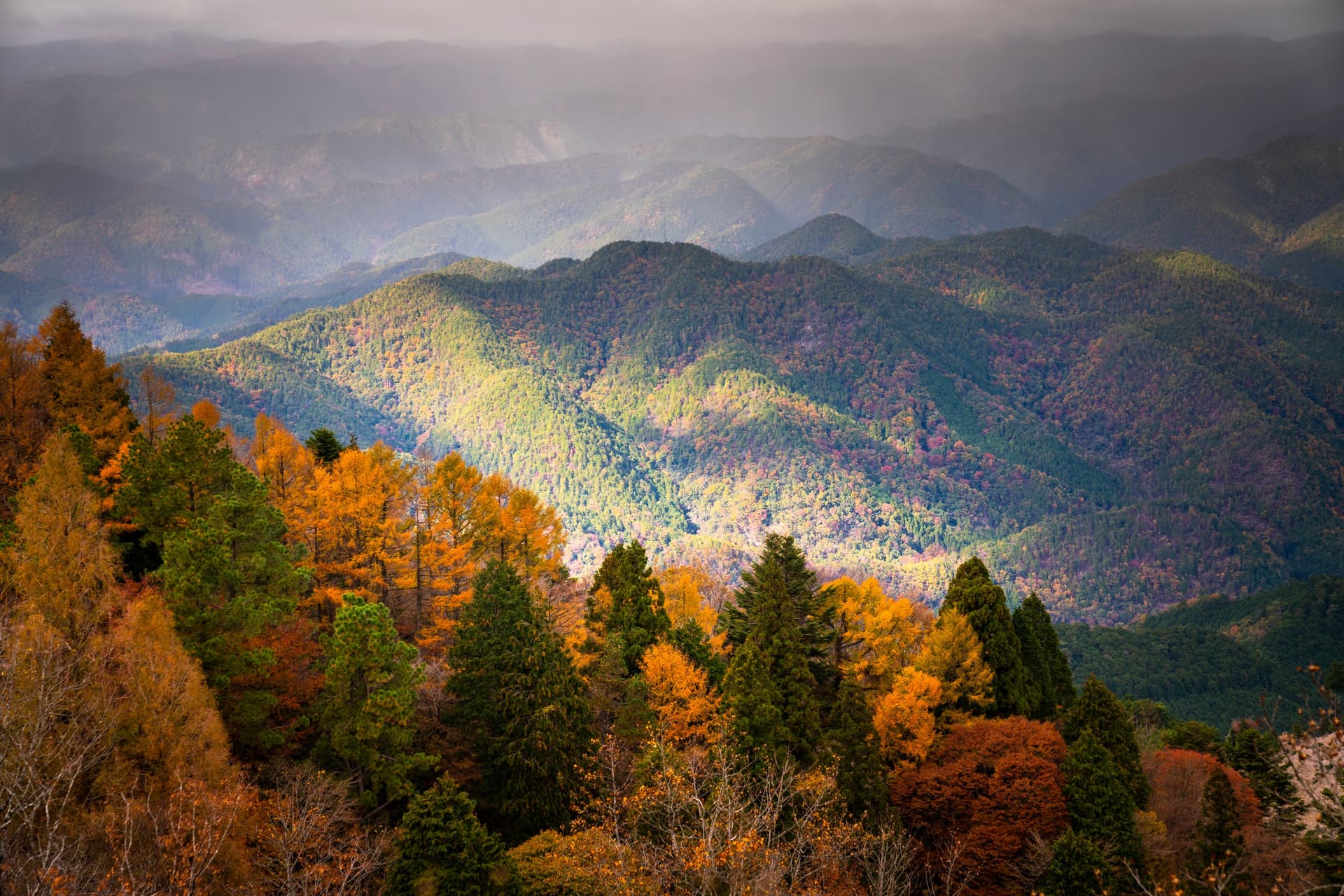
Mount Hiei rises to 848 metres northeast of Kyoto, on the border between Kyoto and Shiga prefectures. Blanketed in dense forests, it is home to one of the highest spiritual sites of Japanese Buddhism: the Enryaku-ji monastic complex, inscribed as a UNESCO World Heritage site in 1994. Ancient trails, thousand-year-old temples and panoramic views over Lake Biwa make this mountain a cherished day excursion from Kyoto.
Why visit Mount Hiei?
Mount Hiei brings together three points of interest rarely found on a single site. First and foremost, it is the birthplace of Tendai Buddhism, a school founded in the 9th century whose influence shaped Japanese spirituality for over a thousand years. It is also an accessible hiking destination from central Kyoto, with forest trails crossing through preserved wildlife. Finally, it is a natural vantage point over Lake Biwa, Japan's largest lake, offering striking contrast with Kyoto's urban energy.
The inscription of the Enryaku-ji complex to UNESCO in 1994 strengthened its prominence, but the mountain remains less crowded than downtown sanctuaries, making it a smart choice for escaping the throngs.
A mountain at the heart of Japanese history
Founded in 788 by the monk Saichô, Enryaku-ji Temple quickly becomes the nerve centre of Tendai Buddhism and one of medieval Japan's most powerful religious complexes. At the height of its influence, the mountain is home to thousands of buildings and maintains a militia of warrior-monks (sôhei) feared by neighbouring lords.
This power attracts conflict. In 1336, Ko no Morofuyu stages an important battle there. In 1571, warlord Nobunaga Oda, determined to break the political power of the monks, launches an assault that ravages the site: nearly all buildings are destroyed and the community decimated. Reconstruction unfolds over the following centuries, driven notably by Toyotomi Hideyoshi and later the Tokugawa.
In the 20th century, the name Hiei also designated a Japanese military cruiser, sunk during the Battle of Guadalcanal in 1942. Today, the mountain remains above all an active monastic sanctuary.
What to see on Mount Hiei?
The Enryaku-ji complex
The temple is divided into three sections several kilometres apart, connected by trails and a shuttle service:
- Tôdô (eastern sector): the most visited area. It houses the Konpon Chûdô, a main hall designated a National Treasure, dedicated to Yakushi, the Buddha of medicine.
- Saitô (western sector): the section preserving the site's oldest building, the Shaka-dô, in a more forested and tranquil atmosphere.
- Yokawa (northern sector): the least frequented. Its main hall, the Chudo, preserves the Dharma light, a flame maintained uninterrupted for approximately 1,200 years, watched over constantly by a monk.
The marathon monks
Mount Hiei is associated with the Sennichi Kaihogyo, or "1,000 days of training in the mountains." This ascetic Tendai ritual unfolds over seven years in several progressive stages: daily walks of dozens of kilometres, prolonged fasting, prayers at hundreds of sacred stations. Very few monks complete the course. With a bit of luck, you may encounter a practitioner on the trails.
The Museum Garden and views over Lake Biwa
At the summit, the Museum Garden showcases reproductions of French Impressionist works (Monet, Renoir) in a landscaped setting: flower gardens, water lily pond, arched bridge, café with terrace. The main draw remains the panoramic view over Lake Biwa, which stretches below on the Shiga side.
Trails and nature
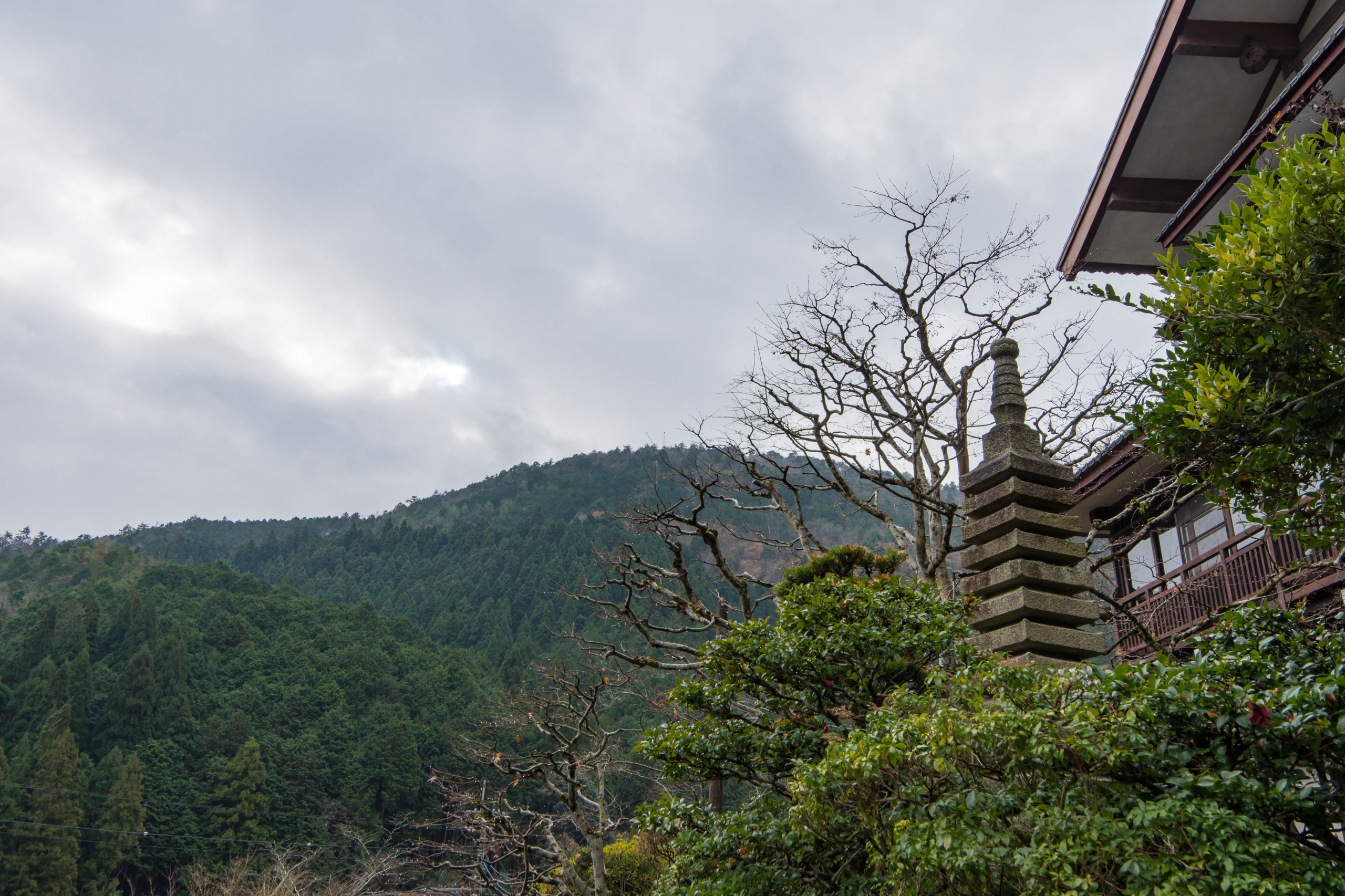
The traditional Honzaka route, which starts from the village of Sakamoto, is the historic climbing path. Allow approximately 500 metres of elevation gain on moss-covered stone steps. The forest is home to monkeys, raccoon dogs and wild boars. Throughout the seasons, you encounter waterfalls and peaceful clearings.
When to visit?
Two seasons stand out distinctly:
- Spring (April-May): cherry blossom blooms followed by azaleas. Mild temperatures, pleasant trails.
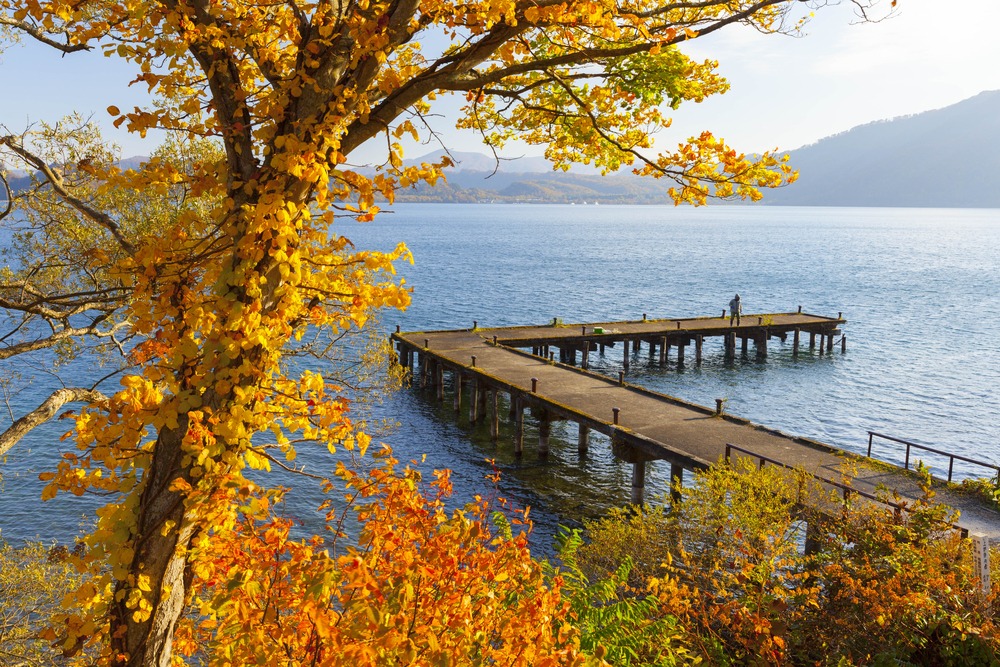
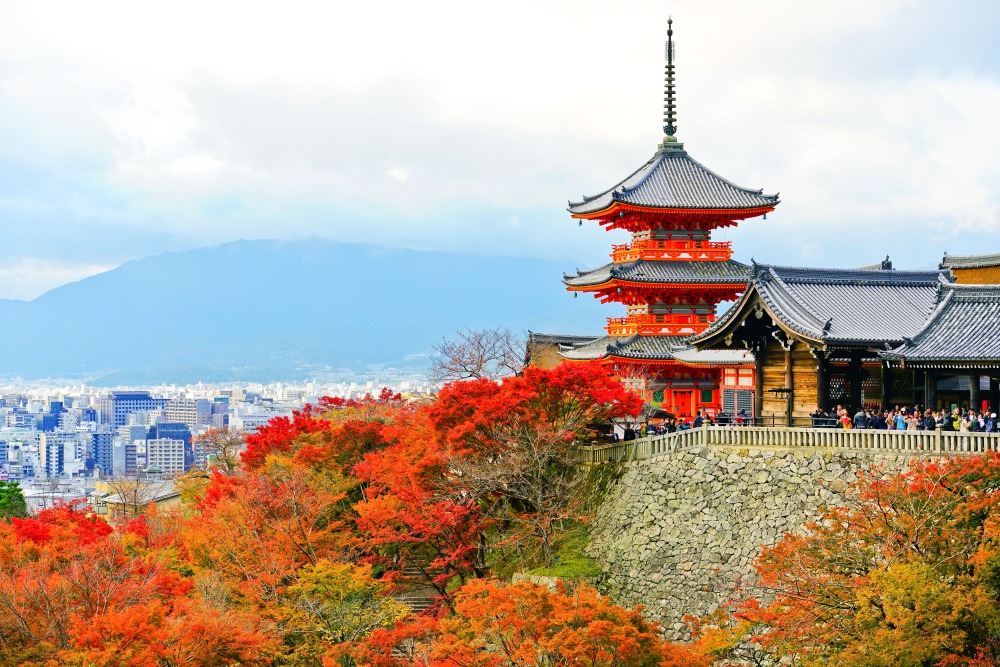
- Autumn (mid-November to early December): fiery maple foliage, particularly spectacular around the Saitô and Yokawa pavilions.
Summer is warm and humid but the altitude brings some relief. Winter is cold with possible snowfall: some cable car and ropeway access operate on reduced schedules or close temporarily.
Practical information
- Visit duration: allow a full day to explore all three sections of Enryaku-ji and the summit. A half-day suffices for Tôdô alone.
- What to wear: hiking shoes recommended, especially if tackling the Honzaka route. Ground surfaces are damp and slippery in the forest.
- Admission fees: paid entry to the Enryaku-ji complex (combination ticket for all three sections) and the Museum Garden. Rates are moderate; check official websites before departure for current prices.
- Respect for the site: this is an active religious site. Modest clothing, quiet voices and photography are prohibited in certain halls.
How to get there?
Several access points are available from Kyoto or Otsu:
- Via Sakamoto (Shiga side): JR Kosei line to Hieizan-Sakamoto Station, then approximately 1.2 km on foot to Sakamoto cable car, which reaches the summit in minutes.
- Via Demachiyanagi (Kyoto side): Keihan line to Demachiyanagi, connection with Eizan line to Yase-Hieizanguchi, then Eizan funicular and ropeway to the summit.
- On foot: ascent via the Honzaka route from Sakamoto, approximately 2 to 3 hours depending on pace.
- By bus: seasonal shuttles (Hieizan Shuttle Bus) connect the three sections of Enryaku-ji and the cable car and ropeway terminals.
Nearby attractions
Mount Hiei pairs well with other stops in the region:
- Sakamoto: ancient monastic village at the mountain's foot, famous for its stone walls and retired monks' residences.
- Lake Biwa and the city of Otsu: boat cruises, sanctuaries and beaches on the country's largest lake shore.
- Kyoto: easy return to downtown sanctuaries via Keihan or JR lines.
For other mountain hikes, you may also venture further to Mount Tsukuba north of Tokyo, or Mount Inasa in Nagasaki. Buddhist site enthusiasts will find another spiritual landmark at Nachi Taisha.
FAQ
Frequently asked questions
A full day is ideal to explore all three sections of Enryaku-ji (Tôdô, Saitô, Yokawa) plus the Museum Garden. For a focused visit to Tôdô and Konpon Chûdô, allow a half-day.
Yes. Cable cars and ropeways, accessible from Sakamoto or Yase-Hieizanguchi, reach the summit in minutes. Once at the top, shuttles connect the various temple sectors.
Spring (cherry blossoms, azaleas) and autumn (maples) are the two peaks. Autumn, around mid-November, is particularly renowned for its colours.
Enryaku-ji is an active monastery. Some halls host daily prayers open to visitors in silence. Meditation retreats are also offered occasionally, by reservation.
The Enryaku-ji complex was inscribed as a UNESCO World Heritage site in 1994, as part of the "Historic Monuments of Ancient Kyoto" ensemble.
Include Mount Hiei in your trip
Mount Hiei integrates seamlessly into a multi-day itinerary around Kyoto and Lake Biwa. To build a tailor-made stay including this excursion, explore our Japan travel experiences and speak with our specialists in the archipelago.
Nearby
Interested in this visit?
We can include it in your personalised itinerary.