Mount Inasa
Mount Inasa
Rising 333 meters above Nagasaki, Mount Inasa offers a 360° panorama and one of the world's three most beautiful night views, officially recognized in 2012.
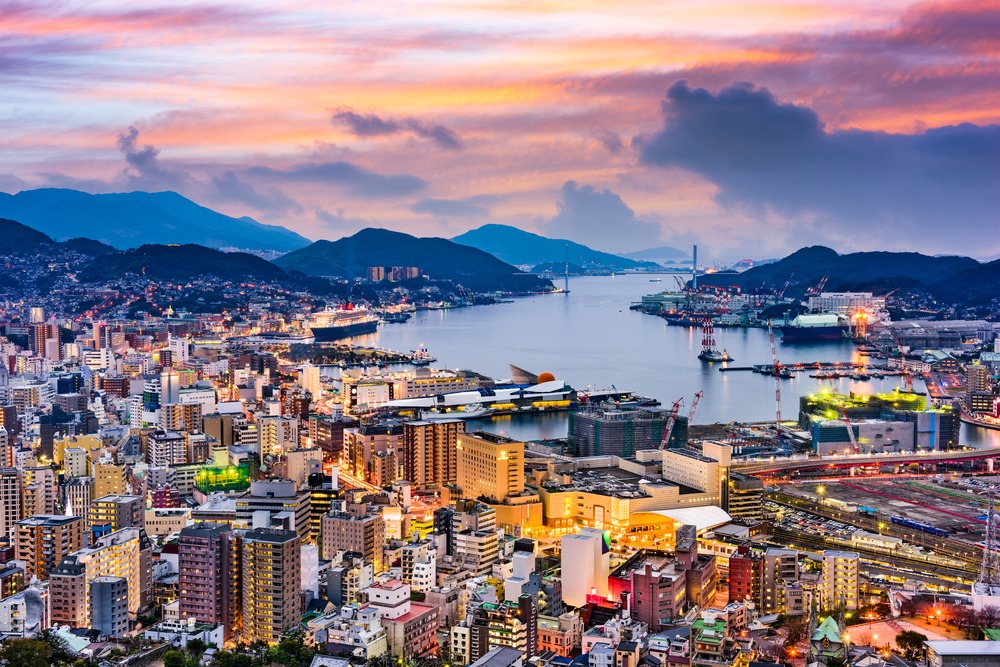
Mount Inasa dominates Nagasaki at an altitude of 333 meters and offers one of Japan's most celebrated urban panoramas. Its summit observatory was ranked among the New Three Great Night Views of the World in 2012, alongside Monaco and Hong Kong, earning it the nickname of the "10 million dollar view."
Why visit Mount Inasa
Mount Inasa combines three assets rarely found on a single site: a 360-degree panorama over Nagasaki Bay, a family leisure park with azalea garden, zoo, and amphitheater, and direct accessibility from the city center by cable car. The visit can be completed in half a day and suits both families and travelers seeking the night view over the port city.
The site remains frequented by local residents, making it a living place rather than a mere tourist platform. Seasonal festivals, open-air concerts, and green spaces succeed one another throughout the year.
A landmark in Nagasaki's history
Nagasaki holds a unique place in Japanese history. During the Edo period, the city was the sole port permitted to trade with foreign nations when the country closed itself to the rest of the world. Three centuries later, in August 1945, it suffered the second atomic bombing of World War II. The city was rebuilt, and Mount Inasa, rising above the bay, became one of the symbols of this renewal.
International recognition came in 2012 at the Night View Summit held in Nagasaki: the night panorama from the summit joined Monaco and Hong Kong on the list of the world's three most beautiful night views, a status that has contributed to the site's prominence since.
What to see
Inasayama Observatory
The observation platform at the summit offers a 360-degree panorama. On clear days, the view extends beyond the bay to Amakusa and the Goto Islands. The spectacle changes dramatically at nightfall, when the lights of the city and port create the image that has made the site famous. A restaurant and covered spaces allow you to extend your visit regardless of the weather.
The azalea garden and Tsutsuji Festival
In the central area, Inasayama's azalea garden features approximately 80,000 plants that color the slope in spring. In April, the Tsutsuji Festival attracts residents with karaoke contests and stands selling local specialties, including fried pigeons.
Leisure and family spaces
- The Fountain Plaza, the central meeting point for rest areas
- An outdoor amphitheater with sloped lawn, which hosts the Sky Jamboree rock festival in August
- A small free zoo housing monkeys and deer
- A dog racing track and a grass sliding area (to be confirmed on-site depending on the season)
- A children's play area near the parking lot
Practical information
A visit to the summit generally takes between 1.5 and 3 hours depending on whether you dine there. Bring an extra layer for the evening: the temperature at the summit is noticeably cooler than in the city, and wind can be significant. For the night view, arrive about 30 minutes before sunset to observe the day-to-night transition.
The cable car operates during the day and into the evening; exact hours and maintenance periods should be verified before your visit. The site is free; only the cable car is charged.
When to visit
Mount Inasa can be visited year-round, but each season offers a different experience:
- Spring (March-April): cherry blossoms followed by azaleas, Tsutsuji Festival, mild temperatures (59-68°F).
- Summer (June-August): strong heat and humidity (75-90°F), rainy season in June-July, but also Sky Jamboree Festival in August.
- Autumn (October-November): russet and golden foliage, clear skies favorable for long-distance panoramas.
- Winter (December-February): mild winter by Japanese standards (39-55°F), dry air and often excellent visibility for the night view.
How to get there
By cable car
This is the most popular option. The departure station is about 15 minutes' walk from the Takaramachi tram stop. The journey to the summit is short (a few minutes) and already offers a sweeping view of the bay. Shuttle buses sometimes connect Nagasaki Station to the cable car terminal.
By car or taxi
From Nagasaki Station, allow about a quarter hour of driving. Parking is available near the summit, but access for private vehicles may be restricted on Saturday evenings and during school holidays: check before driving.
By bus
A bus line connects Nagasaki Station to a stop on the mountainside, with several departures per hour. Then allow about 15 minutes of uphill walking to the summit: an economical option but more physically demanding.
Nearby
Mount Inasa naturally fits into a broader visit to Nagasaki: Peace Park, the historic Dutch quarter of Dejima, Glover Garden, and the Chinese district are accessible by tram from the city center. To extend your Japanese mountain panorama experience, Mount Hiei near Kyoto and Mount Tsukuba north of Tokyo offer other perspectives on the Japanese landscape. Those fond of historic districts will appreciate Nagamachi in Kanazawa.
Frequently asked questions
Frequently asked questions
Access to the site and observatory is free. Only the cable car and parking are charged. The small zoo at the summit is also freely accessible.
Autumn and winter evenings, in clear, dry weather, offer the best visibility. Arrive about 30 minutes before sunset to enjoy the transition between the daytime and night views.
Allow 1.5 to 2 hours for the ascent, the observatory, and a quick tour of the spaces. Plan 3 hours or more if you dine at the summit restaurant or explore the azalea garden in season.
Yes. The site includes a play area, a small free zoo with monkeys and deer, green spaces, and Fountain Plaza. The cable car eliminates the approach walk for young children.
Reservations are generally not necessary, but waiting times can increase in the evening during tourist seasons (weekends, Japanese school holidays). Check the last descent time before going up.
Include Mount Inasa in your journey
Mount Inasa naturally fits into a stay in Nagasaki, a highlight of an itinerary in southern Japan between Kyushu, the Inland Sea, and Kyoto. To plan a custom journey including the night view and historical sites of the city, consult our selection of Japan travel ideas.
Interested in this visit?
We can include it in your personalised itinerary.