The Namba District
The Namba District
The vibrant heart of southern Osaka, Namba (Minami) brings together Dotonbori, Kuromon Market, covered arcades, electronics and traditional theaters.
Namba, also known as Minami, is the southern district of Osaka, straddling the boundaries of Chuo-ku and Naniwa-ku wards. Covered shopping arcades, the neon glow of Dotonbori, Kuromon Market, traditional theater and consumer electronics all converge within a few hundred meters. It ranks as one of two major entertainment hubs in the city alongside Kita to the north.
Why Visit Namba
Namba distills most of Osaka's urban character into a walkable perimeter: street food culture (takoyaki, okonomiyaki), the luminous signs reflected in the Dotonbori canal, covered shopping arcades, a historic food market, an electronics district and two important theaters. The density of attractions allows you to move seamlessly between dining, shopping, temples and performances without relying on public transport.
The atmosphere shifts throughout the day: a quiet morning ideal for Kuromon Market and temples, an afternoon devoted to shopping, and a lively evening around Dotonbori and the bars of America Mura.
A Bit of History
Namba developed during the Edo period around theaters and entertainment venues lining the Dotonbori canal, which was dug in the early 17th century to connect the city's rivers. The district quickly became a hub of popular entertainment, where kabuki, bunraku (puppet theater) and dining establishments coexisted. This theatrical tradition endures today with the National Bunraku Theater, one of Japan's leading institutions dedicated to this art form and inscribed on UNESCO's Intangible Cultural Heritage list.
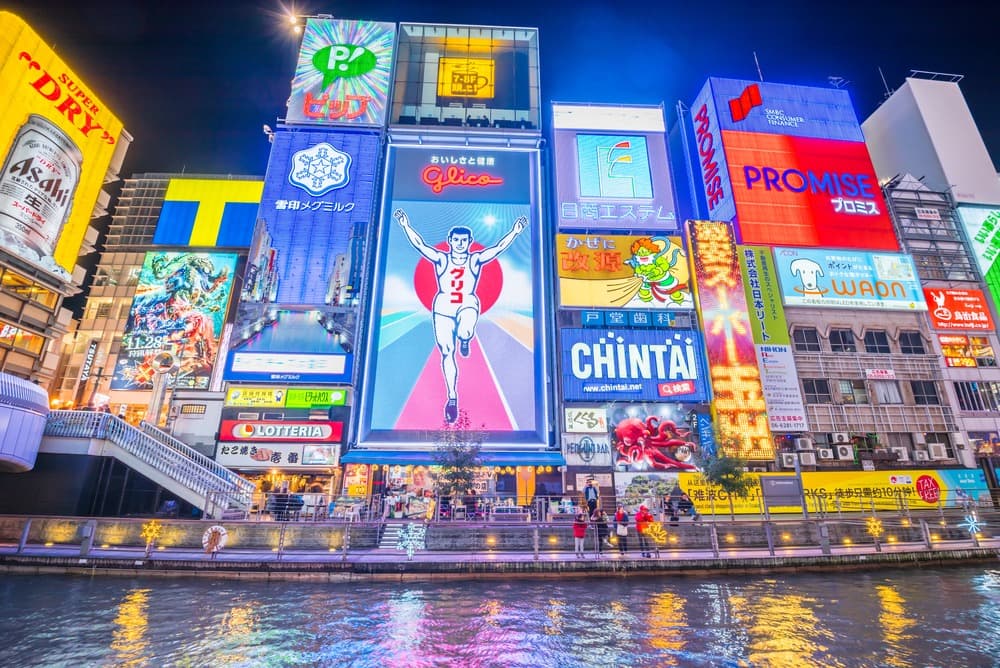
The Glico Man billboard, which has overlooked the canal since 1935 (several versions have succeeded one another), became the district's visual icon.
What to See and Do in Namba
Dotonbori and Its Arcades
The Dotonbori canal and the Glico Man sign form the visual heart of the district. Nearby, the intersection of Shinsaibashisuji and Ebisubashisuji, two covered pedestrian streets, groups together restaurants, fashion boutiques and souvenir shops. This is where you can most easily taste Osaka's two emblematic specialties: takoyaki (octopus balls) and okonomiyaki (savory pancakes).
Slightly further north, the underground Crysta Nagahori arcade runs beneath Nagahori-dori avenue and provides shopping sheltered from the weather.
Hozenji Yokocho and America Mura
Hozenji Yokocho is a narrow cobblestone alley lined with small restaurants, home to a modest temple with a statue of Fudo Myo-o entirely covered in moss — visitors splash it with water as a prayer ritual. A few streets over, America Mura offers a strikingly different atmosphere: vintage clothing shops, anthropomorphic streetlamps, pinball arcades and hip-hop culture inherited from the 1970s-80s.
Kuromon Ichiba and Doguyasuji
To the east of the district, Kuromon Ichiba market stretches nearly 600 meters with stalls selling fruit, vegetables, fish, freshly prepared sashimi and grilled skewers. It's the go-to spot for a quick lunch. Nearby, the Doguyasuji arcade specializes in kitchen equipment: knives, takoyaki molds, dishware and restaurant signage.
Den-Den Town
Osaka's answer to Akihabara, Den-Den Town gathers several hundred shops devoted to electronics, video games, manga and otaku culture. Many stores offer tax-free shopping for travelers.
Shrines and Green Spaces
Namba Yasaka Jinja shrine features a stage shaped like a giant lion's head (roughly 12 meters tall), said to swallow evil spirits — an instantly recognizable photo subject. For a peaceful break, Namba Parks, a multi-level complex with terraced gardens above Nankai Station, blends shops, gardens and artificial waterfalls; the café Kua'Aina serves Hawaiian-style burgers.
Traditional Theaters
Two venues deserve attention: Shochikuza, a Western-style theater that regularly stages kabuki, and the National Bunraku Theater, dedicated to traditional puppet theater. English-language audio guides are typically available.
Practical Information
- Duration: allow half a day for a quick tour, a full day to include the market, theater and shopping.
- Best times: morning for Kuromon Ichiba (stalls at their fullest), late afternoon and evening for the illuminated Dotonbori.
- Budget: most attractions are free; street food at moderate prices, theater tickets vary by program.
- What to bring: comfortable shoes (the route is mostly pedestrian), cash for small market vendors.
Nearby
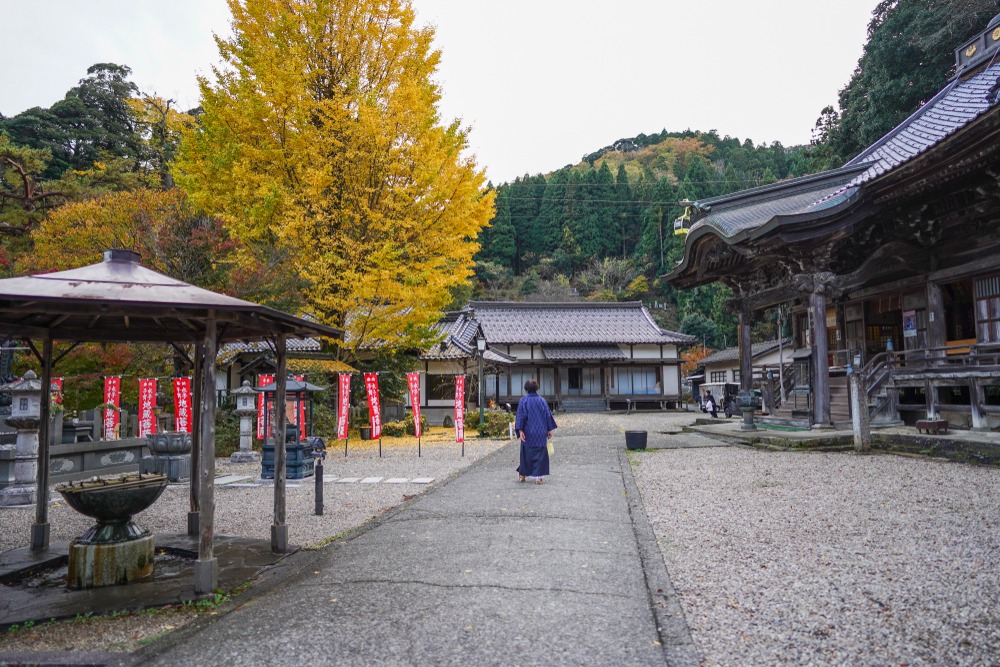
Namba fits naturally into a broader itinerary throughout the Kansai region. To extend your cultural visit, Nanzen-ji Temple in Kyoto offers a serene contrast to Osaka's energy. History enthusiasts will appreciate Nagamachi district in Kanazawa, a former samurai quarter. Along the route between Tokyo and Kyoto, the historic Nakasendo trail allows you to walk between preserved post stations. Further south, Nachi Taisha shrine and its waterfall complete a spiritual journey through the Kii Peninsula.
Getting There
Namba sits at one of Osaka's densest transportation hubs.
- Subway: Namba station on the Midosuji (red), Yotsubashi (blue) and Sennichimae (pink) lines. From Shin-Osaka, the Midosuji line is most direct (just a few stops).
- Train: the area is served by JR Yamatoji (JR Namba station), Kintetsu Namba, Hanshin Namba and Nankai Main Line, which connects to Kansai International Airport (KIX) in under an hour via the Rapi:t express train.
- On foot: from Shinsaibashi, allow about ten minutes via the covered arcades.
Frequently Asked Questions
Frequently asked questions
Half a day is sufficient to tour Dotonbori, Hozenji Yokocho and the covered arcades. Allow a full day if you want to include Kuromon Market, Den-Den Town and a bunraku or kabuki performance.
None: Minami ("the south") is the traditional name for the area, as opposed to Kita ("the north", around Umeda). Namba more precisely designates the sector around the station of the same name, which forms its heart.
Both. Kuromon Market and shrines are best visited during the day, while the Dotonbori canal reaches its full visual impact after dark, when illuminated signs reflect in the water.
Yes. The Nankai Rapi:t train connects Kansai International Airport to Nankai Namba station in approximately 35-40 minutes, making it one of Japan's simplest airport-to-center connections.
Takoyaki (octopus balls) and okonomiyaki (savory pancakes), which were born in Osaka, as well as kushikatsu (breaded skewers). Kuromon Market is the easiest place to sample them in small portions.
Including Namba in Your Journey
Namba integrates naturally into a circuit through the Kansai region combining Osaka, Kyoto and Nara. Discover our journeys to Japon to build an itinerary combining cities, shrines and nature.
Nearby
Interested in this visit?
We can include it in your personalised itinerary.