Bikan District
Bikan District
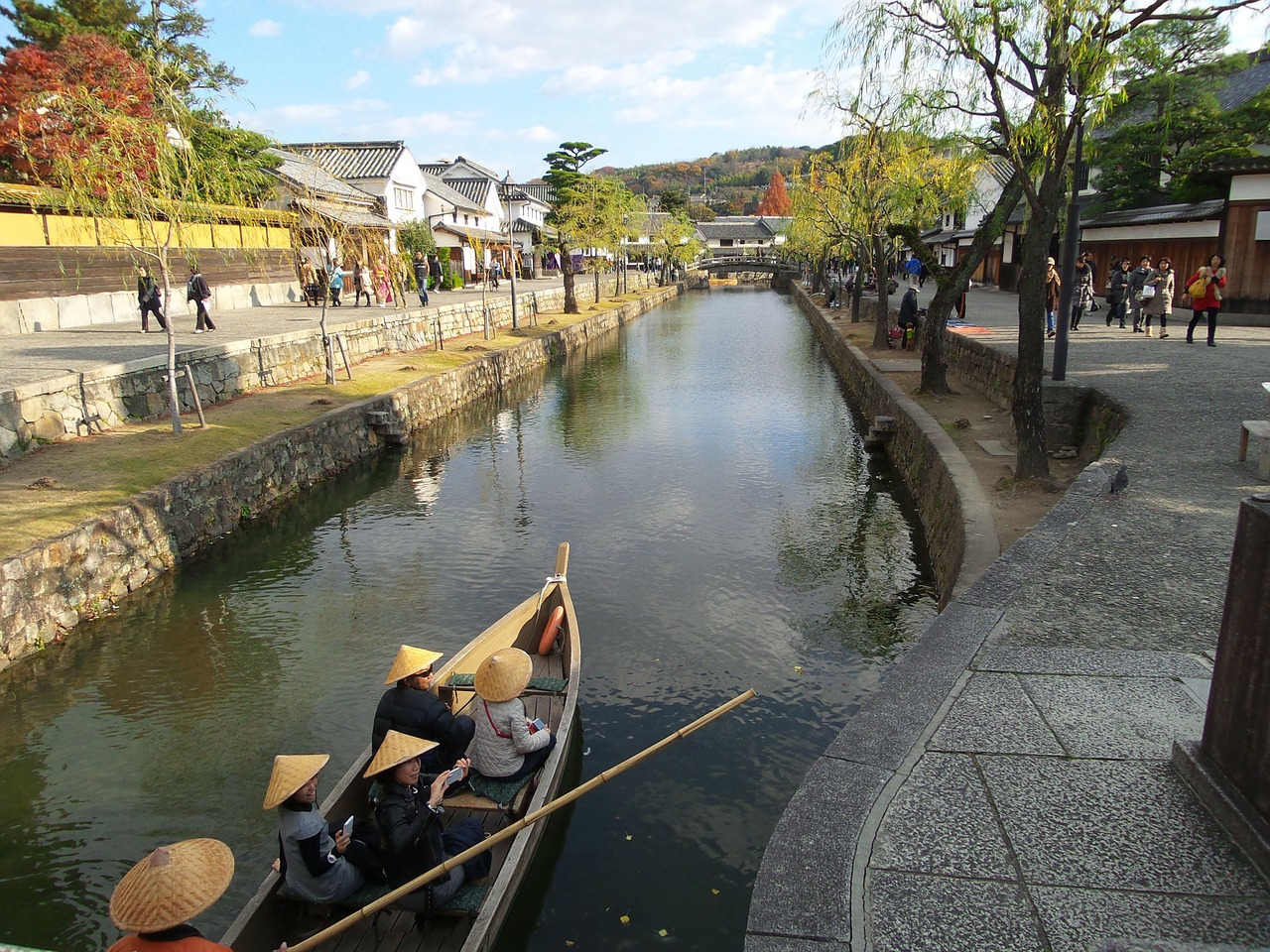
The historic heart of Kurashiki, Bikan lines up white Edo-era warehouses, art museums and a canal edged with willows. Nicknamed the "Venice of Japan".
The Bikan district occupies the historic heart of Kurashiki, in Okayama Prefecture. A merchants' city during the Edo era, it preserves its white-walled warehouses, wooden houses and canal lined with willows. Nicknamed the "Venice of Japan", it now brings together museums, artisan workshops and shops within an entirely pedestrian-only perimeter.
Why visit Bikan
Bikan offers a rare glimpse into Japanese urbanism: a prosperous merchant quarter from the 17th century that has reached us intact, completed with buildings of Western inspiration built during the Meiji era. Its electrical cables have been buried to preserve the aesthetic of the whole, and the public lighting reproduces Taisho-style street lamps, particularly striking at nightfall.
The district brings together several first-rate museums within a few streets, a stroll along the canal, Bizen pottery workshops and a Shinto shrine on the heights. Budget half a day for a simple visit, a full day if you include several museums.
History of the district
Under the Tokugawa shogunate, Kurashiki was directly administered by Edo, which granted it the status of government territory. The city became a logistics hub for the rice trade, whose warehouses (kura) gave the place its name. The white-plastered walls and black glazed tiles of these buildings still form the visual hallmark of Bikan today.
During the Meiji era, the textile industry took over. Several buildings of Western influence testify to this period of openness, notably the former tourism office near Nakabashi Bridge and the former textile factory that became Kurashiki Ivy Square, whose red brick walls contrast with the surrounding traditional architecture.
What to see in Bikan
Ohara Art Museum
Housed in a building inspired by the Parthenon, the Ohara Museum of Art is one of Japan's oldest museums of Western art. Its collections feature works by El Greco, Corot, Rodin, Gauguin and Picasso, complemented by a section dedicated to contemporary Japanese painting.
Kurashiki Mingei-kan Museum
This folk art museum houses about 800 pieces: ceramics and lacquerware from Japan and other countries. It occupies former rice warehouses converted to new use, making it both an exhibition space and an architectural testament.
The canal and boat cruise
The central canal is the backbone of the district. A twenty-minute boat cruise allows you to observe the facades from the water and pass by the Yurinso house with its green tiles (designated an Important Cultural Property), the Koko-kan archaeological museum and the Japanese toy museum, which also has a gallery, shop and café.
Honmachi-dôri Street
North of Bikan, Honmachi-dôri Street runs east to west through the Honmachi and Higashimachi neighborhoods. The alignment of dark wooden houses here shelters cafés, workshops and shops. It's the place to pick up Bizen pottery, a regional craft specialty.
Achi Shrine
On Mount Tsurugata, the Shinto Achi Shrine (Achi-jinja) is reached by a stone staircase. The short climb offers a viewpoint over the district's rooftops. The shrine hosts a traditional festival each year featuring masked dances and drum rolls.
Kurashiki Ivy Square
This former cotton mill, recognizable by its red brick walls draped in ivy, now houses a hotel, restaurants, a museum and a gallery. The ensemble illustrates the industrial reconversion of the district without breaking from its heritage.
When to visit
Bikan is worth visiting year-round, but two periods stand out:
- Late April: cherry blossom season along the canal transforms the stroll and boat cruise.
- Evening: at dusk, Taisho-style street lamps illuminate the white facades and create a different, calmer atmosphere than during the day.
Summer can be hot and humid, autumn offers interesting colors on the heights of Achi Shrine, and winter remains pleasant, with fewer crowds in the museums.
Practical information
- Duration of visit: 3 to 6 hours depending on the number of museums visited.
- Admission: free entry to the district, paid admission for each museum and for the boat cruise (moderate prices, boat tickets available at the tourist office).
- Hours: most museums open in the morning until late afternoon, with weekly closure on Mondays for many of them. Check in advance.
- Tourist office: located near Nakabashi Bridge, in a Western-style building. Maps and cruise tickets are available here.
How to get there
The district is about 10 minutes' walk from Kurashiki Station, accessible from Okayama via the San'yō Line (about ten minutes' travel). From Tokyo, Kyoto or Osaka, the Shinkansen reaches Okayama, then connect to Kurashiki.
On site, everything is done on foot. Cycling is possible on the peripheral streets, but the heart of Bikan is pedestrian-only.
Things to see nearby
- Himeji Castle: about an hour by train, Japan's most famous feudal castle.
- Mount Arashiyama: on the outskirts of Kyoto, famous for its bamboo forest.
- The historic Nakasendo route: ancient road linking Kyoto to Edo, dotted with preserved villages.
Frequently asked questions
Frequently asked questions
Half a day is enough to walk through the district, stroll along the canal and visit one or two museums. Allow a full day if you wish to visit the Ohara Museum, the Mingei-kan and take the boat cruise.
The tour lasts about 20 minutes and allows you to observe the white warehouses from a different angle. It is particularly recommended during cherry blossom season in late April. Tickets are available at the tourist office.
Anko (red bean paste) in various forms, and indigo-colored ice cream, a nod to the local textile production that Kurashiki has made a specialty.
No. Most close on Mondays, and certain hours vary by season. It's best to check opening days before planning your visit.
Yes, the streets remain open at all times. Taisho-style street lamps make evening strolls appealing, though most museums and shops close in late afternoon.
Preparing your trip
Bikan fits naturally into an itinerary between Okayama, Hiroshima and the Kansai region. To build a tailor-made trip, consult our suggestions for travel to Japan.
Interested in this visit?
We can include it in your personalised itinerary.