Pontocho Street in Kyoto
Pontocho Street in Kyoto
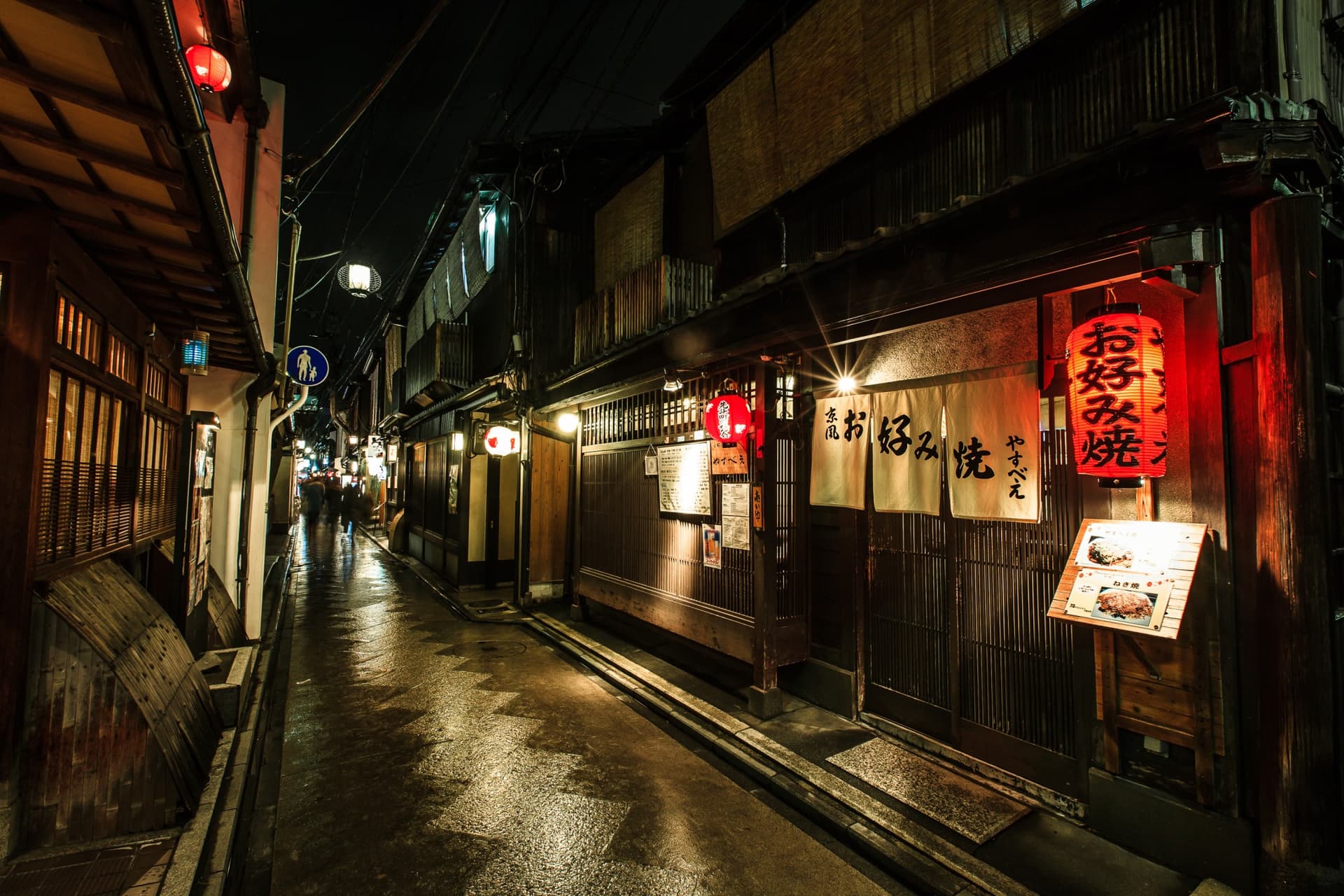
Historic pedestrian alley in Kyoto, Pontocho brings together traditional wooden houses, geiko theater and restaurants along the Kamo River.
Pontocho is a pedestrian alley located in the heart of Kyoto, nestled between Shijo-dori and Sanjo-dori avenues along the western bank of the Kamo River. Narrow and paved, lined with wooden houses, it concentrates a significant part of the city's historic nightlife and offers a striking contrast with the neighboring commercial streets.
Why visit Pontocho?
Pontocho compresses within a few hundred meters a rare architectural and cultural heritage unique to Kyoto: facades of machiya (traditional wooden houses), paper lanterns, a theater dedicated to the arts of geikos, and restaurants established for generations. No motorized vehicles are allowed, which preserves its atmosphere and enables a leisurely stroll, particularly in the evening when lanterns are illuminated.
The alley remains a major center of geiko culture (Kyoto's equivalent of geishas) and their apprentices maiko, whom you may spot as they make their way to an appointment at an ochaya (tea house).
History
The name Pontocho is an original blend: the Portuguese ponte (bridge), inherited from contacts with Portuguese missionaries and merchants in the 16th and 17th centuries, combined with the Japanese cho (street, block). The alley took shape from the 1670s onward, when the developed banks of the Kamo saw the growth of tea houses, theaters, and entertainment venues.
The district is closely linked to the origins of kabuki: the first performances of this theatrical art, attributed to dancer Okuni in the early 17th century, were held on the banks of the Kamo, in the immediate vicinity of present-day Pontocho. The neighborhood has retained a strong theatrical identity, still embodied today by the Pontocho Kaburenjo theater.
What to see and do
An architectural stroll
The alley can be walked in about ten minutes, but deserves a slower pace to observe the details: noren (entrance curtains), carved wooden signs, latticed facades. Pontocho's symbol, a plover bird (chidori), appears on numerous lanterns and plaques.
Pontocho Kaburenjo Theater
Built to host performances by the neighborhood's geikos and maiko, this theater programs each May the Kamogawa Odori, a traditional dance spectacular whose first edition dates back to 1872. Tickets should be reserved in advance with the theater.
Gastronomy
Pontocho boasts a high density of restaurants, from yakitori counters to refined kaiseki dining (multi-course haute cuisine). A local seasonal specialty to try: hamo (pike conger), an emblematic summer fish of Kyoto, often served in broth or tempura. In summer, several establishments set up elevated terraces above the Kamo, called yuka or kawadoko, a tradition unique to Kyoto.
Reservations are highly recommended, especially on weekends and during peak season.
When to visit
Pontocho can be visited year-round, but certain periods are particularly noteworthy:
- May: Kamogawa Odori performances at Pontocho Kaburenjo theater.
- May to September: yuka terraces above the Kamo River.
- Year-round, in the evening: the alley comes into its own at dusk, when lanterns are lit.
Crowds are notable during peak tourist season (April for cherry blossoms, November for autumn foliage) and weekends.
Practical information
- Access: pedestrian alley, free access 24/7.
- Fee: free for strolling; variable budget for dining (from affordable counters to high-end kaiseki).
- Visit duration: allow 30 minutes for a walk, one to two hours including a meal or drink.
- Tip: prefer late afternoon or evening for the best atmosphere; avoid photographing geikos and maiko without permission, as some sections of the alley explicitly prohibit it.
How to get there
From Kyoto Station, several bus lines serve the Shijo Kawaramachi stop, a few minutes' walk from Pontocho's south entrance; check the current line numbers on-site or via a transport app. The subway is also an option: Sanjo Keihan station (Keihan Line) or Kyoto Shiyakusho-mae station (Tozai Line) are within walking distance.
Nearby
- The Gion district, another major center of geiko culture, on the east bank of the Kamo.
- Nishiki Market, a few minutes west, for Kyoto gastronomy.
- The Kamo riverbanks, ideal for strolling.
- Nanzen-ji Temple and Mount Arashiyama, to incorporate into a broader Kyoto stay.
Frequently asked questions
Frequently asked questions
Planning your trip
Pontocho fits naturally into a Kyoto stay combining heritage, gastronomy, and living culture. To build a customized itinerary, consult our suggestions for travel to Japan.
Nearby
Interested in this visit?
We can include it in your personalised itinerary.