Shibu Onsen
Shibu Onsen
A thousand-year-old thermal village in Nagano prefecture, Shibu Onsen lines wooden ryokans and nine public baths at the foot of the Japanese Alps.
Shibu Onsen is a thermal village in the municipality of Yamanouchi, in Nagano prefecture. Renowned for its nine public baths fed by natural hot springs and its alignment of wooden ryokans, it retains the appearance of the Taishō and Shōwa eras—a rarity in contemporary Japan.
Why visit Shibu Onsen
Three elements distinguish Shibu Onsen from other thermal villages in the country. First, its nine sotoyu, public thermal sources accessible to ryokan guests via a communal key provided upon arrival. Second, its dark wooden architecture, paved alleyways, and stone bridges inherited from the early twentieth century. Finally, its location: just a few kilometres from the Jigokudani Monkey Park and the Shiga Kōgen ski resort, the village is an ideal base for exploring northern Nagano.
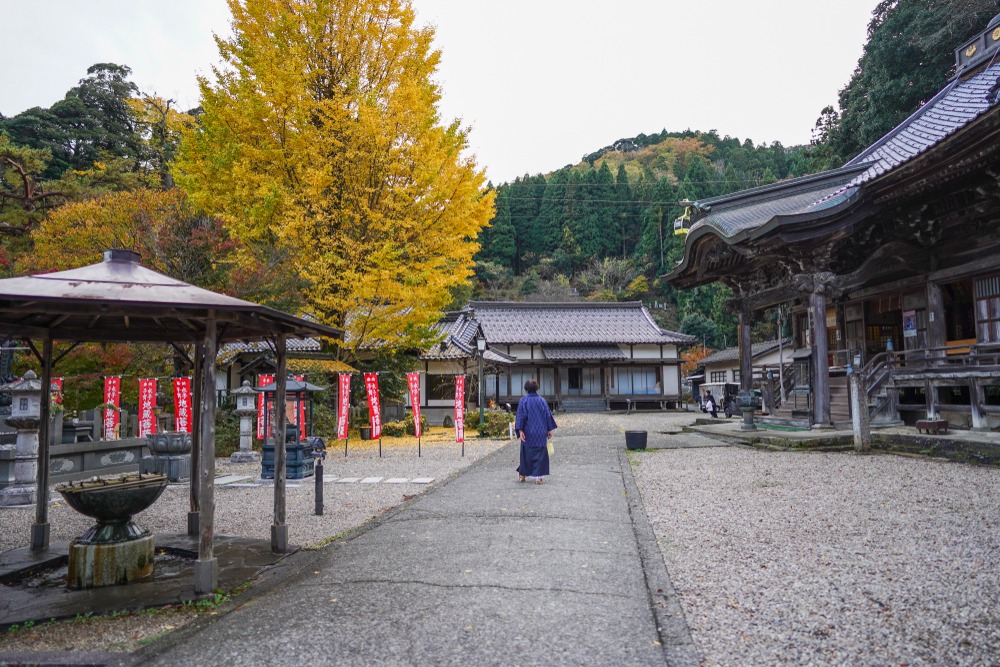
The atmosphere remains that of a sleepy pilgrimage town: minimal traffic, guests in yukata wandering between the baths, wisps of sulphur drifting through narrow streets.
History
The origins of Shibu Onsen date back more than a thousand years. The village developed as a stopping point on the route leading to Zenkō-ji temple in Nagano, one of Buddhism's great pilgrimage sites in Japan. Travellers would pause there to rest and purify themselves in the hot waters before continuing their journey.
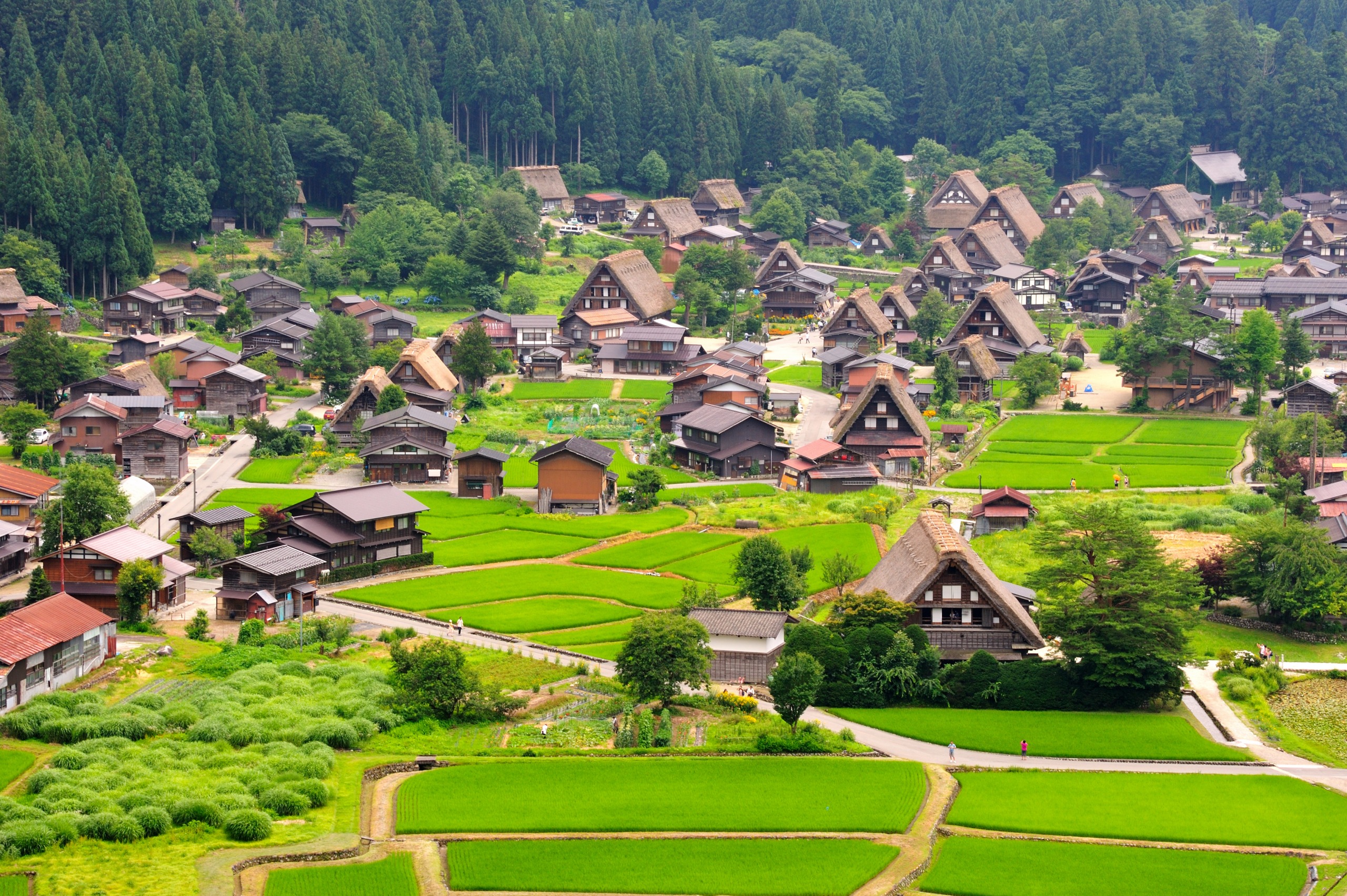
Over the centuries, ryokans were built around the springs, welcoming both pilgrims and passing travellers. Most of the current buildings date from the Taishō (1912–1926) and Shōwa (1926–1989) eras, which explains the visual consistency of the village centre. Several inns have been run by the same families for generations.
What to see and do
The tour of nine sotoyu (jūnyoku)
The nine public baths in the village are the main attraction. Each bears its own name and has water with slightly different properties—varying in mineral composition and temperature. Ryokan guests receive a key that opens eight of the nine bathhouses; the ninth, the Ō-yu, is typically accessible to all visitors staying in the village.
The tradition involves completing the jūnyoku, the tour of nine baths, by having a small towel stamped at each stop. Once complete, the towel is said to bring good fortune and carry the bather's wishes (health, longevity, family harmony). It is as much a playful ritual as a thermal experience, structuring a full day or half-day at Shibu.
Alleyways and architecture
Beyond the baths, the pedestrian centre warrants a leisurely stroll. Darkened wooden façades, lanterns, small Shintō shrines tucked away, stone bridges: the whole ensemble can be explored in about an hour.
Local flavours
- Sake from Shibu's local brewery, best enjoyed in the evening.
- Manju, small pastries filled with red bean paste, a speciality of the village.
- Eggs boiled in spring water, sold at certain shops.
Practical information
- Bath access: open during the day and early evening (typically 6am–10pm). The communal key is provided by your ryokan.
- Onsen etiquette: rinse thoroughly before entering the bath, do not bring a towel into the water, keep noise to a minimum.
- Tattoos: Shibu's sotoyu are historically more tolerant than most Japanese onsen, but confirm the policy with your accommodation.
- Yukata: ryokans provide a yukata and geta sandals, to be worn in the streets between baths.
- Recommended duration: one night minimum; two nights to combine the sotoyu, monkey park, and surrounding areas.
- Budget: ryokan stay with half-board, mid-to-upper range depending on season.
When to visit
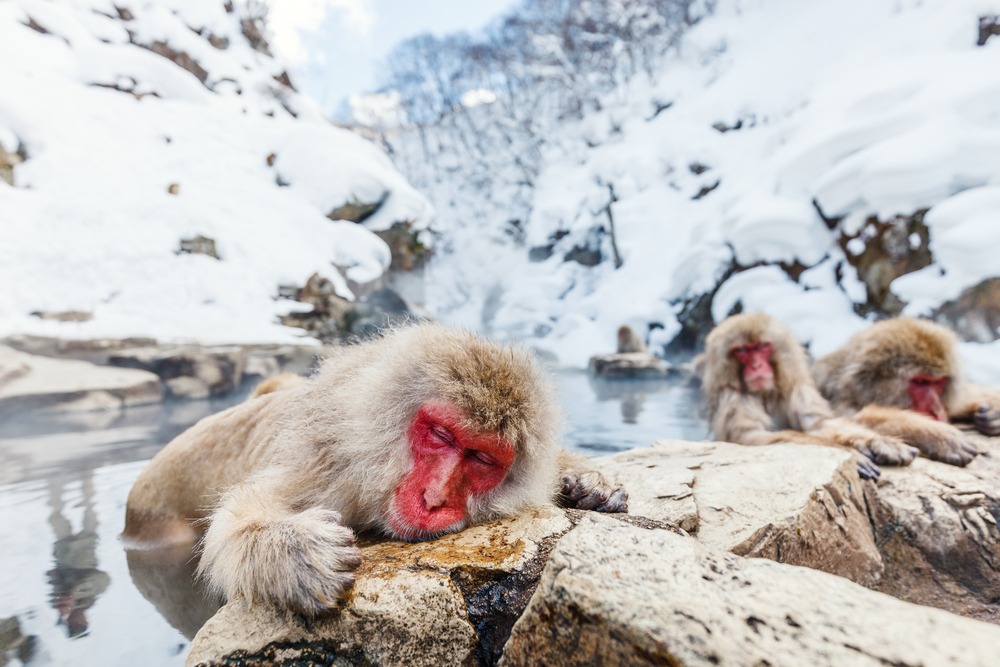
Shibu Onsen can be visited year-round, though each season has its appeal. Winter (December to March) is the most popular period: snow on rooftops, Japanese macaques bathing in Jigokudani's springs, skiing at Shiga Kōgen. It is also peak season, so book well in advance. Spring and autumn offer mild temperatures and striking colours (cherry blossoms in April, maples in October–November) with fewer crowds. Summer is quieter, ideal for hiking in the surrounding mountains, though the very hot baths can be demanding.
How to get there
From Tokyo, the journey happens in two stages: Shinkansen to Nagano (approximately 1.5 hours), then the Nagaden line to Yudanaka station, the terminus, in 45 minutes to 1 hour depending on the service (express or local). From Yudanaka, Shibu Onsen is reached on foot in about twenty minutes, or by shuttle arranged by some ryokans upon reservation.
By car, the village is about fifteen minutes from Shinshū-Nakano IC interchange on the Jōshin-etsu expressway.
What to see nearby
- Jigokudani Monkey Park: about thirty minutes by car or bus, famous for its macaques bathing in the springs.
- Yudanaka Onsen: neighbouring thermal village, more modern, twenty minutes on foot.
- Shiga Kōgen: major ski resort and high-altitude hiking area, about thirty minutes by car.
- Hida Takayama: another historic mountain town to combine on an itinerary through the Japanese Alps.
- Kamikōchi: spectacular alpine valley in the same region.
Frequently asked questions
Frequently asked questions
Plan your trip
Shibu Onsen fits naturally into an itinerary through the Japanese Alps or as a complement to a stay in Tokyo and Kyoto. To build your route, explore our Japan travel suggestions.
Interested in this visit?
We can include it in your personalised itinerary.