The Yamanote Circular Line
The Yamanote Circular Line
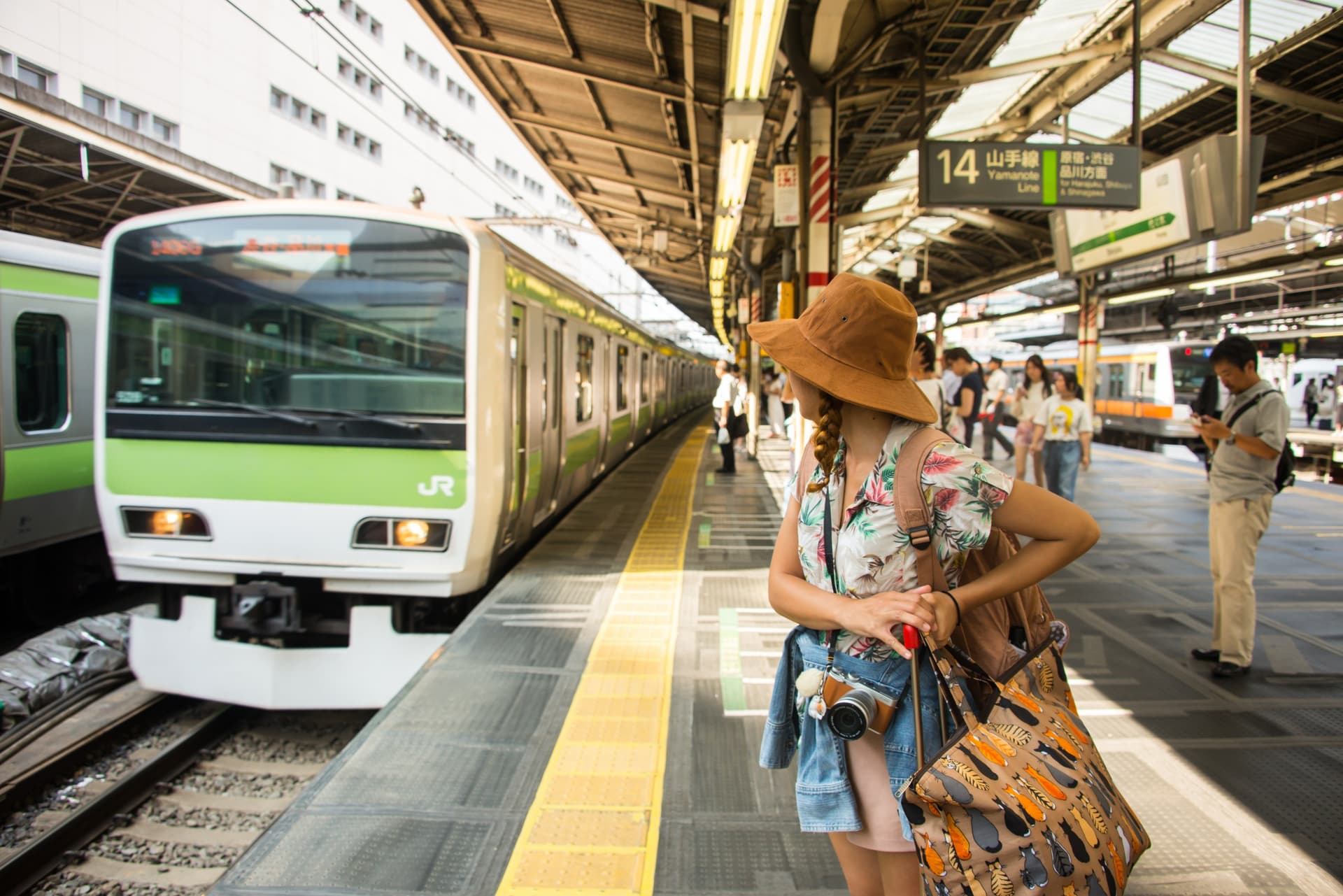
A 34.5 km railway loop operated by JR East, the Yamanote connects 29 major stations in Tokyo, from Shinjuku to Ueno via Shibuya.
The Yamanote Line (山手線, "line of the mountain side") is an elevated 34.5 km railway loop operated by East Japan Railway Company (JR East). With its 29 numbered stations, it traces the perimeter of central Tokyo and links the capital's main districts. For a traveller, it's the backbone of the urban network: a single ticket is all you need to move between Shinjuku, Harajuku, Shibuya, Tokyo, Akihabara and Ueno.
Why take the Yamanote to explore Tokyo
The Yamanote is arguably the most useful line for a first visit to Tokyo, for three practical reasons:
- Coverage of major districts. In one loop, you access the city's tourist, shopping and cultural hubs without changing lines.
- Extremely high frequency. A train arrives every 2 to 4 minutes during the day, so there's no need to plan around schedules.
- Included in the JR Pass. If you travel with a Japan Rail Pass, the Yamanote is fully covered, unlike Tokyo Metro and Toei subway lines.
A complete loop of the circle takes approximately 1 hour, making it a useful mental reference point for understanding Tokyo's geography.
History of the line
The Yamanote was not built all at once: it took four decades to develop in stages.
- 1885: opening of the first section between Shinagawa and Akabane, originally designed to link freight lines in western and northern Tokyo.
- 1903: northern extension between Ikebukuro and Tabata.
- 1909: connection of the two sections, combined service launched with the Chuo and Keihin-Tohoku lines between Nakano and Tokyo.
- 1925: the north-south link between Kanda and Ueno closes the loop and converts the Yamanote to continuous circular service.
- 1971: integration of Nishi-Nippori station, bringing the network to 29 stations.
- 2020: opening of Takanawa Gateway station between Shinagawa and Tamachi, the first new station in nearly half a century.
As for rolling stock, older trains have been progressively replaced by the E235 Series, equipped with information displays and more efficient motorisation.
What to see at the main stations
All 29 stations on the Yamanote are not equally interesting from a tourist perspective. Here are the most useful stops for a traveller, in order around the loop.
Shinjuku
Administrative and commercial hub of north-west Tokyo. Within walking distance: the Shinjuku Gyoen National Garden, free observation decks in the Metropolitan Government Building, and the Kabukicho district. The nearby Shin-Okubo station serves Tokyo's Korean neighbourhood, lively in the evenings.
Yoyogi and Harajuku
Yoyogi overlooks the park of the same name and the northern entrance to Meiji Shrine. Harajuku is the direct stop for Meiji-jingu Shrine, Yoyogi Park and the shopping street Takeshita-dori, the heart of Japanese youth fashion.
Shibuya
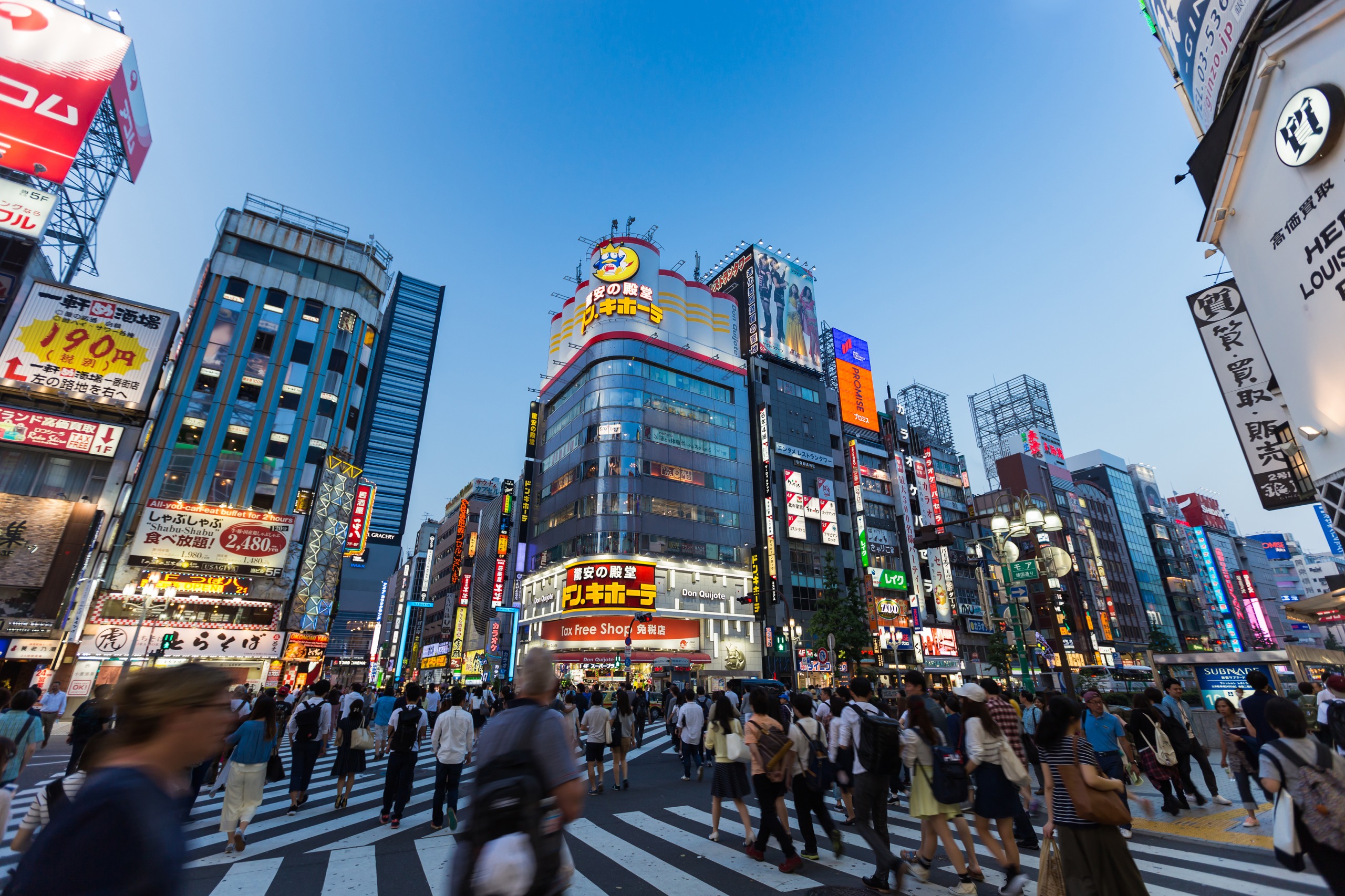
Known for its pedestrian crossing, Shibuya is packed with department stores, galleries (Bunkamura cultural centre) and the statue of Hachiko in front of the station.
Meguro
A quieter neighbourhood. The Meguro Canal is one of Tokyo's most photographed spots during cherry blossom season (late March to early April). Nearby, the Teien Art Museum occupies a former Art Deco royal residence.
Tokyo
The central station serves Marunouchi, the country's main business district, and provides access to the Imperial Palace and East Garden. The restored brick façade of the station is worth viewing in the evening.
Akihabara
Electronics and pop culture hub. Major retailers (Akky, Yamada Denki, Sofmap) sit alongside manga shops, video game outlets and figurine stores.
Ueno
The cultural destination par excellence. Around the station: Ueno Park, Ueno Zoo, the Tokyo National Museum, the Tokyo Metropolitan Art Museum and several small shrines.
Practical information
- Direction of travel. Trains run continuously in both directions: sotomawari (outer, clockwise) and uchimawari (inner, counter-clockwise). No station is an obligatory terminus.
- Frequency. 2 to 4 minutes during the day, 4 to 6 minutes in the evening.
- Fares. Single tickets cost a few hundred yen depending on distance, or journeys are deducted from Suica and Pasmo IC cards. The Japan Rail Pass covers the line in full.
- First and last trains. Service runs from around 4:30 am to 1:00 am depending on the station.
- Connections. The Yamanote intersects the Chuo, Keihin-Tohoku, Sobu and Saikyo lines, as well as most Tokyo Metro and Toei subway lines.
How to access the line
From Narita Airport, the Narita Express (N'EX) reaches Tokyo, Shinagawa or Shinjuku stations, all located on the Yamanote. From Haneda, the monorail connects to Hamamatsucho, a Yamanote station. Once in the city, you can board at any station with a recharged IC card from a vending machine, or an activated Japan Rail Pass. To plan your journeys, Google Maps or Navitime apps provide reliable real-time itineraries.
Nearby and other must-sees
The Yamanote is the ideal tool for exploring Tokyo, but other sites across Japan are worth a day trip or additional stop:
- Mount Arashiyama, west of Kyoto, for its bamboo groves.
- Himeji Castle, the finest example of a Japanese fortress.
- Higashiyama district, in Kyoto, for its traditional streets.
- Eigamura Park, a studio-park dedicated to samurai cinema.
FAQ
Frequently asked questions
Approximately 60 minutes to complete the 34.5 km loop across all 29 stations without getting off. This is a useful reference point for gauging distances in Tokyo.
Yes, in full. Since it's a JR East line, the JR Pass gives unlimited access to all stations on the loop for the duration of the pass's validity.
Service starts around 4:30 am and stops around 1:00 am depending on the station. The line does not operate at night, unlike certain taxis and night buses.
No. A rechargeable IC card (Suica or Pasmo) automatically deducts the fare as you pass through the gates. This is the most convenient option if you don't have a JR Pass.
It depends on your interests: Shinjuku for urban life and skyscrapers, Ueno for museums, Tokyo for the Imperial Palace and Marunouchi, Shibuya for fashion and excitement.
Plan your trip
The Yamanote Line is just one gateway to the country's riches. To build an itinerary combining Tokyo, Kyoto and more rural regions, explore our tailor-made trips to Japan.
Interested in this visit?
We can include it in your personalised itinerary.