Izushi
Izushi
A former castle town nicknamed the "Little Kyoto of Tajima," Izushi blends samurai heritage, legendary sobas, and Zen meditation—just a short distance from Kinosaki Onsen.
Lords, samurai, and wealthy merchants have left Izushi with a rich heritage spanning the centuries. Don't miss the castle, nor the oldest wooden theatre in the Kansai region, followed by explorations of traditional craft workshops.
History
Izushi is a historic city whose name appears in the "Kojiki" (Records of Ancient Matters) and "Nihongi" (Chronicles of Japan). Legend has it that the Prince of Tajima, Amenohiboko, developed the locality around the 3rd or 4th century.
The Yamana clan occupied the first Izushi Castle for more than two centuries during the Motomachi period (1336-1573). Toyotomi Hideyoshi, Japan's second great unifier after Oda Nobunaga, stormed the site in 1569. Subsequently, Yamana Suketoyo had another castle built on Mount Ariko, but Hideyoshi besieged it once more in 1580.
In 1604, Koide Yoshihide erected a new castle at Izushi, around which the modern town grew. In the years that followed, Izushi earned the epithet "Little Kyoto of Tajima" due to its grid-patterned street layout.
Discovering Izushi
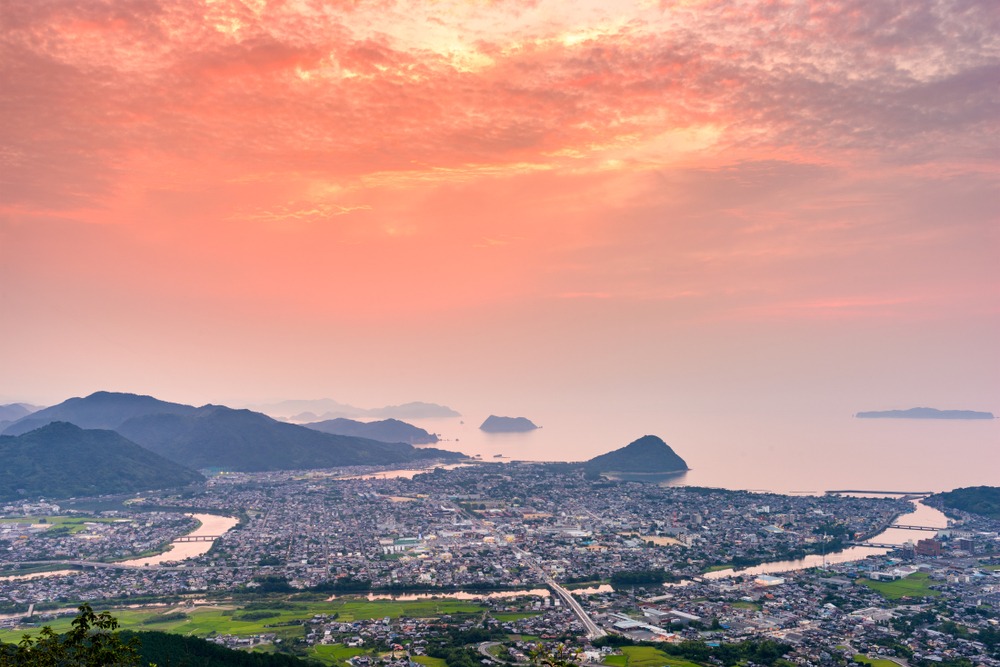
Izushi appeals to castle enthusiasts and Japan history devotees. Upon arriving, the first thing you'll notice is the Izushi Castle ruins built by Koide Yoshihide atop a hill. From the summit, you'll enjoy a stunning view over Izushi. Nearby, the wooden bridge once crossed by samurai entering the domain has been faithfully restored. Close to the ruins, a stone staircase lined with vermillion torii gates leads to the Arikoyama Shrine.
Step into old Japan by exploring Izushi's town centre
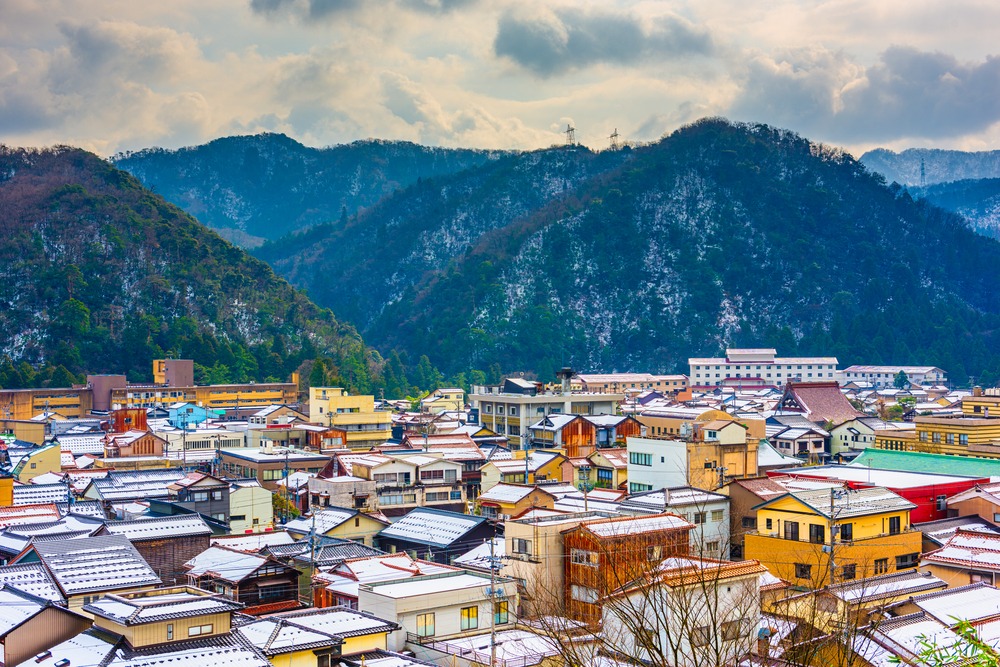
In the heart of town, the Sinkoro Clock Tower stands as an architectural landmark. Its tick-tock has rhythmed daily life since its creation in 1781. Don't overlook the residence of samurai Sengoku Sakyo, who played a decisive role during the Sengoku period uprising, or the Izushi-shiryokan, a former silk merchant's home from the Meiji era, now converted into a museum housing important historical documents. Another must-see historic monument in Izushi, the Eirakukan was founded in 1901 and boasts being the oldest wooden theatre in the Kansai region. Restored in 2008, the venue now hosts traditional Japanese performing arts and opens its backstage areas (the naraku and mawaributai) to visitors.
Discover culinary traditions
Izushi is home to around fifty restaurants where you can savour the famous Japanese sobas. In the town, they're served in sets of five on small plates. The noodles are enjoyed with a special sauce, "dashi" (a broth made from seaweed and fish). Local chefs may also offer soy sauce, wasabi, raw egg, chopped scallion, grated mountain yam, or daikon oroshi (grated white radish) as accompaniments.
Izushi's streets hide sake breweries dating back 250 years. Many remain in use today, preserving and selling the local sake called rakuraku-zuru. Don't hesitate to participate in a tasting to enhance your outings.
Experience Zazen (seated meditation)
Originating in India, the seated posture of Zazen helps regulate breathing during meditation. Leave daily bustle behind and embrace this beneficial practice alongside Zen Buddhist devotees at Sukyōji Temple. At the end of sessions, you'll be offered a special vegetarian meal and traditional Japanese sweets. Zazen participation is limited to 10 people per day and requires advance reservation.
Sukyōji Temple was built in 1392. It was in this serene setting that the castle's ruling family engaged in worship. It's also the birthplace of pickled daikon radish, or "Takuan," a recipe invented by Buddhist monk Takuan Soho, who gave the temple its alternate name, "Temple Takuan." Takuan Soho was moreover the master of the legendary swordsman Musashi Miyamoto.
Other workshops available in Izushi include learning Izushi-yaki porcelain painting, soba noodle preparation, leather bag crafting, and silk crêpe dyeing.
When to visit Izushi?
Izushi enjoys a humid subtropical climate with a poorly marked dry season. This climate type is classified as Cfa on the Köppen-Geiger scale. Throughout the year, the region receives substantial rainfall, averaging 1,899.9 mm. The average annual temperature stands at 14.4°C.
Izushi is charming year-round, but the finest views come in spring, when cherry blossoms dot the castle ruins, and autumn, when blazing foliage mingles with the brilliant vermillion of the torii gates.
Visit Izushi during festivals
In spring, the Izushi Cherry Blossom Festival is the most popular event, followed by the Izushi Soba Restoration Contest and the Hatsuuma Matsuri at Arikoyama Shrine. Summer brings the Firefly Festival, the Atago Fire Festival, and the Bon Dance Festival. Autumn welcomes the Fighting Danjiri Festival, featuring a feudal lord's procession, as well as the New Soba Festival.
Izushi is served by the "Zentan Bus" public bus service from Toyooka and Kinosaki Onsen JR stations, located approximately 1 hour and 30 minutes away respectively.
Izushi is an easy town to explore on foot. To enhance your walks and fully immerse yourself in the town's traditional atmosphere, consider renting a kimono from the many dedicated kiosks throughout the city.
What to do in Izushi?
- Explore the Izushi Castle ruins and gardens
- Attend a traditional performance at Eirakukan Theatre
- Discover soba noodle craftsmanship and various recipes
- Experience the benefits of zazen seated meditation at Sukyōji Temple
- Join the Cherry Blossom Festival in spring, and more
Want to discover this destination?
Our local advisors design your tailor-made trip.