Nikko
Nikko
At the foot of Mount Nantai, Nikko brings together UNESCO shrines, thousand-year-old cedar forests and sulfurous hot springs — spiritual Japon just two hours from Tokyo.
Nikko's appeal lies in its setting at the edge of forests and mountains, but above all in its status as home to the mausoleum of the celebrated shogun Tokugawa Ieyasu. This charming small town nestles at the foot of Mount Nantai in Tochigi Prefecture, just two hours by train from Tokyo. It's a haven of magnificent shrines and temples listed as UNESCO World Heritage sites. With its numerous hot springs, this region also forms an oasis of relaxation.
History
Monk Shodo Shonin established his spiritual retreat in a pine forest at Nikko in 766. From then on, the site emerged as a sacred center of Buddhism in Japan, alongside Mount Koya-San.
Nearly a millennium later, in 1636, during the Edo period, the mausoleum of shogun Ieyasu, the last of Japan's three great unifiers, was built at Nikko at the behest of the Tokugawa family. The coexistence of Buddhist temples and Shinto shrines thus made the city a symbol of Japanese syncretism.
Etymologically, Nikko means "Sunlight."
What to Do in Nikko?
Visit Its 3 Main Sites
Three UNESCO World Heritage sites are essential when exploring Nikko:
Toshogu Shinto and Buddhist Shrine
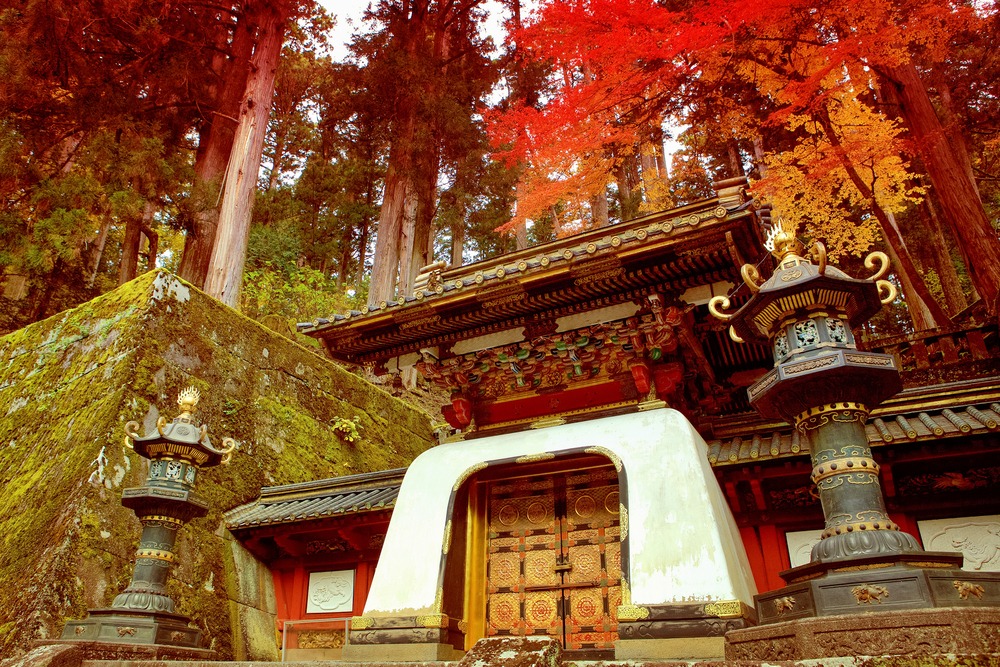
Toshogu Shrine is a masterpiece of Shinto-Buddhist architecture. It is here that you'll find the mausoleum of Tokugawa Ieyasu. You'll likely be amazed by its exuberant artistic details and rich ornamentation. Among its points of interest is the famous Yomeimon Gate, Japan's most ornately decorated gateway, and the celebrated Three Wise Monkeys, statues that embody the saying "See no evil, hear no evil, speak no evil."
Rinnoji Buddhist Temple
Rinnoji Temple was founded by Shodo Shonin in the 8th century. You'll be mesmerized by three magnificent gilded Buddha statues. The Shoyoen garden, across from the main building, will also delight you if you appreciate traditional Japanese landscapes.
Futarasan Shrine
Futarasan Shrine, also founded by Shodo Shonin in the 8th century, is dedicated to a deity of Nikko's sacred mountains. It's known for its three main shrines representing Nikko's mountains. The site embodies harmony between Shinto beliefs and veneration of nature.
Capture Stunning Photos at Shinkyo Bridge
Shinkyo Bridge is part of Futarasan Shrine. This sacred monument dates back to the Edo period, when only shoguns and imperial court messengers were permitted to cross it. This is no longer the case today—everyone can cross. It's an excellent photography spot.
Discover Lake Chuzenji and Its Surroundings
Lake Chuzenji, nestled at the foot of the majestic Mount Nantai, is an exceptional site to explore during your visit to Nikko. Its deep blue waters provide an ideal setting for various relaxing and water activities, such as canoeing. For hiking enthusiasts, trails around the lake allow you to fully immerse yourself in the surrounding nature. The breathtaking views include vistas of Kegon Falls, nearly 100 meters high. In autumn, the vibrant foliage transforms the landscape into a living masterpiece. Walks around the lake during this season promise stunning views, perfect for photography lovers.
Relax in Hot Springs
Nikko is renowned for its hot spring sources, which benefit from a fabulous natural setting. Among the region's most famous onsens is Yumoto Onsen, located near Lake Yunoko, in the heart of the mountains. This thermal station has been known for over 1,200 years for its sulfur-rich waters, which help relieve muscle pain and skin conditions.
Another popular destination in the Nikko area is Kinugawa Onsen, situated along the Kinugawa River. Its baths offer views of the magnificent surrounding gorges.
Experience Feudal Japan at Edo Wonderland
Edo Wonderland is an immersive theme park that transports visitors to the Edo era. This reconstructed village offers an authentic experience with traditional buildings, bustling streets and live performances. Tourists can participate in activities such as dressing as samurai, ninja or geisha, attending martial arts demonstrations and discovering ancient crafts. It's an interesting attraction for deepening your knowledge of feudal Japanese culture and traditions.
Explore Kanmangafuchi Gorge
Kanmangafuchi Gorge spans a few hundred meters along the Daiya River. The site belongs to the Kanman historic trail. The Jiun-ji Temple, which houses 74 Buddhist statues in alignment, is located here.
Taste Local Cuisine
During your exploration of Nikko, be sure to sample local culinary specialties, such as yuba, a dish made from soy milk. This delicacy is a key element of Buddhist cuisine, often served in carefully seasoned vegetarian dishes.
Restaurants where you can enjoy yuba dishes in various forms include Nikko Yubamaki Zen, near Shinkyo Bridge, and Gyoshintei, nestled in the woods, ideal for savoring shojin ryori cuisine, entirely vegetarian.
Soba noodles, made with local buckwheat, are also very popular in Nikko. Similarly, Ageyuba Manju, a sweet treat made from yuba and red bean paste, fried tempura-style, delights many food lovers.
Practical Information
When to Visit Nikko?
Nikko spans elevations between 300 and 2,000 meters. It enjoys a warm temperate climate, with an average temperature of 12°C in its urban area and 7°C in the higher elevations. Summer, with more comfortable temperatures ideal for outdoor activities, is the best time to explore it.
How Many Days to Visit Nikko?
You can visit Nikko's main attractions in a full day. However, to explore the region more thoroughly, it's recommended to plan 2 or 3 days.
How to Reach Nikko from Tokyo?
Nikko is connected to Tokyo – Asakusa Station by trains operated by the Tobu railway company. The Express SPACIA line makes the journey in just 1 hour and 50 minutes. To access the Limited Express service, you must purchase a ticket from the Tobu Tourist Information Center at Asakusa Station, or from Tobu Top Tours agencies.
Tobu buses depart from Nikko Station and pass through all the city's tourist attractions and surroundings.
The Nikko Pass
It's worth noting that the Tobu company offers two discounted passes to visit Nikko from Tokyo. The Nikko World Heritage Area Pass, valid for 2 days, allows a round trip from Tokyo, unlimited bus travel in central Nikko and one train trip to Kinugawa Onsen. The Nikko All Area Pass additionally includes Okunikko and is valid for 4 days.
Nikko passes can be purchased at the tourist information center or ticket office at Tobu Asakusa Station. They can also be purchased online.
Nikko or Kamakura?
With its mountains, temples and hot springs, Nikko is ideal for those who love nature and historic sites. Kamakura, closer to Tokyo, is perfect for a day trip to discover Zen temples, beaches and the Great Buddha. Nikko is quieter and wilder, while Kamakura is more compact and accessible.
Nikko or Hakone?
Nikko owes its fame to its UNESCO World Heritage shrines and mountainous landscapes. Hakone attracts visitors with its views of Mount Fuji, its hot springs and Lake Ashi. Choose Hakone if you wish to relax in hot baths while admiring Fuji, and Nikko if you're more inclined toward culture and hiking.
Want to discover this destination?
Our local advisors design your tailor-made trip.