Okayama
Okayama
Between its striking black castle, the magnificent Korakuen Garden, and the legend of Momotaro, Okayama offers a compelling cultural stop along Japan's western Shinkansen corridor.
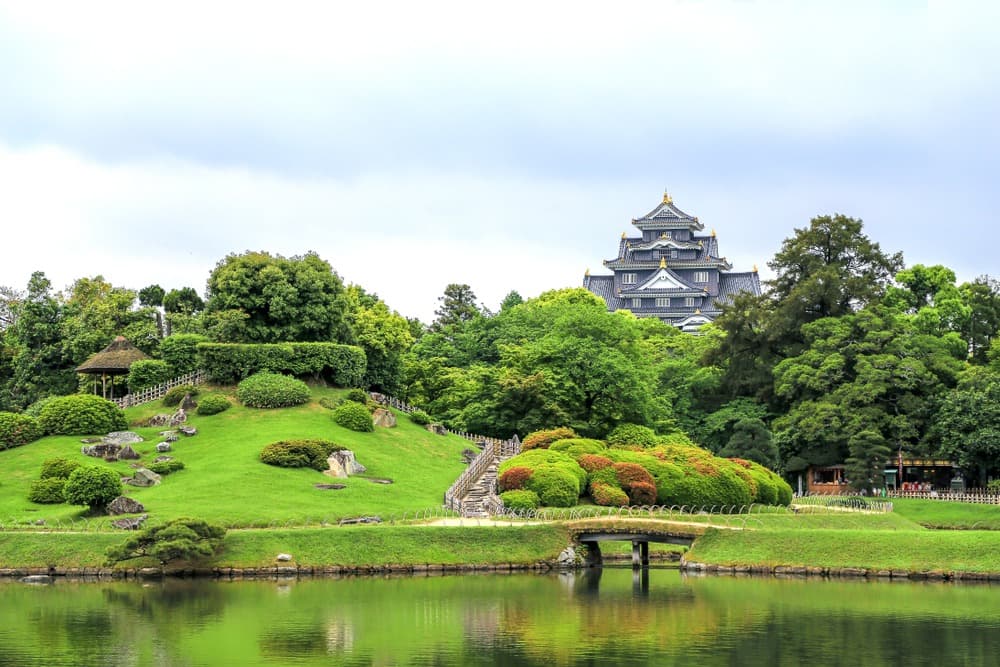
The city of Okayama, Okayama-shi in Japanese, is the capital of the prefecture of the same name, located in the Chūgoku region at the western edge of Japan's main island, Honshū. This coastal city's appeal stems largely from its castle, nicknamed "the Crow Castle" for its striking black exterior, and its garden, ranked among Japan's most picturesque traditional gardens. With a population of 714,678, Okayama sits strategically midway between Osaka and Hiroshima. It makes for a compelling stop when traveling to the latter destination. Don't hesitate to step off the Shinkansen or park your car to discover its magnificent attractions!
History
Okayama is historically one of Japan's most significant regions. It once belonged to the Kingdom of Kibi, which controlled much of western Japan's trade between Yamato and the kingdoms of the Korean Peninsula. Following Kibi's dissolution, Okayama was integrated into the province of Bizen.
Daimyo Ukita Naoie brought development to the region by constructing the Okayama Castle and establishing the city as capital in 1573. The Ukita's reign ended in 1600 after the Battle of Sekigahara. Hideaki Kobayakawa briefly administered the city for two years before his death. Ikeda Tadetsugu, one of the grandsons of Tokugawa Ieyasu, then took control of the territory. The Ikeda clan continued to develop Okayama through the early Meiji era in 1871. Between 1686 and 1700, they founded the Korakuen Garden.
Okayama suffered severe damage during World War II. The 1945 air raids devastated much of the city center and castle. By 1966, monuments and infrastructure were gradually restored.
The Legend of Momotaro
Okayama is associated with the celebrated Japanese legend of Momotaro, believed to have originated here during the Edo period (1603–1868). Throughout the city, you'll encounter the tale's protagonist and his companions depicted as statues and motifs at every turn.
The story tells of a childless woman who saw an enormous peach floating down a river while she washed clothes. She retrieved the fruit and showed it to her husband. Upon opening it, they discovered a child inside who told them he had been sent from heaven to be their son. The couple named him Momotaro. As he grew, the boy developed great strength but proved equally lazy. One day, villagers asked him to fight the demons on the island of Onigashima. Along the way, he befriended a talking dog, pheasant, and monkey. Together, the four defeated the malevolent beings, captured their leader, and claimed his treasure. Upon returning to the village, they were celebrated as heroes and lived the rest of their lives in prosperity and security.
What to Do in Okayama?
Admire Okayama Castle
Nestled in the city center, Okayama Castle stands in striking contrast to the famous white Himeji Castle with its dark facades. Constructed in 1597, it was largely destroyed during World War II bombing raids and reconstructed in 1966. The castle houses exhibitions on the region's history and pottery workshops. Its upper floors offer stunning views across Okayama and the Korakuen Garden.
Stroll Through Korakuen Garden
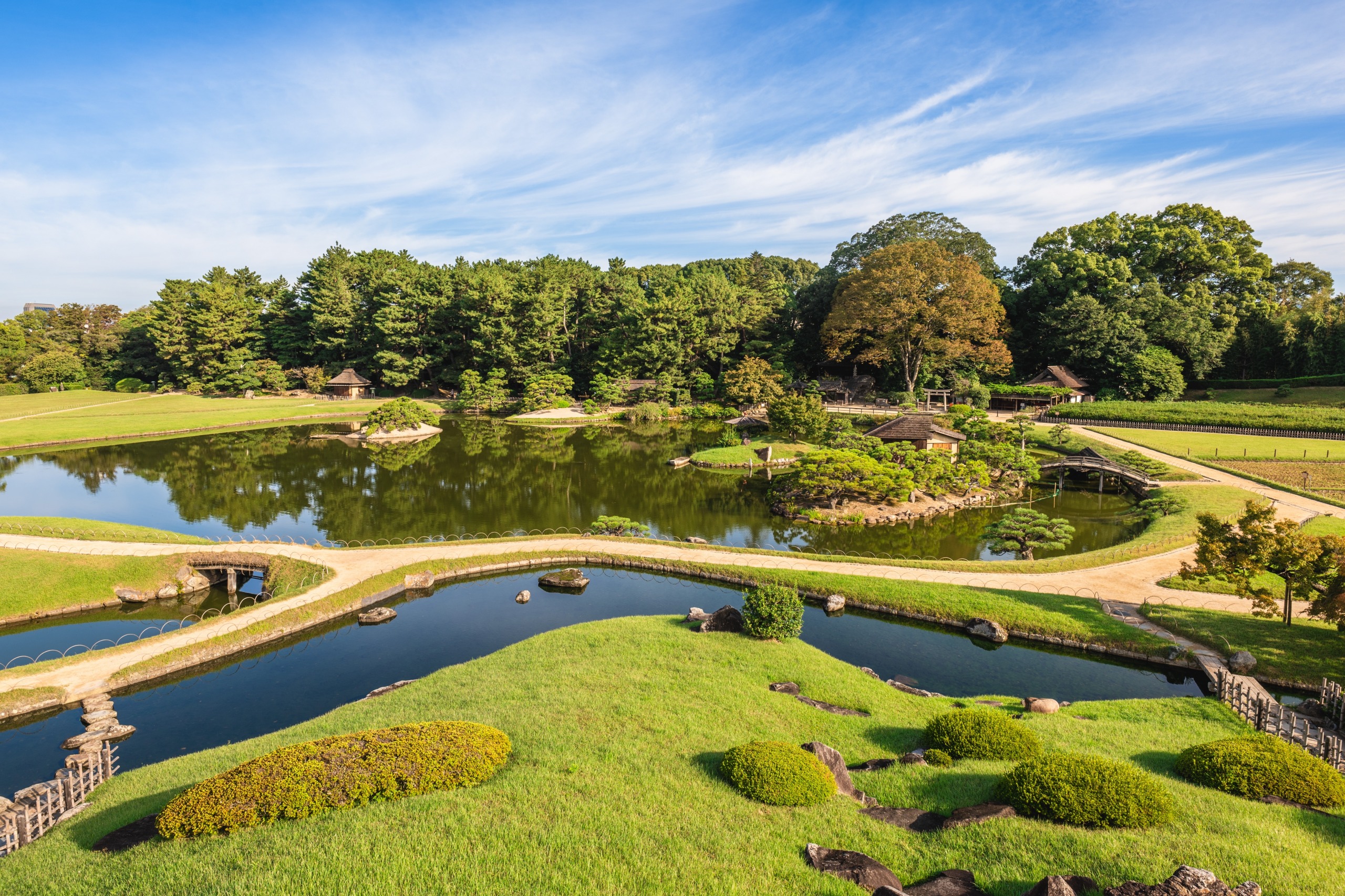
You'll find the magnificent Korakuen Garden near the Crow Castle. It's regarded as one of Japan's three most beautiful landscape gardens. A walk along its paths—winding past meticulously maintained lawns, rows of cherry trees, photogenic specimen trees, tea fields, streams, and ponds—is essential to any Okayama visit.
Visit the Okayama Prefectural Art Museum
The Okayama Prefectural Art Museum houses over 2,000 high-quality artworks related to the prefecture. You'll discover an abundance of classical calligraphic and pictorial works, Japanese paintings, Western-style Japanese paintings, craft objects, and sculptures.
Cycle the Kibi Trail
Bicycle enthusiasts will delight in the 17-km Kibiji Plain cycle path. The route offers genuine escape and traverses rice paddies. Along the way, cyclists can stop at various regional shrines, such as Kibitsu Shrine. Bicycles are available for rent at Soja and Bizen-ichinoyama stations.
Discover Bizen Pottery
Bizen, one of Japan's oldest and most prestigious ceramic traditions, is distinguished by its raw, rustic appearance and distinctive reddish-brown tone. What makes these wares so special is that they're never glazed and are fired in traditional kilns fueled by pine wood. In the village of Imbe, the historic heart of this craft, over one hundred studios and galleries line Sanyo Street. A simple stroll down this charming street, lined with beautiful traditional Japanese houses, is enough to immerse yourself in the potters' world.
Imbe is approximately 45 minutes by train from Okayama.
Make a Short Detour to Kurashiki
Kurashiki, often called the "little Venice of Japan", will enchant you with its willow-lined canals and historic district, Bikan. This quarter, a testament to feudal Japan, features restored warehouses now housing museums and restaurants. A boat ride along the canal offers a unique perspective on the city.
Kurashiki is located just 15 minutes from Okayama.
Appreciate Okayama's Peach Orchards
Peaches are a source of quiet pride for Okayama residents—you'll find them everywhere. The fruit isn't entirely Japanese but rather a hybrid with Chinese peaches introduced to the country in 1875. Each summer, visitors have the opportunity to visit Yoshii Farm and Tomomien Fruit Farm to participate in harvesting and enjoy fresh fruit on-site. Consider bringing back a basket of Okayama peaches as memorable souvenirs.
Practical Information
When to Visit Okayama-shi?
It depends on what you plan to do. While spring is perfect for viewing cherry blossoms along the Asahi River, autumn offers the ideal setting for exploring Korakuen Garden when the maples turn crimson. Summer is peak season for fruit.
The Okayama Station is connected by the JR Tokaido-Sanyo Shinkansen to Shin-Osaka and Tokyo. The city has an airport with connections to major Japanese destinations and Southeast Asian countries.
Two streetcar lines radiate through the city from JR Okayama Station. Extensive bus networks cover the area. Bicycles are quite popular among tourists, with numerous rental shops available.
Kobe or Okayama?
Kobe and Okayama each offer unique experiences. Kobe is known for its bustling port and panoramic views from Kobe Tower. Nature enthusiasts appreciate the hiking trails leading to Nunobiki Falls and the Nunobiki Herb Garden.
Okayama, by contrast, distinguishes itself through its rich cultural heritage, particularly the Korakuen Garden and the Crow Castle.
Want to discover this destination?
Our local advisors design your tailor-made trip.