Oshino
Oshino
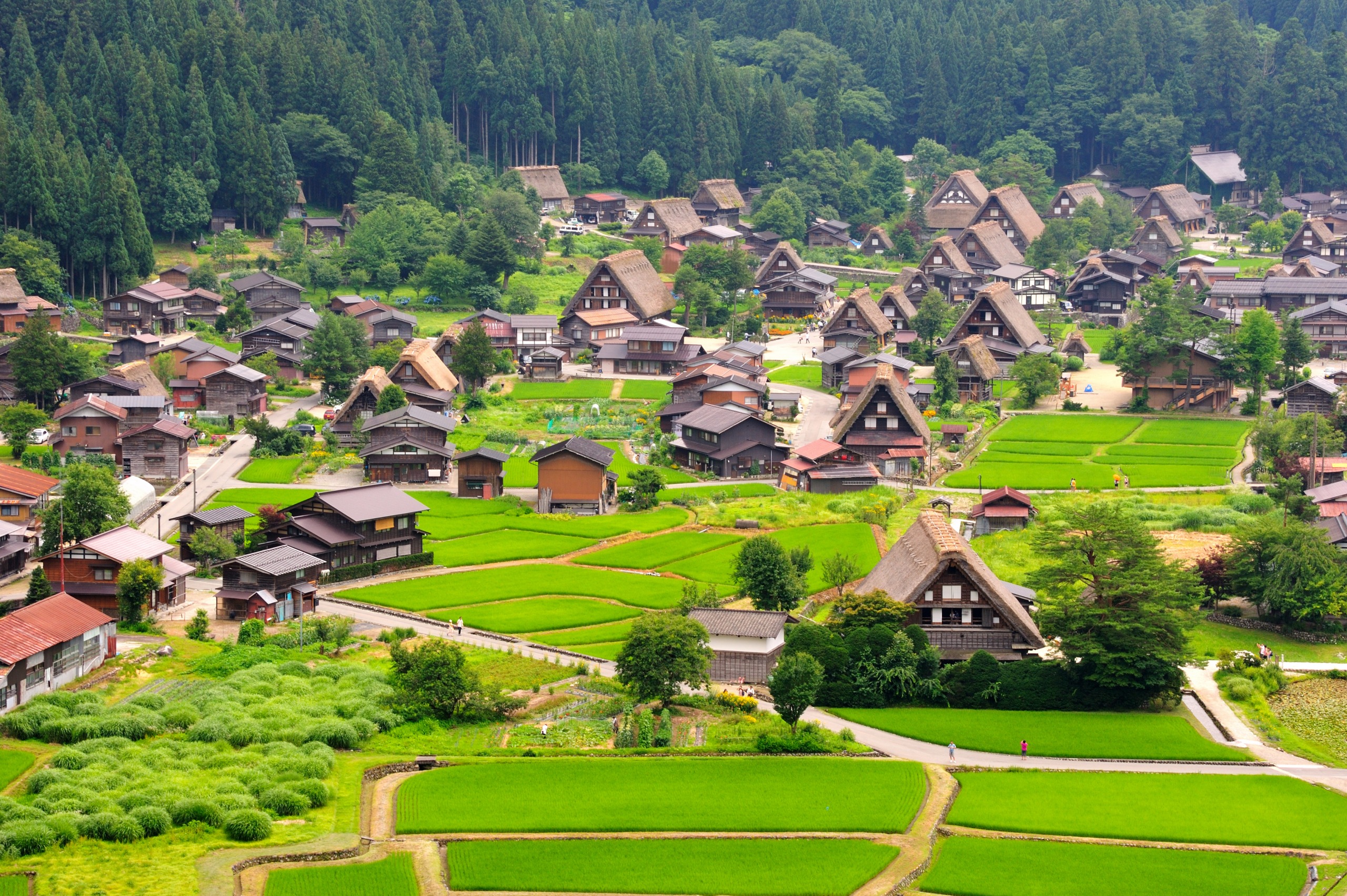
At the foot of Mount Fuji, Oshino Hakkai lines its thatched roofs around eight translucent ponds—rural Japon suspended between the Edo period and UNESCO.
This charming small town is nestled at the foot of Mount Fuji, in Yamanashi Prefecture, right in the heart of the Chubu region. Thatched-roof dwellings, water mills, silk shops, and traditional confectioneries and restaurants characterize Oshino Hakkai as a quintessential traditional Japanese village.
History
Approximately 800 years ago, Oshino Hakkai referred to a body of water known as the sixth lake of the region. Successive eruptions of Mount Fuji caused the lake to evaporate, ultimately giving rise to the village. Over time, the settlement took shape by forming eight freshwater basins. The name "Hakkai"—literally meaning "eight seas"—refers to the eight ponds found within Oshino.
In 1985, Oshino Hakkai was recognized among the "100 purest waters of the archipelago." In 2003, the village had a population of 8,507 residents. By 2012, that figure had grown to 8,731. Today, the local population is estimated at approximately 9,200 people.
Oshino Hakkai has inherited architectural practices from the Edo period. The village has been part of UNESCO's World Heritage since 2013.
What to Do in Oshino Hakkai?
Marvel at the Ponds
Spend memorable moments in the village of Oshino Hakkai! From the moment you arrive, the thatched roofs transport you to another world entirely. This village has weathered different eras with grace.
Yet what truly draws visitors to this place are its tranquil blue ponds. Pathways and bridges guide you to them and across them. A unique landscape unfolds: traditional dwellings with slowly turning water wheels, framed by Mount Fuji in the distance.
Named Deguchi, Okama, Sokonashi, Choushi, Waku, Nigori, Kagami, and Shoubu, Oshino Hakkai's eight basins each possess their own character. For instance, Deguchi, meaning "exit," sits right at the village's entrance, while Kagami, which reflects Mount Fuji, translates as "mirror." Most are fed by melted snow from Mount Fuji. Some are home to koi, ornamental fish prized in Japanese culture.
These lagoons are especially valued for the pristine quality of their water, sourced from natural snowmelt. The water filters through multiple layers of porous lava before flowing into the ponds. Historically, bathing in these basins was believed to bring health benefits. Today, the ponds remain a source of drinking water for residents. Don't hesitate to ask locals to help you fill your bottle. If you don't have one, inexpensive bottles are sold locally.
Visit the Hannoki Bayashi Shiryokan Museum
A charming open-air museum, the Hannoki Bayashi Shiryokan, sits on the shores of Oshino Hakkai's largest pond. For just 300 yen, you can step inside a traditional thatched-roof farmhouse displaying various agricultural tools and household items. Samurai weapons are also exhibited here.
Savor Local Specialties in Village Restaurants
You'll find numerous restaurants dotting the ponds' edges. Sample local culinary treasures such as filled tofu and kusamochi, a delicate pounded rice cake infused with herbs. Some establishments set up small outdoor grills that waft the savory aromas of roasted sweet potatoes and crispy rice crackers. These flavors will linger in your memory long after departure.
Browse the Souvenir Shops
Before you leave, be sure to explore the village souvenir shops. Numerous items directly connected to the site await your discovery.
Getting There
From Tokyo
From the Japanese capital, take a train bound for Kawaguchiko from Shinjuku, Shinagawa, or Tokyo Station. No transfers are required.
Once at Kawaguchiko Station
Upon arrival at Kawaguchiko Station, board a local bus heading toward Gotemba Station. Most buses on this route stop at Oshino-Hakkai.
Tourist Bus Tours
Alternatively, from Kawaguchiko Station, you can catch the Fujikko tourist bus or the Mount Fuji World Heritage Loop bus to reach the village. These vehicles circle the region's main attractions, including the Five Lakes area (Lakes Kawaguchiko, Fujiyoshida, Yamanakako, and Oshino Hakkai). A two-day unlimited pass is recommended if you plan to spend the night in the region.
Nearby Points of Interest
- Kitaguchi Hongu Fuji Sengen-Jinja Shrine
- Arakurayama Sengen Park
- Fuji-Q Highland Amusement Park
- Mount Fuji World Heritage Center
Want to discover this destination?
Our local advisors design your tailor-made trip.