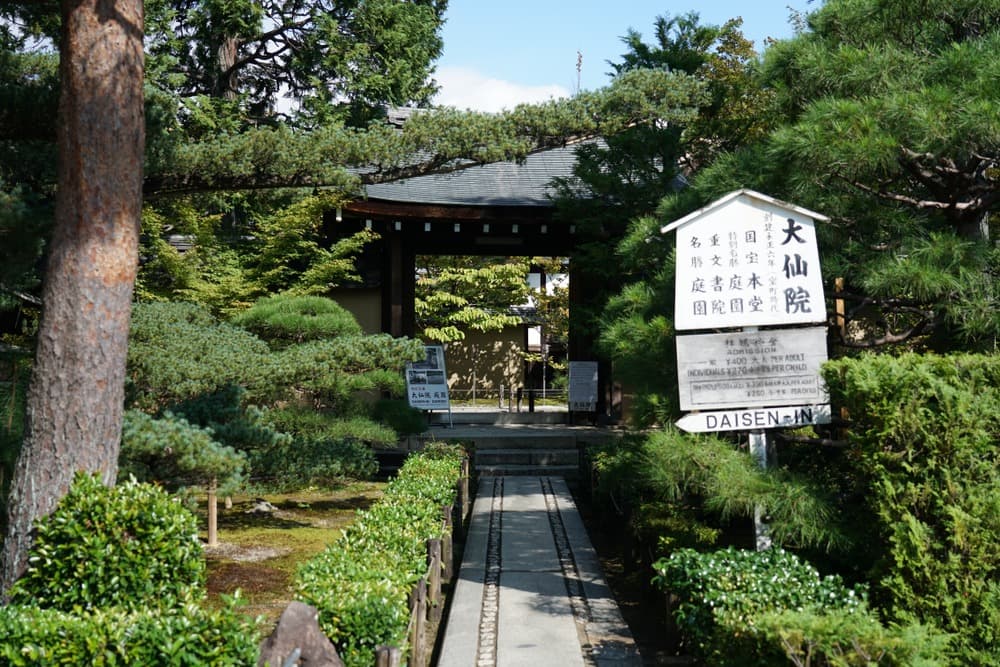
Daisen-in Zen Garden
Daisen-in Zen Garden
A small sub-temple of Daitoku-ji in Kyoto, Daisen-in shelters a dry rock garden whose composition reads like a life journey according to Zen philosophy.
Daisen-in 大仙院 is a small Zen temple in Kyoto that houses one of Japan's most studied dry rock gardens. Spread across roughly a quarter-acre, stones and raked gravel tell a life's journey according to Zen thought, accompanied by calligraphies that monks decipher for visitors.
Why visit Daisen-in garden
Daisen-in is not a grand, spectacular garden: it is a garden to be read. The mineral compositions follow the principle of kare-san-sui 枯山水 (枯 = dry, 山 = mountain, 水 = water), where stones represent mountains and raked gravel evokes waves on a river. This aesthetic reflects a wish, present in Japanese culture, to live in harmony with nature by suggesting it rather than reproducing it.
The place's appeal also lies in its monastic guidance: the visit unfolds through explanations of the garden's "logic" and the calligraphies preserved in the temple. You leave with a framework for understanding, not merely with images.
History of Daisen-in and Daitoku-ji
Daisen-in is one of the sub-temples within the Daitoku-ji 大徳寺 complex, founded in 1315 in northern Kyoto. Daitoku-ji is one of Japan's principal centers of Zen philosophy, closely tied to the Rinzai school and, historically, to tea ceremony and calligraphy. Daisen-in stands in this tradition: its dry garden, attributed to the late 15th to early 16th century, is considered a major example of kare-san-sui from the Muromachi period.
What to see
The dry garden and its symbolic journey
The garden, roughly a quarter-acre, surrounds a small pavilion. The monk-guided visit proposes a reading in several stages:
- A first cramped space, where gravel waves are highly sinuous: it represents the beginning of life, crossed by the temptations of the outer world.
- A space that gradually opens, with softer waves: progression through life and growing calm.
- A final expanse without waves: balance, marked by the presence of the "Tree of Life".
The five-character calligraphy
The monk also presents a calligraphy composed of five kanji, each linked to a Japanese expression. The size and form of each character reflect its meaning:
- 気 ki (spirit) — ki ha nagaku 気は長く: the spirit is long, be slow to anger.
- 心 kokoro (heart) — kokoro ha maruku 心は丸く: the heart is round, be gentle.
- 腹 hara (belly) — hara wo tatezu 腹を立てず: do not raise your belly, thus do not grow angry.
- 人 hito (people) — hito ha ôkiku 人は大きく: others are great, they matter.
- 己 onore (oneself) — onore ha chiisaku 己は小さく: oneself is small, one makes oneself small to give space to others.
The pavilion
The central wooden pavilion features the sober interiors typical of Daitoku-ji sub-temples. Photography is generally prohibited here: it is a place of practice before being an attraction.
Practical information
- Address: within Daitoku-ji grounds, Murasakino district, Kita ward, Kyoto.
- Duration: allow 30 to 45 minutes for Daisen-in alone, and 2 to 3 hours if you visit several Daitoku-ji sub-temples.
- Hours: open during the day year-round, with reduced hours in winter. Check current hours before your visit.
- Admission: paid entry, in a modest range comparable to other Zen sub-temples in Kyoto.
- Photography: prohibited inside the pavilion and on the main garden. Note-taking is preferred.
When to visit
The dry garden suits all seasons, since its composition is mineral. Autumn (late November) is prized for the maples that color the Daitoku-ji grounds; spring offers soft light on the gravel. Summer is warmer but crowds remain moderate, as Daisen-in draws fewer visitors than major temples like Kinkaku-ji or Ryôan-ji. For tranquility, aim for opening time in the morning or late afternoon on weekdays.
How to get there
Daitoku-ji sits in northern Kyoto, away from the tourist center. Several options:
- By bus: from Kyoto Station, municipal lines serve the "Daitokuji-mae" stop in 30 to 40 minutes.
- By subway: Karasuma line to Kitaôji Station, then 15 minutes on foot or a short bus ride.
- By bicycle: Kyoto is bicycle-friendly, and the northern city offers calmer traffic than the center.
Once within the Daitoku-ji grounds, follow the signage: Daisen-in is located in the northern part of the complex.
What to combine nearby
Daisen-in pairs well with a day devoted to Kyoto and its Zen temples:
- Other Daitoku-ji sub-temples open to the public (Kôtô-in, Ryôgen-in, Zuihô-in) extend the visit in the same kare-san-sui tradition.
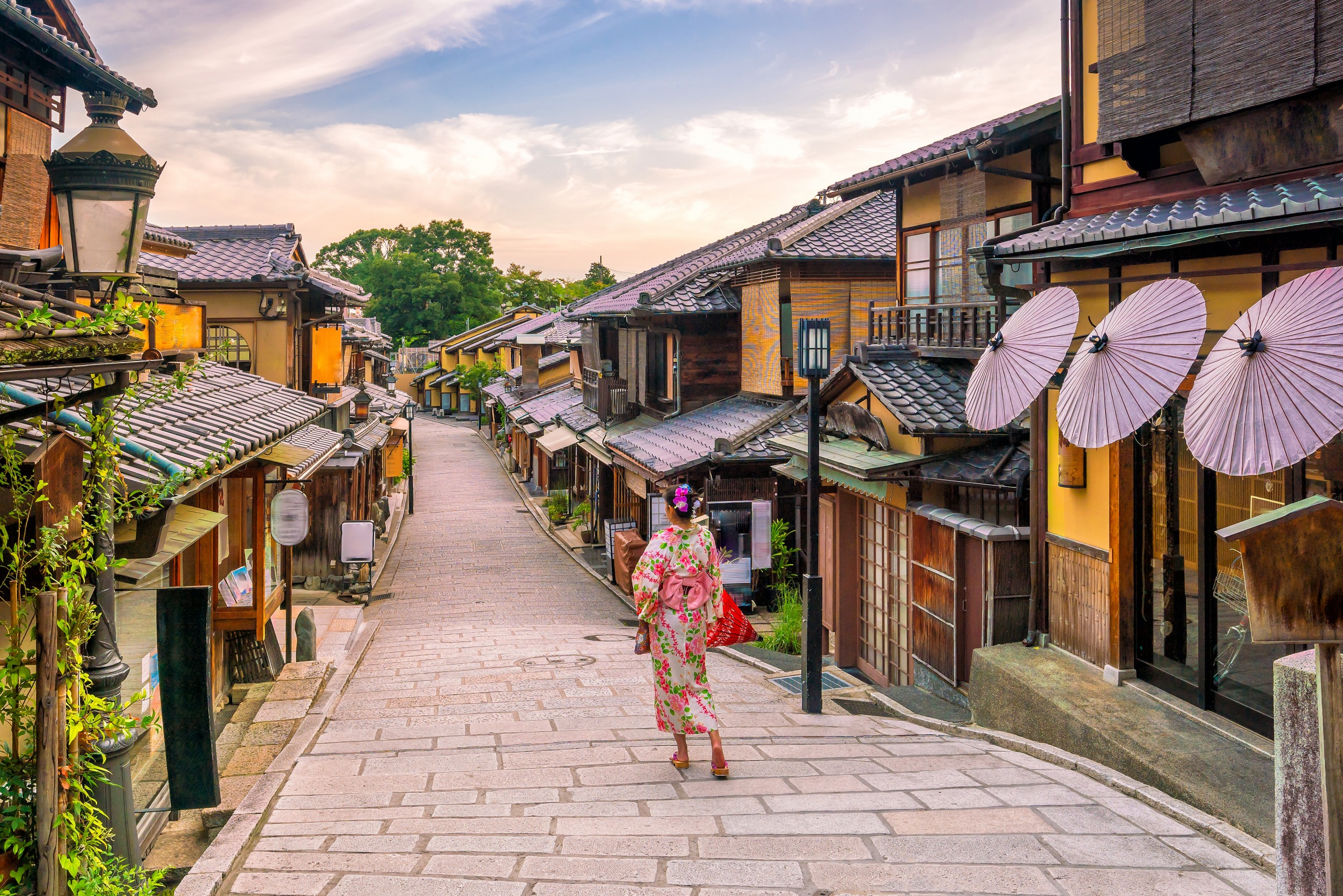
- The Higashiyama district, east of the city, for an atmosphere of traditional alleyways and livelier temples.
- The Arashiyama area, to the west, for a day immersed in nature around the bamboo grove and riverside temples.
- The Eigamura park, for a contrast with Kyoto's samurai film studio world.
Frequently asked questions
Allow 30 to 45 minutes for Daisen-in alone, longer if you follow the monk's explanations. To visit several Daitoku-ji sub-temples, plan for a half-day.
Photography is generally prohibited inside the pavilion and on the main dry garden. Check with staff before taking any photos.
The monk's explanations are given primarily in Japanese. English-language materials are generally available, and the garden's symbolic reading also comes through visually.
Ryôan-ji offers a larger, more austere dry garden organized around fifteen stones. Daisen-in is smaller and more narrative: its compositions tell a life journey in several scenes.
Like many ancient Kyoto temples, access includes steps and raised wooden flooring. Accessibility is limited; contact the temple in advance for details.
Integrating Daisen-in into a trip
Daisen-in naturally fits into an itinerary centered on Kyoto and Zen culture, complementing Himeji Castle and the major cities of the Kansai region. To craft a custom journey, explore our Japan travel ideas.
Interested in this visit?
We can include it in your personalised itinerary.