Dejima Island
Dejima Island
Dutch trading post established in 1636 in Nagasaki, Dejima was Japan's only window onto the West during the Sakoku period. A visit to a restored historic site.
Dejima Island, whose name literally means "exit island," is an artificial island created in 1636 off the harbor of Nagasaki. For over two centuries, this small fan-shaped trading post served as Japan's sole window onto the Western world. Restored since the 1990s, Dejima today functions as an open-air museum where Japanese architecture and European furnishings coexist.
Why visit Dejima
Dejima is one of the rare places in Japan that concretely tells the story of the Sakoku period—two centuries of national isolation during the Edo era. Through some twenty reconstructed buildings and a rich museum experience, you discover how Western medicine, astronomy, and clockmaking entered Japan through this singular opening. The site appeals equally to history enthusiasts and visitors curious about architecture, with its white and brown Dutch facades set atop tatami-mat floors.
The visit remains compact: Dejima spans just one main street and can be explored in half a day. It combines easily with Nagasaki's other attractions, making it a logical stop on a Kyushu itinerary.
An island built to contain the foreigner
The island was built in 1636 by the Tokugawa shogun following the prohibition of Christianity, to keep Christian Portuguese merchants at arm's length. Years later, the Dutch of the Dutch East India Company established themselves there and founded Japan's first international trading port.
Throughout the Sakoku period, Dejima remained the country's only point of contact with the outside world. Goods, books, and Western knowledge passed through in a trickle. This body of knowledge—clockmaking, telescopes, hot-air balloons, stained glass, medicine—became known as Rangaku, or "Dutch learning."
Several European scientists lived on the island and helped spread this knowledge:
- Engelbert Kaempfer (1651–1716), German physician
- Carl Peter Thunberg (1723–1828), Swedish naturalist
- Isaac Titsingh (1745–1812), Dutch surgeon
- Philipp Franz von Siebold (1796–1866), Bavarian physician
The island lost its role as a trading post with Japan's opening in the mid-19th century, then was gradually absorbed by the port's landfill. Heritage restoration efforts launched in the late 20th century recovered the original layout and rebuilt its principal structures.
What to see on site
The Chief Factor's Residence
This is the site's most iconic building. The residence of the head of the Dutch trading posts hosted merchant meetings and banquets. Its white and brown facade is punctuated by two turquoise staircases. Inside, European-style furnishings rest on tatami floors, a concrete illustration of Dejima's distinctive cultural blend.
The First Ship Captain's Quarters
This former residence of captains and officers of Dutch merchant vessels displays period furnishings imported from the Netherlands and Indonesia, testament to the trade routes that connected Europe to Asia via Batavia.
The Protestant Seminary
Japan's first Protestant seminary, founded in 1877, this two-story wooden building now serves as an exhibition center. Models, plans, and graphics trace Dejima's creation, function, and transformation through to Japan's opening.
The archaeological exhibitions
The annex building houses archaeological finds unearthed on site: tableware, translated books, pottery, firearms. The mix of Eastern and European manufactures illustrates the intensity of exchange between the Dutch and Nagasaki's inhabitants. A former stone warehouse, repurposed as an information center, also contains a projection room dedicated to the site's history.
The Omotemon Bridge and quay
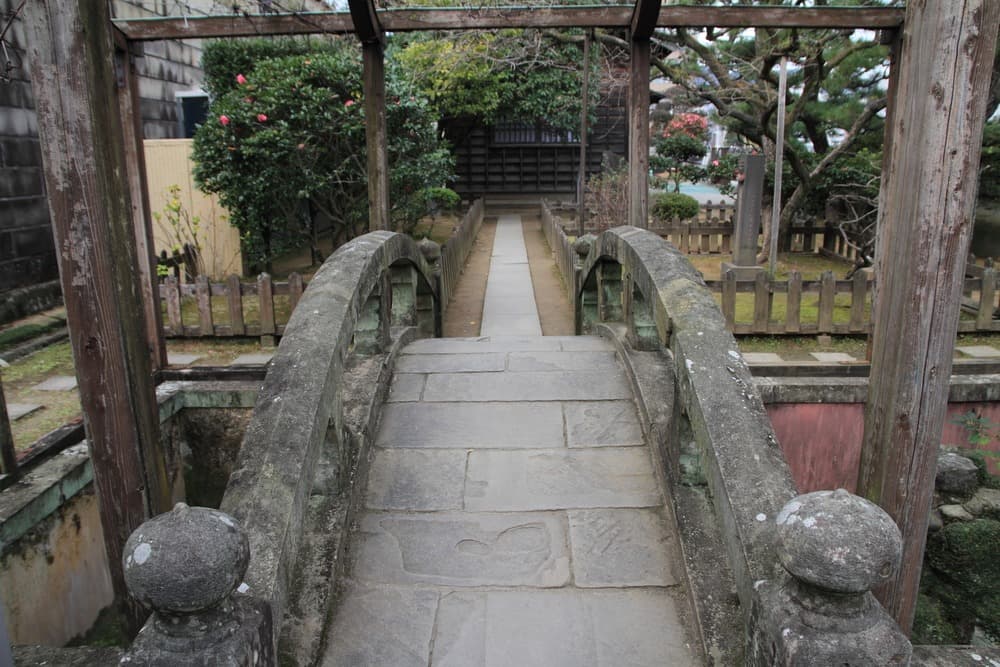
Opened in 2017, the Omotemon Bridge serves as the main entrance and reproduces the historic access to the island. It is illuminated in the evening. From the center, you reach the quay on foot: the pier offers an open view of the harbor. The former Nagasaki international club, converted into a restaurant, serves a local specialty, Turkish rice—pilaf rice, pork cutlet, and Neapolitan pasta topped with demi-glace sauce.
The annual Oranje festival, held in late April, celebrates the historic bond with the Netherlands and brings the island alive with concerts and parades; it's an excellent time to extend your visit.
Practical information
- Duration: allow 1.5 to 3 hours depending on your interest in the exhibitions.
- Hours: open year-round, generally 8am to 9pm, with earlier closing during peak summer season. Check current hours on-site.
- Admission: paid entry, moderate fare, reductions for students.
- Audio guides: available in multiple languages, including English.
- Accessibility: the site is mostly level, with a few stairs in the historic buildings.
How to reach Dejima
Dejima is located in central Nagasaki, about 15 minutes on foot from Nagasaki JR Station. The blue tramway line serves the site directly ("Dejima" stop). From the harbor and Dejima Wharf tourist area, access is also on foot in just a few minutes.
Nearby attractions
Nagasaki preserves the memory of Christian persecution in the late 16th century and the 1945 bombings, reflected in its museums and monuments. Beyond these sites of remembrance, several attractions complement a Dejima visit:
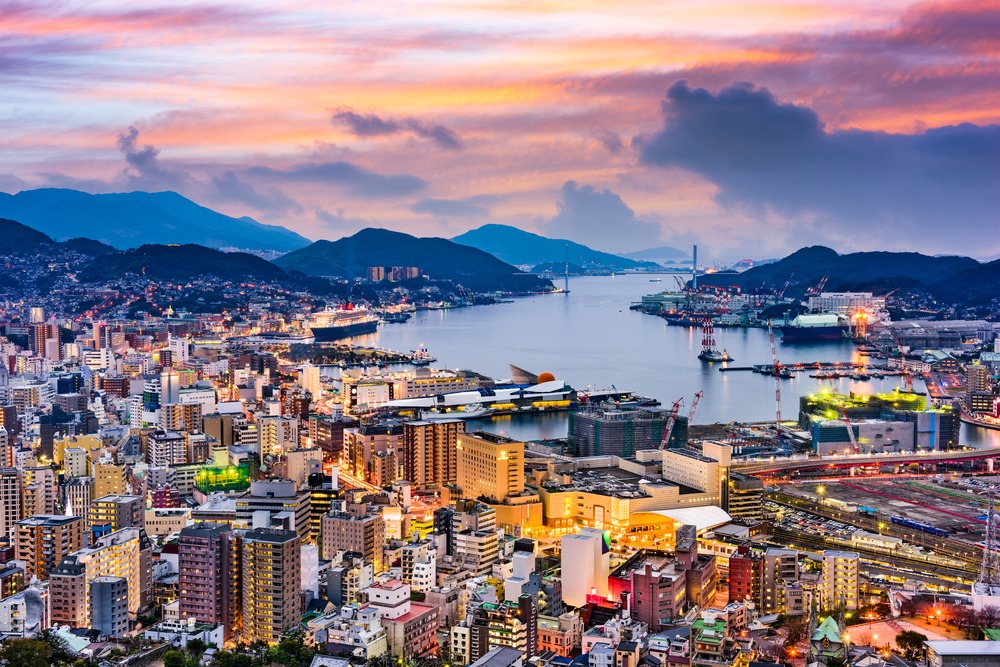
- Mount Inasa, west of the city, offers one of Japan's most spectacular night views.
- Chinatown (Shinchi) and the Shianbashi district concentrate restaurants and nightlife.
- Nagasaki Aquarium and its penguins, accessible by bus.
- The Unzen region, to the east, offers volcanic hiking and hot springs.
FAQ
Frequently asked questions
A complete tour of the buildings and exhibitions typically takes 1.5 to 3 hours. If you attend concerts or the Oranje festival in late April, plan for half a day.
Originally, yes: it was an artificial island created in 1636 off Nagasaki harbor. With port expansion in the 19th and 20th centuries, it was gradually connected to the mainland landfill. The restored site reproduces its historic fan-shaped layout.
During the Sakoku period (17th–19th centuries), Dejima was Japan's sole point of contact with the West. European scientific and technical knowledge, collectively known as Rangaku, entered the country through Dutch merchants here.
The site is approximately 15 minutes on foot from JR Nagasaki Station. The blue tramway line also serves the "Dejima" stop in just minutes.
Several shops in the neighborhood offer day-long kimono rentals, a popular option for photos in the historic buildings.
Include Dejima in your journey
Dejima fits naturally into an itinerary through southern Japan, connecting Nagasaki, Kyushu, and neighboring volcanic regions. To plan a custom itinerary including this historic stop, consult our Japan tours.
Interested in this visit?
We can include it in your personalised itinerary.