Koraku-en Garden in Okayama
Koraku-en Garden in Okayama
One of Japan's three great gardens, in Okayama: 14 hectares of Kaiyu landscape inherited from the Edo period, views of the castle and marked seasonality.
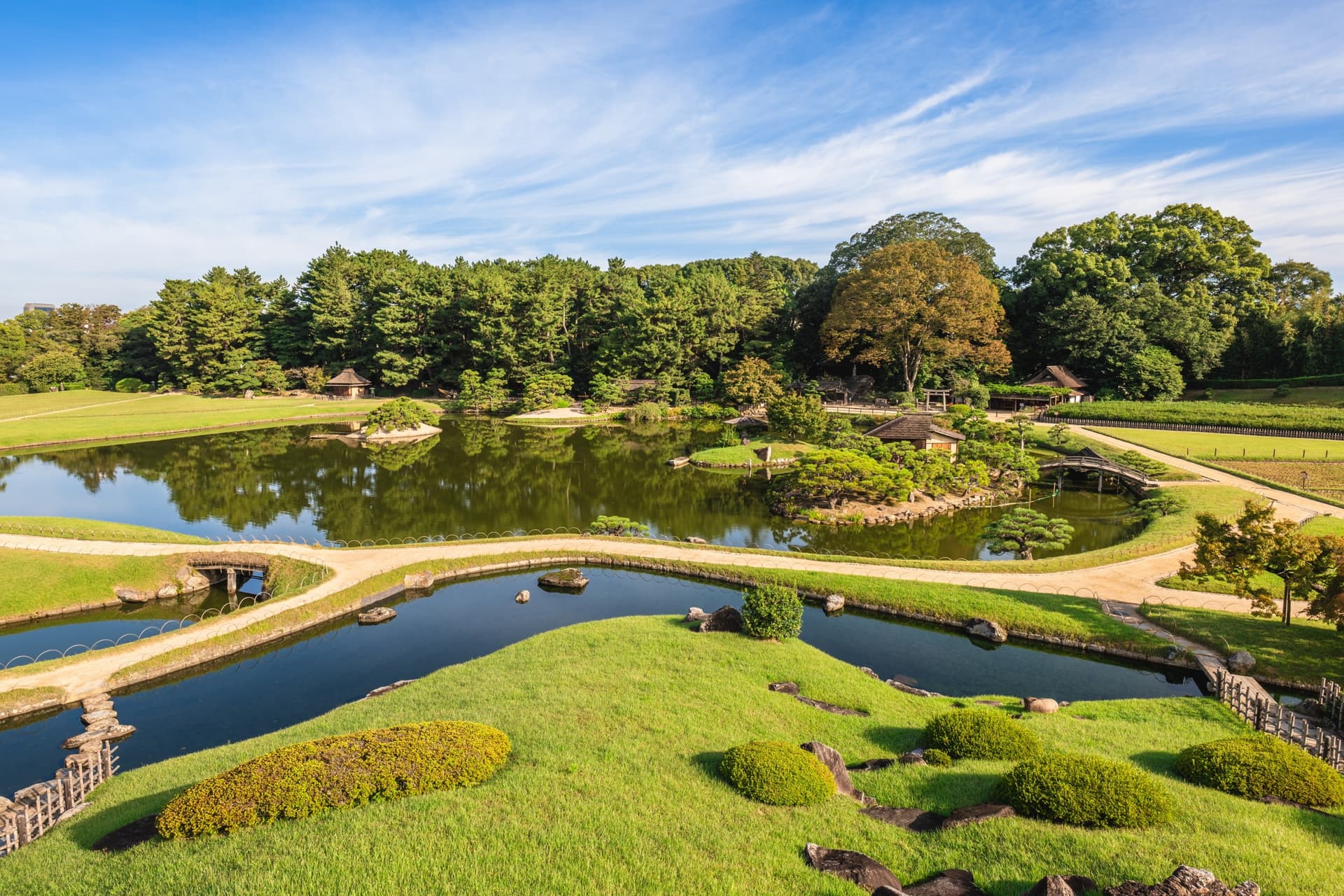
In Okayama, Koraku-en ranks among Japan's three greatest gardens, alongside Kairaku-en in Mito and Kenroku-en in Kanazawa. Laid out on a sandbank in the middle of the Asahi River, this 14-hectare garden exemplifies the landscape artistry of the Edo period and has earned a three-star distinction in the Michelin Green Guide to Japan.
Why visit Koraku-en
- One of Japan's three greatest gardens, designated a "Special Scenic Site" since 1952.
- A complete example of Kaiyu style (stroll garden) from the Edo period.
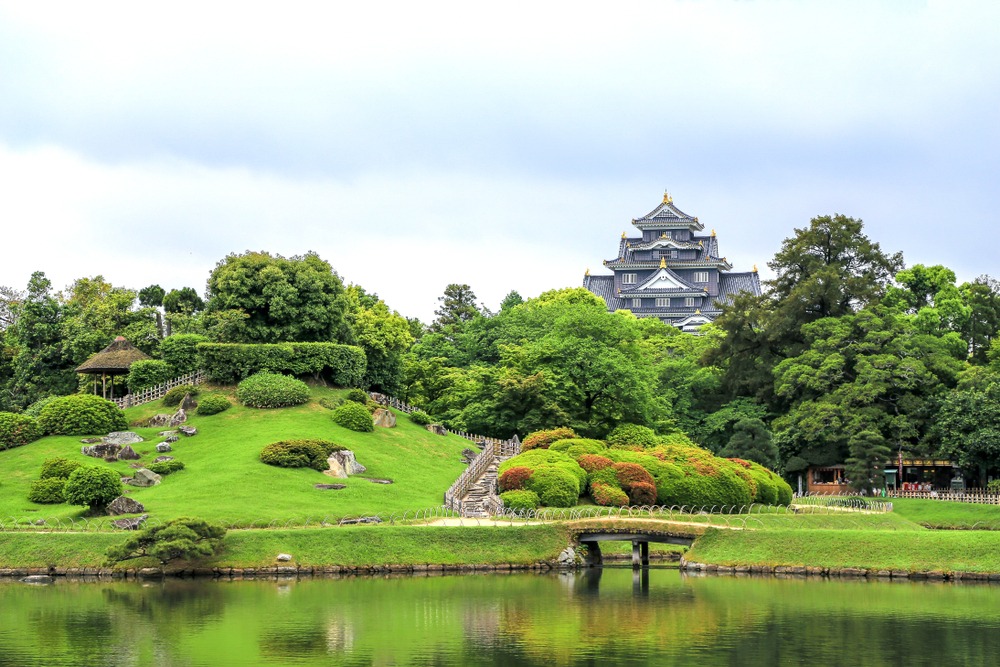
- Clear views of Okayama Castle, known as the "Crow Castle" for its black façade.
- Marked seasonality: flowering plum trees, cherry blossoms, irises, autumn maples.
- An aviary housing cranes, a species for which Okayama Prefecture is one of Japan's principal breeding centres.
Garden history
Koraku-en was created by Tsunamasa Ikeda, the feudal lord of Okayama during the Edo period. The garden was initially reserved for the daimyo's family and important guests; however, occasional openings allowed city residents occasional access. As the feudal era ended, Okayama Prefecture took over management of the site and officially opened it to the public in 1884.
The site experienced two major destructions: the 1934 floods and bombing during World War II. Because the original plans were carefully preserved, they enabled faithful restoration of the original layout and plant compositions. In 1952, the garden was designated a "Special Scenic Site," a status reserved for historical and cultural properties deemed essential to pass on to future generations.
What to see in the garden
The landscape composition
Koraku-en is a perfect example of a Kaiyu garden: winding paths successively reveal ponds, islands, bridges, stone lanterns and open lawns. From Yuishinzan hill, you can take in Sawa-no-Ike pond and glimpse, across the Asahi River, the dark silhouette of Okayama Castle, whose main keep has six storeys.
Buildings and shrines
At the garden's centre stands Enyo-tei House, a former resting place for lords during their visits. Its traditional architecture harmonises with a small pond and manicured shrubs. In the quieter Nishiki-ga-Oka area, the Jizo-do shrine is worth a discreet detour.
The crane aviary
Koraku-en has housed an active crane breeding programme since 1956. On January 1st, a crane release is organised in the garden: the birds move freely through the winter landscape, a rare opportunity to observe this protected species in flight.
When to visit
The garden is open year-round, and each season brings a distinct atmosphere:
- Late winter: flowering plum trees, the first signs of renewal.
- Spring: cherry blossoms, followed in May by tea harvesting carried out by women in kimono in the garden's tea plantation.
- Summer: iris blooms at the heart of the basins.
- Autumn (kôyô): scarlet foliage, enhanced by evening illuminations.
Two highlights complete this calendar: the crane release on January 1st and the opening of the Noh Theatre on Culture Day, in early October or November, featuring traditional performances.
Practical information
Koraku-en is open daily, with extended hours during the warm season (mid-March to September) and more limited hours during the cold season. Admission remains moderate; entry is free for children and students under 18, and discounts apply to seniors and groups of at least 20 people. Plan 1.5 to 2 hours for a complete stroll, longer during peak flowering season.
Within the garden, the Shikisai restaurant serves refined Japanese cuisine made from local products. The garden has two entrances: the main gate, near Okayama's prefectural museum, and the South gate, near the bridge leading to the castle.
How to get there
From Okayama Station, you have two options:
- On foot: approximately 30 minutes' walk to the main gate.
- By tram: Higashiyama line, exit at Shiroshita stop, then about fifteen minutes' walk to the South gate.
To place the garden in its urban context, consult our guide dedicated to Okayama.
Nearby and other sites in Japan
If you extend your itinerary through Japan, several sites of significance and spirituality complement a garden visit:
- Mount Kōya: a major centre of Shingon Buddhism.
- Mount Hiei: monastic complex overlooking Kyoto.
- Mount Inasa: renowned panoramic views of Nagasaki.
- Museums of Kinosaki: cultural stop in a hot spring town.
Frequently asked questions
Frequently asked questions
Plan your trip
Koraku-en naturally fits into a cultural itinerary connecting western Honshū to the Kansai region. To build a coherent stay around gardens, castles and spiritual sites, consult our trips to Japan.
Interested in this visit?
We can include it in your personalised itinerary.