Matsuyama Dogo Onsen
Matsuyama Dogo Onsen
Japan's oldest hot spring, Matsuyama's Dogo Onsen brings together historic baths, Meiji-era architecture, and founding legends.
Dogo Onsen, located in Matsuyama on the island of Shikoku, is considered Japan's oldest hot spring. Its origins date back more than 3,000 years, and its main building, erected in 1894, ranks among the country's first public baths designated as an Important Cultural Property. The site combines ancient legends, Meiji architecture, and a thermal district still in operation today.
Why visit Dogo Onsen
Dogo Onsen distils multiple layers of Japanese culture in one place: a functioning historic onsen, state-protected wooden architecture, and a rich literary and cinematic legacy. The site inspired Natsume Sōseki's novel Botchan, part of the Japanese school curriculum, and is regularly cited as one of the visual sources that influenced Hayao Miyazaki's Spirited Away (Studio Ghibli, 2001), although this connection has never been officially confirmed.
Beyond the baths themselves, the district offers a complete half-day itinerary: a contemporary annex, a park with castle ruins, a glass museum, and a temple and shrine within walking distance.
History and legends
Two foundational tales accompany the spring. The first recounts how a wounded white heron, injured on its shin, is said to have healed by soaking its wound in Dogo's waters. Local residents who were ill mimicked the heron and regained their health, establishing the site's reputation. A "Heron Stone" commemorates this episode in Hojoen Garden, across from Dogo Onsen station.
The second legend features the deities Ōkuninushi and Sukunabikona. Sukunabikona, gravely ill, was brought to the spring by his companion; upon leaving the water, he is said to have danced on a rock. This stone, called Tama no Ishi, remains visible today and is considered a good luck charm.
From imperial bath to Cultural Property
The main building, Dogo Onsen Honkan, was constructed in 1894 during the Meiji era. It hosted members of the imperial family and retains a bath reserved for them, the Yushinden. A century after its construction, the building became the first public bath in Japan to be designated an Important Cultural Property.
What to see on site
Dogo Onsen Honkan
The main building, with its dark wood and tiled roof, can be explored across multiple levels. The Yushinden, the former imperial private bath, is discovered through a separate guided tour distinct from bathing. Public baths are distributed across two floors: the Kami no Yu (Bath of the Gods) on the first floor, and the Tama no Yu (Bath of Spirits) on the second, more intimate floor. Facilities are separated by gender. On the upper floors, tatami rooms—communal or private—allow visitors to rest after bathing, sometimes over tea or a meal.
The Asuka-no-yu annex
Opened in 2017, the Dogo Onsen Asuka-no-yu annex adopts Asuka architectural style, with white walls and dark wooden timber work. The interior, more contemporary, incorporates artworks evoking regional history. It features public baths, private baths, and a large central relaxation area.
Around the thermal station
South of the district, Dogo Park climbs toward an observation platform overlooking Matsuyama and housing the ruins of Yuzuki Castle, the former stronghold of the Kōno clan. An associated museum displays objects related to these rulers. Nearby, the Dogo Glass Museum (Dogo Giyaman) exhibits traditional pieces and contemporary creations. For a quieter break, Hōgon-ji Temple and Isaniwa Shrine are within walking distance of the station.
Practical information
Dogo Onsen is open year-round, though each bath and the Yushinden follow their own schedules, subject to change. Prices vary depending on the package: simple bath entry, bath access with rest room, or Yushinden tour. Budget moderately for basic entry and supplement for packages including tatami rest areas. Children's rates are significantly reduced. Check current conditions on the official website before your visit, as parts of the Honkan have undergone extended restoration campaigns.
Allow 1 to 2 hours for a bath and rest time, and a half-day if you combine Honkan, Asuka-no-yu, and Dogo Park. Tattoos remain a sensitive issue at most Japanese onsen: inquire in advance.
When to visit
Dogo Onsen is open year-round. Spring, around cherry blossom season in Dogo Park, and autumn, for the colours, are particularly popular. Winter enhances the thermal experience, with a striking contrast between cold air and warm water. Avoid if possible the Golden Week (early May), Obon (mid-August), and New Year periods, when crowds increase significantly. Early morning and late evening offer the most peaceful atmospheres.
How to get there
The district is served by the Dogo Onsen tram stop, about a 5-minute walk from the thermal station. From Matsuyama JR Station, tram line 5 runs directly to the terminus in around thirty minutes. The nostalgic Botchan train follows the same route on a limited schedule; check departures. From Matsuyama Airport, direct limousine buses provide service.
What to see nearby
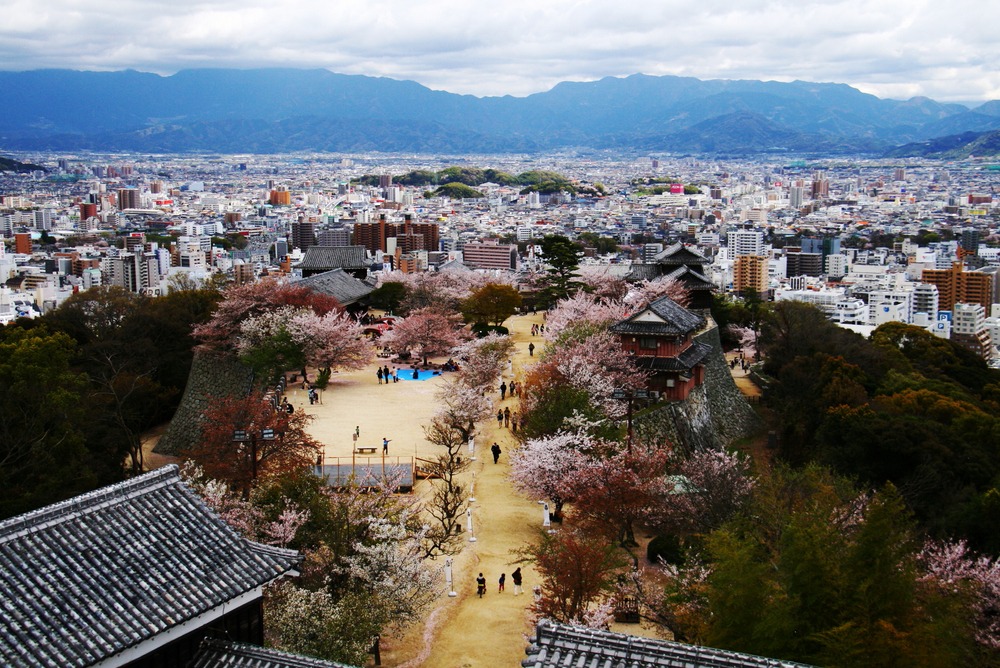
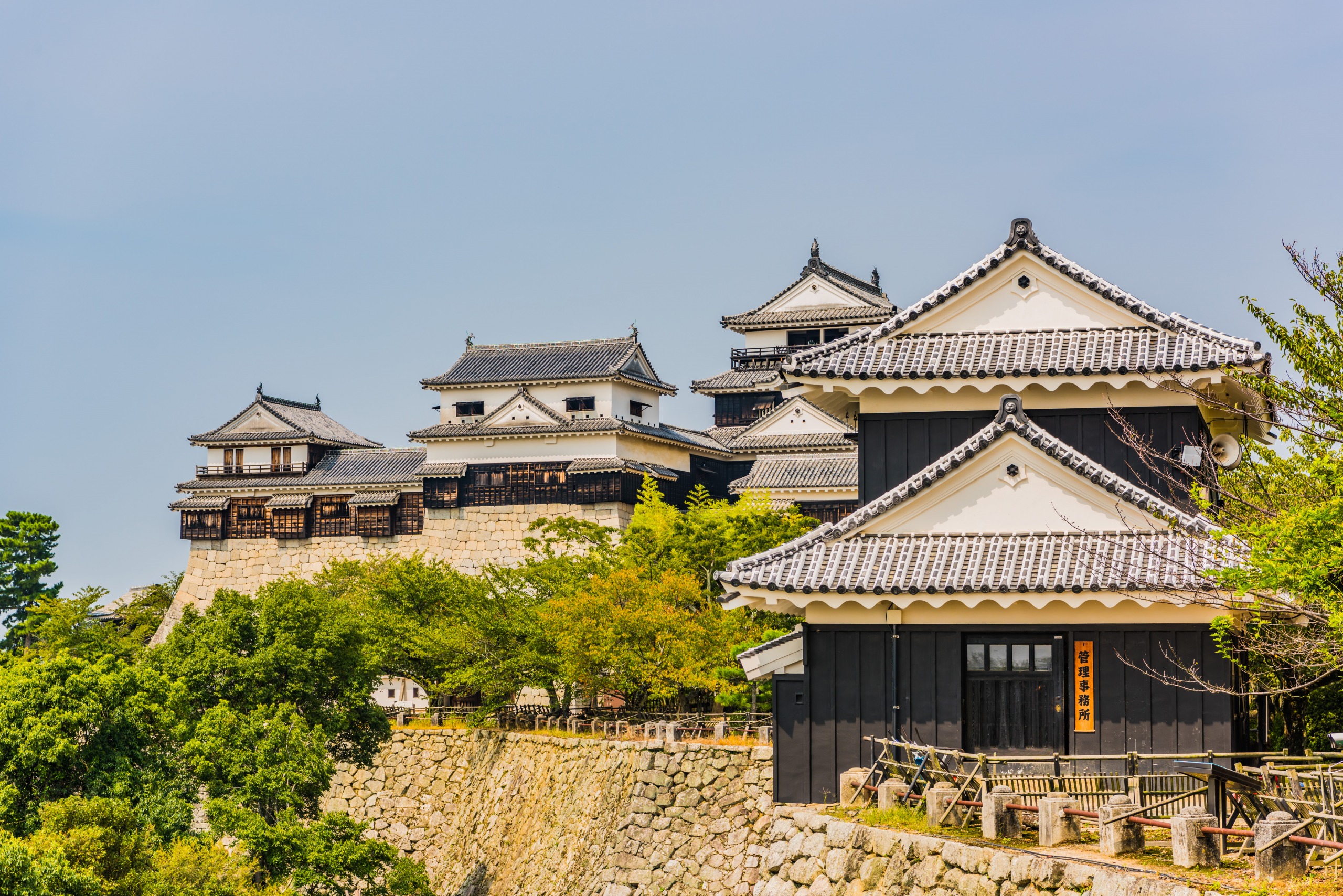
Matsuyama deserves more than a quick thermal stop: its hilltop castle, one of Japan's rare original donjon structures, is just a few tram stops away. To extend the onsen experience across the archipelago, the museums of Kinosaki offer insight into bath culture in another renowned thermal city. For panoramic views, Mount Inasa near Nagasaki and Mount Hiei near Kyoto offer quite different urban vistas. For a spiritual detour, Nachi Taisha shrine on the Kii Peninsula complements a heritage itinerary well.
Frequently asked questions
Frequently asked questions
Yes, this is the traditionally accepted dating: the springs have been frequented for over 3,000 years according to ancient records, making it one of the country's oldest documented onsen.
The Honkan is regularly cited as one of the film's visual inspirations. This connection has never been officially confirmed by Hayao Miyazaki or Studio Ghibli, however.
Simple entry requires no reservation. During peak periods (weekends, Japanese holidays), queues are possible. The Yushinden tour operates by time slot: inquire on-site.
The policy varies. Most traditional Japanese onsen restrict access for tattooed visitors. Check the policy in place before your visit, particularly at the Honkan.
Allow 1 to 2 hours for bathing and tatami rest time. A half-day allows you to add the Asuka-no-yu annex, Dogo Park, and one of the district's museums.
Planning your trip
Dogo Onsen fits naturally into an itinerary combining Shikoku and western Japan. To structure your stay around this thermal destination, consult our Japan travel suggestions.
Interested in this visit?
We can include it in your personalised itinerary.