Odaiba, Tokyo's Artificial Island
Odaiba, Tokyo's Artificial Island
An artificial island in Tokyo Bay born from 19th-century fortresses, Odaiba is today a leisure district of museums and contemporary architecture.
Odaiba is an artificial island in Tokyo Bay, connected to the mainland by the Rainbow Bridge. Once a maritime defense system from the 19th century, the site has become since the 1990s a leisure district of museums and contemporary architecture, administered by the Minato and Koto wards.
Why Visit Odaiba
Odaiba combines several rare attractions in Tokyo: a clear waterfront, a direct view of the capital's skyscrapers, and a concentration of science centers, shopping centers, and visual landmarks such as a replica of the Statue of Liberty or a life-size Gundam statue standing before DiverCity Tokyo Plaza. It's also one of the few places in Tokyo where you can stroll along an urban beach while watching boats pass by.
The neighborhood suits a half-day or full day visit, depending on whether you prioritize museums, shopping, or a waterfront walk. The contrast between remnants of former military batteries and futuristic buildings offers an interesting reading of Tokyo's urban history.
History: From Edo Fortresses to a Futuristic District
The name "Daiba" means "fortress" in Japanese. The island originated in the 1850s, when shogun Ieyoshi Tokugawa ordered the construction of a polder to protect Edo (old Tokyo) from Western ships. Six batteries were then built to defend the bay, in the context of pressures exerted by Commodore Matthew Calbraith Perry, whose naval expeditions announced the end of Japan's isolationist policy.
Once the threat subsided, the fortresses lost their military function. In 1928, the third battery, or "Dai-San Daiba," was renovated and opened to the public as Daiba Metropolitan Park. The other batteries were dismantled between 1941 and 1960 to facilitate maritime traffic. Only the sixth battery, "Dai-Roku Daiba," survives today as a witness to the island's defensive past.
Odaiba's current appearance dates from the early 1990s, when Tokyo governor Shunichi Suzuki launched a major modernization plan to transform the island into a business and leisure hub. After a tentative start, the project transformed the former port area into one of the capital's most visited neighborhoods.
What to See and Do in Odaiba
The Daikanransha Ferris Wheel
With a diameter of 100 meters and a total height of 115 meters, the Daikanransha completes a full rotation in approximately 15 minutes. Several cabins feature transparent floors. On clear days, the view encompasses the bay, the Rainbow Bridge, and Tokyo's skyline.
The Miraikan, Museum of Emerging Sciences
The Miraikan (National Museum of Emerging Science and Innovation) showcases Japanese research in robotics, biotechnology, space exploration, and artificial intelligence. The humanoid robot Asimo, developed by Honda and long emblematic of the museum, was exhibited there for many years before the program was discontinued. The planetarium and interactive exhibits make it a visit suited to both families and science enthusiasts.
Oedo Onsen Monogatari Thermal Bath
This bathing establishment recreates the atmosphere of a popular neighborhood from the Edo era, with wooden streets, small shops, and yukata provided for bathers. It's a good introduction to onsen culture for travelers who haven't planned a hot spring stay elsewhere in Japon.
Architecture and Urban Symbols
Odaiba is home to several signature buildings: Fuji TV headquarters with its distinctive panoramic sphere, Tokyo Big Sight with its inverted pyramid architecture, and the promenade leading to a scaled replica of the Statue of Liberty, positioned facing the bay. The life-size Gundam statue standing before DiverCity Tokyo Plaza is a popular meeting point, particularly in the evening during light-up shows.
Practical Information
- Recommended visit duration: allow a half-day for the essentials, a full day if you plan multiple museums and a thermal bath.
- Admission: free entry to the island and waterfront; museums and the Ferris wheel are paid at moderate rates.
- Best time: weekends are more lively; weekdays offer a quieter experience. Evenings are particularly appreciated for the Rainbow Bridge illuminations.
- Suitable for: families, contemporary architecture enthusiasts, and science lovers.
How to Reach Odaiba
- By train: the Yurikamome line, an automated elevated metro, connects Shimbashi station to Odaiba in about thirty minutes, with panoramic views of the bay during the journey.
- By boat: the Tokyo Water Bus connects Odaiba from Asakusa by traveling up the Sumida River in approximately one hour. A scenic option to combine transportation and a river cruise.
- By car: access is via the Rainbow Bridge, which is a photo stop in itself.
Nearby
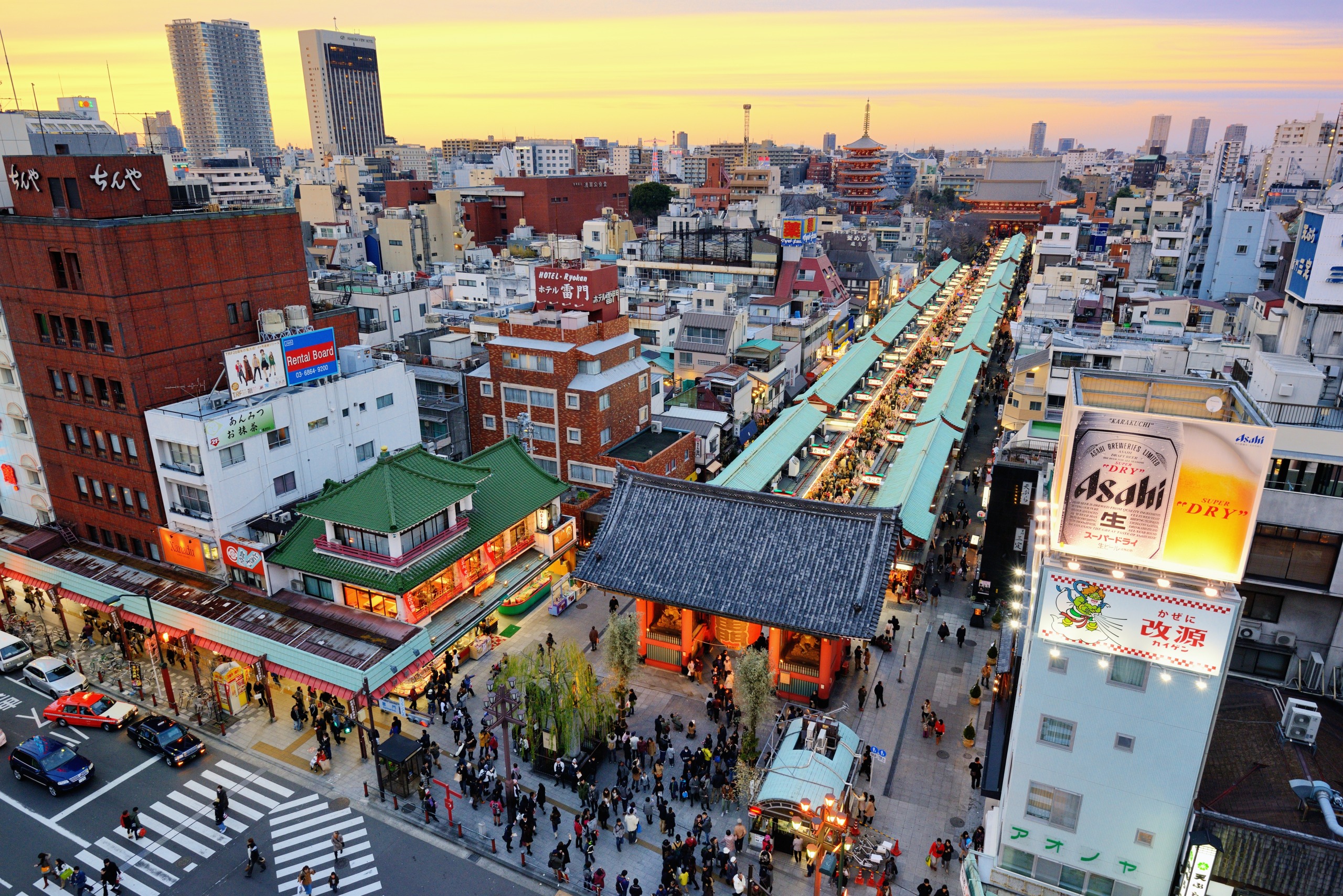
Odaiba lends itself well to a combined day with other Tokyo neighborhoods: Asakusa and its Senso-ji temple are connected by boat, while Shimbashi and Ginza are just a few stations away. To continue your urban exploration elsewhere in Japon, the Namba neighborhood in Osaka offers another perspective on modern Japanese cities. Heritage enthusiasts will also appreciate the Nagamachi neighborhood in Kanazawa or the historic Nakasendo route.
Frequently Asked Questions
Frequently asked questions
A half-day is enough to walk the waterfront, see the Gundam, the Statue of Liberty, and ride the Ferris wheel. Allow a full day if you add the Miraikan and Oedo Onsen Monogatari thermal bath.
The Yurikamome line from Shimbashi is the fastest, about 30 minutes, with views of the bay. For a more scenic approach, the boat from Asakusa via the Sumida River takes approximately one hour.
Yes. The Miraikan features interactive exhibits, the Daikanransha Ferris wheel is accessible to all, and the waterfront promenade offers an urban beach where children can stretch their legs.
Of the six original batteries, only the sixth battery ("Dai-Roku Daiba") is still visible. The third battery, reconstructed in 1928, became Daiba Metropolitan Park, accessible freely.
Not essential on weekdays, but recommended on weekends, public holidays, and during Japanese school holidays, when crowds are heavy.
Odaiba fits naturally into a Tokyo itinerary. To build a tailor-made trip combining the capital and other regions of the archipelago, consult our suggestions for travel to Japon.
Nearby
Interested in this visit?
We can include it in your personalised itinerary.