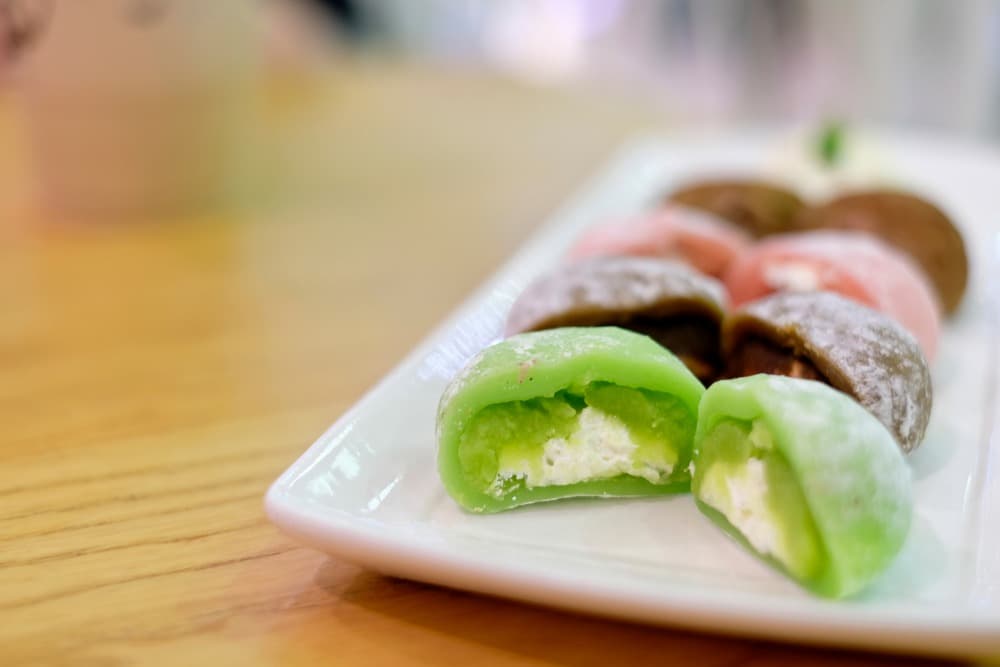
Mochi
Mochi 餅, a rice cake, is an essential component of Japanese New Year celebrations.
Mochi 餅, a rice cake, is an essential component of Japanese New Year celebrations.
Mochi is quite an unusual food: a kind of cake made from rice paste, rather dense in texture. It's not particularly easy to eat—it requires endless chewing, if you know what I mean. When fresh, mochi is somewhat soft and elastic, but if left to air-dry, it hardens and becomes brittle.
While mochi can be found year-round in Japanese supermarkets today, it remains a quintessential New Year food. Whereas the mochi found in department stores are typically small rectangular blocks, New Year mochi is round (like a flattened sphere) and is called kagami-mochi (鏡餅, literally "mirror-mochi" because its shape resembles a mirror).
Mochi Tsuki
Mochi is made from glutinous rice (mochi-gomé 餅米), which is vigorously pounded until it forms a thick paste. This manufacturing process is called mochi-tsuki (餅搗き) and is traditionally carried out using a large wooden mallet to pound the rice in a hollowed-out tree trunk (see photo below). "Mochi-making festivals" (mochi-tsuki taikai 餅つき大会) are still common today, organized in schools, clubs, and by various companies.
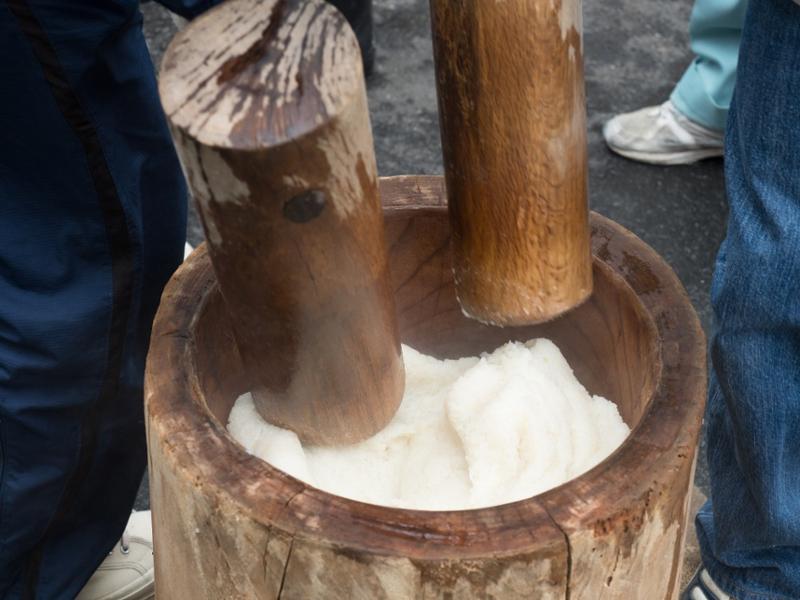
After pouring the steamed glutinous rice into the tree trunk, men take turns pounding the paste. While one person strikes with the mallet, an assistant takes advantage of the upswing to flip the piping-hot rice paste. As you can imagine, this requires perfect synchronization (to prevent the assistant's hand from being crushed), which is why the process is often accompanied by rhythmic chanting from the assembled crowd to keep the beat.
Here's what mochi looks like after the rice has been pounded.
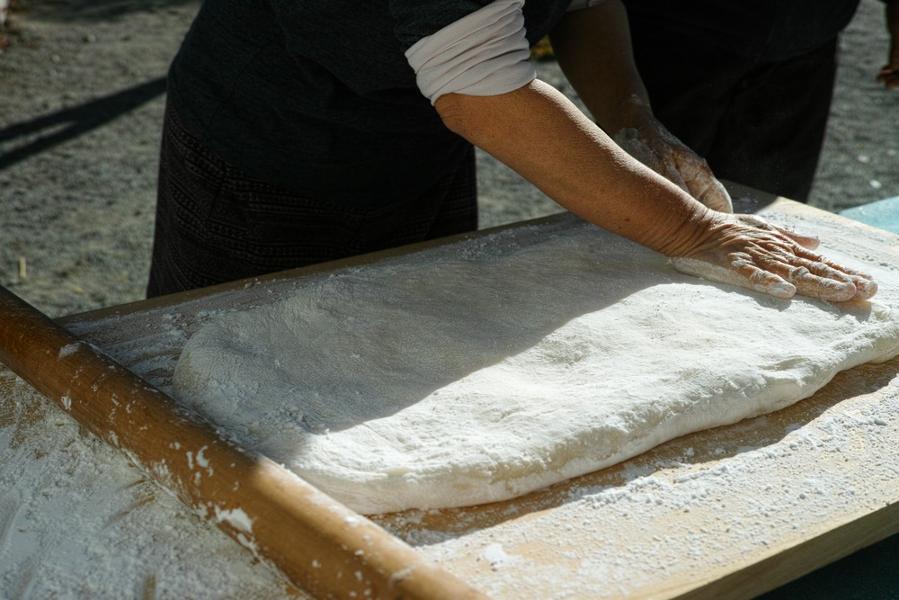
The final step is to divide the paste and shape it into balls, which are then flattened to achieve their traditional form. But if you're eager to taste it right away, bite-sized dumplings work just as well.
Time to eat!
There are countless ways to enjoy mochi, truly something for every taste:
- For instance, you can dip it in red bean paste to make shiruko (汁粉).
- You can also coat it in a lightly sweetened powder called kinako 黄粉 (literally: "yellow powder"), made from roasted and peeled soybean flour. Incidentally, this is my favorite mochi preparation!
- Grilled, then wrapped in a sheet of nori (seaweed), and drizzled with soy sauce.
- And of course, o-zoni (お雑煮), a special New Year's dish where mochi is served in a vegetable soup.