Taking Photos and Videos in Japan: Essential Practical Guidelines
Exotic landscapes, a unique way of life, and vibrant flora… Japan's sites strike Western visitors as exceptionally photogenic. Few can claim to return from a journey to the Land of the Rising Sun without beautiful photographs to show for it. However, there are fundamental rules to observe when capturing images and videos. Japanese legislation is particularly strict on this subject.
Exotic landscapes, a unique way of life, and vibrant flora… Japan's sites strike Western visitors as exceptionally photogenic. Few can claim to return from a journey to the Land of the Rising Sun without beautiful photographs to show for it. However, there are fundamental rules to observe when capturing images and videos. Japanese legislation is particularly strict on this subject.
Choosing Your Photography Equipment
Before discussing the essential rules to follow when photographing where and when permitted, let's first address the type of equipment to bring on a Japan trip. Remember this: a high-quality image speaks volumes more than a generic description. To preserve lasting memories of your journey, don't hesitate to invest in quality digital equipment.
Compact cameras: These offer the advantage of being lightweight, compact, and therefore pleasant to carry. A pocket-sized travel accessory. Brands like Sony (Sony DSCW810B) and Canon (Canon SX600 HS) are highly sought after on the market.
Bridge cameras: A middle ground between compact and DSLR cameras. Image quality surpasses that of compact cameras, but you'll be limited to a fixed lens. Bridge cameras are designed for moderate budgets.
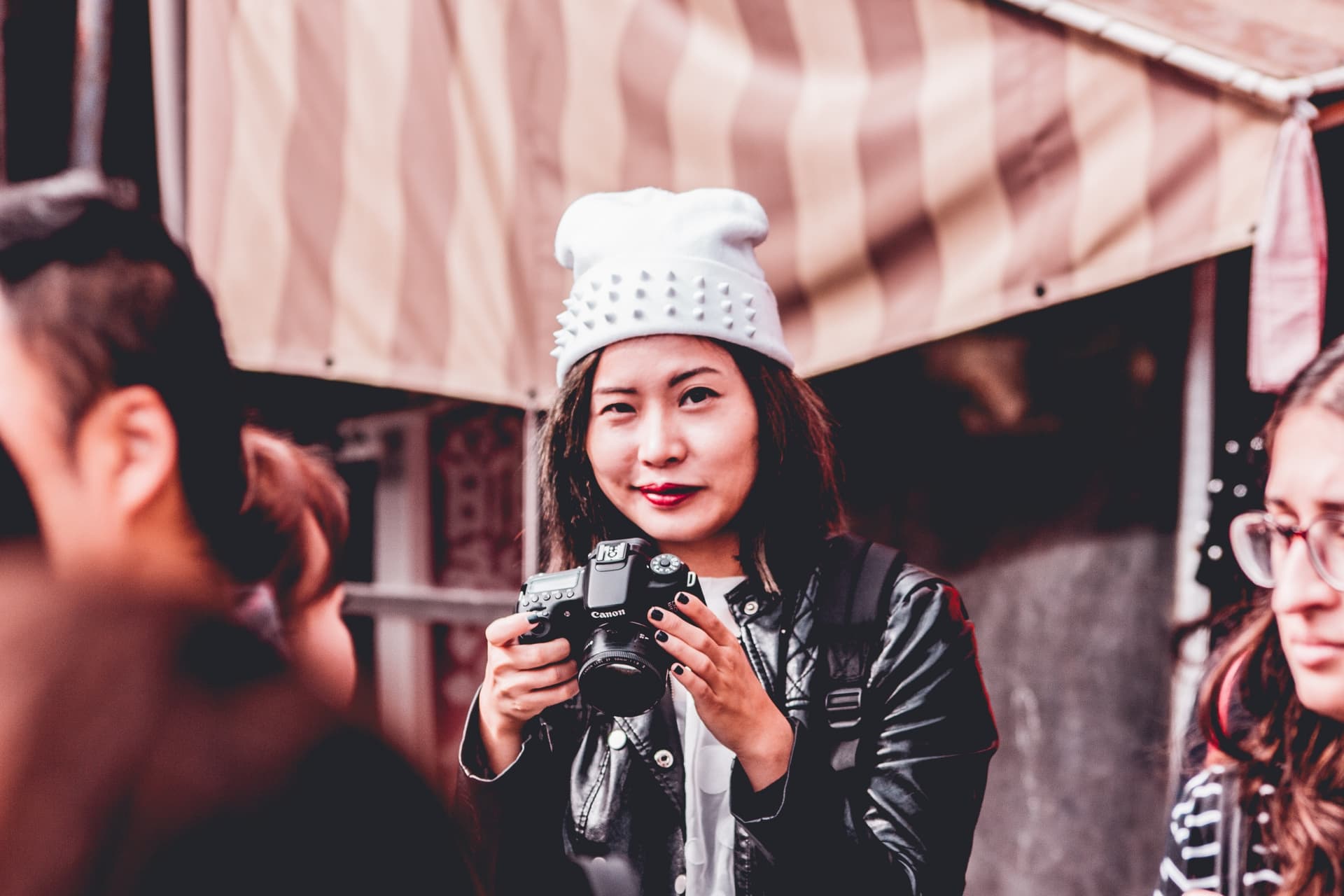
DSLR cameras: An excellent investment for professionals and photography enthusiasts who love capturing life-sized subjects. A top-tier option if you don't mind its bulk and weight, and if you're willing to pay premium prices. This is what you need if you plan to film or photograph the Instagram-worthy viewpoints of Japan: the celebrated Mount Fuji at sunrise, cherry blossoms in shades of pink or golden yellow in spring, or geishas draped in elegant silk kimono strolling through the Gion district in Kyoto.
Of course, camera performance alone cannot guarantee a stunning photograph. The rest depends on your skill, whether you're a novice or an experienced photographer.
Rules and Guidelines to Follow
Now that you're informed about the criteria for choosing photography equipment, know that in Japan you cannot photograph just anyone or anything anywhere. Japanese people place great emphasis on privacy and respect for personal privacy. Comply fully with our guidelines to avoid trouble.
Temples and Shrines
Public access to sacred sites, such as monasteries and Buddhist temples, is permitted. While exteriors are generally photographable, the same is not true once you enter inside. Temples are primarily places of worship and spiritual contemplation, and you risk disturbing the reverence of worshippers with photographs. However, smartphones and cameras are tolerated at certain sacred sites. Always ask first.
Children: Photography Prohibited
The law is explicit: it is forbidden to photograph children, whether for personal purposes, videography, or social media publication. If you wish to do so, speak to the parents and wait for their permission before taking photos or uploading them online.
Tourists are not permitted to photograph schools, which are considered places where children live and thrive.
In Streets and Outdoor Ceremonies
Photography is permitted outdoors, such as in streets, gardens, and parks. You can photograph crowds as long as no faces appear in a recognizable manner. If you wish to feature specific people, such as newlyweds in a public ceremony, you must ask for permission. Refusal to consent constitutes a breach. Using photos for purposes other than those for which you obtained consent also constitutes a breach.
Performances and Concerts
Generally speaking, theaters, music halls, and performance venues prohibit photography. Recording voice, video, or posting on Twitter or Facebook is disapproved. Selfies are permitted in some cases, but have the courtesy to disable sound and flash to avoid disturbing other audience members.
What About Photos on Public Transportation?
Selfies, yes. Fill your phone with images on VIP buses, subway stations, or the striking fish-tail facade of the Shikansen express train. You can photograph objects as long as your lens is kept at a distance from other passengers.
In the End, Where Can You Film and Take Photos?
Despite all these restrictions, Japan welcomes photography activities in dedicated spaces: public squares, gardens, forest parks, museums, art galleries, and any monument of historical or cultural value. Beyond these locations, the rule is to always ask permission. It's a matter of basic courtesy, and the Japanese will appreciate your consideration!