Dining in Japan
A leisurely journey to Japan transcends enchanting landscapes—from parks and gardens adorned with cherry blossoms to imperial palaces and unique cultural treasures. During your expedition, you'll experience unforgettable moments of gastronomic pleasure.
The appeal of a pleasure trip to Japan extends far beyond its enchanting natural landscapes, with parks, gardens, and cherry blossoms, its imperial palaces, or its distinctive culture. During your expedition, you'll savour unforgettable culinary moments. Coming to Japan means surrendering to a destination of paramount gastronomic importance, renowned for the excellence and richness of its cuisine rooted in rice, seafood, and the masterful use of seasonings. That said, it would be a mistake to reduce Japanese cuisine to these basic ingredients alone. Here, the originality of dishes owes less to the culinary resources themselves than to the art of cooking, the harmony of flavours, and the manner of consumption. Discover in our curated selection of articles everything you need to know for a truly worthy gastronomic journey through the Land of the Rising Sun.
As you may have noticed, Japanese society has its own set of rules and life habits. Strange as it may seem to Western sensibilities, the act of eating is governed in Japan by a rigorous set of etiquette rules that must be respected to avoid offending others and breaching propriety. Once there, you'll quickly realize this when a Japanese person invites you to lunch or tea at their home. Adhering faithfully to these rules is a token of respect and an excellent way to express gratitude for their hospitality.
Phrases to Pronounce Before and After the Meal
The meal begins with a polite expression: Itadakimasu, which means "I humbly receive". This phrase thanks Mother Nature for providing the plants and animals present on the table. Similarly, the meal concludes with Gochisosama deshita, as a mark of respect to the person who prepared it or with whom you shared it. Japanese people say these words with their hands joined.
Handling Chopsticks with Care
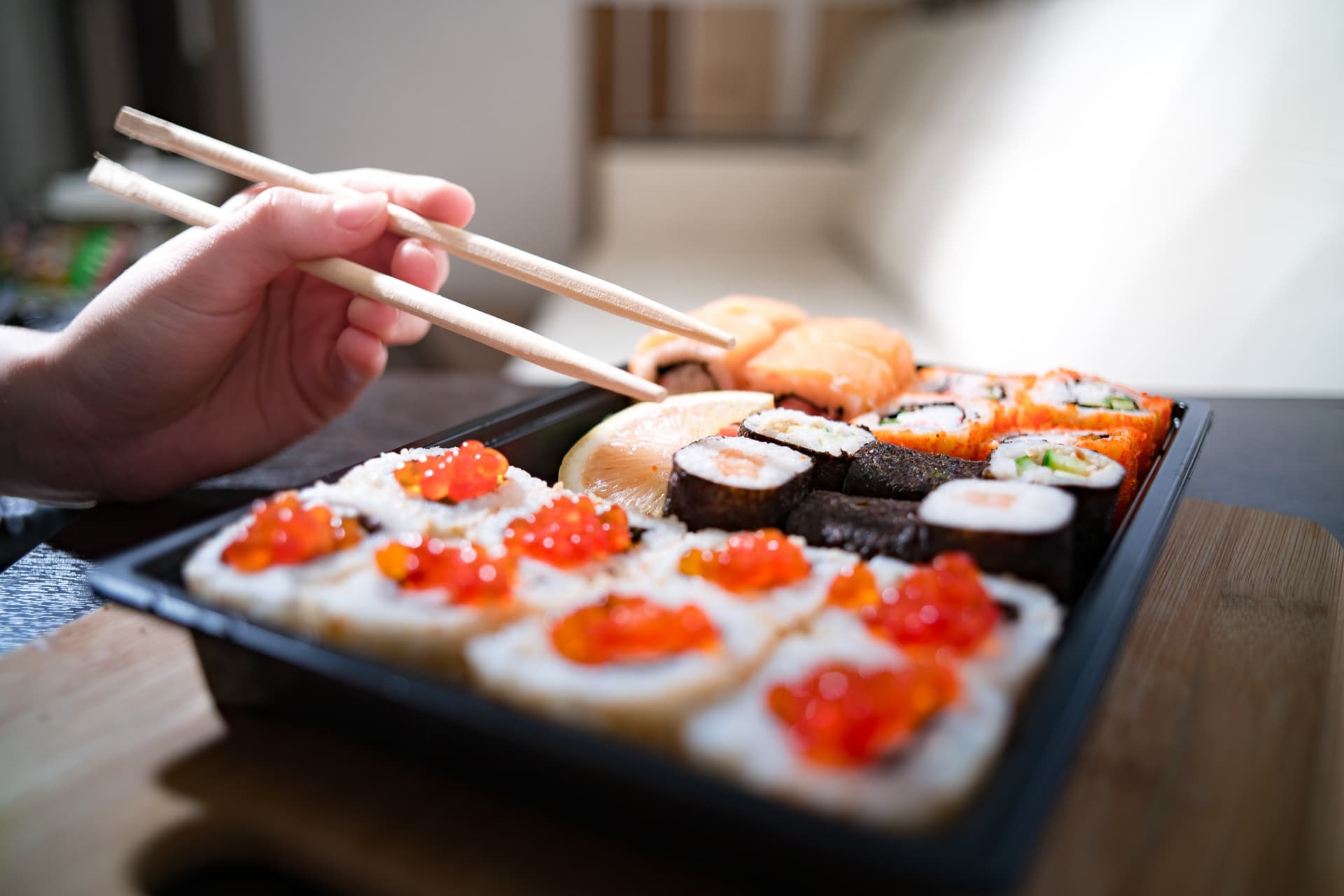
You are not obligated to eat with chopsticks when dining at a Japanese person's home. Locals readily understand that wielding this utensil is not straightforward for foreigners. However, if you wish to attempt it, here are the guidelines:
- never point at guests with chopsticks. This is highly disrespectful and interpreted as provocation;
- do not play with the utensils by waving them about;
- chopsticks should never be used like a fork: it is forbidden to plant them into noodles or into a rice bowl. Doing so will tear the food, compromising its integrity. Instead, practice gently grasping food between the tips of the chopsticks;
- use only one hand to manipulate chopsticks, never both;
- when you have finished your plate, do not rest your chopsticks on the table. They should be placed on a designated holder: the hashi oki. If no such holder is available, carefully rest them in your napkin.
- the placement of chopsticks is not arbitrary: protocol requires laying them horizontally at the edge of the table, with the tips pointing left. Do not position them to the right of your plate or above your rice bowl.
Eat While Hot
Dishes are enjoyed hot in Japan. If you need to take an urgent call, keep it brief and return promptly to your meal. The restaurant chef may take offence if you allow your dish to cool.
Do Not Blow Your Nose
It is shameful in Japan to blow your nose in public, particularly during lunch or dinner. Should you have an urgent need for a tissue, please step out onto a balcony or to the restroom.
…And Do Not Burp
Of course, burping is absolutely forbidden! It is an unacceptable display of rudeness in Japan.
Shared Dishes
In Japan, when a group of friends or colleagues dines at a restaurant, dishes are not served individually but communally. Should you find yourself in this situation, transfer portions onto a small plate (typically, communal dishes are accompanied by individual plates). Be mindful to use the opposite end of your chopsticks—the end that has not touched your mouth—when serving yourself.
Different Dishes Are Eaten Differently
This rather particular rule may well astonish you! "Proper eating" does not mean the same thing as you move from one dish to another:
- rice: it is not eaten while the bowl remains on the table. Hold the rice bowl in one hand, bring it close to the edge of your lips, and use chopsticks in your other hand to eat. Rice should not be mixed with soy sauce;
- noodles: to eat noodles like a true Japanese person, use your chopsticks, and as they enter your mouth, make a gentle "slurp" sound. This audible slurping signals that you are relishing the noodles;
- meat dishes: do not ask for a knife to cut beef or chicken. A pair of chopsticks is sufficient: push them into the food and spread your fingers to break it into small pieces;
- Western dishes: chopsticks are reserved for Japanese specialities. Consequently, if you order French dishes, you will risk ridicule by using those famous wooden or ivory sticks. Use a knife, spoon, and fork as appropriate.
The Matter of Beverages
Let us now turn to beverages! Whilst self-service is customary for food, it is the convention not to fill your own glass. Your neighbour is expected to serve you, and you should serve them in return. Give and take! This rule applies especially to stronger beverages. Wait until all guests raise their glasses and toast before you begin drinking.
When toasting in Japan, the common phrase is Kanpai. Saying "Cheers" or "To your health" is equally correct. However, "Chin-Chin" should be absolutely avoided, as instead of toasting your neighbour's health, you would inadvertently be toasting the success of their testicles!
When your tablemate offers to refill your glass, be sure to empty it promptly and hand it to them. This is what etiquette recommends. However, you may also politely decline, thanking them for their thoughtful gesture.
Finish Your Plate
To honour a meal, propriety demands eating every last grain of rice. If there are leftovers, it suggests that you are dissatisfied with what your host has kindly prepared and disappointed by their culinary efforts.
Conclusion
As you will have gathered, the art of "dining well" in the Japanese manner is not learned in a single day. To practise, try sushi bars or restaurants specialising in Asian cuisine in your city. Adhering to these lessons in table etiquette will serve you well when dining without self-consciousness in Japan and making a favourable impression on the local population.