Getting Around in Japan
Japan boasts exceptional transportation infrastructure. Whether by bus, plane, boat, or especially train, you'll have no difficulty traveling between islands, connecting cities, or reaching points of interest.
Japan boasts exceptional transportation infrastructure. Whether by bus, plane, boat, or especially train, you'll have no difficulty traveling between islands, connecting cities, or reaching points of interest.
Everything is easily accessible and thoughtfully designed to facilitate travel for international visitors.
Traveling by Train in Japan
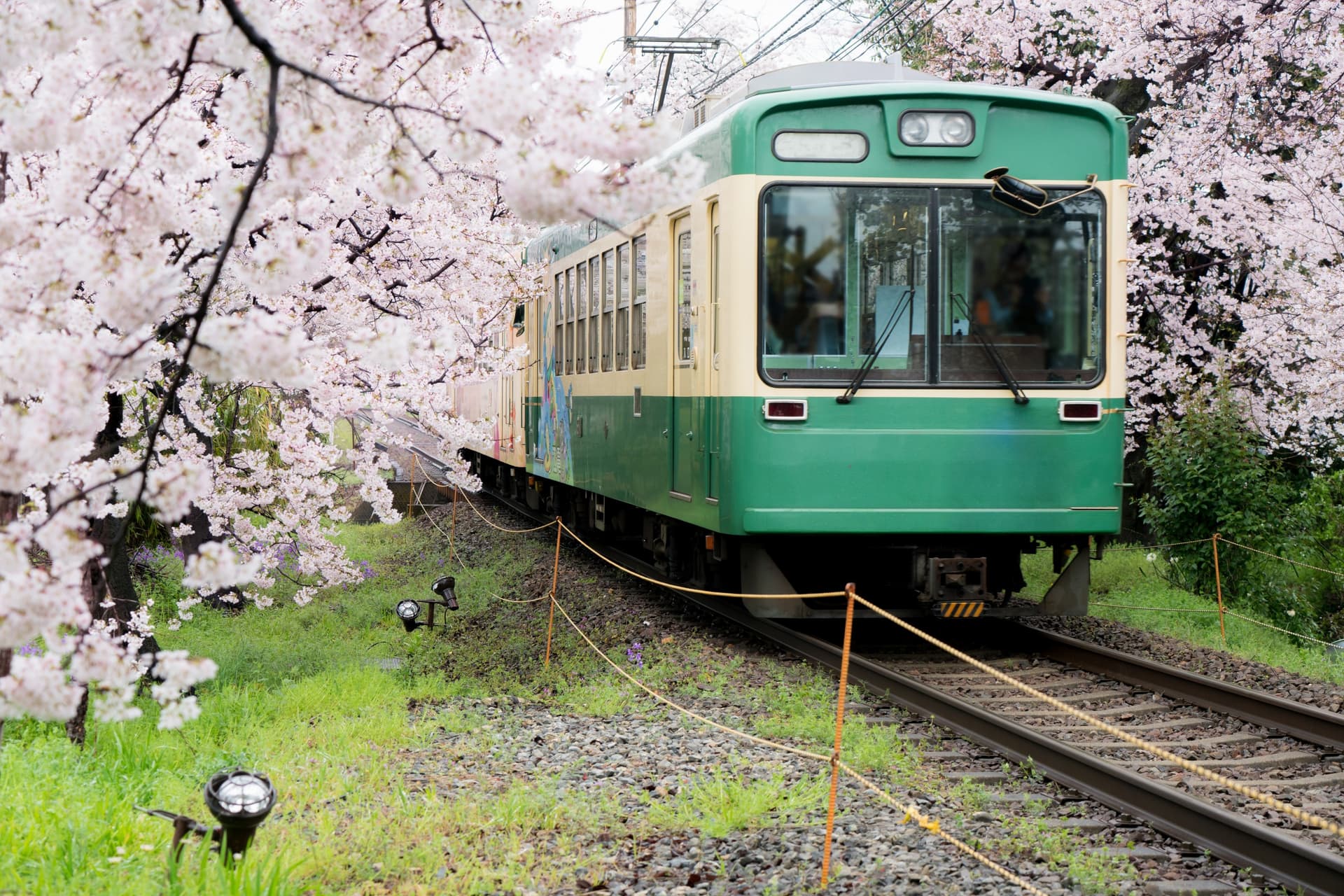
Train travel is undoubtedly the most common and practical way to move throughout the Japanese archipelago. Japan is renowned for having one of the world's finest railway networks, with convenient and regular lines, and trains that run on time.
The vast majority of stations are exceptionally well-developed. You can easily purchase tickets at ticket windows or from automatic machines that offer English-language options. English-speaking staff are typically available to assist you with ticket purchases.
Japan's railway lines are operated by several networks:
Japan Railway
The JR network comprises six railway companies covering the entire country. The lines are convenient and make it easy to connect the main Japanese islands. The trains are clean, comfortable, and fast.
The Shinkansen
Known as the Japanese high-speed train, the Shinkansen offers numerous rapid connections between the country's major cities. The train stands out for its futuristic design. Exceptionally comfortable with near-flawless service, quality comes at a price.
A journey between Tokyo and Kyoto, for example, takes approximately 2.5 hours for over 500 km and costs around 14,000 yen, roughly €115.
Private Railways
Japan has numerous private railway lines offering service quality comparable to the public network at nearly similar prices.
Private lines can be found at Nikko with the Tobu line, at Hakone with Odakyu Electric Railway, around Osaka with Kintetsu Railways for Nara, Keihan Railways for Kyoto, Hankyu Electric for Kobe, and Nankai Electric Railways for the Kansai International Airport.
The Japan Rail Pass
The Japan Rail Pass is a highly attractive package offered by JR. Often essential for stays in Japan, it not only facilitates travel between Tokyo and Kyoto, but also to regions in the south and north of the country. Depending on your travel itinerary and planned visits, this pass often allows you to save on fares and offers unlimited travel on JR network lines (trains and metro) and affiliated buses and ferries. Additionally, it provides discounts at JR group hotels.
The JR Pass must be ordered before your trip and picked up at a station in Japan upon arrival. Some station counters now allow you to purchase it on-site.
JR Pass Rates
In economy class (standard):
- 7 days 28,610 ¥ (€238);
- 14 days 45,640 ¥ (€380);
- 21 days 58,420 ¥ (€487);
- Discounts available for ages 6-11.
Other Regional Japan Rail Pass Options
Advantageously priced passes by region are available for tourists, purchasable before departure or locally. For the Kyoto-Osaka-Nara region, obtain the Kansai Area Pass:
1 day €17 (approximately 2,260 ¥);
2 days €32 (approximately 4,260 ¥);
3 days €40 (approximately 5,320 ¥);
4 days €47 (approximately 6,260 ¥).
Discounts available for ages 6-11.
You can travel freely on railway lines between Osaka, Kobe, Nara, Kyoto, and Wakayama, and enjoy numerous discounts on tourist attractions.
For stays on Hokkaido, you can also purchase the JR Hokkaido Pass (from 14,880 ¥ – €124). Other passes exist as well, such as the JR East Pass (23,400 ¥ – €195), the West Rail Pass (17,160 ¥ – €143), and the JR-Kyushu Pass (13,560 ¥ – €113).
Flying in Japan
Japan has two major airlines counted among the world's finest: Japan Airlines and ANA (All Nippon Airways). Japan Airlines offers a Japan Explorer Pass – allowing 2 to 6 discounted flights – valid for 2 months.
Japan's two largest airports are Tokyo-Narita and Kansai, near Osaka, built over water and offering an incredible arrival view.
From Europe, direct flights to Osaka (Kansai International Airport) are available via regular daily services, allowing quick access to Kyoto without passing through Tokyo.
Traveling by Bus in Japan
Roads in Japan are of high quality, and journeys, while longer than by train, are generally very pleasant. Buses are always exceptionally clean and comfortable. For a Tokyo-Kyoto journey, expect 7 hours for a cost of around 5,000 yen. Tickets can be purchased on company websites or at bus station offices.
Urban buses will surprise you with their punctuality! Very practical in certain cities like Kyoto, we nonetheless advise against buses in Tokyo. Tickets are purchased directly on board.
The Metro
Major cities have metro systems allowing very easy movement around town. Modern, clean, functional, and impeccably organized, Japanese city metros are surely the best way to move around town. However, we strongly recommend avoiding the metro during peak hours, unless you wish to experience one of the most unusual and suffocating human encounters.
It's generally very easy to navigate Japanese metros. They're all equipped with network maps showing station names in both Japanese and English. Announcements also call out station names in multiple languages, including English.
Tickets are easily purchased from automatic machines at every station. Ticket prices vary based on distance traveled and the number of stations passed. If you encounter any issues, you can always ask for help from an attendant or a passerby who will be delighted to guide you.
Taxis
Taxis can be useful for getting around town. Remember that they very rarely speak English, so be sure to have your address in Japanese or show your precise address on a map in Japanese.
The receipt (ryōshûsho) is issued by an electronic machine. The initial charge varies, depending on the time of year, from 400 to 700 ¥ approximately (€3 to €6); the meter then increases starting from 2 km. Particularly good value for short trips.
Other Forms of Transportation in Japan
The Car
Renting a car to travel through Japan isn't the easiest option. First, an international driving permit isn't sufficient—you must have your license translated into Japanese in addition to the original. Moreover, driving is on the left side of the road and signs are written in Japanese. We therefore advise against this mode of transport.
The Bicycle
Cycling in Japan allows you to discover locations not served by railway networks. Popular routes like the Shimanami Kaido offer spectacular scenery. However, note that the climate varies by season and region, requiring good planning. Equip yourself properly and follow local traffic rules.
Cycling in major cities can be stressful due to very dense traffic and left-side driving. Consequently, it's recommended to avoid metropolises as much as possible.
FAQ
What apps can help you plan your itineraries in Japan?
To navigate Japan, here are some essential applications:
- Google Maps: an essential tool for GPS navigation, transport schedules, and location information.
- Japan Travel by NAVITIME: offers door-to-door itineraries, train, bus, and ferry schedules, and tourist guides.
- Hyperdia: very useful for planning train itineraries and checking ticket prices and travel times.
For more economical travel in Japan, use the Japan Rail Pass for trains, long-distance buses, and local buses. Prepaid transport cards like Suica and Pasmo also offer discounts. Furthermore, you can rent a bicycle or use a ride-sharing service (available only in certain prefectures such as Tokyo and Kyoto).
To reach Kyoto from Tokyo, take the high-speed train (Shinkansen) or fly. But to better enjoy the Japanese countryside, opt for long-distance buses.
Is it easy to get around Tokyo by train?
Yes, exploring Tokyo by train is easy thanks to its well-organized railway network, with signs and announcements in English at most stations. Trains are frequent and punctual, and prepaid cards like Suica or Pasmo simplify fare payments.