A stopover in Japan's former imperial capital: 6 temples to visit in Kyoto
Japan's former imperial capital is a true treasure for lovers of spirituality and history. Why? The city is home to hundreds of shrines and temples in Kyoto!
Japan's former imperial capital is a true treasure for lovers of spirituality and history. Why? The city is home to hundreds of shrines and temples in Kyoto! Follow us as we introduce you to 6 emblematic religious buildings of the city – representing both Shinto and Buddhist religions...
What are the most beautiful temples in Kyoto?
Before discovering the most beautiful temples and shrines of Kyoto, it's worth noting that the city was once Japan's ancient capital (then called Heian-kyō). From this imperial past, the city retains numerous monuments.
Spared by the 1945 atomic bomb (precisely because of this exceptional heritage), the city today preserves very old historical monuments from ancient Kyoto, and is home to nearly 2,000 religious buildings on its territory!
What is the difference between a temple and a shrine? To put it simply, shrines are the religious buildings of Shintoism, while temples are those of the Buddhist religion. The two types of buildings are easily recognizable: ● Shinto shrines (jinja) are equipped with a torii, a gate that separates the human world from that of the deities). ● Buddhist temples (otera) are equipped with sanmon, imposing richly ornate gates that stand three stories high. Some buildings represent both religions. |
1. Fushimi Inari-taisha Shrine
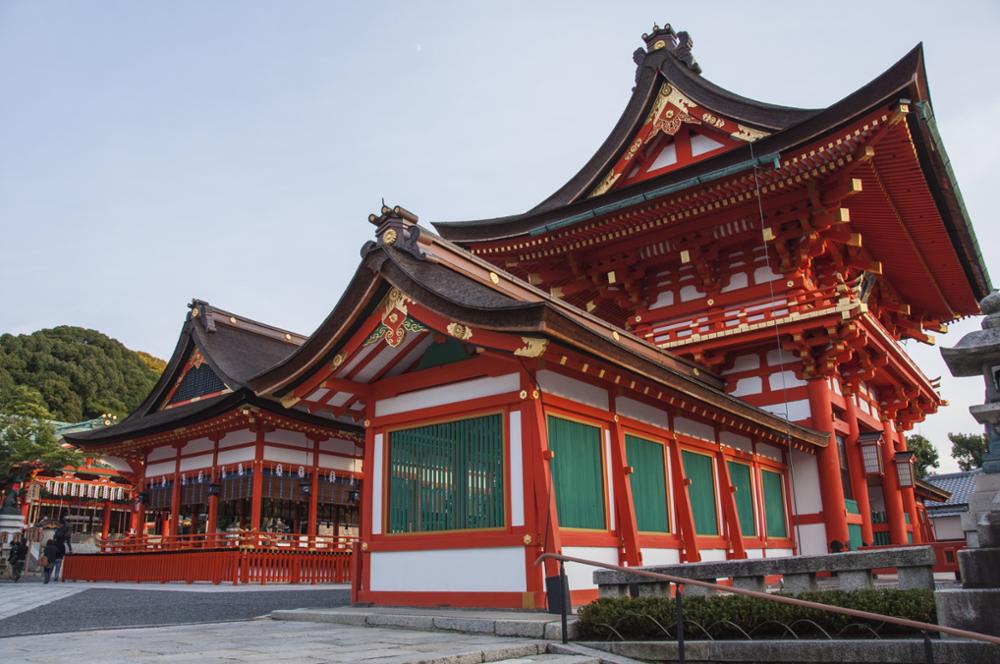
Fushimi Inari Taisha is one of the most beautiful shrines in Kyoto. Designed in 711, the monument is dedicated to the goddess Inari – the deity ensuring the prosperity of agricultural harvests, represented in the form of a fox.
The complex comprises several buildings scattered throughout the mountainous Arashiyama area. Its most famous feature is its long avenue of torii – a vermillion tunnel said to contain nearly 10,000 traditional gates!
An anecdote? If you can't read Japanese, the black characters inscribed on the torii may seem very typical, but know that these are actually... advertisements! Indeed, the gates located at the shrine's entrance are costly advertising spaces (around €8,000).
The shrine is nestled in the heart of a bamboo forest, and the path to reach it is quite pleasant (allow approximately 2.5 hours of walking, with the possibility of stopping at tea salons along the way). Beyond tourists, the building also attracts many faithful worshippers.
Practical information ● Address: 68 Fukakusa Yabunouchicho, Fushimi Ward, Kyoto, 612-0882, Japan ● How to get there: take the JR Nara Line to JR Inari Station, then walk a few minutes to the shrine. ● Opening hours: open 24/7 ● Admission: free ● To note: it is recommended to plan your visit early in the morning to avoid afternoon crowds. |
2. Kiyomizu-dera Temple
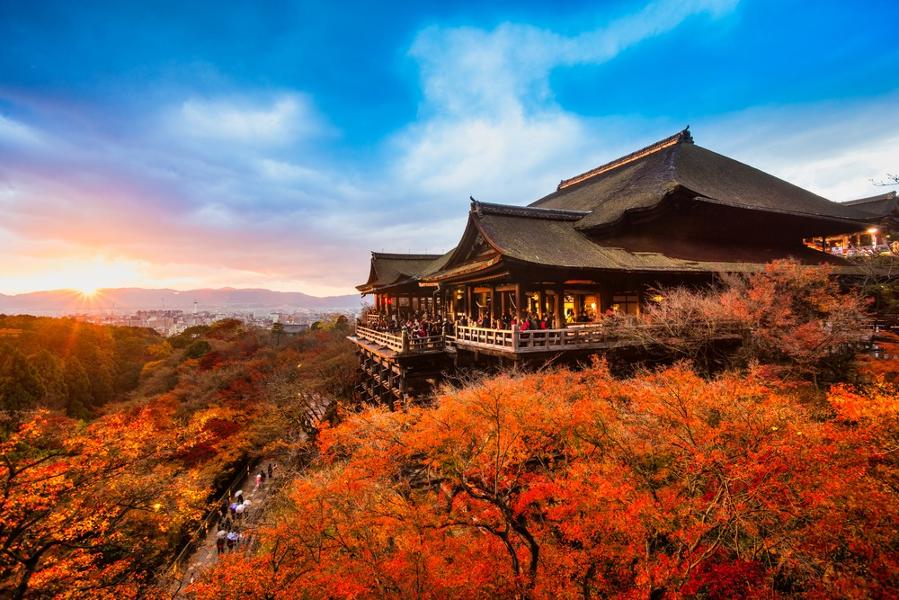
Listed as a UNESCO World Heritage site, Kiyomizu-dera Temple stands on a hillside in the Higashiyama district. Comprising both a Shinto shrine and a Buddhist temple, the building is renowned for its wooden platform situated 13 meters high, and its stunning panoramic views of Mount Otowa and its surroundings.
Originally built in 780 (then rebuilt in 1633 following a fire), the temple is one of the must-visit spots in autumn to admire the momiji (the reddening of maple leaves) and in spring during the sakura period (cherry blossom season).
Practical information ● Address: 1 Chome-294 Kiyomizu, Higashiyama Ward, Kyoto, 605-0862, Japan ● How to get there: 10 minutes on foot from Kyoto, Keihan, and Gion Shichijo stations and the Higashiyama-gojo bus stop ● Opening hours: daily from 6 am to 6 pm (hours may vary by season). ● Admission: €3 per person. |
3. Kodai-ji Temple
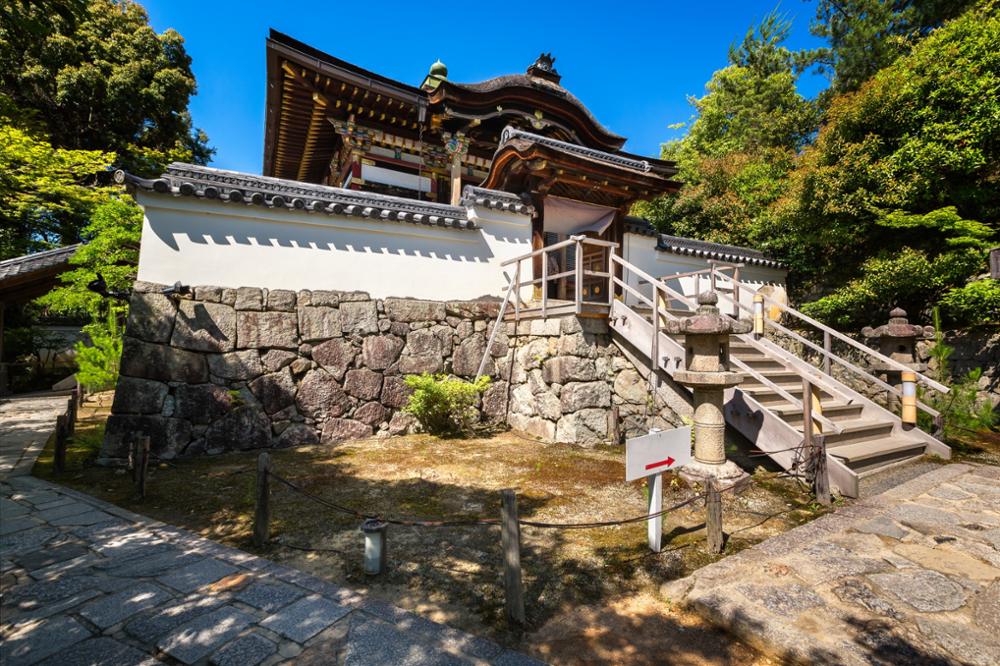
Kodai-ji Temple was designed in 1605 in memory of Toyotomi Hideyoshi – one of the three unifiers of Japan during the Sengoku period. It is a monument of the Rinzai branch (one of the three schools of Zen Buddhism in Japan).
Within the grounds of this superb temple, you can discover the museum (featuring numerous calligraphies and paintings from the 16th and 17th centuries), a mausoleum dedicated to Hideyoshi, tea houses, and most surprisingly... the remarkable humanoid robot Mindar!
Conceived in the likeness of the divine being Kannon, this android oracle delivers sermons at the temple entrance in a metallic voice (as well as warnings against the dangers of anger, ego, desire, etc.). According to the temple's priests, this initiative aims to reach younger generations, less receptive to the discourse of "somewhat outdated priests."
Kodai-ji is also a highly favored observation spot during the momiji period (thanks especially to its magnificent nighttime illuminations).
Practical information ● Address: 605-0825 Kyoto, Higashiyama Ward ● How to get there: 10 minutes' walk from Higashiyama-Yasui bus stop (lines 100 or 206) ● Opening hours: daily from 9 am to 5 pm ● Admission: €4 per person (temple visit only); €5.50 per person temple + museum |
4. Eikan-do Temple
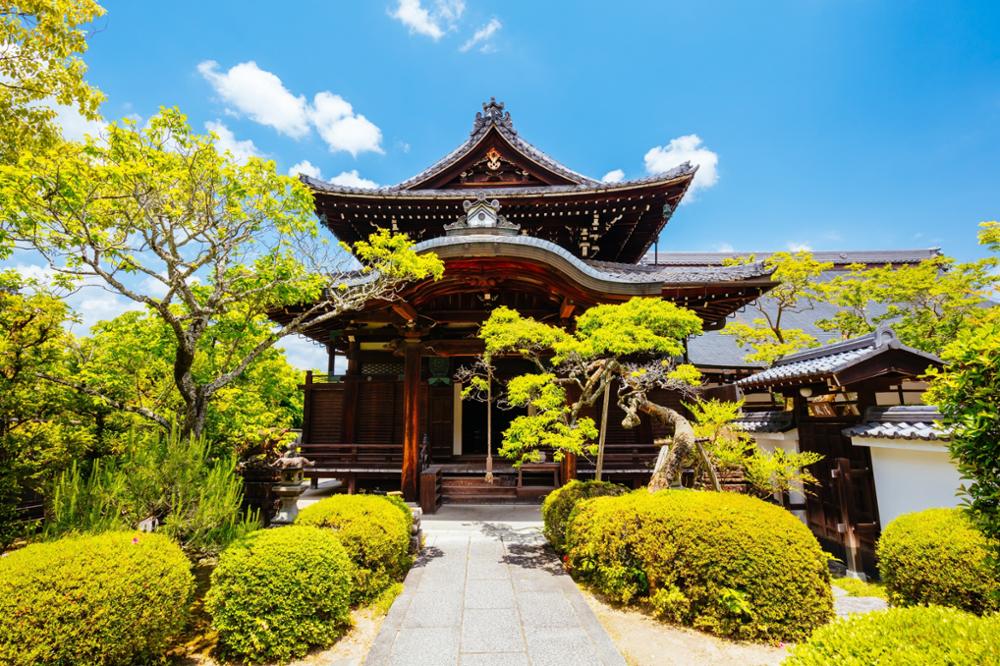
The religious building of Eikan-do is a temple of the Seizan branch (a branch of Jōdo-shū Buddhism). It is known for its statue of Buddha looking over his shoulder, as well as its stunning traditional Japanese gardens.
The complex houses the Hojo Pond, renowned for its lush scenery featuring moss and maple trees. Well-marked paths allow visitors to stroll through this verdant Eden. Its charming Tahoto pagoda offers a breathtaking view over the city of Kyoto.
Practical information ● Address: 48 Eikandocho, Sakyo Ward, Kyoto, 606-8445, Japan ● How to get there: by bus (line 5, from Kyoto Station / Nanzenji Eikando-michi stop); by subway (Toza Line, Keage Station + change at Karasuma). ● Opening hours: daily from 9 am to 5 pm ● Admission: €4 per person ● To note: prices increase in November during illuminations. Expect €6 per person for visits (until 9 pm) |
5. Ginkaku-ji (the "Silver Pavilion" Temple)
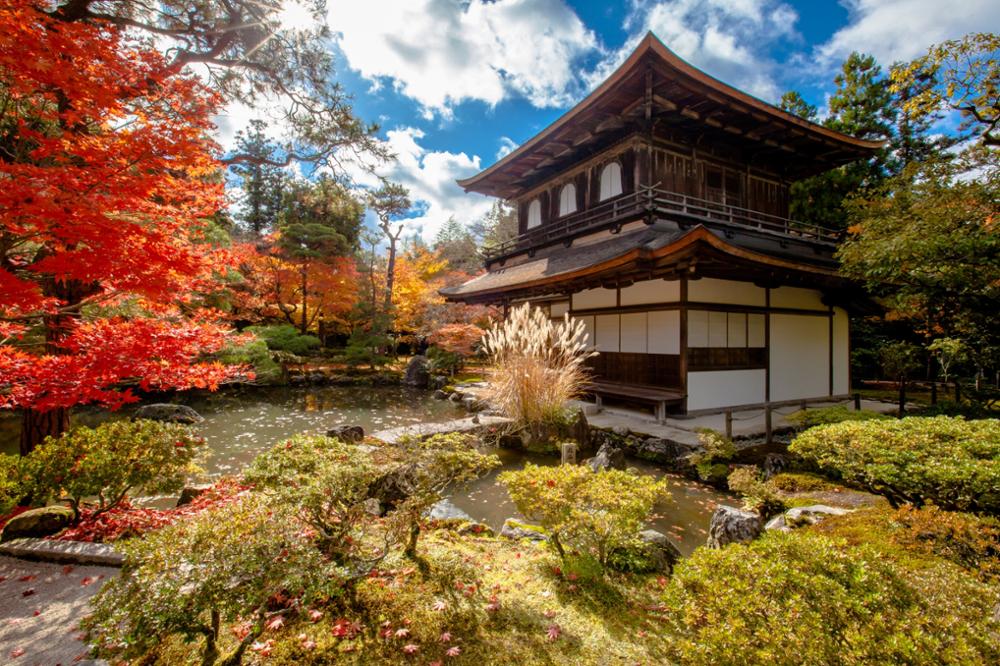
The Ginkaku-ji Temple was designed in 1482 at the request of shogun Ashikaga Yoshimasa. Its purpose? To rival the Golden Pavilion (Kinkaku-ji Temple), built by his grandfather! Unlike his ancestor's temple, the grandson's building was ultimately not covered in silver leaf, yet retained the name "Silver Pavilion".
During your visit, you can admire a superb Zen garden adorned with moss and bamboo pathways. Its particular feature? The garden extends over two levels and offers a circular route.
Practical information ● Address: 2 Ginkakujicho, Sakyo Ward, Kyoto, 606-8402 ● How to get there: by bus (lines 5 or 17, from Kyoto Station) ● Opening hours: daily from 8:30 am to 5:00 pm ● Admission: €3.10 per person |
6. Kinkaku-ji (the "Golden Pavilion" Temple)
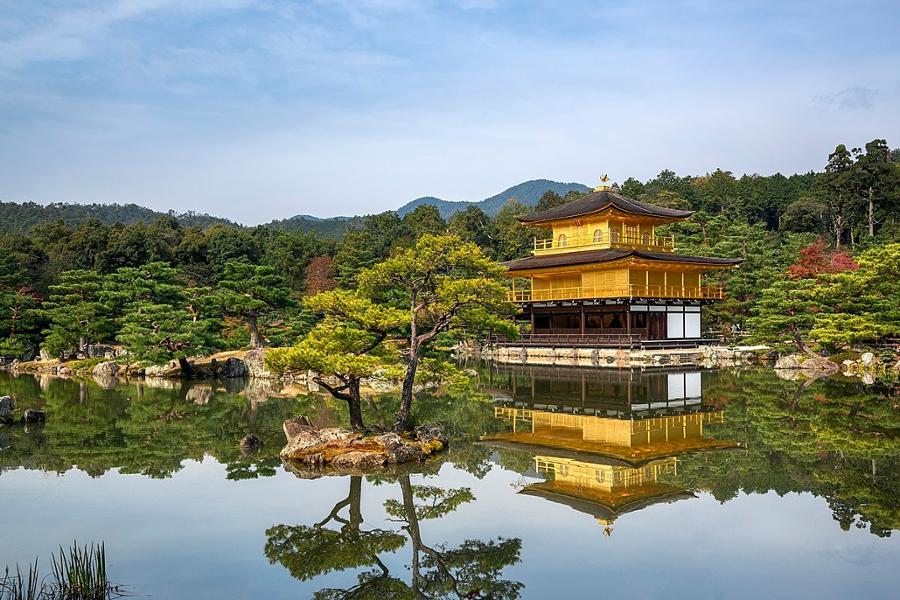
Located in northwest Kyoto, the Kinkaku-ji Temple is recognizable by its sublime façades covered with gold leaf. Listed as a UNESCO World Heritage site, the temple stands over 12 meters tall above Mirror Lake. The result? The monument reflects in the waters of the pond, thus highlighting the meeting of human craftsmanship and the beauty of nature!
Somewhat isolated, the temple offers hiking possibilities in the surrounding area, with trails leading to other temples. It is pleasant, for example, to rent a bike and head toward the Ninna-ji and Ryoan-ji temples.
Practical information ● Address: 1 Kinkakujicho, Kita Ward, Kyoto, 603-8361 ● How to get there: by bus (lines 101, 102, 205) ● Opening hours: daily from 9 am to 5 pm ● Admission: €2.50 per person |
Visit tips Numerous temples dot the city of Kyoto. If you wish to visit several, it is recommended to: ● Prioritize visits early in the morning (to avoid crowds), ● Select a neighborhood and choose temples to visit in advance (to avoid multiplying transfers and wasting time). In terms of timing, it is possible to visit a maximum of 3 temples in a single day – these typically close quite early (often around 5 pm, or even 4 pm). |
Frequently asked questions
What was Kyoto called before?
Japan's capital from 794 to 1868, Kyoto was formerly called Heian-kyō, which means "Capital of Peace and Tranquility." Today, Kyōto-shi – or "capital city" – testifies to its rich imperial past through its heritage and historic districts.
How should you dress to visit a Japanese temple?
There is no specific dress code for visiting a Japanese temple. You simply should avoid wearing overly revealing clothing (mini shorts, crop tops, etc.) and remove your hat or cap – sometimes even your shoes. A tip? Respect tradition by entering with your right foot for women and your left foot for men.
What is the oldest temple in Japan?
The oldest temple in Japan is Gango-ji. Designed in 588 in Asuka, it was relocated to Nara in 718 – when the city was designated as Japan's capital. The building is recognized as the birthplace of Buddhism in Japan. Gango-ji Temple is part of a heritage complex listed by UNESCO.
Frequently asked questions
To visit the 6 temples presented in this article, allow at least 2 to 3 days. Indeed, it is advisable not to visit more than 3 temples per day, as most close around 5 pm. Organize your visits by neighborhood to optimize your travel time: the Kodai-ji, Kiyomizu-dera, and Eikan-do temples are close to the Higashiyama district, while Kinkaku-ji and Ginkaku-ji are located in the north and east of the city.
Yes, the majority of Kyoto's temples are open year-round, generally from 9 am to 5 pm. However, hours may vary by season, particularly during autumn nighttime illuminations (November) when some temples like Kodai-ji or Eikan-do stay open until 9 pm. It is advisable to check hours in advance on each temple's official website.
Fushimi Inari-taisha Shrine is the most visited in Kyoto, particularly because of its famous tunnel of 10,000 vermillion torii. It is also one of the rare sites to be open 24/7 and free to enter. To avoid crowds, it is strongly recommended to visit very early in the morning, before 8 am.
Yes, cycling is an excellent way to travel between Kyoto's temples! The city is relatively flat in its center and numerous bike rental shops are available near major stations. It is particularly pleasant to connect Kinkaku-ji to the Ninna-ji and Ryoan-ji temples by bike, as mentioned in this article.
Yes, the main temples in Kyoto welcome many foreign tourists and typically have explanatory signs in English, and sometimes in other languages. Translation apps can be useful for reading inscriptions. Note that the characters inscribed on Fushimi Inari's torii are actually advertising mentions for local businesses!