Where to View Mount Fuji: The Best Viewpoints
Standing at 3,776 meters above sea level, Fujisan is the highest peak in the Land of the Rising Sun. More than just a mountain, it holds sacred significance for the Japanese people,
Where to View Mount Fuji: The Best Viewpoints
Apr 29, 2026
Standing at 3,776 meters above sea level, Fujisan is the highest peak in the Land of the Rising Sun. More than just a mountain, it holds sacred significance for the Japanese people, known worldwide thanks to the woodblock prints of Hokusai. If you wish to admire this iconic summit without undertaking an ascent during your trip to Japan, here are 10 spots to see Mount Fuji offering breathtaking views and varied experiences depending on your chosen observation points.
Overview Depending on the season and weather, Fujisan reveals itself differently: at sunrise, from a cruise, amid spring blossoms, or beneath a clear winter sky. Here's a selection of 10 spots to see Mount Fuji during your trip to Japan!
|
1. Fuji Go Ko and Lake Kawaguchi: The Best Photo Spot at Sunrise
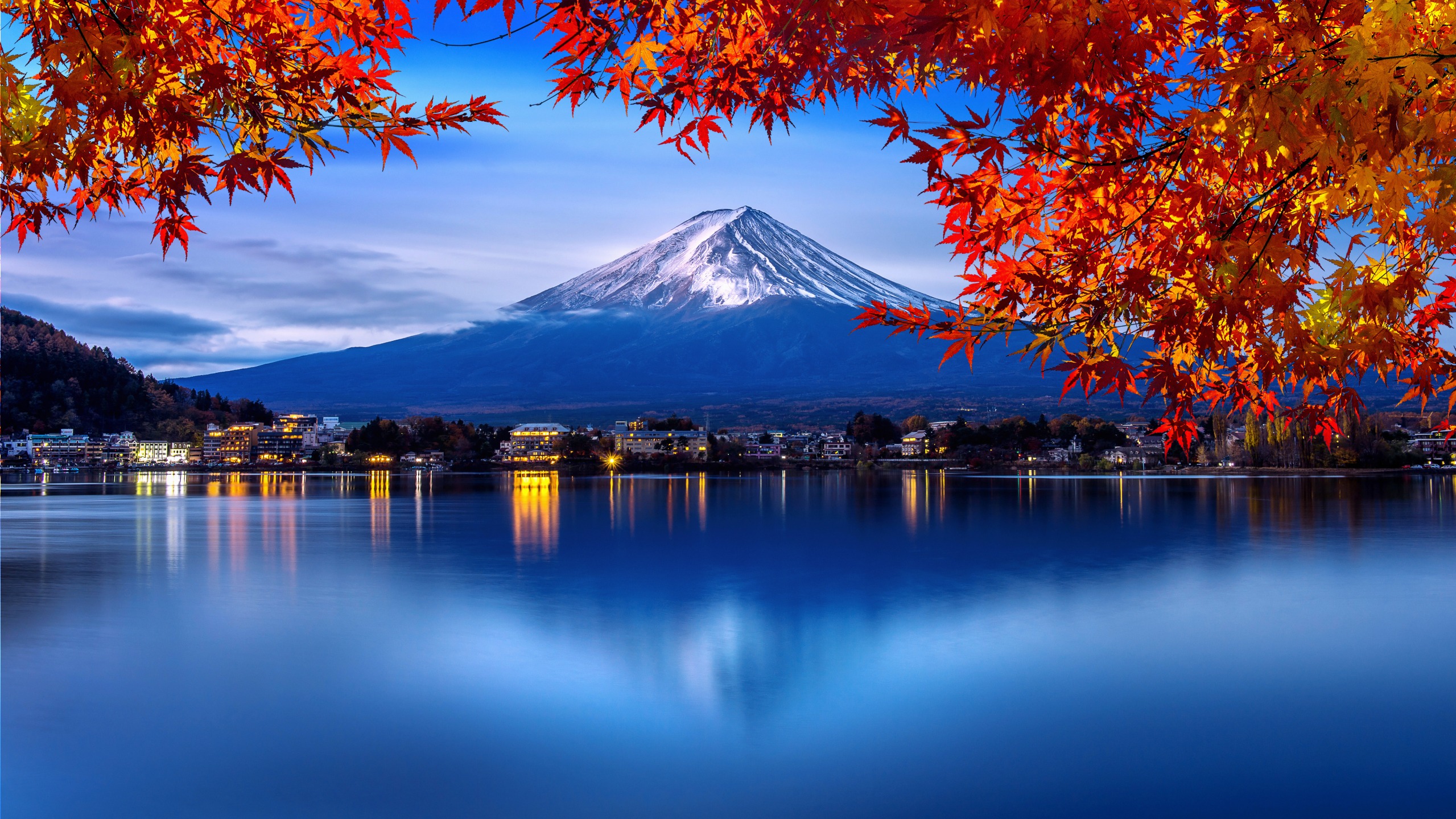
Climbing Mount Fuji is a childhood dream for many travelers; but if heights aren't your forte, the Fuji Go Ko region is an ideal spot for stunning photographs.
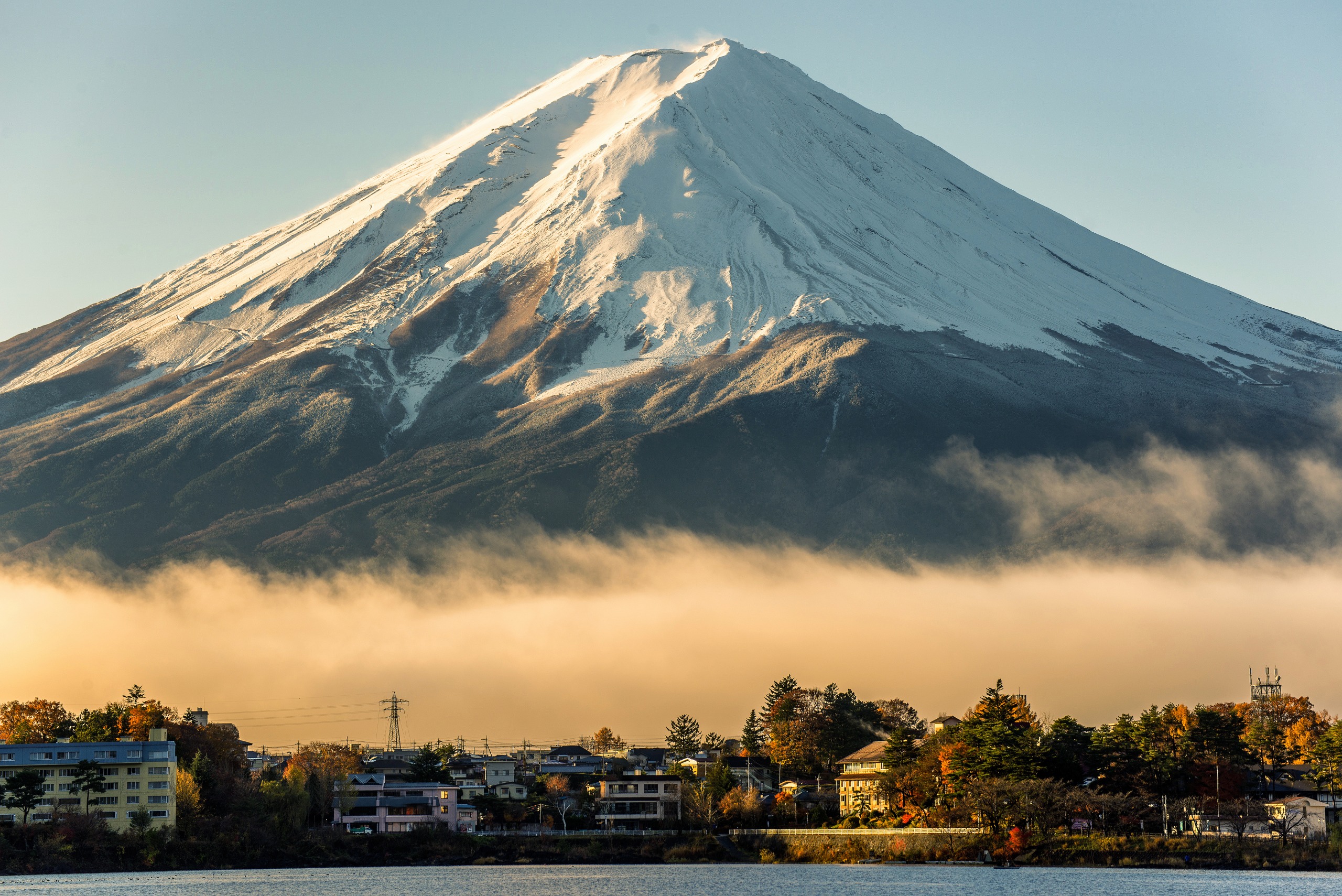
At the foot of the mountain, the five lakes of Sai, Shoji, Yamanaka, Kawaguchi, and Motosu create a picturesque tableau. Set out early in the morning when Fuji's conical silhouette glows with the first rays of dawn and reflects on the transparent waters of the lakes.
The best observation point is said to be along the shores of Lake Kawaguchi. Beyond its purely photographic appeal, you can enjoy a magical walk through flower fields and cherry blossom groves. Activities include exploring secret caves, taking a small boat ride, or tasting local products.
Practical Information ● Getting there: from Tokyo, take an express train on the JR Chuo Line, then transfer at Otsuki Station to the Fuji Kyuko Line (note that the JR Rail Pass is not accepted). Alternatively, you can take it toward Kawaguchiko Station. ● Access: stroll along the lake shores or take a cruise on Lake Kawaguchi to get closer to the mountain and see it reflected on the water's surface. |
Lake Kawaguchi at a Glance
Want to discover the Grand Edo Era?
2. Lake Ashi: A Different Perspective by Cruise
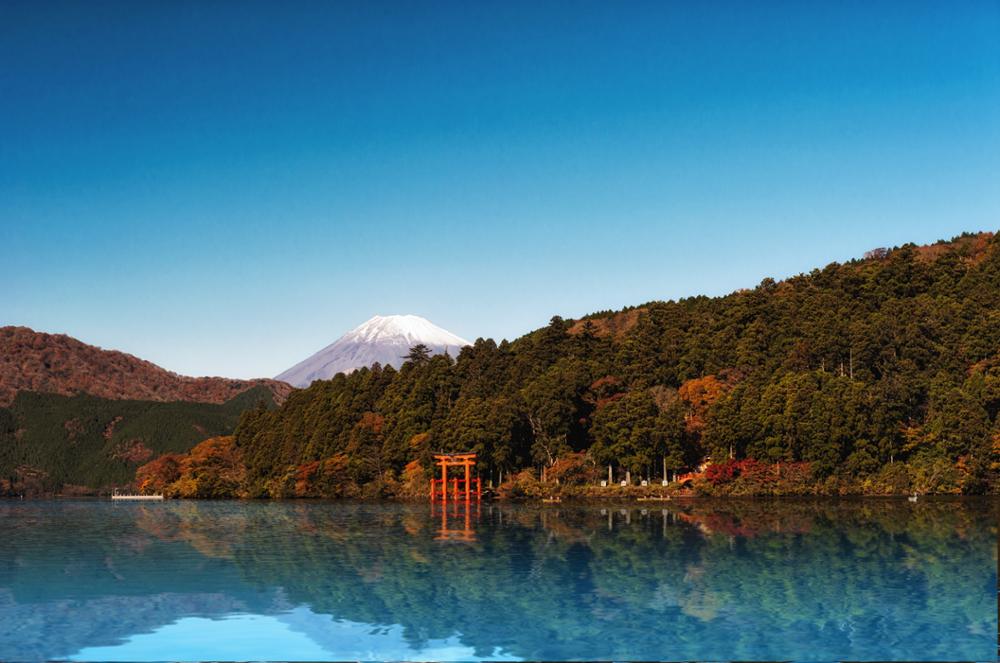
Crossing the Hakone region in Kanagawa Prefecture, Lake Ashi will enchant cruise lovers and delight those dreaming of a magnificent view of Mount Fuji. The boat tour serves as a perfect excuse to visit numerous points of interest: you can pay your respects at the Hakone-jinja Shrine, wander freely through Onshi-Hakone-Koen Park and admire its lush vegetation, or visit the Open Air Museum.
Unwind as you soak in the simple and charming atmosphere of the countryside. As long as the weather is pleasant and warm, all these observation points are excellent for contemplating Mount Fuji.
Practical Information ● Getting there: accessible by bus from Hakone-yumoto-eki Station ● Access: walking along the lake shores. ● To note: if you wish to enjoy an exceptional view of Mount Fuji, don't hesitate to take the cable car from the lake to the summit of Mount Komagatake (the highest mountain in Hakone). |
Lake Ashi at a Glance
Breathtaking views of Mount Fuji from the lake. An opportunity to discover the must-see attractions in the area during the cruise and enjoy a moment of serenity in the heart of the countryside.
3. Chureito Pagoda: An Iconic View of Mount Fuji
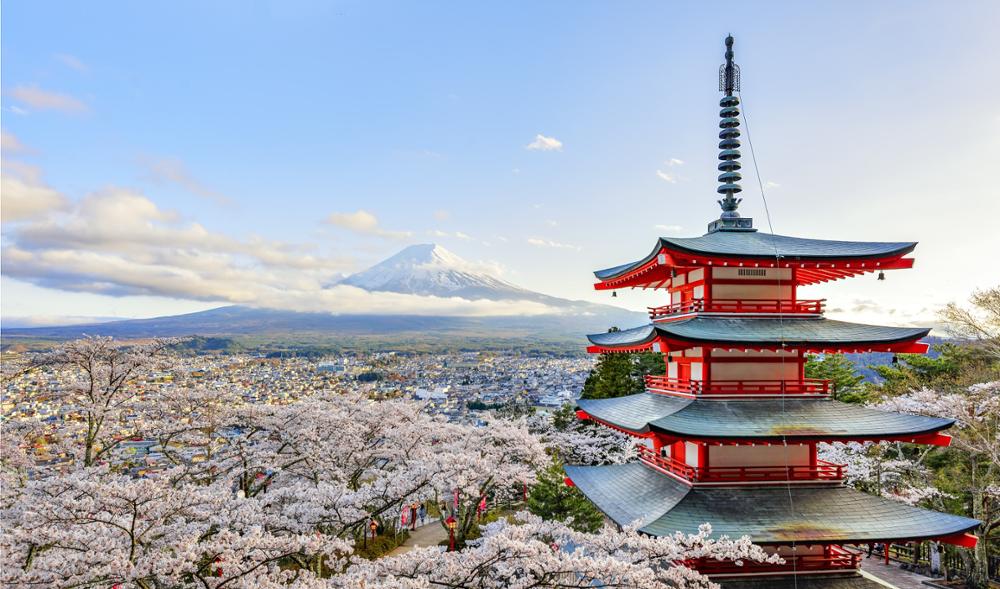
Located in Arakurayama Park, the Chureito Pagoda offers one of the most iconic views of Mount Fuji. In spring, with cherry blossoms in full bloom, and in autumn with maples ablaze in fiery colors, photographs of Fujisan can only be spectacular!
The pagoda overlooks the town from the heights of the park, so it requires some effort to reach it. About a hundred steps lead to the structure and allow you to enjoy the view. You can continue your walk through the shaded park, which is quite pleasant.
Practical Information ● Getting there: by train from Tokyo (Shinjuku Station); from the region of the 5 lakes (Fujikyu Line to Shimoyoshida Station). You can also take the Mount Fuji tourist bus (Mount Fuji World Heritage Loop Bus), which stops at Chureito Iriguchi every 90 minutes – the pagoda is located near the station and bus stop. ● Best time to visit: mid-April, during the sakuras (cherry blossom season), this spot offers a beautiful flowering view of Mount Fuji. In autumn, from September to November, you can witness the momiji phenomenon (the reddening of maple leaves). |
Chureito Pagoda at a Glance
In addition to offering a stunning view of Mount Fuji, the pagoda provides an exceptional panorama of the surrounding nature and allows you to witness the sakura and momiji phenomena.
4. Tokyo Gate Bridge: A Stunning View from Wakasu Seaside Park
The celebrated engraver Hokusai set the tone when he painted the emblematic mountain beneath the Mannen Bridge in Fukagawa. Following his example, Wakasu Seaside Park features a rather unusual bridge – Tokyo Gate Bridge – from which travelers can admire the white majesty of Mount Fuji that defiantly rises above the clouds.
The striking profile of Tokyo Gate Bridge, which resembles two dinosaurs in confrontation, will leave you amazed. You can visit the golf course and cycle paths if you feel the need for some physical activity to recharge. But don't miss the mountain view at twilight when Fujisan appears like a volcano ablaze in the light of the setting sun.
Practical Information ● Getting there: take the Toei bus from Shin-Kiba Station to the Wakasu Seaside Park bus stop (then a few minutes' walk to the bridge) ● Best time to visit: to see Mount Fuji from Tokyo Gate Bridge, it's preferable to go in winter when the sky is clear. |
Tokyo Gate Bridge at a Glance
This unconventional dinosaur-shaped bridge allows you to admire the snow-covered beauty of Mount Fuji, along with a superb sunset.
5. Kawaguchi-ko: One of the Five Lakes of Mount Fuji
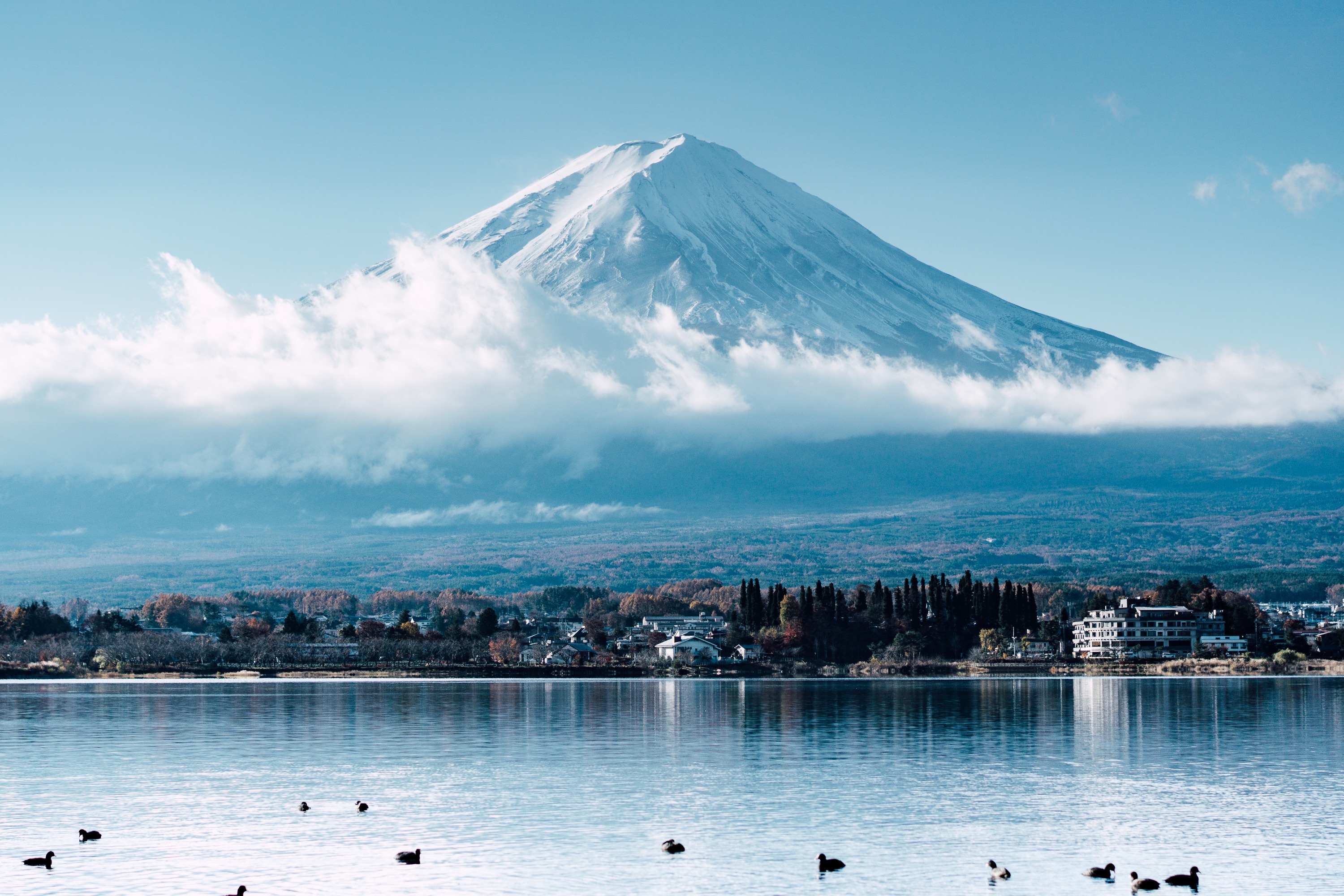
On a climbing trail starting from Yoshiba to Subaru at 2,105 meters elevation, Kawaguchi-ko is a well-known station for discovering Mount Fuji from a fabulous perspective.
The site's popularity is explained by three reasons: the trek level is relatively easy, the food at nearby hotels is excellent, and the view of the five lakes is absolutely breathtaking. This spot is perfect if you want to enjoy mountain scenery without intending to continue climbing to the summit.
Practical Information ● Getting there: take the train from Tokyo (JR Line) or bus (same company as the one to Mount Fuji) to Kawaguchiko Bus Terminal, then walk about 10 minutes to reach the lake shores. ● Best time to visit: all four seasons have their own charm. In spring the lake is adorned with cherry blossoms, while autumn sets the surroundings ablaze with ocre and red maple leaves. In summer, the lake's edges are graced with the lovely violet color of lavender. In winter? The clear sky allows you to easily see the snow-capped summit. |
Lake Kawaguchi-ko at a Glance
This flagship lake of the Fujigoko region offers an exceptional view in every season. Easy to access from Tokyo, it's located near tourist sites such as the Itchiku Kubota Art Museum.
6. The Fuji Shibazakura Festival: A Flowering View of Mount Fuji
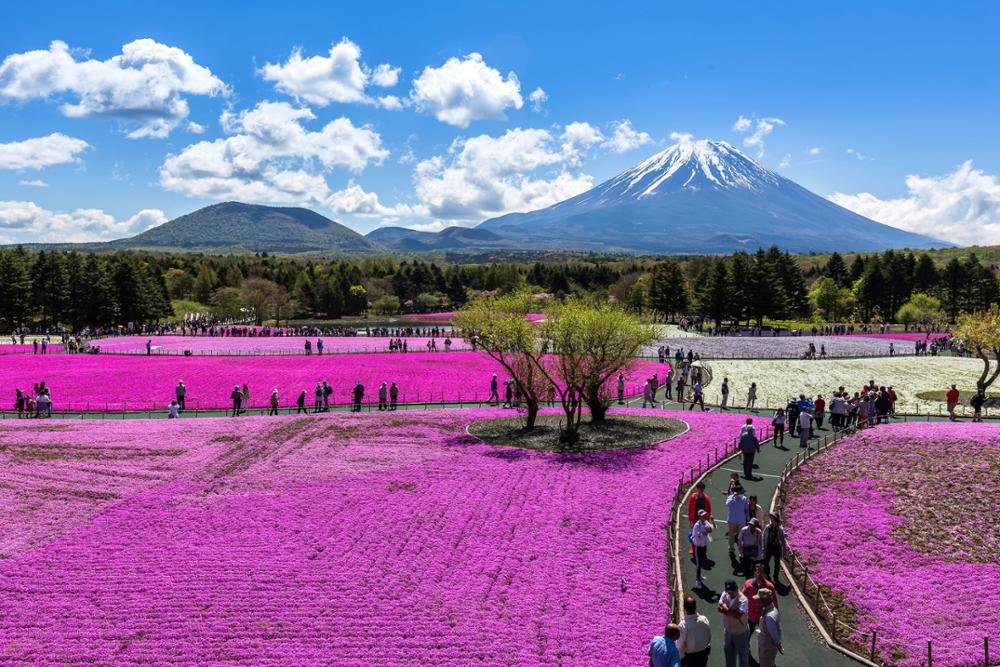
With a bit of luck, your stay in Tokyo will coincide with the Fuji Shibazakura Festival, a floral event held every year at the beginning of spring. This festival is the perfect opportunity to observe the grandeur of Mount Fuji in the most spectacular setting, formed by thousands of pink, white, and purple flowers.
Located near Lake Motosu in the city of Fujikawaguchiko, the festival takes place in a park of nearly 2.4 hectares. About 800,000 Shiba-sakura flowers bloom and create a tableau that sublimes the sacred mountain for visitors.
Practical Information ● Getting there: accessible by bus from Kawaguchiko Station ● Festival dates: every year between mid-April and late May |
Fuji Shibazakura Festival at a Glance
Every year between April and May, the festival transforms into a floral paradise. Pink, white, and purple flowers: nature adorns itself in its finest spring colors with Mount Fuji as the backdrop.
Want to embark on an adventure in Japan?
7. Miho no Matsubara: The Pine-Lined Beach
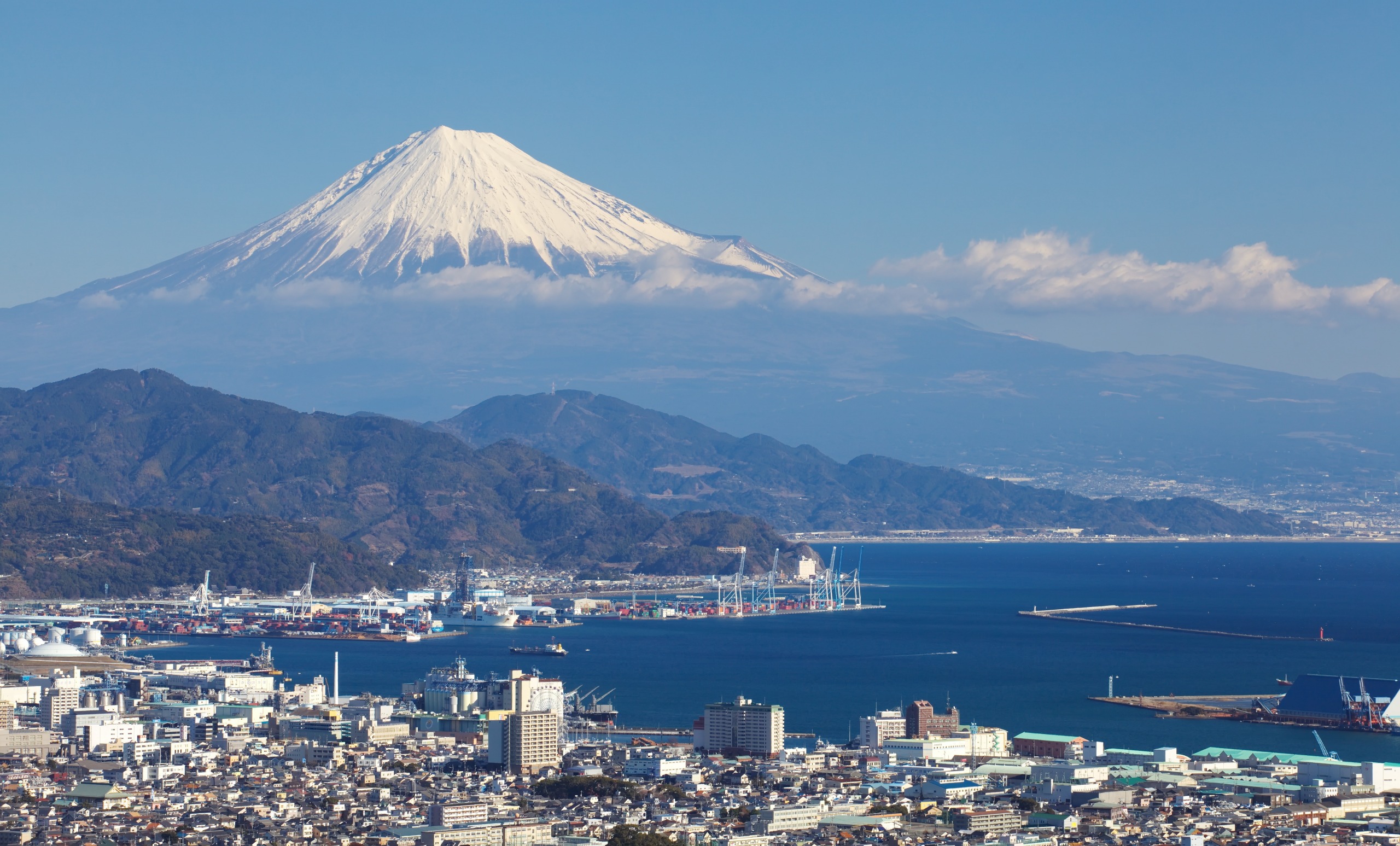
Miho no Matsubara is a beach lined with pines, renowned for its stunning view of Mount Fuji. Located in Suruga Bay, the conifer forest consists of more than thirty thousand trees extending over 7 km along the beach.
The area is connected to the famous legend of Hagoromo, an important traditional Japanese story in Japanese arts and culture. Miho no Matsubara has been a UNESCO World Heritage site since 2013 due to its aesthetic value and spiritual significance.
Practical Information ● Getting there: by train (including the Tokaido Shinkansen) from Tokyo and other major city stations to Shizuoka Station. From there, take a bus or taxi to the beach and pine grove (approximately 25 minutes travel time). ● Best time to visit: the optimal period to see Mount Fuji is from December to February for dry, cold weather (and a clear view). ● To note: Miho no Matsubara is a pebble beach, not ideal for swimming. It's more of a walking destination. |
Miho no Matsubara at a Glance
This pebble beach lined with pines is both a must-see spot to view Mount Fuji and an important site in Japanese culture listed by UNESCO.
8. Oshino-Hakkai: A Traditional Village at the Foot of Mount Fuji
Located at the foot of Fujisan, Oshino Hakkai is a small village known and appreciated for its traditional thatched-roof houses. Between old dwellings, tall grass, and a water mill, this village is a picturesque site with an Edo-era architecture center.
The name Hakkai, meaning "Eight Seas,