Dazaifu Tenmangu Shrine
Dazaifu Tenmangu Shrine
A Shinto sanctuary founded on the tomb of Sugawara no Michizane, Dazaifu Tenmangu brings together plum blossoms, festivals and museums just 30 minutes from Fukuoka.
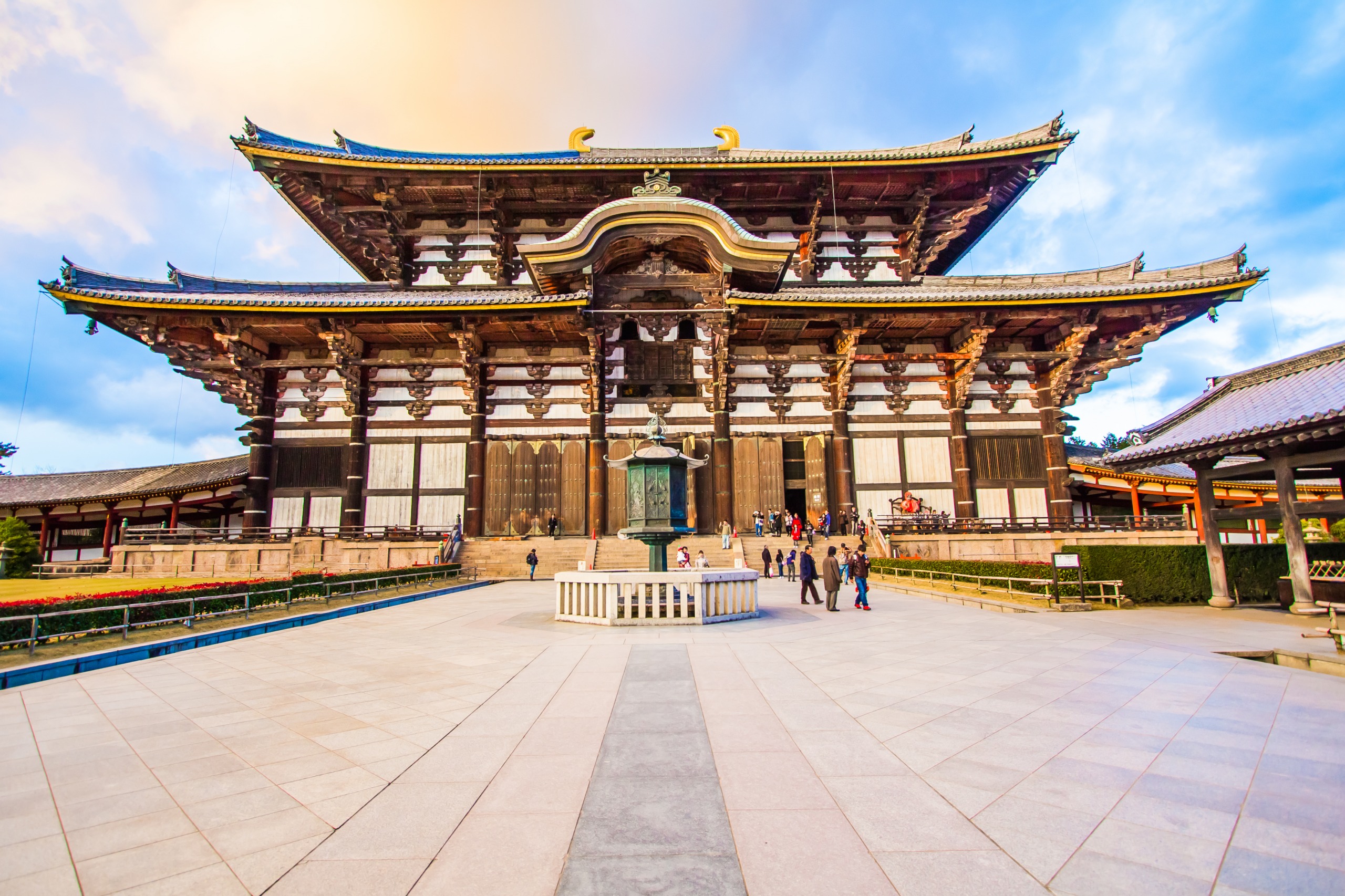
Japan is home to hundreds of Tenmangu shrines dedicated to Sugawara no Michizane. Along with the Kitano Tenmangu in Kyoto, the Dazaifu Tenmangu, in the southeastern suburbs of Fukuoka, ranks among the most significant. The site attracts nearly 10 million visitors each year, coming to pray to the god of letters and studies in a domain where plum blossoms, centuries-old camphor trees and Shinto architecture form a cohesive ensemble spanning more than a millennium.
Why visit Dazaifu Tenmangu
The sanctuary concentrates several points of interest within the same perimeter: a living place of worship, two major museums (the Kanko Historical Museum and the Kyushu National Museum), contemporary artistic programming and a calendar of festivals throughout the year. The shopping arcade leading to the main torii gate, lined with traditional shops, adds a gastronomic dimension to your visit. Its proximity to Fukuoka (around thirty minutes by train) makes it an easy half-day excursion to integrate into a Kyushu itinerary.
History of the sanctuary
Dazaifu Tenmangu was founded on the burial site of Sugawara no Michizane (845–903), a scholar and statesman exiled to Dazaifu after falling from grace at the imperial court. Revered after his death under the name Tenjin, god of letters and studies, he became one of the most prayed-to figures in Japan by students during exam season.
The current honden, the main hall, was rebuilt in 1591 on the foundations of the former main sanctuary erected in the 10th century. It is today designated an Important Cultural Property. The Kanko Historical Museum, located behind the building, traces Michizane's life through documents and period objects; the Kyushu National Museum, perched on the hill overlooking the domain, places this history within the broader context of cultural exchanges between the archipelago and the Asian continent.
What to see on the grounds
The bridges, pond and remarkable trees
Beyond the great torii, the main avenue crosses three successive bridges over a pond inhabited by terrapin turtles and multicolored carp. On the banks stand centuries-old camphor trees supported by stilts, as well as the plum trees dear to Michizane. The most famous, the Tobi-ume or "flying plum tree," grows beside the main sanctuary erected above the scholar's tomb. Legend has it that it followed its master into exile with a single bound from Kyoto.
The ritual before the honden
As in every Shinto shrine, a visit follows a precise order: one washes hands and rinses the mouth at the temizuya, passes through the romon gate, then settles in front of the honden to offer a prayer. A small offering in the dedicated box, two bows, two hand claps, a final bow: the sequence is open to visitors of all faiths.
Contemporary art in a millennial setting
For several years now, the sanctuary has welcomed international artists whose works punctuate the grounds. This programming creates a dialogue between historical architecture and current creation, without compromising the site's spiritual use.
Souvenirs and omamori
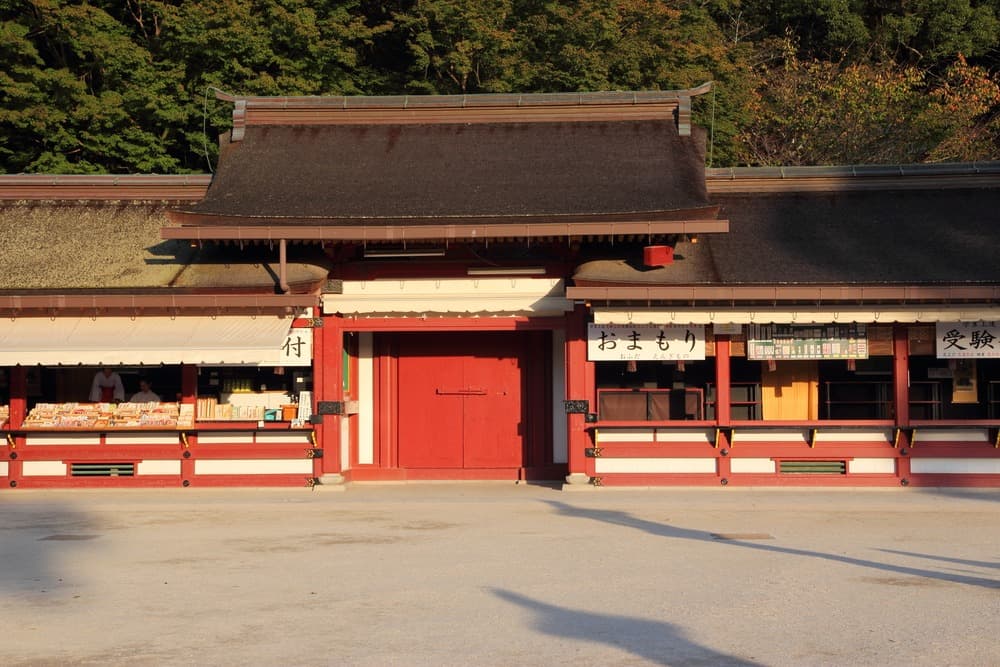
At the sanctuary's counters are sold omamori amulets, many adorned with the plum blossom flower, the emblem of the place. Each corresponds to an objective: academic success, health, love, trouble-free childbirth. Collector visitors can also request a shuin, paper marked with the official stamp and decorated with calligraphy executed on site, to be preserved in a shuincho notebook.
Along the shopping arcade
Before or after your visit, the avenue leading back to the sanctuary is worth lingering over: umegae mochi, toasted rice cakes filled with red bean paste and stamped with the plum blossom seal, are sold here, as well as ice creams with flavors rarely found in Western countries—black sesame, kinako, green tea.
Festivals and highlights
- Usokae (January): the faithful exchange wooden statuettes of bullfinches to ward off evil. A golden statuette, distributed to a single lucky person, is said to bring good fortune for the whole year.
- Kyokusui-no-en (spring): poets in kimono, arranged along a stream, must compose a waka before a floating sake cup reaches them.
- Dazaifu Umeshu Festival (March): celebration of plum liqueur, coinciding with the blooming of plum and cherry blossoms.
Practical information
Entry to the sanctuary is free and the grounds can be explored freely. The museums on the site, however, charge admission. Allow 1h30 to 2h30 for a comfortable visit, longer if you include the Kyushu National Museum. The gates open early in the morning and close in the early evening, with hours varying by season; it's best to check the day's hours before you leave.
When to visit
The sanctuary can be visited year-round, but each season has its own character:
- Late February – early March: blooming of ume (plum trees), the emblematic period of the place.
- Late March – early April: sakura, wisteria and azaleas take over.
- Summer: dense foliage of camphor trees, welcome shade in extreme heat.
- Autumn: fall colors of maples and dragonflies around the ponds.
Weekday mornings offer the lightest crowds; blooming weekends and festival days can be quite busy.
How to get there
From Fukuoka, the simplest route departs from Nishitetsu Fukuoka Station (Tenjin): the Nishitetsu line reaches Dazaifu in approximately 30 minutes, with a transfer at Nishitetsu-Futsukaichi depending on the train. From the Hakata district, direct buses also serve Dazaifu from the Hakata bus terminal. For travelers coming from farther afield, the Sanyo Shinkansen line connects Tokyo and Osaka to Hakata, and Fukuoka Airport is served by frequent domestic flights to Haneda and Itami.
Combine with
- Canal City Hakata in Fukuoka, for a half-day urban experience after visiting the shrine.
- Arita, birthplace of Japanese porcelain, accessible from Kyushu.
- Urakami Cathedral in Nagasaki, another major stop in Kyushu.
- Mount Hiei, to further explore Buddhism and Shintoism in the Kansai region.
Frequently asked questions
Frequently asked questions
Include Dazaifu in your trip
Dazaifu Tenmangu lends itself particularly well to a day trip from Fukuoka, as part of a broader Kyushu itinerary or between Honshu and the southern part of the archipelago. To build a stay that combines shrines, historic cities and nature, consult our custom-designed trips to Japan by our specialists.


Interested in this visit?
We can include it in your personalised itinerary.