Hida Takayama
Hida Takayama
At the gateway to the Japanese Alps, Takayama preserves a wooden merchant quarter, two yataï float festivals and the artisanal heritage of Hida's master carpenters.
In the Hida region 飛騨 (Gifu Prefecture 岐阜), west of Japan's Central Alps, the small town of Takayama 高山 preserves a well-kept historic quarter, living artisanal traditions and two of the archipelago's most acclaimed festivals. Isolated in the mountains, it has long cultivated a distinctive identity, still visible in its architecture, workshops and gastronomy.
Why visit Hida Takayama
Takayama owes its fame to its carpenters, whose craftsmanship was sought from ancient times to build the great temples of Kyoto and Nara. Wood is indeed a major resource in the region, and the city built a local economy around fine carpentry, dark wooden houses and lacquered objects.
The appeal of this stop rests on three pillars: an intact historic merchant quarter, an still-active artisanal life (sake, lacquer, woodcarving) and two seasonal festivals featuring monumental floats. Allow a full day for the center, two days if you venture further to nearby gasshô-zukuri villages.
A bit of history
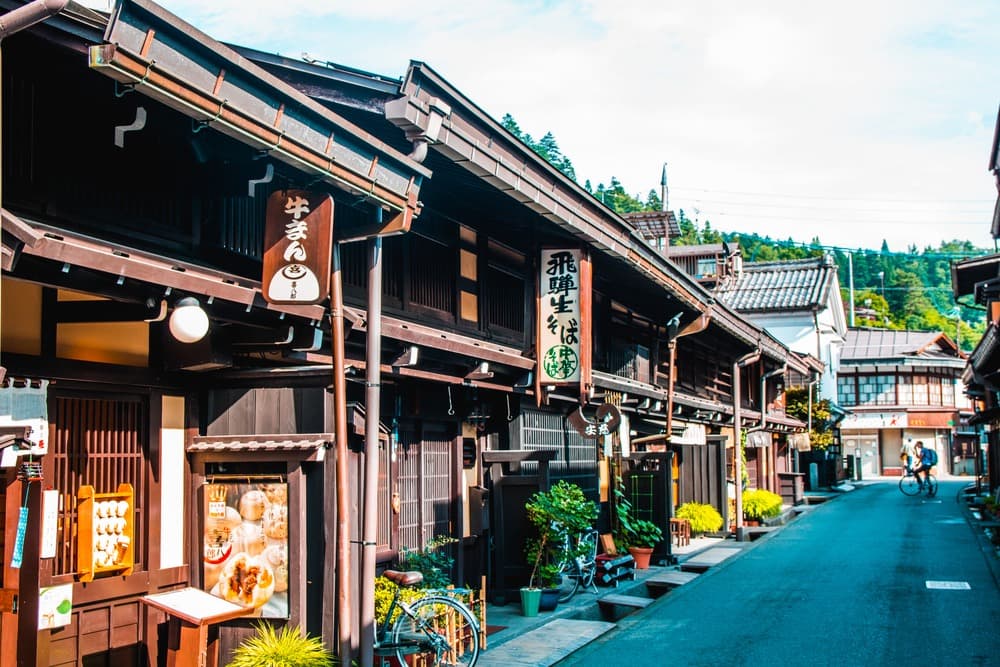
During the Edo period, Takayama fell directly under the shogunate due to the region's forest wealth. This direct rule left a distinctive heritage, including the Takayama Jinya, a former administrative building. Prosperous merchants shaped the Sanmachi Suji quarter, where blackened wooden facades, wooden lattices and old signage attest to the town's prosperity.
The emblematic architectural style of the Hida region is gasshô-zukuri 合掌造, literally "praying hands." The term refers to the steep pitch of the thatched roofs, designed to bear the weight of heavy snows that fall here each winter.
What to see and do in Takayama
Sanmachi Suji and traditional houses
Takayama's old heart is best explored on foot. You'll see numerous traditional wooden houses, some still home to sake brewers. At their entrances sometimes hangs a green or brown sphere: the sugidama 杉玉, a cedar ball hung in autumn to announce a new vintage. Over the months it dries and browns until replaced the following autumn. It's a useful visual signal for spotting active breweries.
Lacquerware craft
Another local specialty: lacquered wood products, urushi-nuri 漆塗り. Urushi refers to the sap used as varnish, nuri the lacquer applied. Bowls, trays and boxes testify to a demanding technique, passed down in family workshops you can visit in the town center.
Yataï kaïkan: the float museum
If your visit doesn't coincide with a festival, Yataï kaïkan 屋台会館 displays several floats on rotation. These yataï 屋台 are imposing wooden structures adorned with gilt, topped with articulated puppets (karakuri) capable of complex movements. The museum offers detailed insight into their construction and ritual role.
The morning market
Two morning markets (asaichi) operate daily along the Miyagawa River and in front of Takayama Jinya. You'll find mountain vegetables, seasonings, miso and small artisanal items. It's a good starting point for your day.
At the table: Takayama-gyû
The local specialty is Takayama beef, Takayama-gyû 高山牛 (close cousin of Hida-gyû), served grilled, as street skewers or in sukiyaki. Several restaurants in the center have made it their signature.
When to visit
Takayama can be visited year-round, but each season offers a very different experience:
- Spring (mid-April): the spring festival, Sannō Matsuri, takes place on April 14–15 with a dozen floats. Heavy crowds; book accommodation well in advance.
- Summer: cooler climate than the plains, ideal for combining with the Japanese Alps.
- Autumn: the autumn festival (Hachiman Matsuri, early October) features a dozen floats, set against reddening foliage.
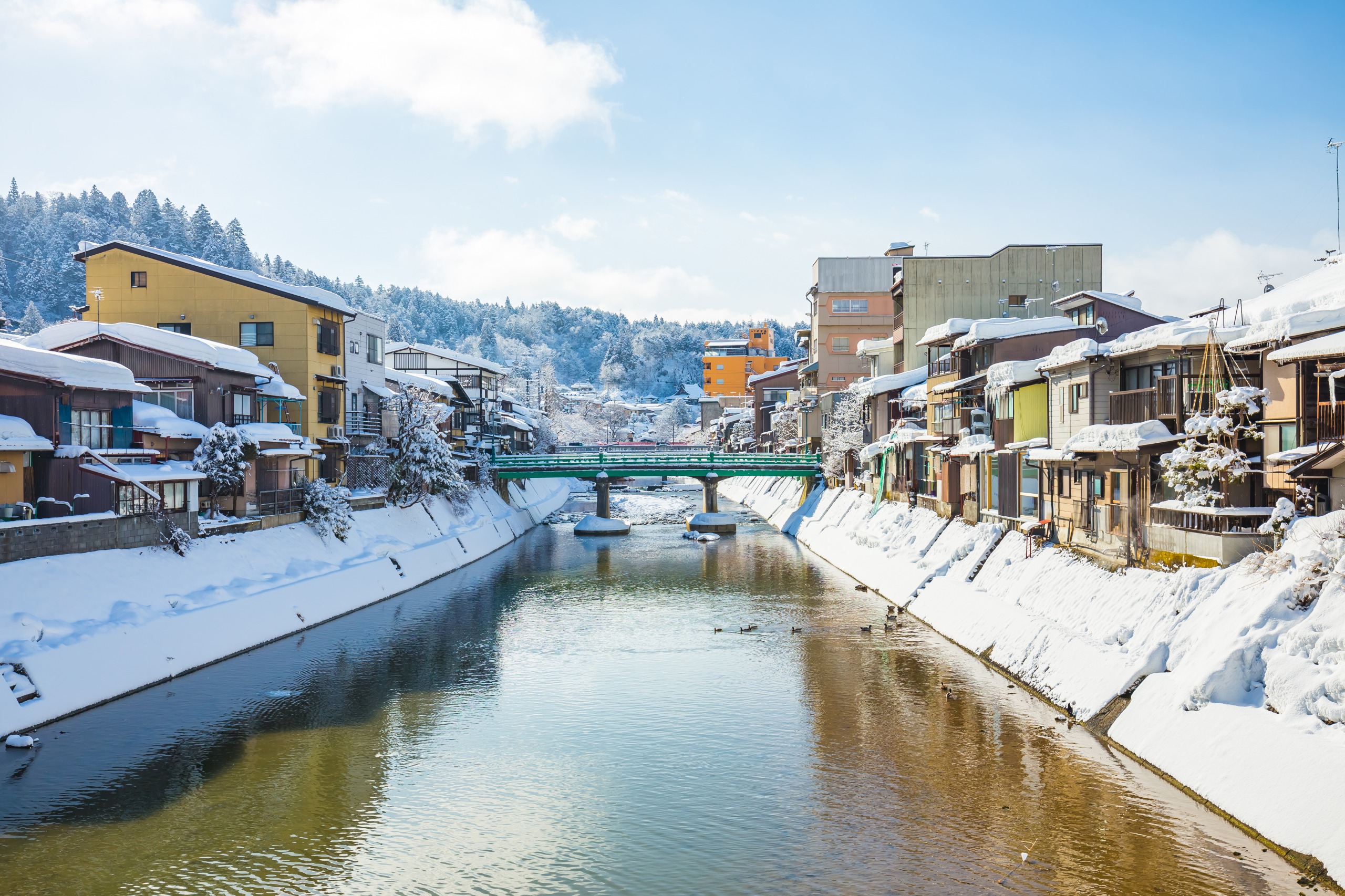
- Winter: abundant snow, highly photogenic, but secondary roads sometimes challenging. Ideal season to understand the logic of gasshô-zukuri roofs.
Practical information
- Duration of visit: one day for the historic center, two days including the surroundings.
- Getting around: the entire center is walkable. Bike rental available by the day.
- Accommodation: numerous traditional ryokan in the center, recommended for the experience.
- Rates: museums moderately priced, some sites combinable via a local tourist pass.
- To prepare: warm clothing in winter, advance booking for festival periods.
How to reach Takayama
Takayama lies off the main Tokyo–Kyoto routes, which partly explains its preservation. Several options depending on your starting point:
- From Tokyo: Shinkansen to Nagoya, then JR Hida line (Wide View Hida express train) to Takayama. Allow roughly half a day's travel.
- From Kyoto or Osaka: Shinkansen to Nagoya, same connection.
- From Kanazawa: direct bus via the Alps, faster than train.
The Japan Rail Pass covers most of the train journey.
To combine in the region
Takayama naturally serves as a base for exploring several nearby sites:
- Shirakawa-go and Gokayama: UNESCO-listed villages, showcases of the gasshô-zukuri style mentioned above, accessible by bus from Takayama.
- Hida Furukawa: small neighboring town with similar charm, much quieter.
- Kamikōchi (in season): gateway to the Japanese Alps for hiking.
To extend your itinerary beyond Hida, other heritage stops in Japan merit a visit: Himeji Castle, Japan's largest preserved wooden castle, the mountain shrine Dewa Sanzan, or the pottery town of Arita in Kyushu.
Frequently asked questions
Frequently asked questions
One full day suffices for the historic center, morning markets and Yataï kaïkan. Allow a second day to venture to Shirakawa-go or Hida Furukawa.
The spring festival (Sannō Matsuri) traditionally takes place on April 14–15, the autumn festival (Hachiman Matsuri) in early October. Since dates may change, check with the tourist office before booking.
It's the sugidama, a cedar ball installed in autumn by sake brewers to signal a new vintage. Green at first, it browns as it dries until the following autumn.
Takayama beef (Takayama-gyû), related to Hida-gyû, served grilled, as skewers or in sukiyaki. Markets and restaurants throughout the center offer it in all its forms.
Yes, and snow highlights gasshô-zukuri architecture beautifully. Prepare suitable clothing and allow for bus schedules, sometimes slowed by conditions.
Planning your trip
Hida Takayama fits naturally into a circuit centered on the Japanese Alps and nearby UNESCO villages. To build a complete itinerary including this stop, consult our Japan trips.
Interested in this visit?
We can include it in your personalised itinerary.