Complete Japan Guide
Our team based in Tokyo has been designing trips to Japan for over a decade. This archipelago of 6,800 islands stretches across 3,000 kilometres, from the subarctic of Hokkaido to the coral reefs of Okinawa. Four regions structure most of our itineraries: the Kanto region around Tokyo, the Kansai with Kyoto, Nara and Osaka, the Japanese Alps from Takayama to Kanazawa, and the volcanic south of Kyushu.
Two distinctive features strike our travellers upon arrival. First, cultural density: you transition from a silent Shinto shrine to a neon-saturated electronics district in a single metro stop. Then the precision of daily life, from the shinkansen departing to the second to a platter of sashimi composed like a woodblock print. This tension between tradition and modernity appears everywhere, even in the ryokan of Hakone where you sleep on a futon after bathing in water heated to 42°C.
For a first trip, we recommend a minimum of 14 to 17 days to combine Tokyo, Kyoto, the Alps and a detour to Hiroshima or Kanazawa. Beyond three weeks, you can add Kyushu, Shikoku or the far north. The JR Pass network simplifies long-distance travel, but we also manage car rentals for the Noto Peninsula or Hokkaido, where trains are sparse.
The regions of Japan
Each region has its own personality: climate, landscapes, pace of life and ways of traveling. Our local team helps you choose the combination that suits you.
Kanto and Tokyo
Tokyo's metropolitan area concentrates 37 million inhabitants, yet reveals itself neighborhood by neighborhood: Yanaka with its pre-war alleyways, Shimokitazawa for vintage clothing, Tsukiji for sea urchin breakfast. Two hours by train away, Nikko shelters the Tosho-gu mausoleum beneath century-old cedars, and Hakone offers hot springs facing Mount Fuji on clear days. The climate remains temperate, stifling in August (35°C, 80% humidity), pleasant from October to November when maples turn red in the Rikugien gardens. We typically start most of our itineraries here, giving time to adjust to jet lag and master the JR train network.
Kansai
The Kansai region concentrates the historical heart of the country. Kyoto and its 1600 temples can be explored by bike: Fushimi Inari at dawn before the crowds, Arashiyama and its bamboo grove, the silver pavilion Ginkaku-ji in late afternoon. Nara, 45 minutes away, is home to the great Buddha of Todai-ji and its free-roaming sika deer. Osaka contrasts with its vibrant energy, its takoyaki at 600 yen and the Dotonbori district by night. Plan for a minimum of 4 to 5 days in the region. Cherry blossoms bloom from late March to early April, the most sought-after period of the year, to be booked ten months in advance.
Japanese Alps
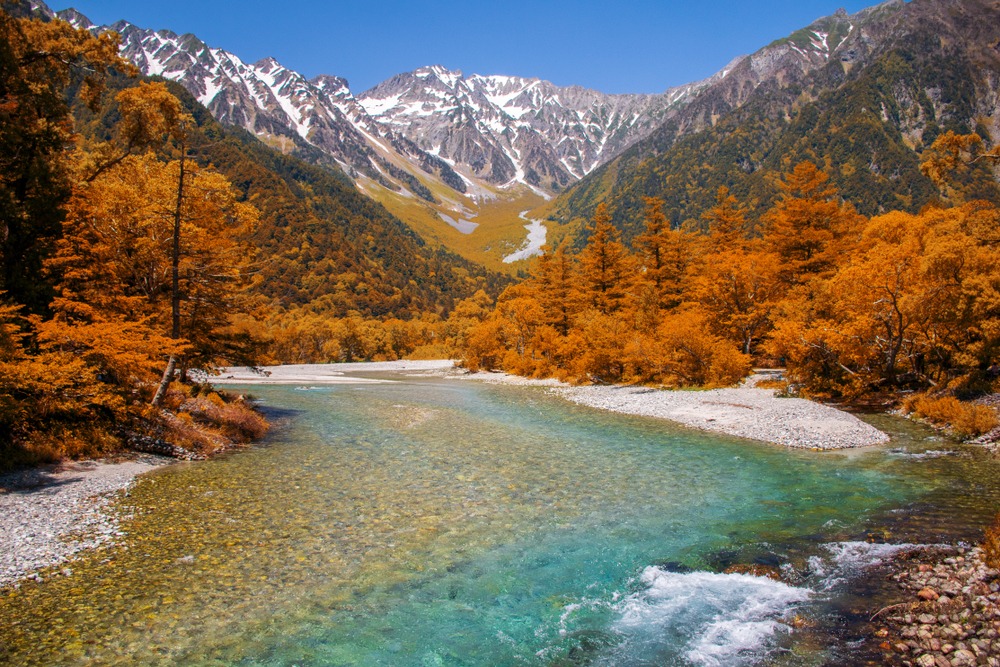
Between Nagoya and the Sea of Japan, the Japanese Alps peak at 3,190 meters at Mount Kita. Takayama preserves its merchant streets from the Edo period and its morning market along the Miyagawa River. Shirakawa-go lines up its thatched-roof gassho-zukuri farmhouses, Unesco-listed, particularly photogenic under January snow. Kanazawa, the former city of the Maeda lords, is home to the Kenroku-en garden and an active geisha district in Higashi Chaya. We send our travelers there from late April through June, then in October, for temperatures between 15 and 22°C and crisp light over the rice fields.
Kyushu
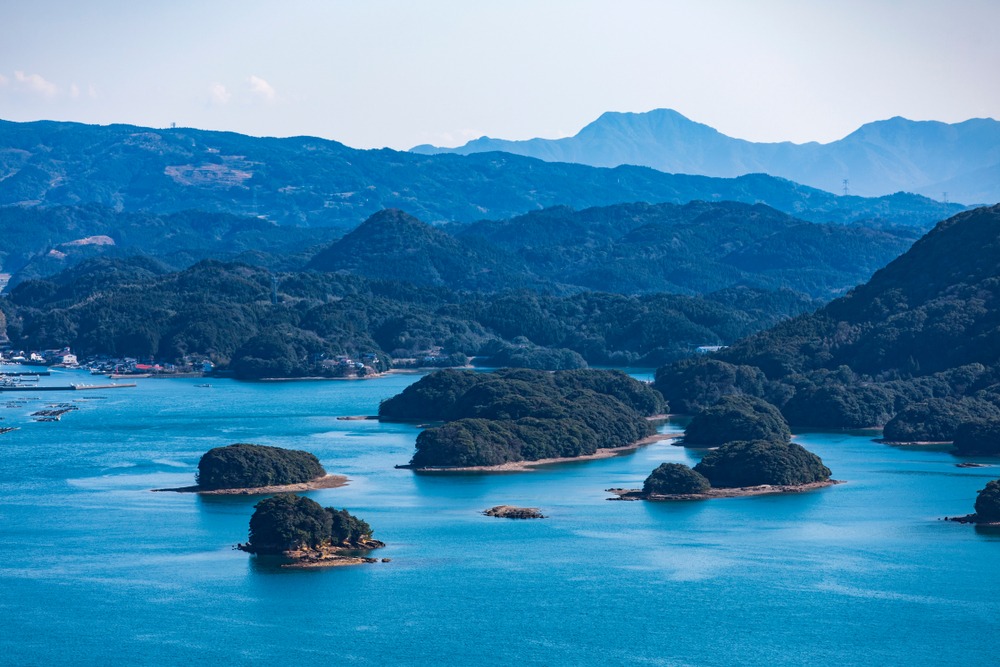
The southern island brings together the most active volcanic landscapes in the country. Mount Aso, the world's largest caldera, continuously smolders in central Kyushu. Beppu and its eight colorful thermal hells, Kagoshima facing Sakurajima volcano which spews its ashes daily, Nagasaki and its Christian and Dutch heritage: the region rewards travelers who have already visited Japan. The onsens of Kurokawa, nestled in a wooded valley, remain our top pick for two nights in a traditional ryokan. Milder climate than Tokyo, with a rainy season in June and possible typhoons in September.
Hokkaido
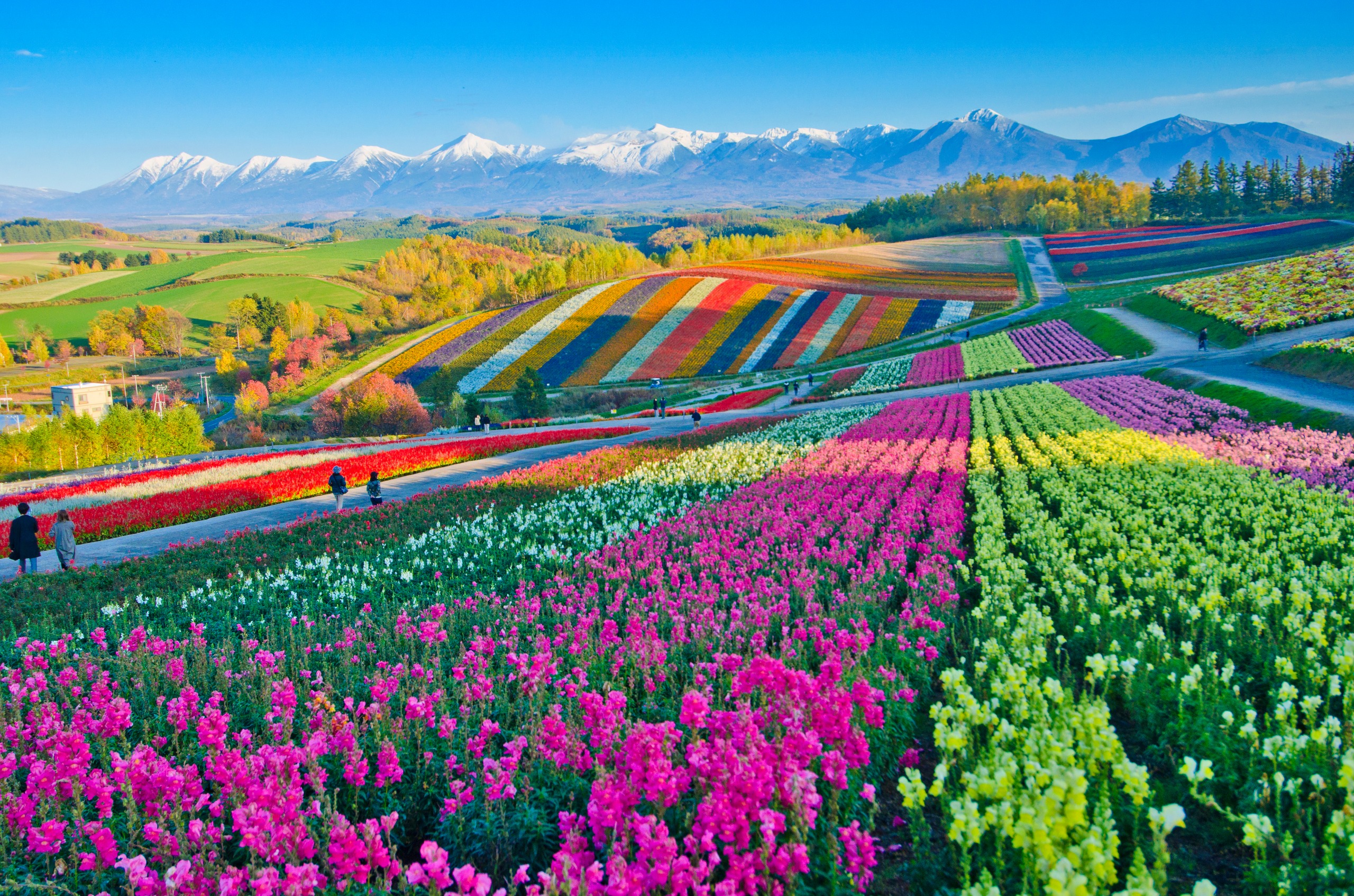
Hokkaido's northern island shifts completely in character: vast landscapes, national parks and dairy farms evoke the Ainu Hokkaido more than classical Japan. Daisetsuzan Park offers hikes on active volcanoes between June and September, when temperatures peak at 22°C. In winter, Niseko receives up to 15 meters of powder snow, and red-crowned cranes parade across the Kushiro Marsh against a white backdrop. Sapporo, the capital, hosts its snow festival in early February with monumental sculptures. We recommend renting a car there, as trains poorly serve the interior.
Okinawa
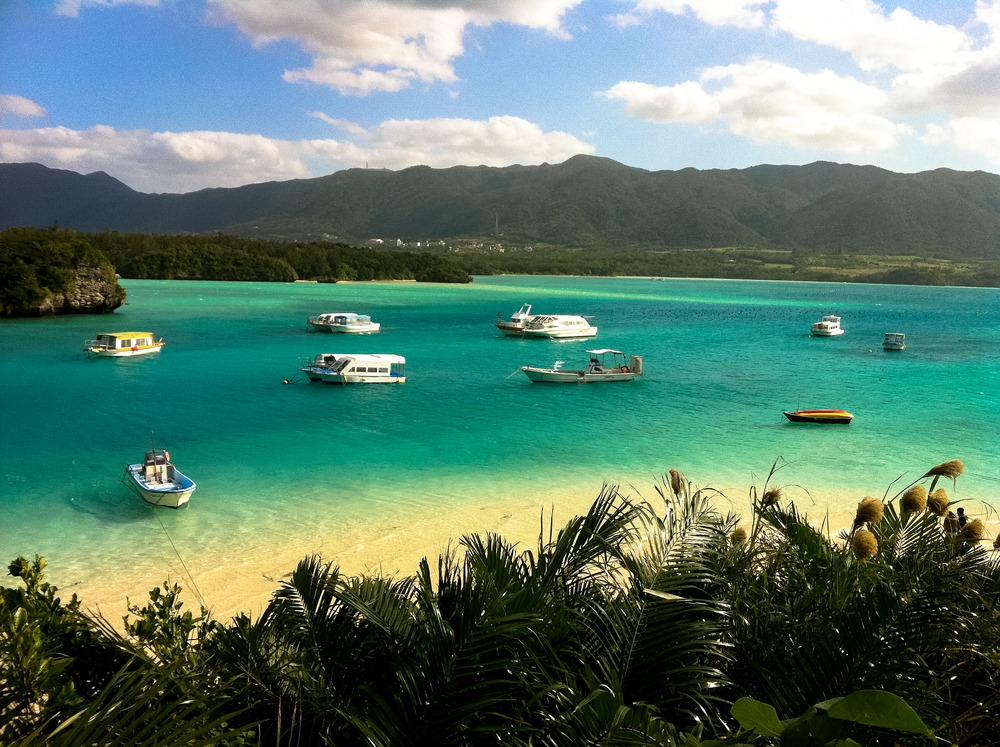
The former Ryukyu Kingdom, annexed to Japan in 1879, forms a string of subtropical islands 1,500 kilometers south of Tokyo. Waters at 26°C from May to October, living coral reefs around Ishigaki and Iriomote, dense jungle where the endemic wild cat survives. The cuisine differs from the rest of the country: goya champuru with bitter cucumber, locally distilled awamori, record longevity of Ogimi residents. Naha preserves the ruins of Shuri Castle, being rebuilt after the 2019 fire. We offer a 4 to 6-day extension here following a classic tour, to unwind on uncrowded beaches.
Explore by theme
Unique experiences tailored to every traveler.
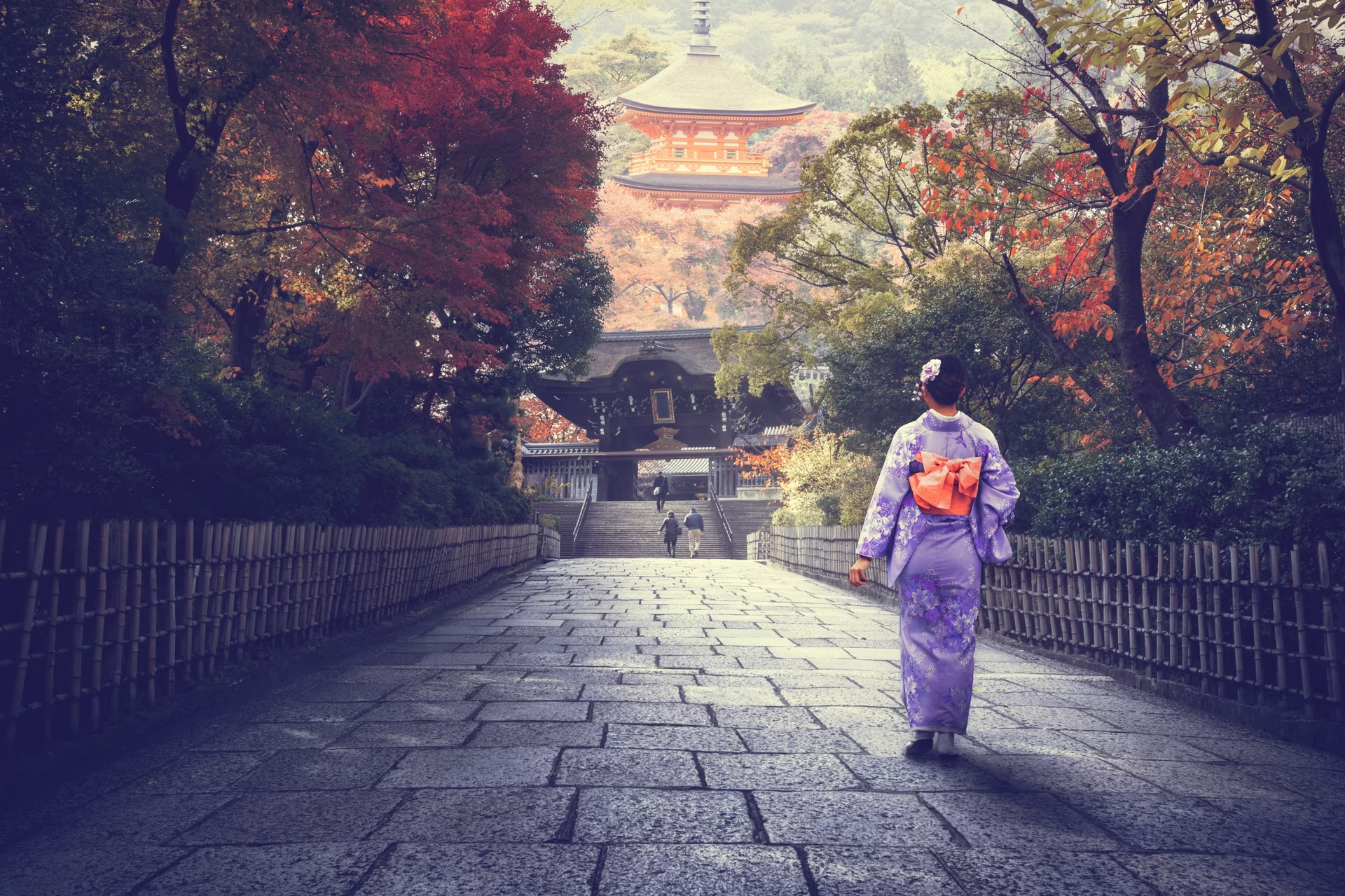
Culture & Heritage
Temples, musées, sites historiques
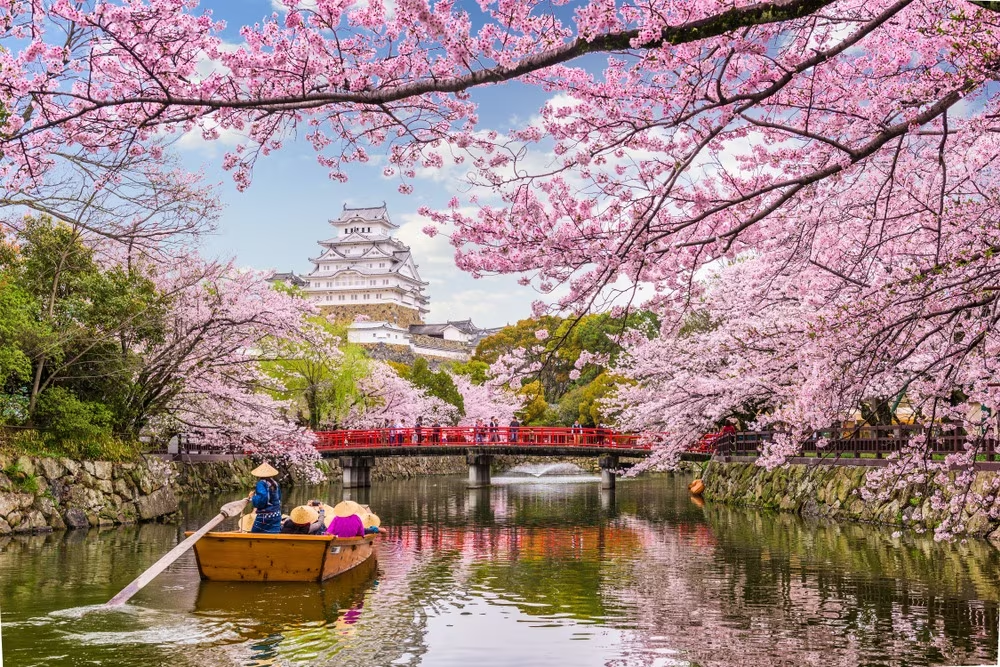
Nature & Landscapes
Parcs nationaux, montagnes, forêts
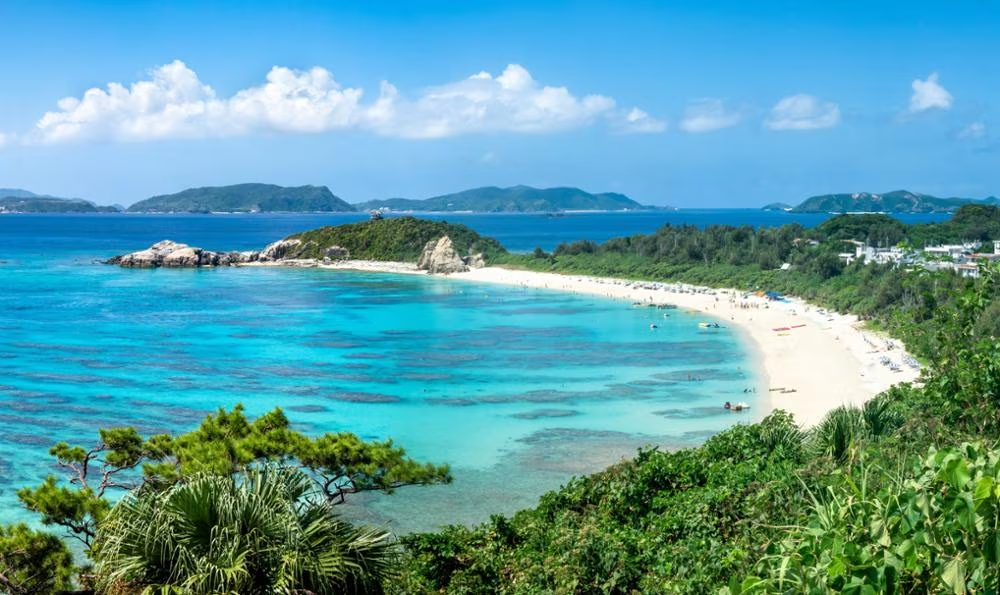
Sea & Beaches
Littoral, îles, sports nautiques
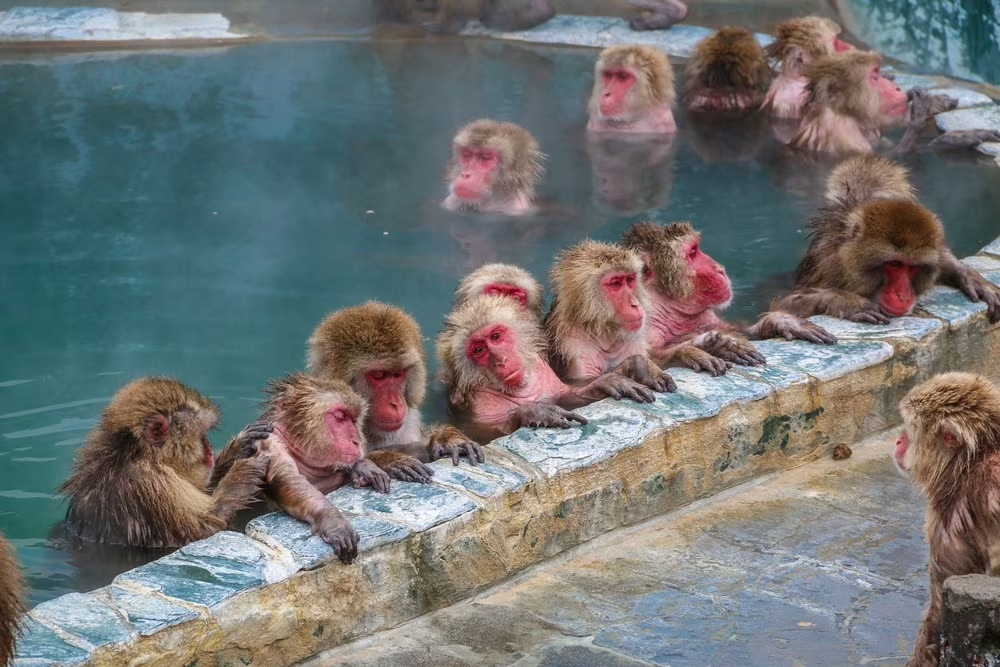
Wildlife & Biodiversity
Observation animale, sanctuaires, réserves
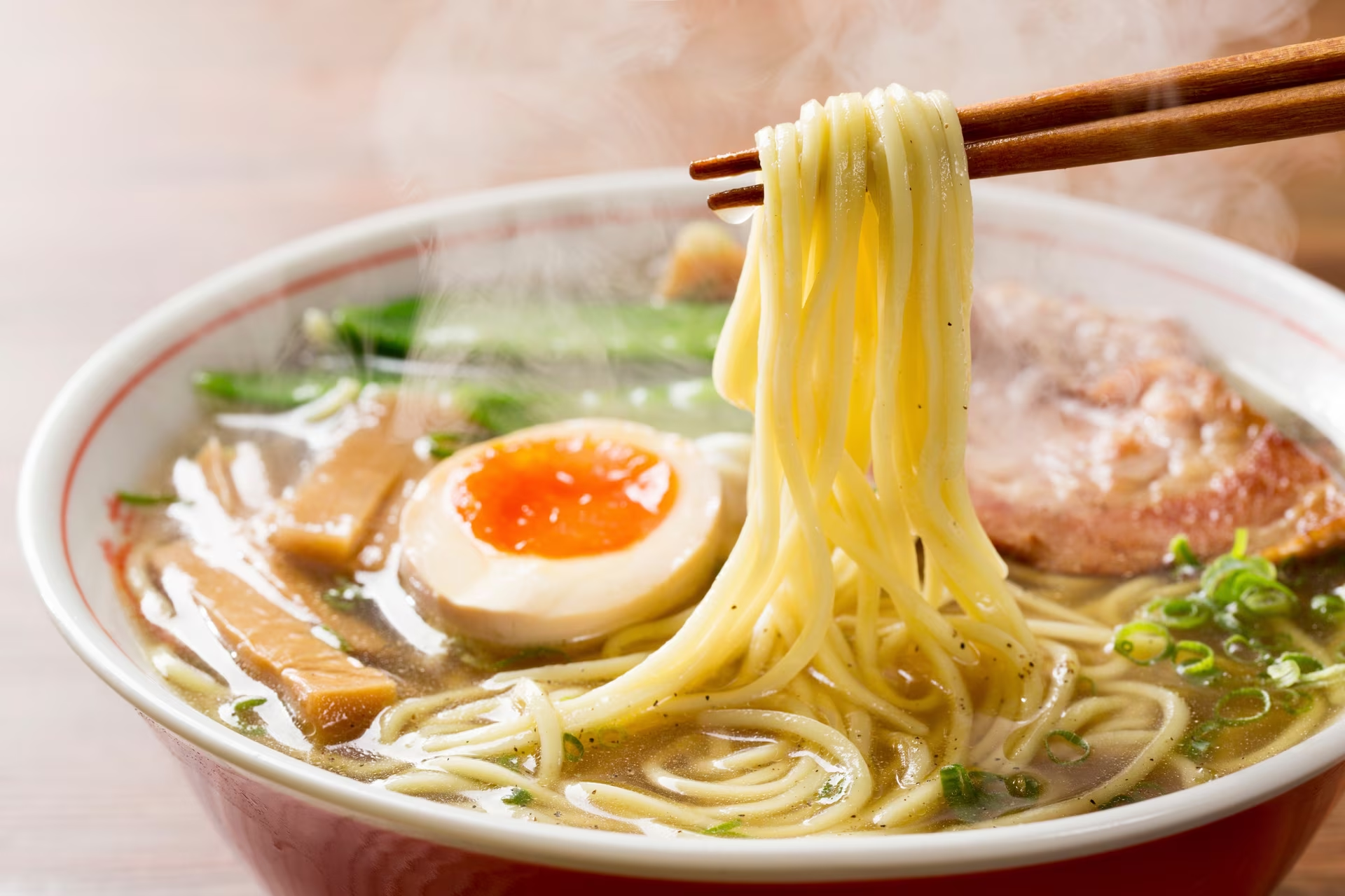
Gastronomy
Cuisine locale, marchés, cours de cuisine
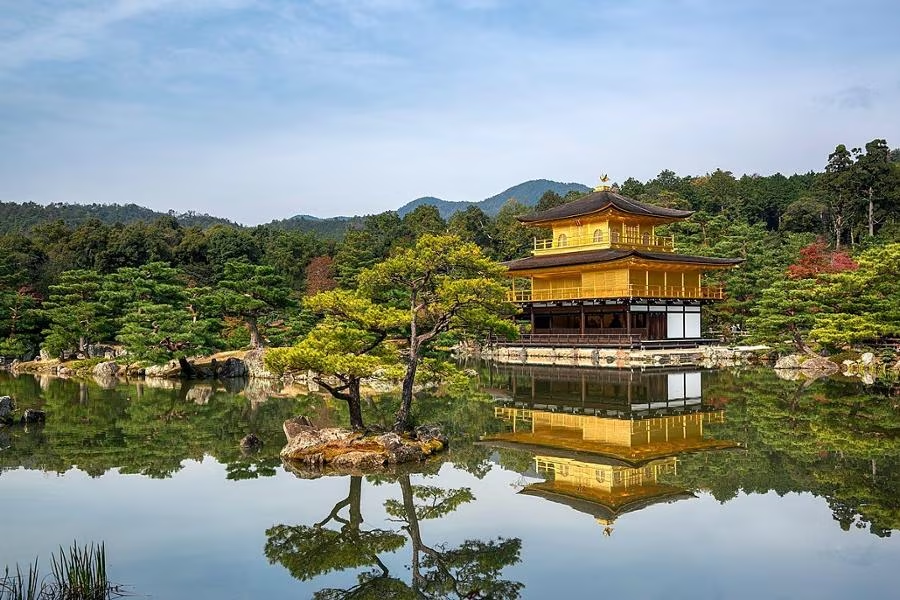
Spirituality
Temples, méditation, retraites spirituelles
We use cookies to improve your experience and measure our site's audience. You can choose what you accept. Learn more.