Kasuga Taisha Nara
Kasuga Taisha Nara
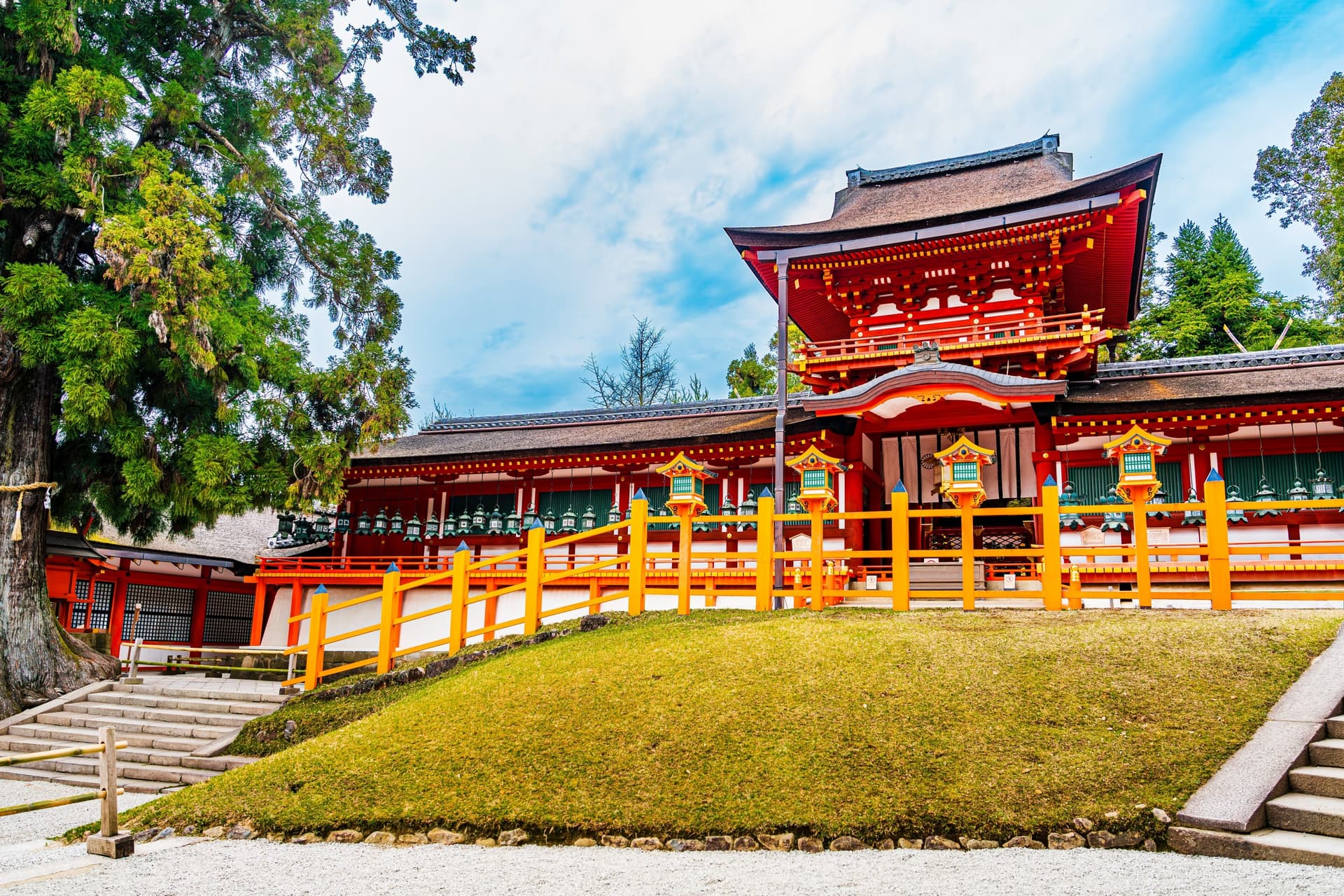
On the slopes of Mount Mikasa in Nara, Kasuga Taisha showcases vermilion pavilions and 3,000 lanterns nestled within a UNESCO-protected sacred forest.
On the slopes of Mount Mikasa, east of Nara, the Kasuga Taisha shrine displays vermilion pavilions and thousands of lanterns at the heart of a sacred forest. Over 1,250 years old, it has been listed as a UNESCO World Heritage Site since 1998 among the historical monuments of ancient Nara.
Why Visit Kasuga Taisha
Kasuga Taisha combines three elements that make it an essential stop in the Kansai region. First, its Kasuga-zukuri architecture, inherited from the early 8th century, with vermilion pavilions topped by roofs of cedar bark. Second, its unparalleled collection of lanterns in Japan: 2,000 stone lanterns covered in moss and lichen line the pathways, while 1,000 bronze lanterns hang from the corridors and pavilions. Finally, its natural setting, on the edge of a sacred primary forest and in immediate proximity to Nara's deer park.
History and Foundation
Nara, once called Heijo Kyo, was the capital of Japan in the 8th century. According to legend, Takemikazuchi no Mikoto, the "God of Thunder," arrived on a great white deer to Mount Mikasa to protect the new capital. In homage to this event, the shrine was built on the mountainside, facing the rising sun.
The Fujiwara clan, then at the height of its power, gave the go-ahead for construction of the monument in 768. Kasuga Taisha thus became the tutelary shrine of the clan. Three other deities are venerated alongside Takemikazuchi: Futsunushi no Mikoto (god of swords), Ame no Koyane no Mikoto (god of wisdom), and Himegami, his wife.
In accordance with Shinto tradition, the Shikinen Zotai ritual—complete reconstruction and restoration of the shrine—took place every two decades until the end of the Edo period, ensuring the preservation of buildings and techniques.
What to See
The Main Precinct and the Romon Gate
The access path winds through a forest scattered with ancient stone lanterns, where shika deer roam freely, considered as messengers of the divine. At the end of the path, the Romon gate marks the entrance to the sacred precinct. Inside, pavilions with white walls and vermilion columns exemplify the Kasuga-zukuri style. In the prayer hall, omikuji (written oracles) are available for visitors.
The Corridors of a Thousand Lanterns
Long corridors lined with red pillars house the suspended bronze lanterns, offerings accumulated over eight centuries by aristocrats and samurai in exchange for wishes of protection, prosperity, or victory in battle. Access to these galleries is paid, at a modest rate.
The Shinen Manyo Botanical Garden
Near the main building, the Kasuga Taisha Shinen Manyo botanical garden shelters over 250 plant species, the vast majority mentioned in the Manyoshu, the oldest collection of Japanese poems, compiled during the Nara period. Wisteria blossoms here at the end of April.
The Primary Forest and Museum
Beyond the shrine extends the primary forest of Kasuga, sacred and forbidden to the public, which has preserved its vegetation for over a millennium. To complete your visit, the Kasuga Taisha Museum displays liturgical objects, including two sets of ornate large drums.
When to Visit
The shrine can be visited year-round, but two periods stand out:
- February and August: The Mantoro festival sees all 3,000 lanterns of the shrine lit at sunset, creating one of the most striking nighttime scenes in Kansai.
- Late April: Wisteria blooms in the Shinen Manyo garden.
- November: Autumn foliage in the surrounding forest and Nara park.
Practical Information
- Hours: The main pavilion opens early in the morning and closes in late afternoon, with reduced hours in winter. The botanical garden and museum open later in the morning.
- Admission: Free entry to the main building. Access to interior corridors and the museum is ticketed, at modest rates.
- Duration: Plan 1.5 to 2.5 hours to combine the shrine, corridors, and botanical garden.
- Attire: Wear sturdy shoes; the access path slopes gently over natural terrain.
How to Get There
The shrine is located east of Nara Park. From Kintetsu Nara Station, allow approximately 30 minutes of walking through the park; from JR Nara Station, about 45 minutes. Buses regularly connect both stations to the shrine: get off at Kasuga Taisha Honden, the closest stop to the entrance.
Nearby Attractions to Combine
Kasuga Taisha is part of a cluster of historical sites accessible on foot or by bus from central Nara. It naturally combines with Todai-ji and its Great Buddha, Kofuku-ji Temple with its five-story pagoda, and the deer park. To extend your Kansai itinerary, you can reach Himeji Castle or detour to Hida Takayama for an immersion in traditional Japan in the Alps.
Frequently Asked Questions
Frequently asked questions
Plan 1.5 to 2.5 hours to explore the main shrine, the lantern corridors, and the Shinen Manyo botanical garden. Add travel time from the stations or the center of Nara Park.
The Mantoro is held twice yearly, in February (around Setsubun) and in August (around Obon). All 3,000 lanterns of the shrine are lit at sunset.
Access to the main building and grounds is free. A ticket office with modest admission fees provides access to the interior corridors adorned with bronze lanterns and the shrine museum.
No, the primary forest is a sacred site, closed to the public for centuries. This very restriction has enabled its preservation. However, you can walk through the secondary forest that borders the access path.
Yes. Shika deer roam freely throughout Nara Park and around Kasuga Taisha. Considered messengers of the divine, they have been protected since the legend of Takemikazuchi on his white deer founded the shrine.
Planning Your Trip
Kasuga Taisha naturally fits into an itinerary centered on Kansai and the former imperial capital. To craft a tailor-made trip including Nara, Kyoto, and beyond, explore our Japan travel ideas.
Interested in this visit?
We can include it in your personalised itinerary.