The Silver Pavilion (Ginkaku-ji Temple)
The Silver Pavilion (Ginkaku-ji Temple)
A Zen temple in Kyoto's Higashiyama district, Ginkaku-ji embodies the wabi-sabi aesthetic through its wooden pavilion and landscaped gardens.
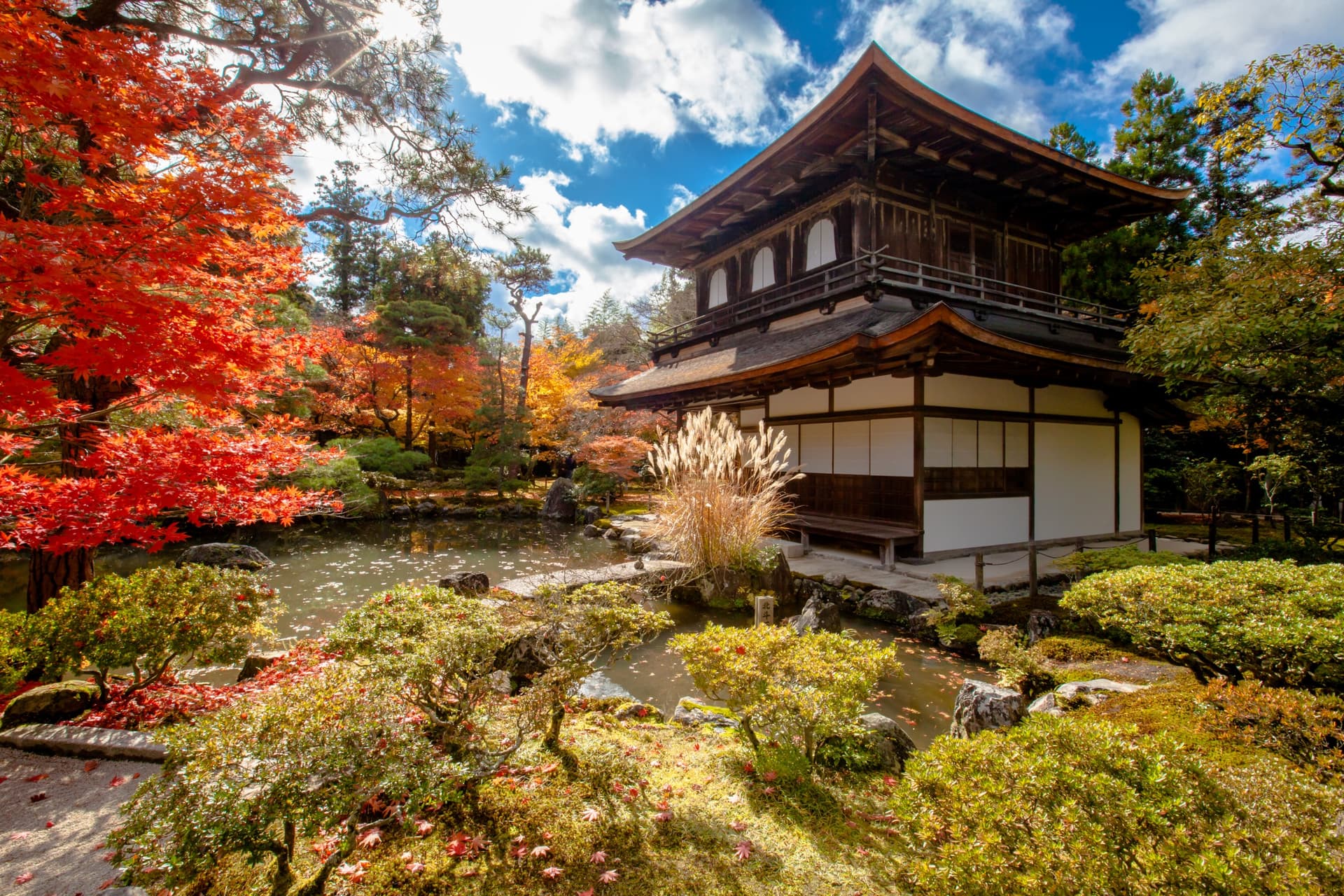
Ginkaku-ji, or the Silver Pavilion, is a Zen Buddhist temple located in the Higashiyama district, east of Kyoto. Officially named Higashiyama Jishō-ji, it was built in the late 15th century by shogun Ashikaga Yoshimasa and embodies the restrained aesthetic of wabi-sabi, a stark contrast to the gilded splendor of Kinkaku-ji, built by his grandfather.
Why Visit Ginkaku-ji
Ginkaku-ji captivates not through brilliance, but through restraint. Its unpainted wooden pavilion, its meticulously maintained dry garden with rigid mineral forms, and its strolling garden encircling a pond compose a coherent ensemble, conceived as an exercise in contemplation. The site holds a central place in Japanese cultural history: it was here that the wabi-sabi aesthetic crystallized, an philosophy that celebrates the beauty of imperfection, asymmetry, and the patina of time.
Compared to Kyoto's most frequented temples, the grounds remain unhurried and the experience preserves a meditative atmosphere, in keeping with its Zen purpose.
Temple History
Ginkaku-ji was constructed in 1482 by shogun Ashikaga Yoshimasa as a retirement villa nestled on the slopes of the Eastern hills. Grandson of Ashikaga Yoshimitsu, creator of Kinkaku-ji (the Golden Pavilion), Yoshimasa initially intended to cover the pavilion with silver leaf to evoke moonlight. This plan was never realized: the Ōnin War (1467-1477), which devastated Kyoto and marked the progressive decline of the Ashikaga shogunate, had exhausted resources and destabilized power.
In 1485, Yoshimasa retired definitively from political life to become a Zen Buddhist monk and devote himself to the arts within this residence. Upon his death in 1490, the villa was transformed into a Buddhist temple in accordance with his final wishes.
During these years, Ginkaku-ji emerged as a major cultural hub of the Muromachi period. Yoshimasa championed the aesthetic concept of wabi-sabi, which subsequently influenced the tea ceremony, flower arrangement, noh theater, and Japanese architecture as a whole.
What to See
The Main Pavilion
The Kannon-den, commonly known as the Silver Pavilion, features unpainted wooden architecture across two levels. Its understated silhouette, integrated into the forested slope, exemplifies the ideal of refined austerity sought by Yoshimasa.
The Togudo Hall
Near the pavilion, the Togudo Hall is dedicated to meditation. It houses one of the oldest known shoin-style rooms, regarded as a foundational milestone in the evolution of Japanese residential architecture.
The Dry Garden
The Ginkaku-ji's kare-sansui dry garden ranks among Japan's most distinctive. It comprises the Ginshadan, a vast expanse of raked gravel nicknamed the "silver sand sea,
Nearby
Interested in this visit?
We can include it in your personalised itinerary.