Hase Temple
Hase Temple
Perched above Kamakura, Hase-dera Temple houses a 9.18-meter Kannon statue, a carved cave, and sweeping views over the bay.
Nestled in the wooded heights of Kamakura, Hase-dera Temple shelters a monumental statue of Kannon, the goddess of mercy, and a terraced garden opening onto the bay. The site blends religious significance, founding legend, and panorama—a 30-minute walk from the station.
Why visit Hase-dera Temple
Hase-dera is one of Kamakura's great Buddhist temples. Its centerpiece, an eleven-headed Kannon statue standing 9.18 meters tall and carved in wood covered with gold leaf, ranks among Japan's most imposing examples in its category. The visit unfolds across several terraced levels along the hillside, alternating between pavilions, gardens, a carved cave, and a vantage point over the bay. It draws fewer crowds than the neighboring Great Buddha, allowing for a more leisurely pace.
History and founding legend
Hase-dera Temple was founded in 736 by Fusasaki Fujiwara, a member of the Fujiwara clan, a major noble lineage in Japan during the Nara and Heian periods (8th to 12th centuries). It belongs to the Jōdo tradition, the Pure Land school of Buddhism.
Legend tells that a Buddhist monk named Tokudo Shonin discovered a camphor tree with such a massive trunk that two eleven-headed Kannon statues could be carved from it. The first was enshrined at Hase-dera Temple in Nara Prefecture. The second was cast into the sea, accompanied by a prayer: that it would resurface where it could save all beings.
Fifteen years later, in 736, the statue washed ashore on Nagai Beach near Kamakura. It was carried up the hillside where the temple now stands, erected to house it.
What to see on the grounds
The eleven-headed Kannon statue
The temple's centerpiece is enshrined in the Kannon-do Hall. The statue, carved in wood and gilded with gold leaf, stands 9.18 meters tall. The eleven heads symbolize the goddess's different modes of attention to human suffering.
The Benten-Kutsu cave
Carved into the hillside, this small cave shelters a representation of Benzaiten, goddess of the arts and knowledge, surrounded by sixteen stone statues of her children carved directly into the rock. The space is narrow, with sections of low ceiling.
The Jizô-do Hall and Jizô statues
Countless small statues of Jizô, protector of children and travelers, surround the Jizô-do pavilion, which houses the Fukuju Jizô. These rows of figurines, often dressed in red caps and bibs, are left in remembrance of deceased children.
The gardens and viewpoint
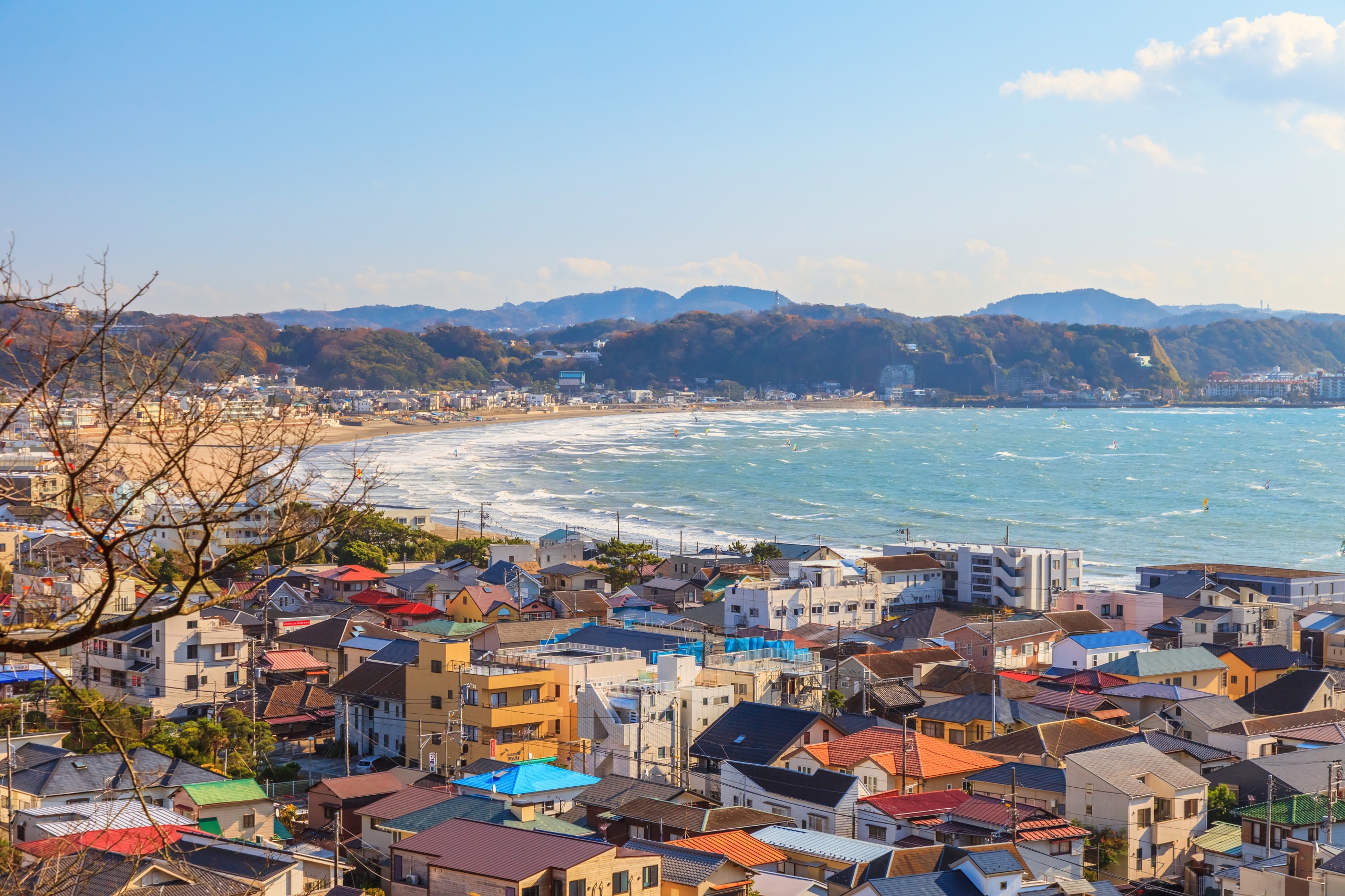
Entry opens onto a Japanese garden arranged around ponds. As you ascend toward the summit, a landscaped terrace reveals expansive views of Kamakura Bay. A few benches offer a respite before reaching the main pavilion.
When to visit
The temple is open year-round, but two seasons particularly draw visitors:
- June: hydrangea blooms (ajisai) along the dedicated hillside path. Crowds surge during this period, and a numbered ticket system may be implemented.
- Mid-November to early December: autumn colors on the maples, sometimes accompanied by evening illuminations.
Spring remains delightful for the gardens and mild weather. Summer is hot and humid; winter is bright but cool.
Practical information
- Duration: plan 1 to 2 hours depending on your pace and season.
- Admission: moderate fee, with reduced rates for children. Payable on-site.
- Hours: morning opening through late afternoon, with extended hours from March to September. Last entry approximately 30 minutes before closing. Verify official hours before your visit, especially during seasonal events.
- Accessibility: the grounds are sloped with stairs; some areas (the cave) are confined.
How to get there
From central Kamakura:
- On foot from Kamakura Station: approximately 30 minutes through the town center, often via Komachi-dōri street.
- By bus from Kamakura Station: around 5 minutes to the Hase stop.
- By train: Enoshima Electric Railway (Enoden) line to Hase Station, then a 5-minute walk.
From Tokyo, allow roughly 1 hour by train to Kamakura via the JR Yokosuka line.
Nearby attractions
Hase-dera fits naturally into a Kamakura circuit:
- The Great Buddha (Kotokuin): about a 5-minute walk away, an 11-meter bronze statue.
- Hokokuji Temple: renowned for its bamboo grove, located east of the city.
- Yuigahama Beach: just minutes downhill.
To extend your journey beyond Kamakura, consider Tokyo's neighborhoods, the Edo-Tokyo Museum, or the Izu Peninsula, accessible from the same region.
Frequently asked questions
Frequently asked questions
Plan 1 to 2 hours to explore the entry garden, the Benten-Kutsu cave, the Jizô-do Hall, the main pavilion, and the bay viewpoint.
Blooms peak in June. The season draws large crowds, and a timed ticket system may control access to the hydrangea path.
Yes. The Great Buddha at Kotokuin stands about a 5-minute walk away. Many visitors tour both sites in a half-day.
Access is limited: the temple is built in terraces with stairs between levels, and the Benten-Kutsu cave has low and narrow passages.
Yes, when entering certain interior pavilions, including the Kannon-do Hall. Shoe racks or lockers are provided at the entrance.
Include Hase-dera in your journey
Hase-dera integrates naturally into a trip combining Tokyo, Kamakura, and the Pacific coast. To plan a custom itinerary featuring Kamakura's temples, explore our Japan travel ideas.
Interested in this visit?
We can include it in your personalised itinerary.