Osenji Temple
Osenji Temple
Founded in 738, Osenji Temple overlooks the thermal village of Kinosaki Onsen from Mount Daishi and preserves the spiritual memory of the seven hot springs.
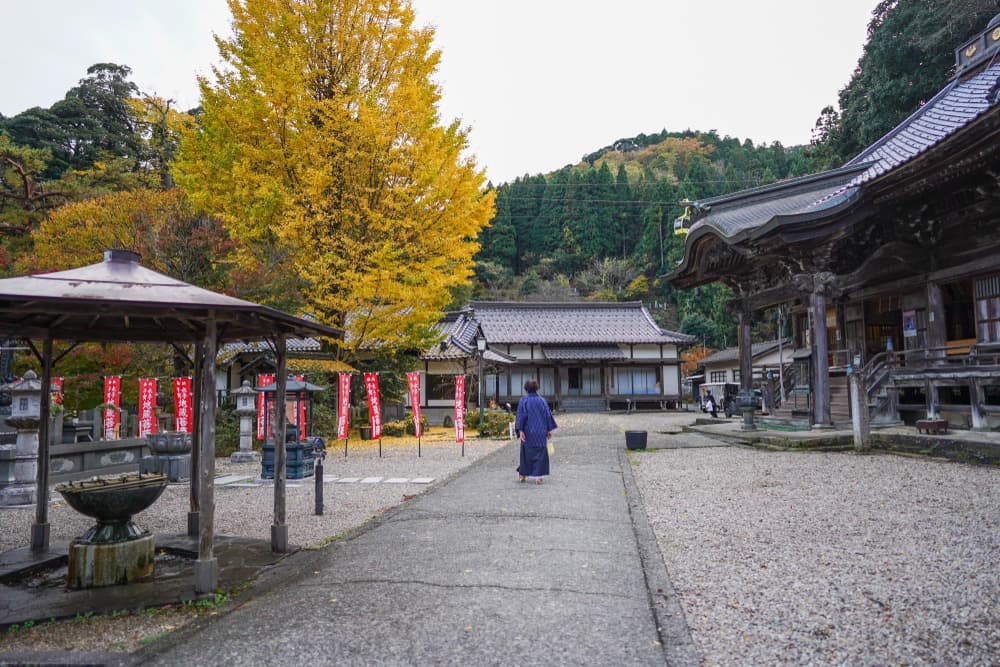
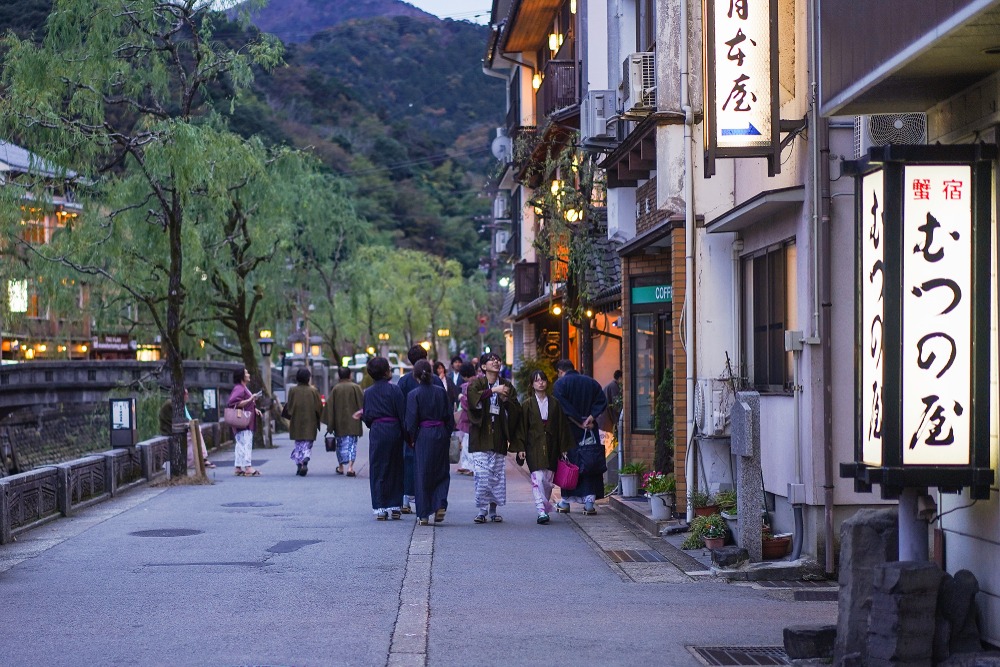
The Osenji Temple overlooks the thermal village of Kinosaki Onsen from Mount Daishi. Founded in the 8th century, it is intimately linked to the emergence of the local hot springs and their sacred dimension. Before donning yukata and getas to visit the seven public baths in the village, visitors once climbed here to receive the monks' blessing—a ritual that shaped Kinosaki's thermal life for over a thousand years.
Why visit Osenji Temple
Osenji Temple is not merely a cultural detour alongside the hot springs: it is their spiritual origin. Three elements set it apart:
- A founding story directly connected to the birth of Kinosaki's thermal sources.
- Rare religious objects, including a statue of the Bodhisattva Kannon with a thousand arms, displayed for only three years every 33 years.
- A panorama over the village and the Japan Sea coast, from the summit of Mount Daishi, which earned a star in the Michelin Guide for its views.
History
The temple was founded in 738 by the monk Dochi Shonin. According to tradition, it was after 1,000 days of prayer that a hot spring with miraculous properties emerged at Kinosaki, giving birth to the thermal village. Osenji became the guardian sanctuary of the baths.
Until the Edo period, the sick who came to be healed by the springs first had to pass through the temple. The guardian monks would grant them a blessing, then hand them a yu-shaku, a wooden ladle used to collect bathwater. This was no mere utensil: it served as a symbolic substitute for the hands of Buddha or Shinto deities, as the water could not be touched directly by bathers. Without a yu-shaku, access to the springs was denied.
What to see on site
The statue of the thousand-armed Bodhisattva Kannon
The temple's masterpiece is a statue of Kannon, the bodhisattva of compassion, sculpted by a craftsman named Keimon. Legend tells that Keimon, who came to Kinosaki to recover from illness, found in the river an unfinished statue of his own making, one that had brought misfortune to the villages where it had previously washed ashore. He decided to complete the work and entrusted it to the monk Dochi Shonin. Since then, the statue has been revealed to the public for only three years every 33 years; the rest of the time, it remains hidden in the sanctuary.
The Dochi Shonin shrine and the yu-shaku
Before the Kannon altar, a small room houses the statue of the founder Dochi Shonin. Several yu-shaku are arranged there as offerings, recalling the etiquette that once governed access to the baths. A codified onsen etiquette is still today outlined on illustrated towels sold at the temple's kiosk.
The Yakushido hall and the sick's votive offerings
At the foot of Mount Daishi, the Yakushido hall preserves a rare testament: the canes, crutches, and mobility aids left behind by sick people healed after their cure. When the healing reputation of Kinosaki's waters spread throughout Japan, people with reduced mobility who had traveled from afar deposited these objects in gratitude. Some are still visible in the eaves.
The main building and Mount Daishi
Osenji's main building is located halfway up Mount Daishi. Two options for reaching it:
- The Kinosaki Onsen cable car, which also serves the summit.
- A stone staircase of 500 steps, approximately 15 minutes of climbing.
From the summit of Mount Daishi, the view over the village, river, and Japan Sea has earned a star in the Michelin Guide. The temple's viewpoint, lower down, already offers a broad panorama of Kinosaki.
Practical information
- Access: Mount Daishi cable car or climbing on foot via 500 steps.
- Duration: allow 1 to 2 hours including the summit and Yakushido hall.
- Admission: modest entry fee; check on site, combined cable car + temple tickets are available.
- Hours: open during the day, closing in late afternoon, with some weekly closures; confirm hours before your visit.
- Etiquette: proper dress, silence in the altar rooms, photography sometimes forbidden.
When to visit
Kinosaki Onsen is worth visiting year-round, and Osenji follows the same pattern:
- Winter (December to February): peak season for the thermal village, frequent snow on the temple roofs, hushed atmosphere. It's also matsuba crab season, a local specialty.
- Spring: cherry blossoms along the canal, climbing Mount Daishi is particularly pleasant.
- Autumn: brilliant maple leaves around the temple and on the slopes of Mount Daishi.
- Summer: humid heat, but pleasant evenings after bathing.
Regarding the thousand-armed Kannon statue, inquire ahead: its exceptional display occurs only three years every 33 years.
How to get there
Kinosaki Onsen is served by train from several major cities in the Kansai region:
- From Kyoto or Osaka: approximately 2.5 to 3 hours by direct train (line covered by JR Pass), sometimes with a change at Fukuchiyama.
- From Himeji: approximately 2 hours.
- From Kobe: approximately 2.5 hours.
Once there, the temple is reached on foot from the village center (approximately 15-20 minutes) or by shuttle to the cable car's lower station.
Nearby attractions
- Himeji Castle: on the route between Kinosaki and western Kansai, UNESCO-listed.
- Mount Arashiyama: bamboo forest and temples northwest of Kyoto.
- Nanzen-ji Temple: major Zen complex in Kyoto, a natural complement to visiting Osenji.
Frequently asked questions
Frequently asked questions
Extend your experience
Osenji Temple is part of a complete thermal stay at Kinosaki, to be combined with a ryokan stay and a visit to the Kansai region. To build a tailor-made itinerary between temples, hot springs, and historic cities, consult our Japan trips.
Nearby
Interested in this visit?
We can include it in your personalised itinerary.