Matsushima
Matsushima
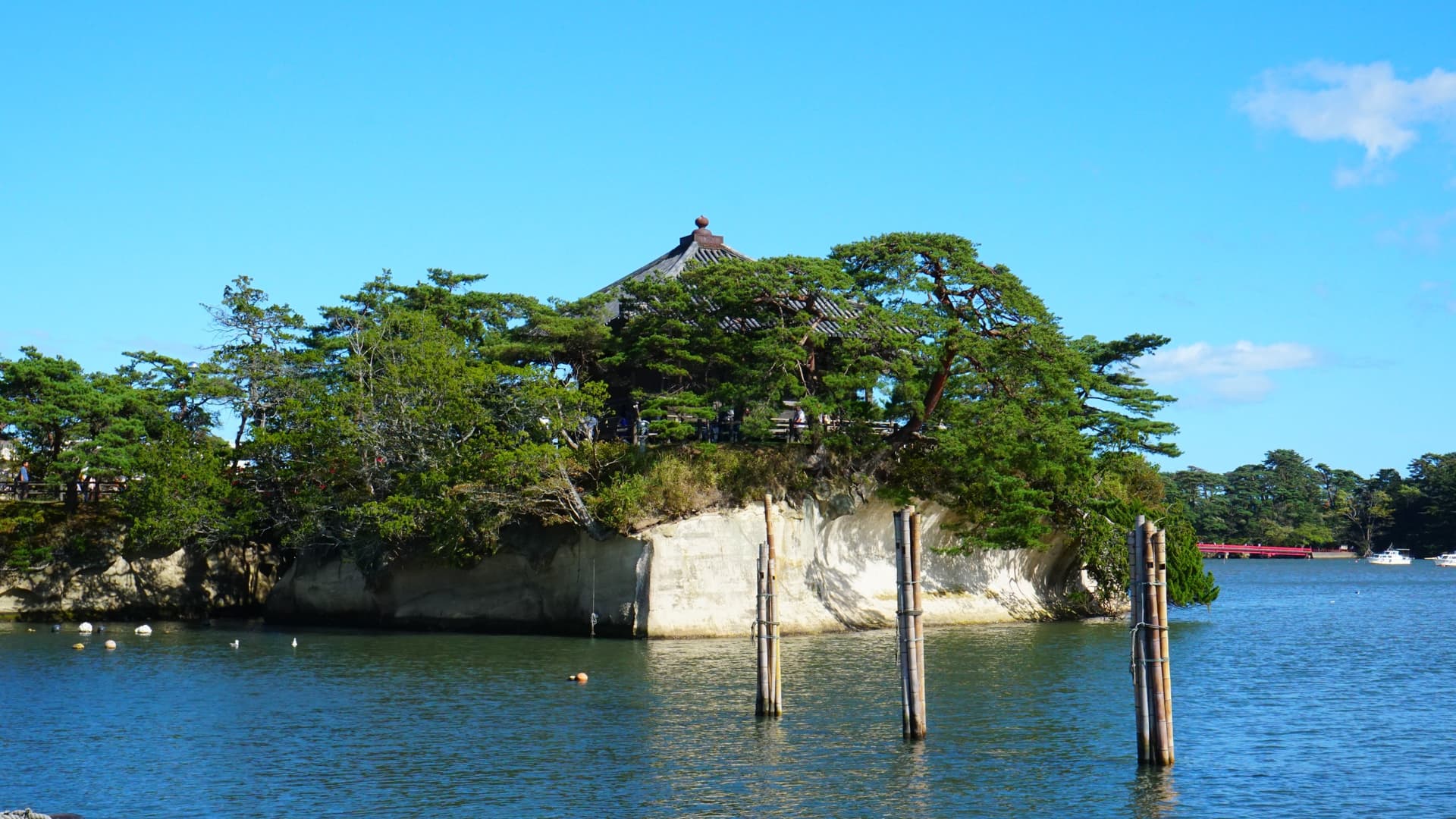
A bay dotted with 260 pine-clad islands, thousand-year-old temples, and prized oysters: Matsushima is one of northern Japan's most captivating stops, just 30 minutes from Sendai.
Discover one of Japan's three most beautiful landscapes: Matsushima! This archipelago in the northeast of the country within the Tohoku region encompasses 260 islands. Nestled within a rich population of pine trees, natural and cultural treasures await discovery…
History
The bay of Matsushima captured attention even in antiquity, celebrated by Japanese poets as a place steeped in history and grace. The Date clan, which dominated the region toward the end of the 16th century, left a beautiful architectural and landscape heritage across the archipelago's 260 islands. They restored and rehabilitated several cultural sites, including the Zuiganji temple and the Kanrantei tea house. The family introduced Western knowledge, as evidenced by the ornaments of the Entsuin mausoleum.
Matsuo Basho visited Matsushima toward the end of the 17th century. The master of Haiku was so astounded by the region's beauty that he decided to celebrate it in his work titled "Okuno Hosomichi".
Matsushima Today
The Japanese Government ranks Matsushima among the three most beautiful landscapes in Japan. The archipelago's historical, cultural, natural, and gastronomic richness places it among the finest destinations for vacations in Northern Japan.
Panoramas Worth Photographing at Matsushima
Behind Mount Sokan, the views from the small Ogitani Hill are unforgettable. This site perched 55 meters above the bay offers a complete panorama of the 260 islands in the Matsushima archipelago. It's a hotspot for landscape photography, but also a place for rejuvenation. In autumn, Ogitani invites you to admire the koyo, when the foliage changes color, in all its splendor. At the southern tip of Matsushima Bay, it's Sokanzan Hill's turn to reveal unique natural scenes. Discover the bay from another angle while enjoying a view of Shiogama city. Take advantage of your visit to Sokanzan to explore its observation deck and restaurant.
Temples Rich in History
Loved by poets and painters, and chosen as a retreat by Buddhist monks, the Zuiganji temple nestles in the heart of peaceful nature. Created in 828, the complex initially belonged to the Tendai school before becoming a place of contemplation during the Kamakura period (1192–1333). It was later restored in the early 17th century. Zuiganji temple is a perfect example of classical Japanese architecture. Its main hall and kitchen are designated national treasures. A second Buddhist temple stands nearby: Entsuin. This structure, dating from 1646, serves as a royal mausoleum. Gold leaf and frescoes adorn its interior walls. The site is surrounded by a beautiful garden of maples and moss. The third temple deserving a visit to Matsushima is perched on a cliff face and is named Godaido. Erected in 807, this sanctuary houses five sacred statues that are shown to visitors only once every 33 years!
Captivating Stops
The Kanrantei tea house was moved from Kyoto to Matsushima as a gift to the daimyo Date Masamune. This charming pavilion offers you a panoramic view of the bay and its islands. It comprises two rooms decorated with fusuma, which formerly served as lodging for princesses, companions of feudal lords, and representatives of the shogunate. The house contains a museum dedicated to weapons and other mementos of feudal Japan. Before leaving, treat yourself to a cup of matcha tea.
For keen walkers, a detour to Shin Tomiyama is highly recommended. Strolling along this 10-minute promenade from Matsushima Station is both a way to refresh your lungs with fresh air and an opportunity to enjoy beautiful perspectives of the archipelago. Stop at the observation platform on the north side of Zuiganji temple, where you can capture some snapshots of the islands and sea. Another special viewpoint over Fukurujima Island and the sprawling bay awaits you at the hilltop.
Boat cruises are available from Matsushima port to visit some of the bay's islands. Two islands, Oshima and Fukurujima, are accessible via a bridge. Furthermore, the bay is home to significant fishing activity, with oysters as its flagship product. Each year, numerous events related to the sea take place in the archipelago, including the oyster festival in February and Umi no Bon in August, when the bay is illuminated by thousands of paper lanterns.
Climate
Matsushima enjoys a warm and temperate climate classified as Cfa by Köppen–Geiger. The bay experiences high rainfall. Rain can occur even during the driest months. The average annual precipitation reaches 1,207 mm. Regarding temperature, the annual average is 12°C.
The train journey to Matsushima from Tokyo Station takes just under three hours. You'll need to reach Sendai Station via the Shinkansen, then take the JR Senseki Line to Matsushima Kaigan Station.
The nearest airport to Matsushima is in Sendai. You'll find direct flights to Japan's major cities as well as Taipei, Seoul, and Shanghai.
From the station, you can reach some of Matsushima's coastal attractions on foot, such as the Shin Tomiyama promenade. However, to enjoy the best views like those from Ogitani or Sokanzan, rent a taxi or car.
What to Do in Matsushima?
- Photograph the landscapes from Ogitani Hill
- Pay respects at Zuiganji temple
- Sip tea at the Kanrantei tea house
- Visit Godaido temple
- Explore Fukurujima and Oshima islands, and more
Want to discover this destination?
Our local advisors design your tailor-made trip.