Narai
Narai
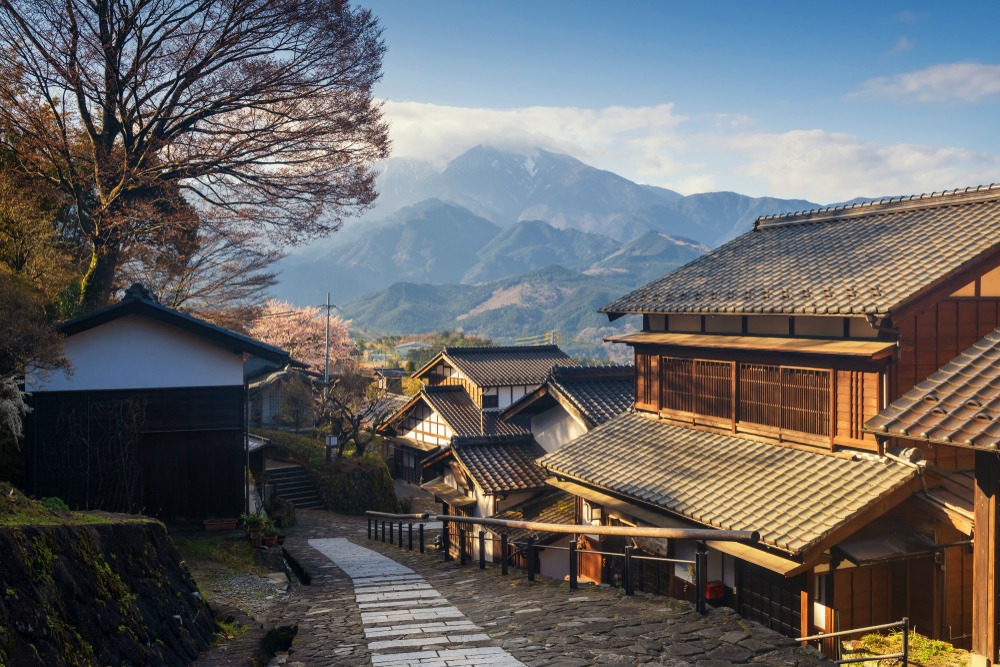
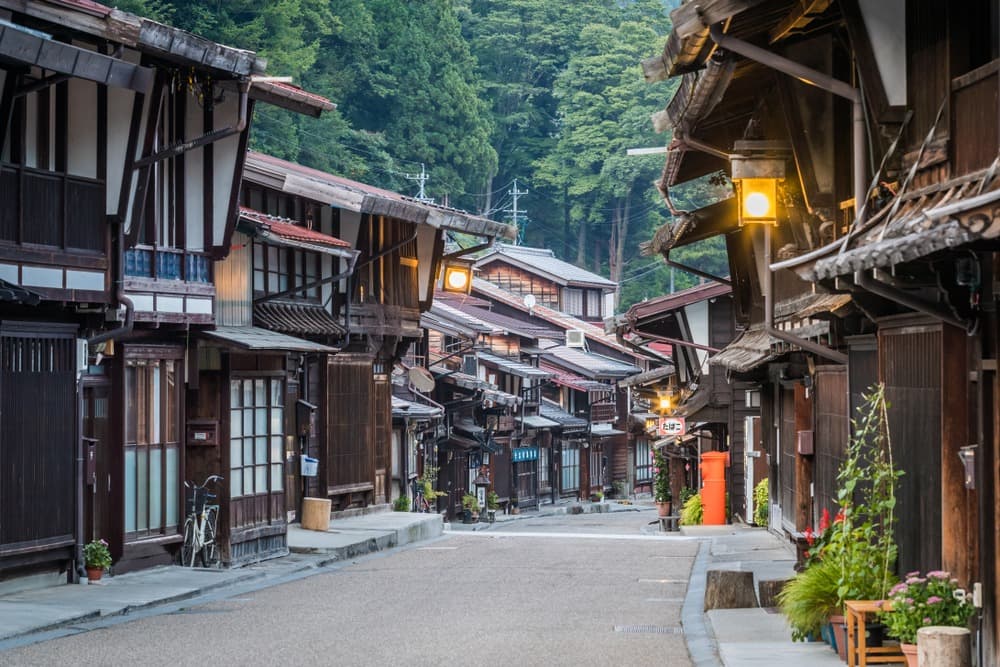
Along the historic Nakasendo route, Narai-juku lines its dark wooden houses through the Kiso Valley. A journey frozen in the Edo era, far from the crowds.
Discover a former post-station town with well-preserved heritage on the celebrated Nakasendo route. Narai, situated in the beautiful Kiso Valley, may be less renowned than Tsumago and Magome found along the same historic path. Yet it remains the finest place to wander on foot, hunt for handcrafted objects, and step back into Japan's past.
History
Narai-Juku lies on the historic Nakasendo route connecting Kyoto and Edo during the Edo period.
The Nakasendo, a legendary itinerary
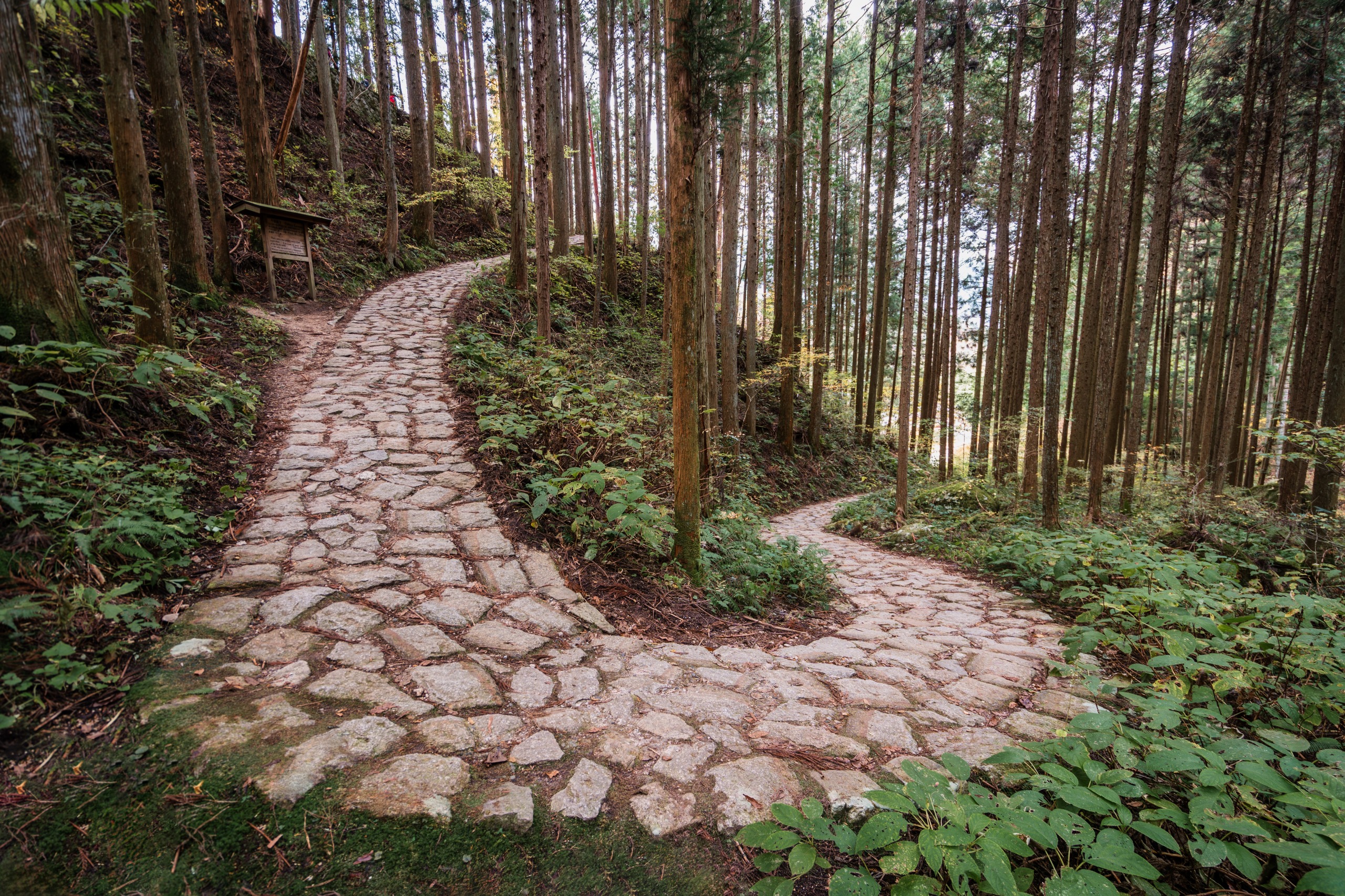
The Nakasendo, or the "Central Mountain Road," was one of five principal routes of the Gokaido serving the ancient city of Edo. The path wound through the Japanese Alps, spanning 534 kilometers between Edo and Kyoto. Daimyo, samurai, porters, merchants, and others traversed the Nakasendo for centuries. Over time, post-towns emerged to provide lodging for travelers. These historic waypoints, where inns continue to welcome guests, play a vital role today in preserving the region's history and culture.
The first weekend of June hosts the Ochasubo Dochu festival. This tradition dates back to the Edo period, when local daimyo gathered in Kyoto and processed toward Edo via the Nakasendo to present tea to the Shogun. The event and procession continue in modern form, honoring tradition.
Narai, once a prosperous post-station town
Narai sat midway between Edo and Kyoto on the Nakasendo. It was the 34th of 69 post-stations along the route. It was also the station at the highest elevation among the different stages of the Kisoji itinerary. Many travelers passed through the Torii Pass, which spurred Narai's development. At its height, the locality earned the nickname "town of a thousand buildings." In 1978, the row of houses dating from the Edo period was designated a cultural property in the category "Groups of Traditional Buildings as Cultural Properties of Japan."
Exploring Narai
Narai is understated today. It's a small, peaceful, and traditional town, rarely crowded, making it ideal for a restful stop away from urban bustle. Being compact, it explores beautifully on foot, at your own pace.
Japan's longest inn street
The primary draw for tourists visiting Narai is the preservation zone housing most of the old buildings and structures from the Edo period. Stroll along the main Narai-juku street, which stretches over a kilometer, and admire the fine collection of wooden buildings. Many of these edifices house traditional shops, inns, soba noodle restaurants, lacquerware workshops, souvenir boutiques, sake vendors, and more. Visit the Nakamura residence, built in the early 19th century, and its splendid garden to understand how Narai's merchants once lived.
Near the street, ancient temples and shrines merit exploration. Within Taihoji Temple, there stands a statue resembling the Virgin Mary, headless and holding a child. Fashioned in Jizo form, the sculpture was likely decapitated by Tokugawa supporters during Christian persecution in Japan. Also discover Shizume Jinja, where travelers sought divine blessing before setting out, or gave thanks upon arrival. Finally, don't miss the Narakawa Museum of History and Folklore, near Shizume Shrine, to learn more about life and customs in the Kiso Valley through exhibits of paintings, craftsmanship, wooden furniture, and combs.
Take home a souvenir from Narai
As in all Nakasendo tourist villages, you'll find numerous souvenir shops bearing Narai's mark. Local craftsmanship occupies the bulk of the shops. You can choose from an array of lacquered wooden items, a practice dating back 600 years that partly made the village famous during the Meiji period. Artisans work primarily with Kiso cypress and Sawara wood.
Among the most popular items are Kiso Shiki, encompassing various lacquered wooden kitchen utensils (plates, chopsticks, spoons, trays, and more). Magemono represent another specialty of Narai's artisans—bentō boxes and cups crafted using ancient techniques.
Practical Information
Climate in Narai-Juku
Narai enjoys a humid continental climate with no dry season. The region receives substantial rainfall, averaging 1,200.1 mm of precipitation annually. Showers are always possible, even during the driest month. The average annual temperature at Narai is 11.3°C.
Narai-Juku is served by the local JR Chuo line train. From Matsumoto to the north, the journey takes around fifty minutes. From Shinjuku Station in Tokyo, allow three hours on the Azusa train, with a change at Shiojiri. If you're in Nagoya, board the Shinano Express, then transfer to the local Kiso Fukushima line—the total journey takes 2.5 hours.
Life and tourist attractions in Narai center primarily on the long main street, easily reached on foot from the station or your accommodation.
What to do in Narai-Juku?
- Admire the old buildings along Narai-juku's main street
- Step into the Nakamura residence and discover how Japanese merchants of old once lived
- Explore spirituality at Narai by visiting Taihoji Temple and Shizume Shrine
- Learn about the history and culture of the Kiso Valley region at the Narakawa Museum of History and Folklore
- Stay overnight in a traditional inn, and more
Want to discover this destination?
Our local advisors design your tailor-made trip.