Shirakawa
Shirakawa
Three UNESCO-listed villages nestled in a Gifu valley, renowned for their distinctive gassho-zukuri thatched-roof farmhouses. Your complete guide to visiting Shirakawa-go.
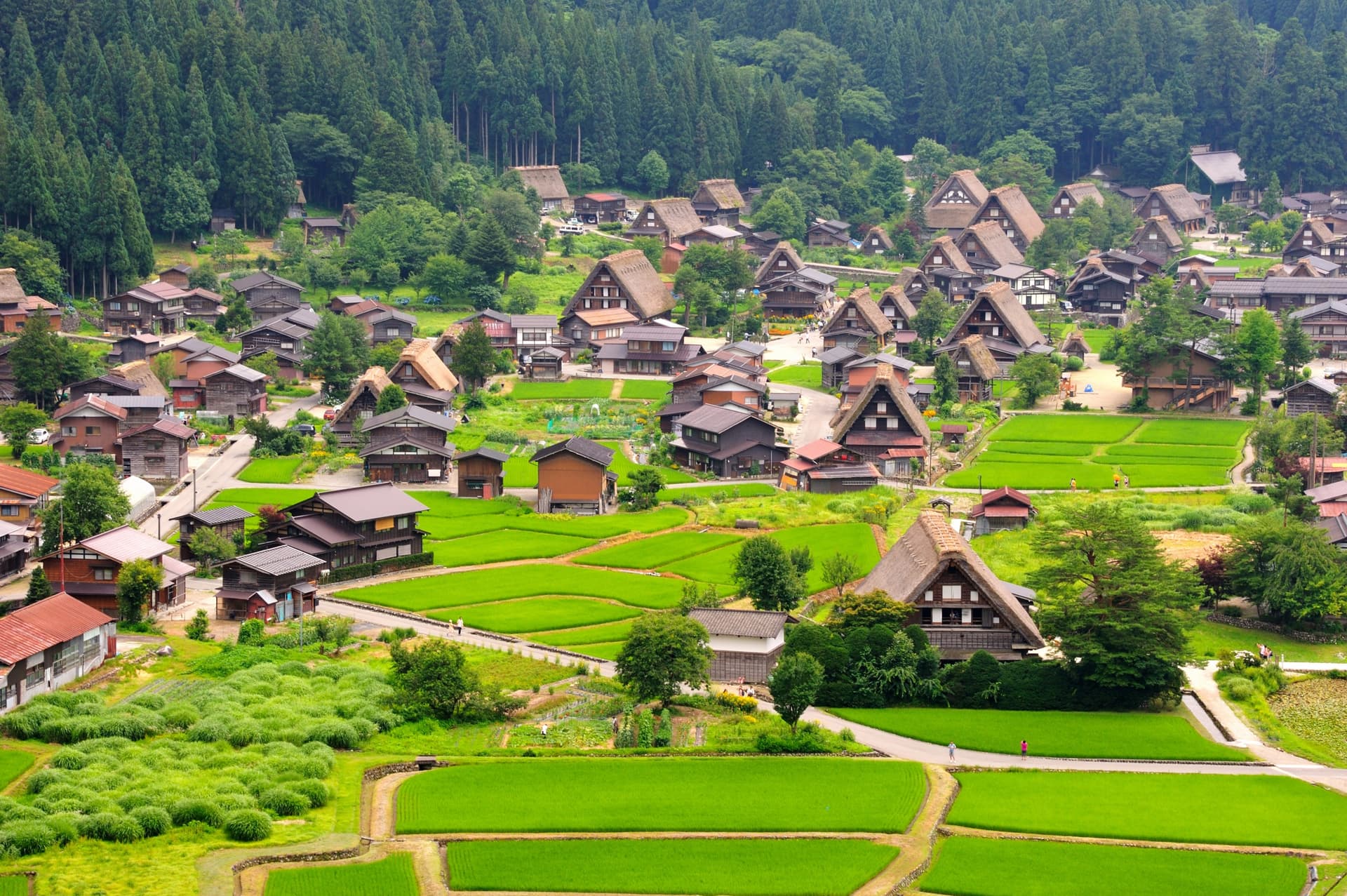
Shirakawa-go is a collection of three traditional villages cradled in an isolated valley within Gifu Prefecture, in central Japon, on Honshu island. Its reputation rests on its distinctive gassho-zukuri thatched-roof houses, designed to withstand the region's harsh mountainous winters while maximizing space for silk-worm farming. Designated as UNESCO World Heritage sites, these hamlets draw countless domestic and international visitors drawn to their exceptional architectural character.
History
Shirakawa-go remained isolated from the rest of Japon for centuries due to its remote geography. Only in the 1590s did the region begin opening to the broader country. This isolation fostered the development of its unique culture and architectural heritage.
Mount Hakusan, a sacred mountain, has anchored local religious practices since the 8th century. The region became a hub for Buddhist ascetic practices of the Tendai sect from this period onward, and later, the Jodo Shin sect.
Unlike other parts of Japon, Shirakawa-go's rugged terrain made rice cultivation difficult. This pushed inhabitants toward subsistence agriculture, supplemented by buckwheat, millet, and products like Japanese washi paper and saltpeter. Sericulture became the region's primary secondary industry by the late 17th century, though it declined in the 1970s.
Offering an authentic step back in time in this corner of Japon, Shirakawa-go earned UNESCO World Heritage designation in 1995.
What to Do in Shirakawa-go?
Explore Ogimachi
Ogimachi, the largest village in Shirakawa-go, brims with captivating experiences. Here are some essential discoveries for your visit:
The Gassho-Zukuri Farmhouses
Several gassho-zukuri farmhouses in Ogimachi are open to the public. The Wada House, the largest and best-preserved in the village, designated an "Important Cultural Property," belonged to the family of the same name, who led the village during the Edo period (1603-1868). It invites you into traditional architecture while revealing how villagers lived in centuries past.
The Nagase House, with its five stories, stands as the tallest gassho-zukuri structure in the village. It captivates visitors with its striking beauty.
The Gassho-Zukuri Minkaen Open-Air Museum
The Gassho-zukuri Minkaen open-air museum is a compelling ensemble of gassho-zukuri farmhouses relocated for preservation. You'll discover village craftsmanship, culture, and history through exhibitions showcasing how these homes functioned—particularly for sericulture and silk-worm storage.
Stay in a Gassho-Zukuri Guesthouse
For complete immersion, lodge in one of Ogimachi's gassho-zukuri guesthouses. Several farmsteads operate as inns where visitors experience authentic rural life in cozy, rustic settings, sharing traditional meals prepared by host families.
Walk to the Observation Point
The Shirakawa-go viewpoint is reached via a short walk and rewards you with a breathtaking vista over the entire village. It's the ideal vantage point to admire gassho-zukuri homes framed by rice paddies and mountains. The view enchants across all seasons—especially stunning in winter when snow blankets the village, or spring when cherry blossoms bloom.
Wander Through Suganuma
The village of Suganuma, smaller than Ogimachi, preserves a serene and authentic atmosphere. Less crowded, it offers a more intimate experience. Gassho-zukuri homes and a museum highlighting the daily lives of past inhabitants grace the village. Surrounded by mountains that create a peaceful natural setting, it appeals to those seeking tranquility. An hour's stroll suffices to explore this charming hamlet.
Discover Ainokura
Situated at the valley's far end, Ainokura ranks as the most remote of the three villages. It also distinguishes itself through its preserved character and serene mood. Here, gassho-zukuri homes remain inhabited, and you can observe rural life continuing across generations. Less touristy than its neighbors, Ainokura suits those seeking authenticity and calm. Several local museums chronicle sericulture history and traditional farming practices.
From Kanazawa
Multiple options connect you to Shirakawa-go from Kanazawa. The most common is the Nohi bus, which departs regularly and delivers you directly to the village in approximately 1 hour 15 minutes.
For travelers seeking greater flexibility, renting a car is recommended. This lets you savor the magnificent Shokawa Valley scenery at your own pace.
From Other Regional Cities
If departing from Takayama, a direct bus is most convenient, reaching Shirakawa-go in roughly 50 minutes. From Nagoya, take a JR Takayama Line train to Takayama first, then continue by bus. Those coming from Gifu typically train to Takayama, then proceed by bus—a popular option.
How Long to Spend in Shirakawa-go?
A half-day generally suffices to enjoy Shirakawa-go's highlights. However, extending your visit to a full day lets you explore surrounding villages more thoroughly and fully appreciate gassho-zukuri architecture.
If photography captivates you, consider staying longer to capture different angles and light throughout the day. For an even deeper experience, plan to overnight in a traditional guesthouse.
Want to discover this destination?
Our local advisors design your tailor-made trip.