Okinawa
Ask a mainland Japanese person to describe Okinawa, and they'll heave a sigh before answering… Sunshine, turquoise seas, pristine beaches, lush vegetation, delicious cuisine and welcoming locals… The **Caribbean of Japan** leaves unforgettable memories and stands as a **dream destination for a stay in the Land of the Rising Sun**.
Ask a mainland Japanese person to describe Okinawa, and they'll heave a sigh before answering… Sunshine, turquoise seas, pristine beaches, lush vegetation, delicious cuisine and welcoming locals… The Caribbean of Japan leaves unforgettable memories and stands as a dream destination for a stay in the Land of the Rising Sun.
History
Before its annexation to the Imperial Japon in 1879, under the Meiji era, the Okinawa islands formed the independent kingdom of Ryukyu. At the time, their economy was largely based on trade relations with the mainland. The inhabitants spoke their own dialect and had a distinct culture with influences from China, Korea and Southeast Asia. Okinawa stood apart from other regions of Japon, which remained isolated from the world until the 19th century.
The Okinawa archipelago during World War II
Okinawa endured dark times during the Second World War. The violent clashes between the Empire of Japon and the Allies severely impacted the islands and their inhabitants suffered greatly. By late 1945, the Americans had annexed Okinawa, which would not be returned to Japon until 1972. On the main island Okinawa hontô, to this day, significant American military bases can still be found.
A brief geographical note on this prefecture
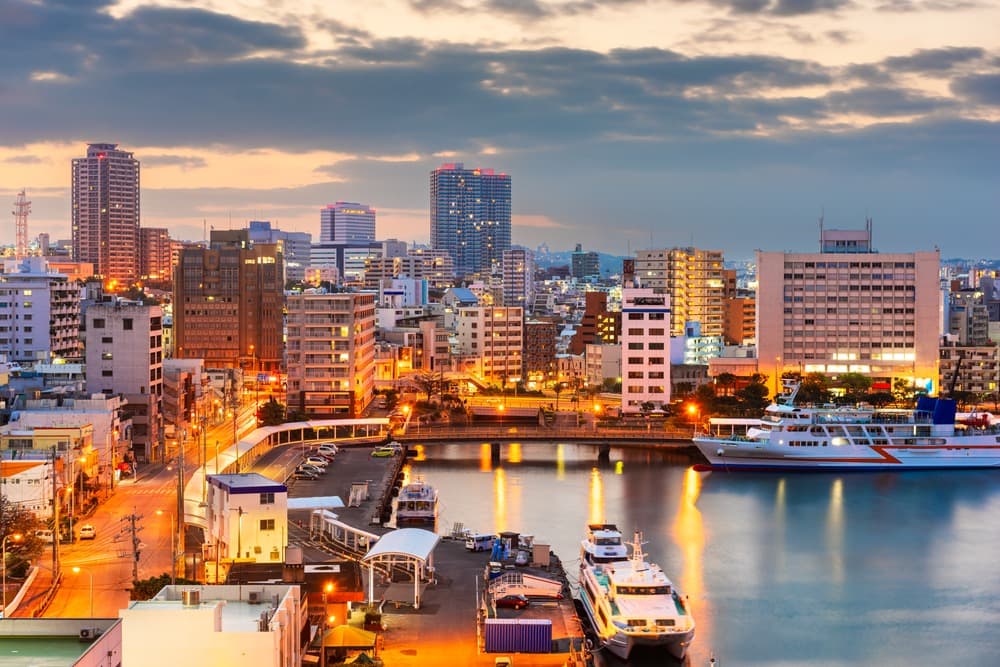
Okinawa Prefecture is located in the southwest of Japon, 1,500 km from Tokyo, between the East China Sea and the Pacific Ocean. It comprises more than 150 islands and has as its capital the city of Naha, on the island of Okinawa hontô. The region is divided into three distinct small archipelagos: Okinawa Shotô (which groups around twenty islands scattered around Okinawa hontô), Miyako and Yaeyama.
What to do in Okinawa?
Exploring Okinawa hontô island and the city of Naha
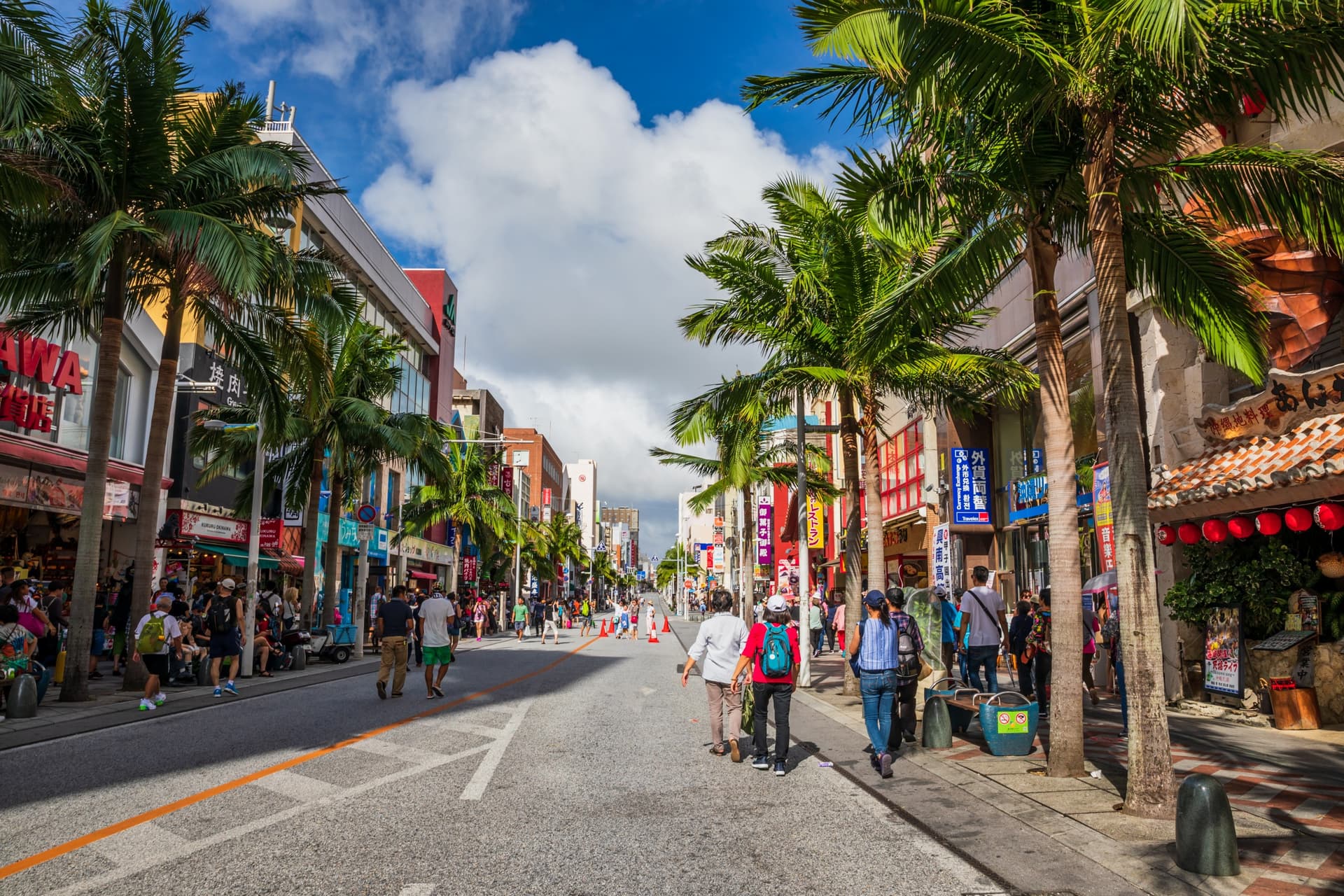
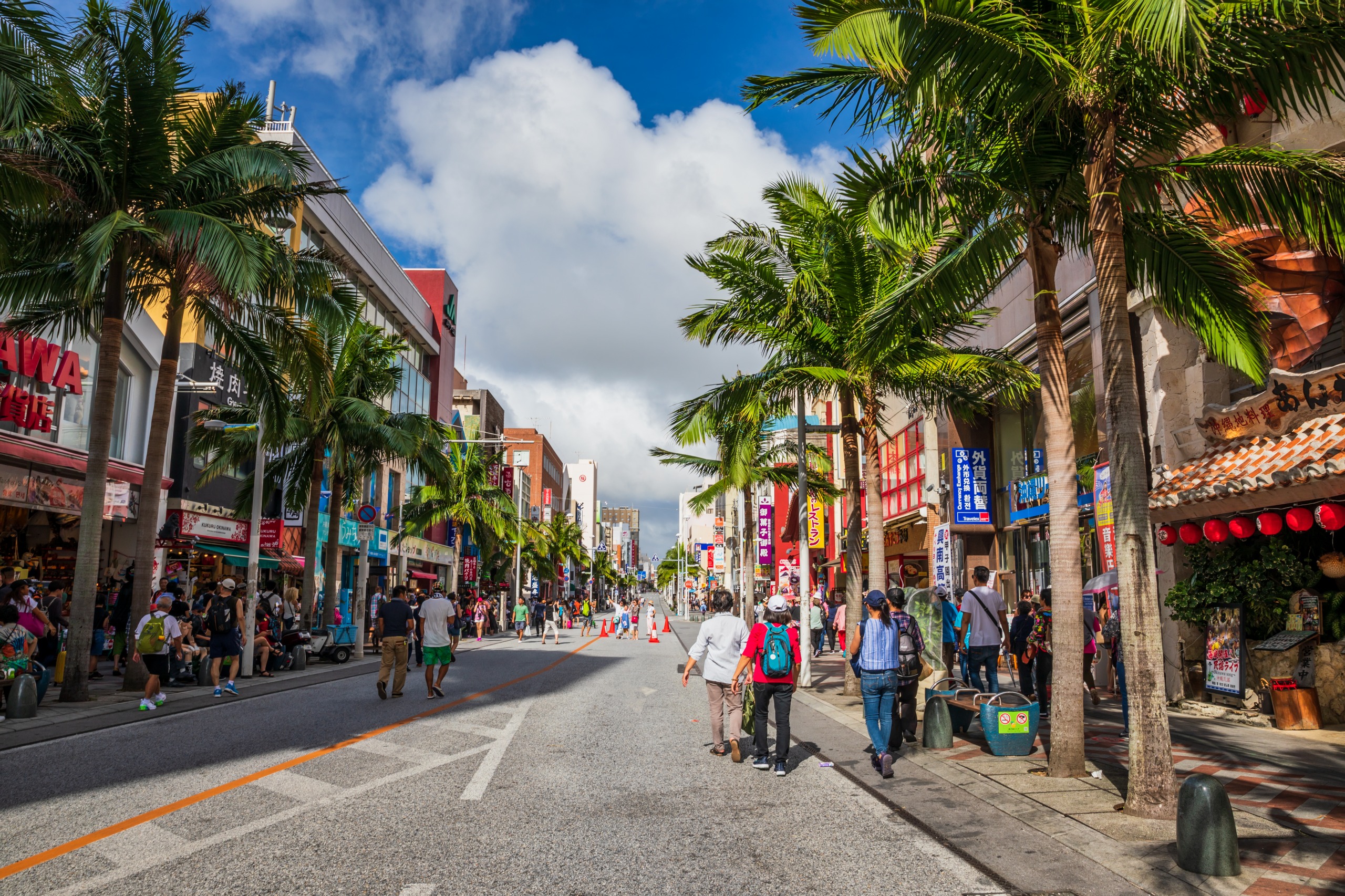
With an area of 1,206 km², Okinawa hontô is the fifth largest island in Japon. Naha, the capital, is home to numerous historical sites worth visiting, such as Shuri Castle, the Shikinaen Garden and the Fukushuen Garden. The Kokusai-dori shopping street is packed with souvenir shops and restaurants. If you pass through, be sure to try Beni Imo, a delicious sweet potato cake.
Leaving the city and heading north, you'll find the Churaumi Aquarium, the world's second-largest aquarium after the Chimelong Ocean Kingdom in China. Further north, beyond Yambaru, you'll discover magnificent wooded hills and fishing villages.
Enjoying beaches and diving at the Miyako islands
Okinawa hontô island is already a tropical destination in its own right, with lush vegetation and many beautiful beaches. But if you're seeking more tranquility and wish to appreciate more idyllic landscapes, the Miyako islands, 290 km southwest of Naha, are a must-see. They are renowned for their picturesque white-sand beaches and turquoise waters.
Home to more than 100 dive sites, the Miyako islands are also a diver's paradise. Among the must-see attractions are the Yabiji sea caves, accessible from July to September. These natural caverns offer a unique experience, perfect for divers equipped with torches. You can also discover the mysterious Torii-ike pond on Shimoji-jima island, cherished by divers for its enchanting atmosphere.
For those who prefer snorkeling, the Miyako beaches are ideal for spotting sea turtles and colorful fish. Local guides will take you to the best spots to maximize your chances of memorable underwater encounters.
Discovering the wildlife of Yaeyama island
While the Miyako islands rely on their paradisiacal beaches to captivate visitors, the Yaeyama island, on the other hand, showcases its wildlife. Manta rays inhabit the depths of the Manta Scramble near Kabira Bay, on Ishigaki-jima island; meanwhile, Iriomote island is known throughout Japon for its population of wild cats.
Cultures and traditions
If you enjoy traveling through the past, note that nine archaeological sites in Okinawa are inscribed on the UNESCO World Heritage List, including Zakimi Castle and the sacred site of Sefa-utaki.
Traditional culture thrives throughout the archipelago. During the O-Bon festival in summer, artists still perform the Eisa dance to the rhythms of drums and the sanshin (a three-stringed instrument). Every October, the Naha giant rope-pulling festival draws more than 15,000 people.
Okinawa cuisine is also excellent and well-balanced, carefully prepared with fresh ingredients. Among the region's specialties, discover champuru, a stir-fried dish made of tofu, vegetables and meat (or fish). And of course, there's awamori, the local spirit, to spice up your evenings.
Climate in Okinawa
In Okinawa, the rainy season encompasses May and June. Rainfall is abundant during this period. The climate calms down and warms toward the end of June. Peak summer occurs in August and September. Typhoons are to be expected during this time. By early October, the heat subsides and the weather is pleasant for outings. In winter, from December onwards, brings wind, but it rarely snows, almost never. It's cold, so dress warmly. Temperatures stabilize in March despite a few cool days; always remember to bring a jacket.
Several daily flights serve Naha airport from Tokyo. The journey takes between 2 and 2.5 hours. There are also some direct flights between Ishigaki or Miyako and Tokyo, with travel times of 3 to 3.5 hours.
Naha is also connected by air to Fukuoka and Osaka.
For travel within the islands, you can choose between bus or bike. On Okinawa hontô island, you can rent a car.
Ferries allow travel between the small islands of the same archipelago, but to reach Miyako or Yaeyama from Naha, most tourists opt for flying.