Hiroshima
Hiroshima
Between the Peace Memorial, Miyajima Island and sake breweries, Hiroshima blends remembrance, tradition and the Japanese art of living.
Hiroshima gradually rebuilt itself in the Chugoku region, after being erased from the map by the atomic bombing of August 6, 1945. Modern buildings and wide boulevards emerged from the charred ruins. The city looks toward the future and attracts an ever-growing stream of visitors.
History
The city of Hiroshima was founded in 1589 in the delta shaped by the Ôta River and the Seto Inland Sea. Its geographical position and proximity to the sacred island of Itsukushima motivated the Japanese general Terumoto Mori (1553–1625) to build his castle there. The city gained prominence at the dawn of the Meiji era (1868–1912). With the country's industrial development, it became a logistics hub for the imperial army.
On August 6, 1945, at 8:15 a.m., an atomic bomb destroyed the entire city in seconds. As many as 250,000 people died from the explosion and exposure to radioactive materials. Hiroshima took time to recover. In the immediate postwar years, a black market flourished in the city. But its reconstruction became a symbol of pacifism in the 1950s.
Today
Hiroshima sits on the northern coast of the Seto Inland Sea. Its location between the Chugoku and Shikoku mountains shields it from torrential rains, giving it a pleasant climate year-round, with an average annual sunshine of 2,000 hours. The Ôta-gawa River and its six tributaries wind through the city, supply it with water and nourish abundant vegetation. For serious athletes, Hiroshima offers sports complexes across its eight districts. Use your vacation to get back in shape and maintain your fitness by taking advantage of these modern facilities.
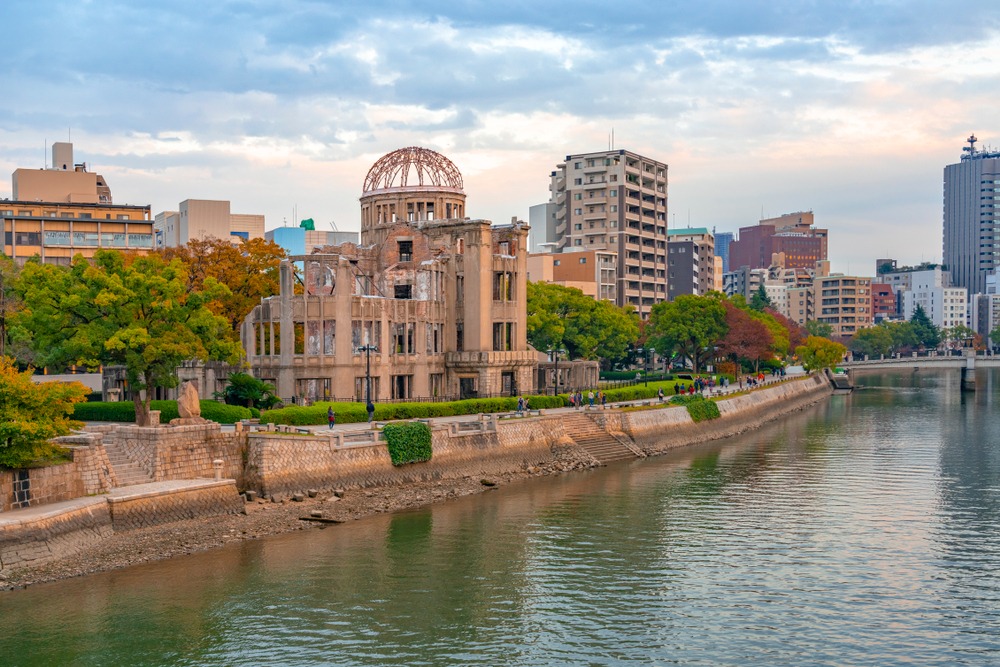
Two Hiroshima monuments are listed as UNESCO World Heritage Sites. First, discover the Genbaku Dome, also known as the Atomic Bomb Dome, which bears witness to the devastation caused by nuclear weapons while serving as a testament to peace. Then, visit the sanctuary on the water at Itsukushima which, according to legend, is said to be home to a deity. Boats shuttle between these places, giving visitors the opportunity to travel through the region's history and traditions. Hiroshima also boasts a rich literary heritage: Hiroshima by John Hersey, Gen of Hiroshima by Keiji Nakazawa, Black Rain by Masuji Ibuse, Sadako and the Thousand Paper Cranes by Eleanor Coerr, and more.
Hiroshima is a fertile agricultural region. Fresh produce from the sea and mountains form the basis of local culinary specialties. Oysters, fish and okonomiyaki feature on restaurant menus. You won't soon forget the unique taste of these seasonal dishes. To add flavor to your gastronomic stops, try the local sake. The city is home to about fifty breweries, placing it among Japan's three most important sake-producing zones, alongside Nadaku and Fushimi. It also takes pride in hosting the National Research Institute of Brewing, the only institution in the country dedicated to the study of this spirit. It is here that new Japanese sakes are evaluated every spring.
To buy souvenirs, visit specialty shops in the train stations, around tourist sites or at the airport. On an excursion to Miyajima Island, pick up a shamoji, a handcrafted wooden spoon for serving cooked rice. For female visitors, the kumunofude makeup brush makes a good choice. Finally, don't forget to purchase a bottle of sake, the product that primarily brings Hiroshima its fame.
Climate
In July and August, if it's not raining, it's the humid heat that settles over the city. If you plan to visit Hiroshima during this period, be sure to book a room with air conditioning. Around mid-September, typhoons can occur between hot and pleasant days. October and November offer refreshing temperatures and little rain. This is a good time for a stay in the city. The winter season is also conducive to tourism, characterized by dry weather, moderate cold and very little snow or rain. Finally, the months of April and May enjoy privileged weather conditions. This is the cherry blossom season.
Hiroshima has an airport that provides air connectivity with Tokyo, Sendai, Okinawa and Sapporo. The facility is connected by limousine bus to Hiroshima JR Station.
From Tokyo, you can also reach Hiroshima by Shinkansen train. The journey takes approximately four hours.
Hiroshima has an extensive tram network, convenient for getting around the city, though rather slow. Many bus lines operate in the city and its outskirts. To reach the northern suburbs, you can take the modern Astram metro. If you enjoy cycling, Hiroshima's wide sidewalks will certainly appeal to you. Paths along the Ôta-gawa River and its tributaries invite leisurely strolls, while routes through the hills toward Hijiyama Park will attract sports enthusiasts.
Want to discover this destination?
Our local advisors design your tailor-made trip.