The Japanese Flag
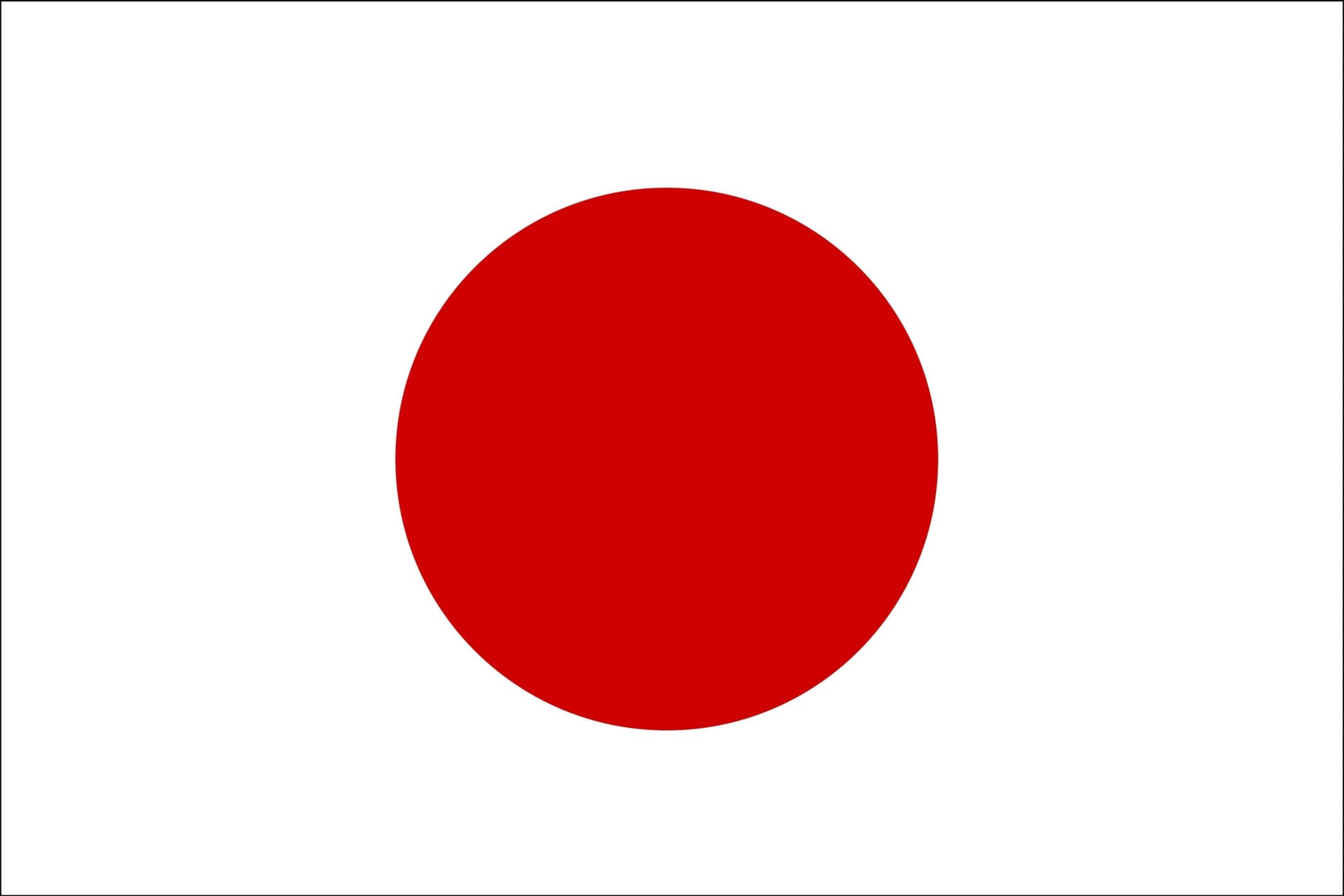
The name of Japan's national flag is the Hi no Maru, or Hinomaru, literally meaning the "Circle of the Sun". More than the celestial body itself, the disc represents above all the Shinto sun goddess Amaterasu
The name of Japon's national flag is the Hi no Maru, or Hinomaru, literally meaning the "Circle of the Sun". More than the celestial body itself, the disc represents above all the Shinto sun goddess Amaterasu, the most venerated deity in the Shinto religion. This divine being is also considered the ancestor of the Japanese imperial lineage.
An emblem with distant origins
The origins of the Hi no Maru are distant and undetermined. The sun symbol has been used for centuries on various flags and banners throughout Japon. From the 12th century onwards, the first Samurai (also called Bushi) were already drawing the famous red circle on the small flags (Gunsen) they carried during, for example, the struggle for power between the Minamoto and Taira clans.
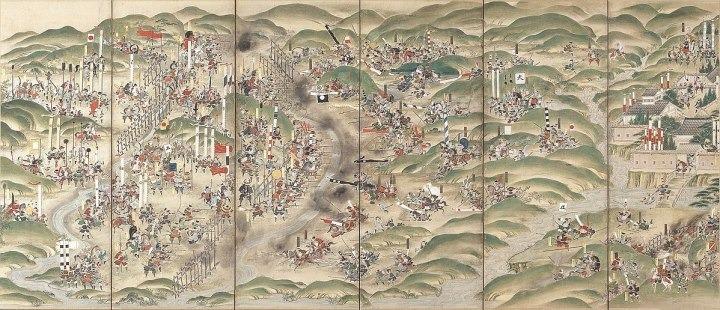
Later, in the 15th and 16th centuries, during the period known as the "Age of Warring States", various military leaders engaged in warfare to expand their power used the Hi no Maru as a military insignia. A painting from the year 1600 depicting the Battle of Sekigahara shows military forces bearing banners with the Hi no Maru at their center. While the red circle on a white background is the most widespread representation, flags with a golden circle on a dark blue background can also be found.
Did you know?
The ratio between the height and width of the flag is 2 to 3. The circle is positioned exactly at the center of the flag and its diameter is fixed at 3/5ths of the flag's height.
The Hinomaru becomes the symbol of the Land of the Rising Sun
It was not until the late 16th and early 17th centuries that representations of the Hi no Maru appeared to symbolize Japon as a whole. It was TOYOTOMI Hideyoshi (16th century) and TOKUGAWA Ieyasu (17th century), Shoguns of Japon, who hoisted the Hi no Maru on merchant vessels sent abroad. A painting from the 17th century depicting scenes of daily life in the city of Edo (present-day Tokyo) shows a ship bearing the Hi no Maru. Its presence indicated that the Shogun was on board.
During the following period, from 1639 to 1854, known as Sakoku ("National Isolation"), the state prohibited all commerce and relations with foreign countries, with the exception of China, Korea, and the Netherlands. It was only after 1854, when the Tokugawa resumed international trade, particularly with the United States and Russia, that the Hi no Maru flag reappeared on Japanese merchant ships.
It was in fact in the year 1854 that the Tokugawa accepted the proposal of SHIMAZU Nariakira, a Japanese feudal lord from the Satsuma domain, to display the Hi no Maru flag on a white background across the entire Japanese fleet, in order to avoid confusing Japanese vessels with foreign ships. In 1860, the Kanrin Maru, the official ship that carried Japanese officials to the United States, displayed the Hi no Maru flag.
The Hi no Maru becomes the official flag of the Japanese Imperial Navy
In November 1867, the Tokugawa family lost political power, and the Meiji era began with its policy of modernizing Japon. In 1870, the Meiji government officially designated the Hi no Maru flag as the symbol of Japon for merchant ships and the Japanese Imperial Navy. The Hi No Maru symbolized at the time the monarchy, ancestral religion, and Japanese identity.
The Hi no Maru becomes the de facto flag of the Japanese Empire
In 1872, the Hi no Maru was raised on the official establishments of the Meiji government. At that time, many non-governmental organizations and citizens wished to display the Hi no Maru as well on public holidays. This led to the publication of notices and documents that further formalized the de facto use of the Hi no Maru as the official flag of Japon.
During the early conflicts and the Pacific War
The Hi no Maru experienced increasing use during Japon's imperial expansion, notably during the Sino-Japanese and Russo-Japanese wars. It became a symbol of patriotism and war mobilization. Acts of solidarity, such as "flag meals" with umeboshi, illustrate this patriotism.
During World War II, the Hinomaru was used to promote Japanese imperialism in Southeast Asia. The flag was perceived by the Japanese as a symbol illuminating the world.
The Hi no Maru finally becomes the official flag of Japon
It was not until 1999 that the Hi no Maru officially became the symbol of the State, following the law regarding national flags and anthems. From then on, it became the civil flag, state flag, merchant ensign, and state ensign of Japon.
It has since been raised on public buildings and in schools. It represents Japon in international organizations and sporting events.

Contemporary use of the flag by the Japanese
Unlike the use of the national flag in many other countries, the Japanese rarely display their national flag. For some Japanese, it remains a symbol dating back to the era of the great Japanese empire. It is therefore rarely seen prominently at sporting competitions or other national celebrations. There is no legal obligation to fly it, and damaging it is not considered a criminal offense (whereas damaging a foreign flag is !).
However, it should be noted that the Hi no Maru is sometimes used as a good luck charm. It is customary to give it to someone as encouragement and a wish for good fortune. Students, for their part, purchase headbands called Hachimaki bearing the red disc to express their determination to succeed in their exams.
The rayed variants of the Hi no Maru
The Japan Self-Defense Forces (JSDF) use various variants of the sun disc design. The Japan Ground Self-Defense Force (JGSDF) displays the Hachijō-Kyokujitsuki, which features eight rays and a partial gold border. Another historical variant, the Jyūrokujō-Kyokujitsu-ki with 16 rays, was the war flag of the Japanese Army and Navy from 1870 to 1945. Although this flag was prohibited by the San Francisco Treaty, it was reintroduced in 1954 for the land and naval defense forces (JMSDF). It is still viewed unfavorably in Asian countries that suffered Japanese occupation.