Japan's Demographics
With 126.33 million inhabitants, Japan ranks as the 10th most populous country in the world. Demographic indicators such as a life expectancy of nearly 84 years and an unemployment rate of 3.1% attest to an honorable level of development.
With 126.33 million inhabitants, Japan ranks as the 10th most populous country in the world. Demographic indicators such as a life expectancy of nearly 84 years and an unemployment rate of 3.1% attest to an honorable level of development. Nevertheless, the Japanese economy must contend with a labor shortage due to the rapid aging of the population. Nearly 40% of the population is over 65 years old, and the retirement age reaches a record of 70 years.
A Unevenly Distributed Population
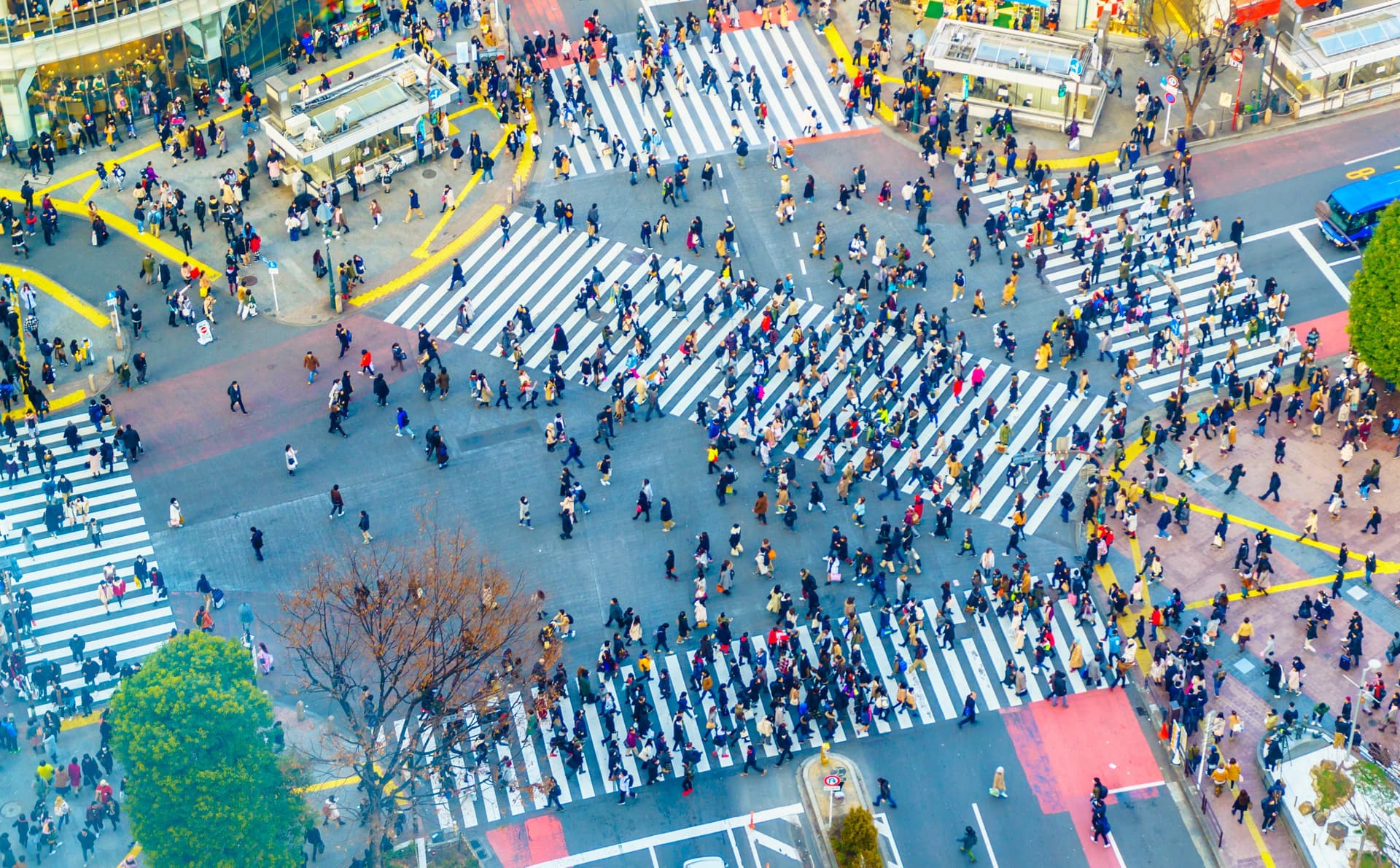
In 2015, the number of residents on Japanese territory stood at 126,919,659 inhabitants. This figure comes from the latest official census conducted by the Statistics Bureau of the Ministry of Internal Affairs and Communications. The population is deserting rural areas and concentrating heavily in cities, particularly large metropolitan centers. In fact, 50% of Japanese live and reside on just 2% of the national territory. Density is among the highest in the world, with 339.7 inhabitants/km². Japan's largest city by population is the capital, Tokyo, which is home to 10.6% of the total population, followed by the prefectures of Kanagawa (7.15%) and Osaka (6.9%). Human settlement is very sparse in Tottori Prefecture (fewer than 589,000 inhabitants). Urbanization reaches a respectable rate of 92%, a characteristic trait of wealthy industrialized nations.
An Aging and Declining Population
While Japanese society stands out for its urbanization, its most striking feature is aging. Japan's population is, in fact, the oldest on the entire planet. In 2015, the share of older people (65 years and over) in the population was 26.59%, compared to 13.11% for young people and children. Working-age adults represented 60.3% of the total population. Comparing with data from previous years, we can see that the country has increasingly more elderly residents. Between 1989 and 2006, the proportion of people in the 65-and-over age group nearly doubled, rising from 11.9% to 21%. By 2009, the proportion of inhabitants over sixty in Japan set a world record at 23%. To this aging is added the fact that Japanese families are having fewer and fewer children, evidenced by a fertility rate of 1.4 children. The number of births recorded is thus very modest, insufficient to replace the working-age population. While other countries worry about controlling their demographic growth, Japan is seeing its population decline at an alarming rate.
The World's Highest Life Expectancy
Japanese people enjoy an enviable life expectancy: men can live up to 79 years and women up to 85 years, with an average maximum age for all genders of 84.74 years. By comparison, France has a life expectancy of 82.4 years. But if they live long, Japanese people often spend their old age alone. Solitude is often experienced with difficulty, as it sometimes happens that elderly persons are not assisted by their family at their death. Thus, 2,211 elderly people died in Tokyo in 2012 without the presence of their loved ones in their final moments.
The high proportion of elderly people also places a heavy burden on the economy: on one hand, the payment of pension benefits increases Japan's social protection expenditures. But on the other hand, there are not enough young people to take over and replace the departing generation. To remedy this labor shortage, the Japanese Government has raised the legal retirement age to 70 years.
Population Composition
Japan is a true human crossroads. It brings together foreigners of various nationalities. Chinese top the list with 680,000 people, or 30% of the non-Japanese resident population; other immigrants are of Brazilian, Korean, Philippine, or Peruvian origin. Indeed, the country opens its borders widely to foreigners, who are considered an asset offsetting the shortage of domestic labor.
Unemployment in Japan
There are many job opportunities in Japan. The unemployment rate remains stable at around 3.1%. Companies are very selective about foreign workers allowed to work on Japanese territory. They only accept highly qualified employees.
Languages and Dialects
Japanese dominates all other languages, local or foreign. Indeed, more than 9 out of 10 Japanese have Japanese as their mother tongue. A few rare dialects are spoken on the island of Okinawa and in Hokkaido Prefecture. But their audience is limited to indigenous peoples.
English is the first foreign language spoken on the archipelago. It is taught at an early age, being a compulsory subject in primary school. After English, Japanese people also learn Mandarin Chinese and Korean.