Sleeping in a Ryokan in Japan
Sleeping in a ryokan offers genuine immersion in Japanese culture. Why? These traditional Japanese inns are not mere lodgings, but welcoming places
Sleeping in a ryokan offers genuine immersion in Japanese culture. Why? These traditional Japanese inns are not mere lodgings, but welcoming places where hosts introduce their guests to local customs and traditions! Origin, rules of use, room types and prices: here's everything you need to know about these quintessential Japanese establishments…
What is a ryokan?
The Origins of Ryokans
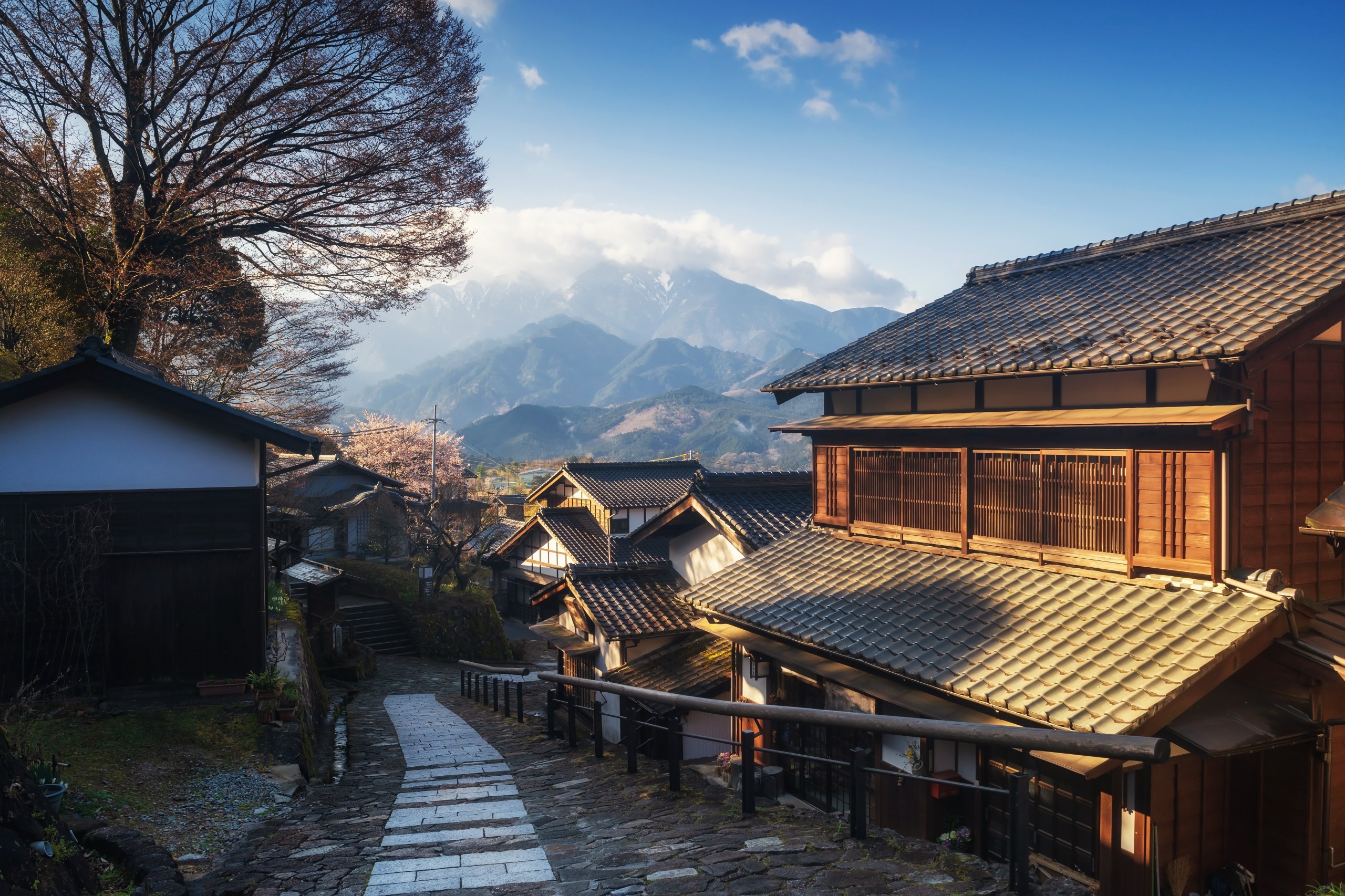
Ryokans are Japanese inns designed during the Edo period to accommodate lords, samurai, and passing pilgrims. While the earliest establishments were rather modest, offering basic services to weary travelers, ryokans evolved to meet the expectations of a new, more sophisticated clientele.
Once free, traditional inns became paid establishments and, at the same time, began offering higher-end services. Despite what the term "inn" might suggest, ryokans today are prestigious accommodations (often more expensive than hotels).
Types of Ryokans
Japan has approximately 70,000 ryokans throughout the archipelago! Among them, you'll find strictly traditional establishments and more modern versions, designed in the twentieth and twenty-first centuries.
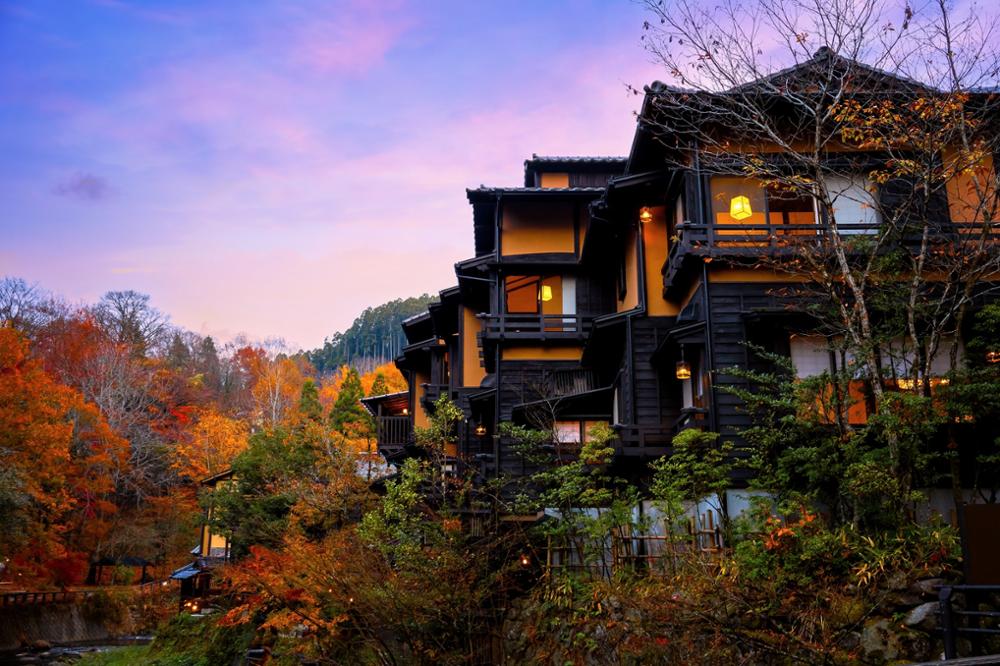
In rural and mountainous areas, you'll typically find older ryokans, equipped with natural onsens (hot spring waters of volcanic origin, renowned for their relaxing and therapeutic properties).
In major cities like Tokyo or Kyoto, you'll more often find modern establishments with jinko-onsen (artificial hot baths).
To Know Established in 1948, the Japan Ryokan & Hotel association lists 3,500 quality establishments. To become a member of the organization, ryokans and hotels must meet strict admission criteria – in order to provide "foreign guests with safe and reliable accommodation structures".1 |
The Layout of a Ryokan
Number of Rooms
A ryokan can typically accommodate between two and four people (some may occasionally have larger capacity). The number of rooms often varies depending on the age of the establishment. Indeed, the oldest (and therefore most rustic) don't offer all amenities…
Thus, it's not uncommon for an older ryokan to lack private bathrooms or toilets in its rooms. In such cases, facilities are located in common areas of the establishment. When booking, you should therefore carefully check the options offered by the inn.
The Living Area
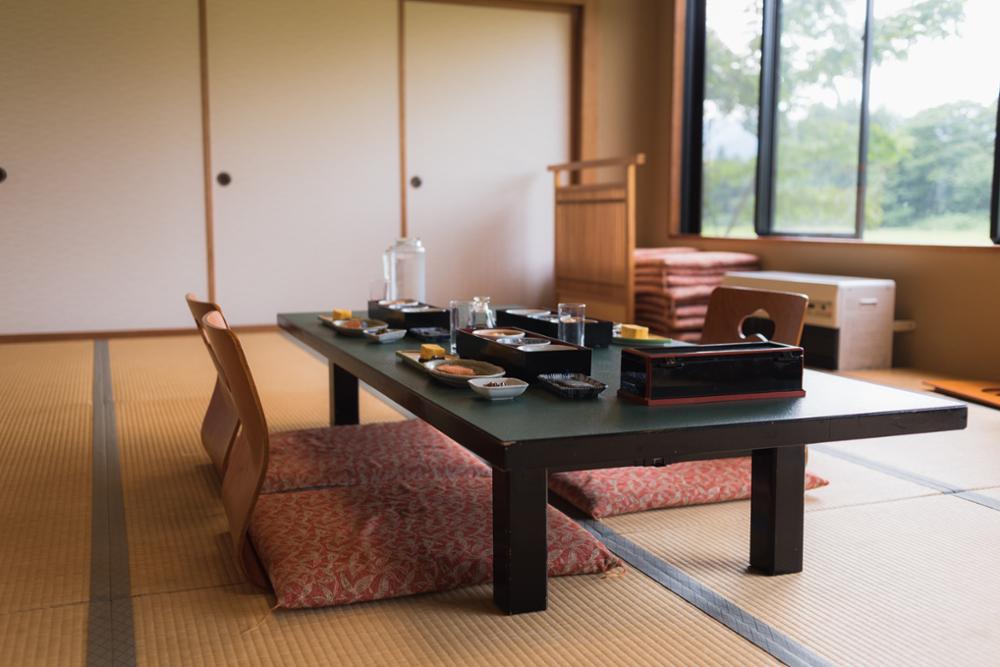
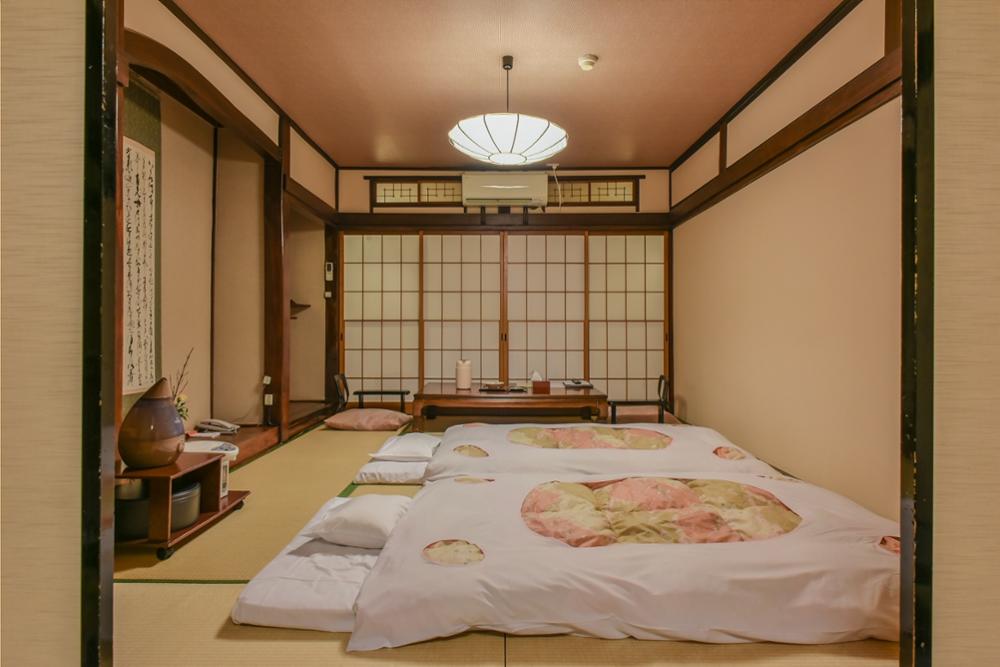
Each room always includes a small living area furnished with a low table and (sometimes, though not always) zaisu – legless chairs with a backrest and cushion, called zabuton.
The living area is separated from the main room by sliding doors. There are two types: fusuma (covered with thick, opaque paper) or shoji (covered with thinner, translucent paper that allows light to filter through the room).
The Tokonoma
Most rooms also feature a tokonoma: a small raised alcove where a piece of pottery, a statue, a floral arrangement, or a painting is displayed… It's a small space dedicated to meditation. Traditionally, the head of the household sits before the tokonoma during meals.
The Tatami and Futon
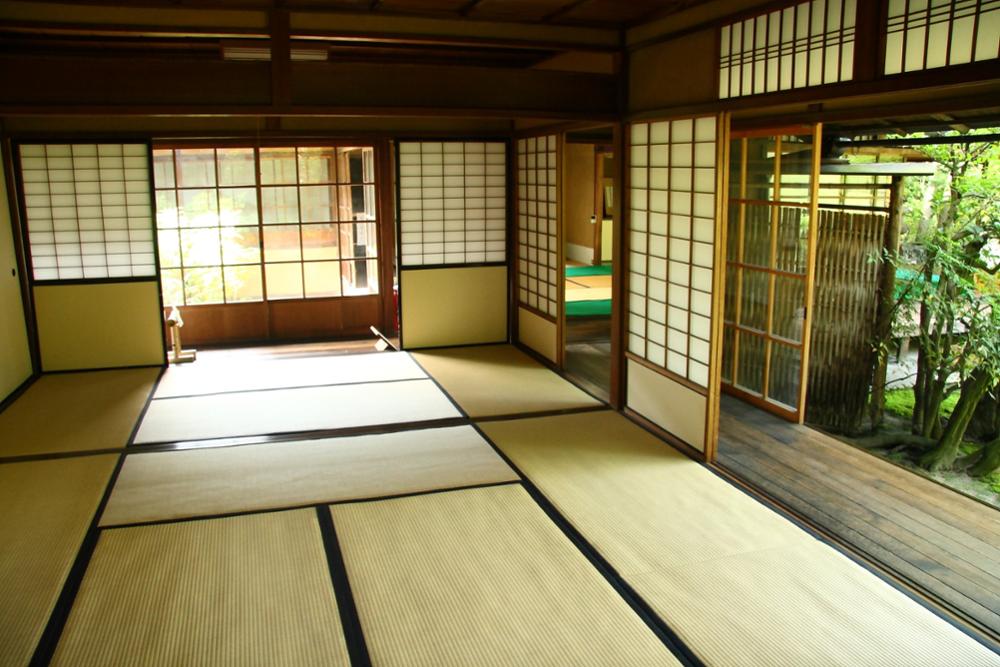
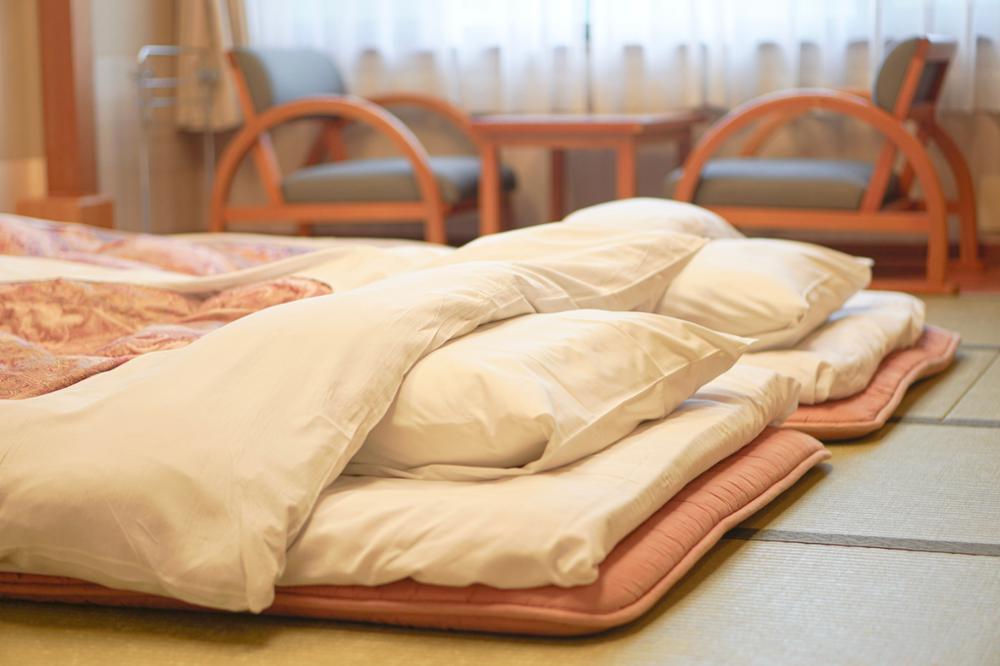
The room floor is covered with tatami (a mat woven from rice straw). Upon arrival, the sleeping area is not yet set up: the futon is laid out later in the evening, usually after dinner, by the establishment's staff.
Note that futon refers to the entire bedding ensemble, namely the cotton mattress (shikubuton) and the comforter placed on top (kakebuton). It is flexible and collapsible for easy storage (often in a dedicated cabinet). In modern establishments, rooms with beds are also available.
Decoration
Whether strictly traditional or more contemporary, ryokans feature minimalist decoration made with natural materials such as wood, cotton, straw, or rice paper. Some may also use more modern materials, but all maintain washitsu decoration – or traditional Japanese style.
Amenities
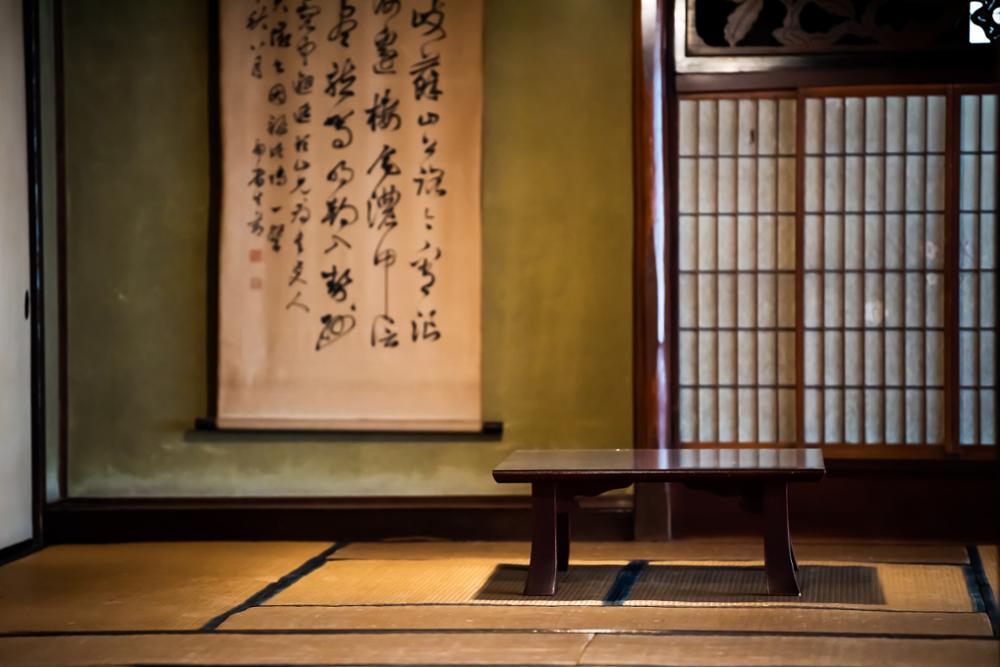
Here again, room amenities depend on how old the establishment is. In more modern ones, you'll find a television, a mini-fridge, and sometimes even a safe. All ryokans provide hygiene essentials (towels, washcloths). Luxury establishments also offer toothbrushes.
Why Stay in a Ryokan?
Experience Host Hospitality
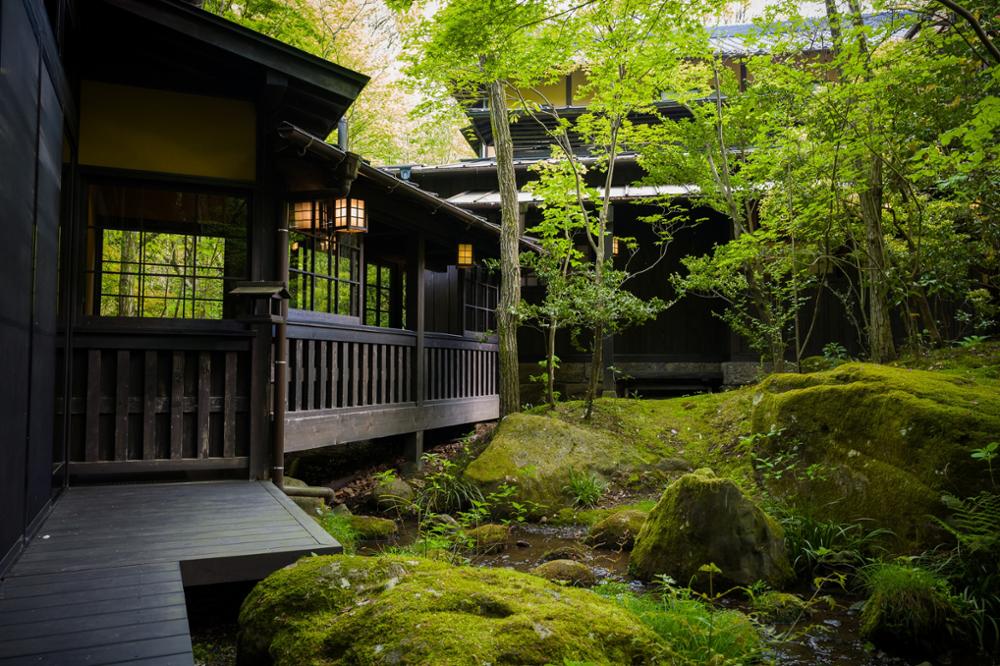
Most ryokans are run by several generations of the same family. Being small establishments, these inns are renowned for their hosts' hospitality, who care for visitors as if they were their own guests.
Always smiling and attentive, the okami (managers) ensure your comfort. Hosts also show their attention through discreet gestures, such as careful futon folding. Staying in a ryokan is thus a unique opportunity to discover the famous omotenashi – the art of Japanese hospitality!
Enjoy a Peaceful Atmosphere
Ryokans are also sought after for their tranquility – the promise of a restorative escape after the bustle of urban frenzy… While most establishments feature a zen garden, the oldest offer moments of relaxation immersed in nature, thanks to their rural locations.
During major seasonal events, such as hanami (cherry blossom blooming) or Momijigari (when maple leaves turn red and set the archipelago ablaze), they also offer splendid views of these natural spectacles.
Discover Traditional Japanese Culture
More than just a lodging, a ryokan is above all an essential place to discover traditional Japanese culture. Some ryokans can, for example, introduce you to the tea ceremony.
Not all establishments offer exactly the same services, but each works to preserve Japanese traditions. Each ryokan also allows you to discover Japanese gastronomy, through a kaiseki dinner – composed of several delicate courses, prepared from local and seasonal products.
Who Should Stay in a Ryokan? A night in a ryokan is ideal for visitors seeking an authentic experience, or couples looking for peace and privacy. If you're booking for a family, make sure amenities are preferably included in your room. |
What Are Ryokan Customs and Etiquette?
Arrive Early for Check-In
If you decide to stay in one of these unique accommodations in Japan, you must first learn a few rules of conduct! The first thing to know is that it's customary to arrive at the reception (choba) around three in the afternoon for check-in. Once completed, a staff member will guide you to your room.
Remove Your Shoes
Upon arrival, also remember to remove your shoes at the entrance of the establishment (slippers will be provided). Indeed, outdoor shoes are not permitted in a ryokan: during your stay, they are stored in a locker. Once in your room? You must also remove your slippers! Yes, slippers are also not allowed on tatami!
Put On a Yukata
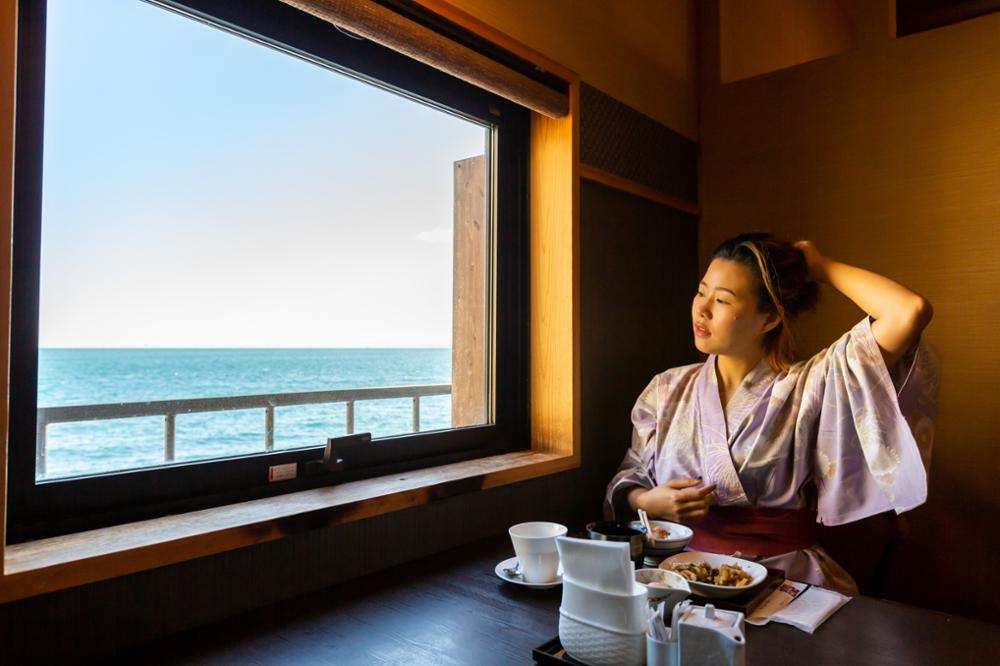
Once in your room, get comfortable and slip on the yukata (a cotton kimono) provided for you. If you feel cold, you can also wear a tanzen (a jacket comparable to a comfortable quilted homewear garment). The tanzens provided during your stay are always appropriate for the season.
What is the Price of a Night in a Ryokan?
Depending on the services offered and the standard of the establishment, one night in a ryokan, per person, ranges on average from 12,000 to 20,000 yen (between 77 and 118 €). The price includes dinner and breakfast. Note that establishments with an onsen are often more expensive.
Frequently asked questions
The price of a night in a ryokan varies depending on the standard and services offered. On average, expect between 12,000 and 20,000 yen per person (about 77 to 118 €), breakfast and dinner included. Establishments with natural hot springs are generally more expensive.
Unlike a standard hotel, a ryokan is a traditional Japanese inn often run by a family. You sleep on a futon laid on tatami, you wear a yukata, and you enjoy a kaiseki dinner. The experience is as much cultural as it is about accommodation.
Yes, many ryokans, particularly in major cities like Tokyo or Kyoto, welcome foreign visitors and provide English-language information. It is recommended to book through international platforms such as Booking.com or specialized sites like Jalan or Rakuten Travel.
An onsen is a hot spring bath fed by hot spring waters of volcanic origin, renowned for their relaxing and therapeutic properties. Ryokans located in rural or mountainous areas often feature them. In cities, you'll more commonly find jinko-onsen, artificial baths that recreate the experience.
It is customary to arrive around 3 p.m. for check-in, remove your shoes at the entrance and your slippers before stepping on the tatami, wear the yukata provided, and respect the tranquility of the establishment. These rules are part of the cultural experience of your stay.
All seasons offer a unique experience. Spring, with hanami (cherry blossom blooming), and autumn, with Momijigari (red maple leaves), are particularly popular. Winter is ideal for enjoying an outdoor onsen under the snow.