Daisetsuzan
Daisetsuzan
At the heart of Hokkaido, Daisetsuzan covers 226,000 hectares of volcanoes, alpine forests and peaks exceeding 2,000 m, including Mount Asahi, the island's highest point.
Daisetsuzan National Park sprawls across more than 220,000 hectares in the heart of Hokkaido. Its name means "great snowy mountains" and refers to five peaks exceeding 2,000 m in altitude. Japan's largest national park, it combines active volcanoes, alpine forests, endemic wildlife, and Ainu culture within a territory still rarely visited by international tourism.
Why Visit Daisetsuzan
Daisetsuzan offers a raw mountain experience, away from Japan's classic circuits. The park is home to Mount Asahi (2,291 m), Hokkaido's highest point, as well as a mosaic of volcanic landscapes crossed by fumaroles and hot springs. Biodiversity is remarkable: 250 species of alpine flowers, Hokkaido brown bears, and Blakiston's eagle owl, a bird reaching 70 cm in wingspan and called "Kotan koro kamui" by the Ainu, who consider it the region's protector. The park lends itself to summer hiking, autumn foliage viewing from mid-September onwards, and extended winter activities thanks to abundant snowfall.
Park History
The project to create the park dates back to 1932. It was officially established in 1934 over 226,781 hectares, driven by Mayor Ryutaro Ôta. During the Pacific War, in 1941, part of the area served as a military training ground. The Sounkyo, Yokumanbetsu, and Nukabira regions were then progressively integrated into the protected perimeter. In 1971, Daisetsuzan obtained special protection zone status, strengthening the conservation of its alpine environments. A zoning revision in 1995 adjusted its area to 226,764 hectares.
What to See in the Park
Given its size, Daisetsuzan is discovered by sectors. Three zones structure the visit.
Mount Tokachi (Southwest)
The volcanic chain of Mount Tokachi unfolds to the southwest. Sharp ridges and deep canyons draw a mineral landscape. Most trails depart from the Furano area. Nearby, the waterfalls of the Nunobe River punctuate the hike. The ascent of Mount Furano begins at the Tokachidake onsen and offers, from the heights, an open view over the Genshigahara plain covered in conifers.
Omote Daisetsuzan (North)
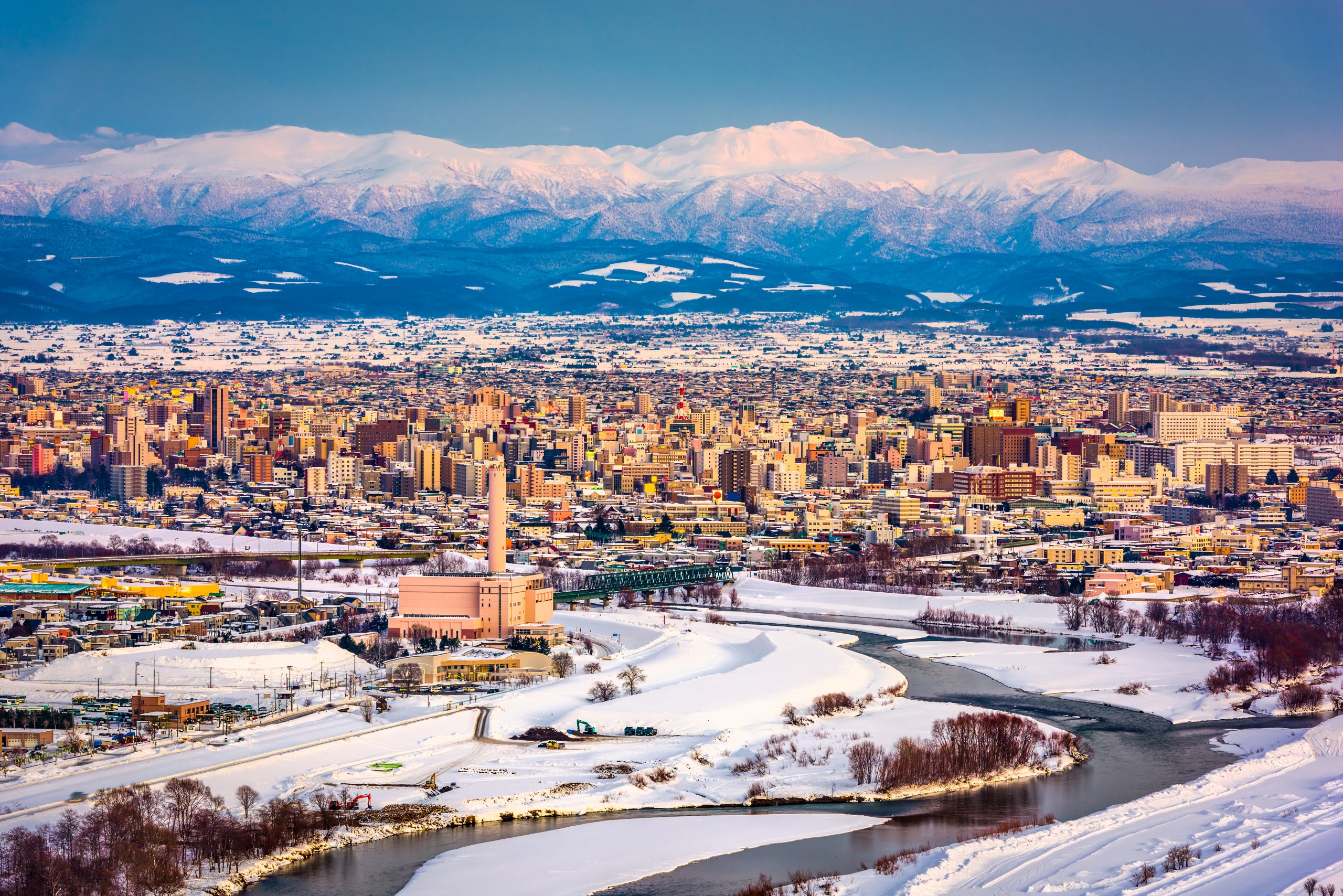
The northern sector is accessible from Asahikawa and the Asahidake and Sounkyo onsen. It concentrates around fifteen volcanoes, including Mount Asahi (2,291 m), nicknamed the "roof of Hokkaido." The most popular route departs from the Asahidake onsen: a cable car leads to the Sugatami station, from which you need about three hours of climbing through a rocky path punctuated by fumaroles and sulfur blocks. The sector is particularly attractive in autumn, when red foliage reaches the slopes from mid-September.
Another option: climbing Mount Kuro (2,000 m) from the Sounkyo onsen. A cable car and mechanical lifts allow quick access to the summit, but a foot ascent remains possible (2.5 to 3.5 hours depending on pace). The panorama opens onto neighboring ridges and wild flower meadows.
Further south, Mount Tomuraushi is worth a detour for those with time. Nicknamed Kamuimintara, the "garden of the gods" in the Ainu language, it stands out for its vast flowery plateau. A few camping areas are available.
Higashi Daisetsuzan (East)
The eastern sector, served by Route 273, is organized around two lakes: Nukabira and Shikaribetsu. In summer, these bodies of water are perfect for canoeing. From January to March, Lake Shikaribetsu freezes completely and hosts the Shikaribetsuko Kotan festival: an ephemeral ice village is built on its surface, with a bar, rotenburo (outdoor bath), and winter activities.
When to Visit
The climate is alpine and marked by the presence of permafrost at altitude. Temperature differences are significant depending on zones and seasons, with temperatures potentially dropping well below 0°C in winter and reaching around 18°C in summer. The harsh period, from October to June, is dominated by cold and heavy snowfall; some snow patches persist year-round.
- July–August: hiking, alpine flowering, mild temperatures.
- Mid-September to mid-October: autumn colors, among Japan's earliest.
- January to March: Shikaribetsu ice festival, skiing, and snowshoeing.
Practical Information
Park entrance is free. Some parking lots are free, others charge a fee. Public transportation within the park is very limited: car rental from Asahikawa is the most flexible option for moving between the three sectors. Plan appropriate mountain equipment: weather changes rapidly at altitude, and wildlife observation (especially bears) requires vigilance and a hiking bell.
How to Get There
Sounkyo is the main entry point. The town is connected to Kamikawa in about 30 minutes by bus, and to Asahikawa in about 2 hours. Shuttles also serve Asahidake from Asahikawa Station. The nearest airport is Asahikawa, connected to Tokyo and Osaka by regular domestic flights.
Nearby
- Asahikawa, Hokkaido's second city and logistics base for reaching the park.
- Furano, to the west, renowned for its lavender fields and ski resort.
- Biei and its rolling landscapes, about an hour's drive away.
Frequently Asked Questions
Frequently asked questions
Yes, park access is free. Only certain parking lots and cable cars (Asahidake, Kurodake) charge fees.
Allow a minimum of two to three days to explore one sector thoroughly, and a week to tour all three zones with some high-altitude hikes.
Mid-July to mid-September for high-altitude trails, when snow patches have melted and alpine flora is in bloom. Autumn colors arrive from mid-September onwards.
It's possible but challenging. Buses connect Asahikawa to Sounkyo and Asahidake, but traveling between park sectors requires a rental car.
Yes. The park is home to Hokkaido brown bears. Check with visitor centers before any hike and carry a bear bell.
Prepare Your Trip
Daisetsuzan fits naturally into a Hokkaido itinerary for travelers seeking pristine nature. To build your custom stay, consult our Japan travel suggestions.
Interested in this visit?
We can include it in your personalised itinerary.