Ise-Shima National Park
Ise-Shima National Park
Ise-Jingu Shrine, the Married Rocks of Meoto-Iwa, Ago Bay's pearl farms: everything you need to visit Ise-Shima National Park in Mie Prefecture.
The Ise-Shima National Park encompasses the towns of Ise and Shima in the northeast of the Kii Peninsula, in Mie Prefecture. Spanning approximately 55,000 hectares, it brings together Shinto shrines, centuries-old cedar forests, deeply indented bays suited to oyster farming, and fishing villages steeped in living traditions. Known as the "cradle of the soul," the region is home to one of Japan's most venerated shrines, Ise-Jingu.
Why Visit Ise-Shima National Park
Three features set this park apart from other Japanese natural spaces. Ise-Jingu Shrine, dedicated to the goddess Amaterasu, is the spiritual heart of Shintoism. Ago Bay to the south is the historical birthplace of cultured pearls, developed in the late 19th century. Finally, the peninsula preserves a tradition of female free diving, the ama, an activity dating back over two thousand years.
The entire area can be explored at a leisurely pace: forests, shrines, oyster ports and period villages coexist on a compact territory, accessible by train and bus from the Kansai region.
A Bit of History
Ise-Jingu Shrine, founded according to tradition nearly two millennia ago, holds a unique place in Shintoism. Its distinguishing feature: a complete renewal of all buildings every 20 years, the Shikinen Sengu, a ritual that transmits traditional carpentry techniques while preserving the original architecture. The most recent reconstruction took place in 2013 and primarily involved Ise-Jingu (Naiku and Geku, inner and outer shrines).
The national park itself was created in 1946 to protect this cultural and natural landscape. Ago Bay, further south, became famous from 1893 onwards, when Mikimoto Kokichi successfully pioneered cultured pearl farming there, transforming the local economy.
What to See and Do
Ise-Jingu, the Shinto Shrine
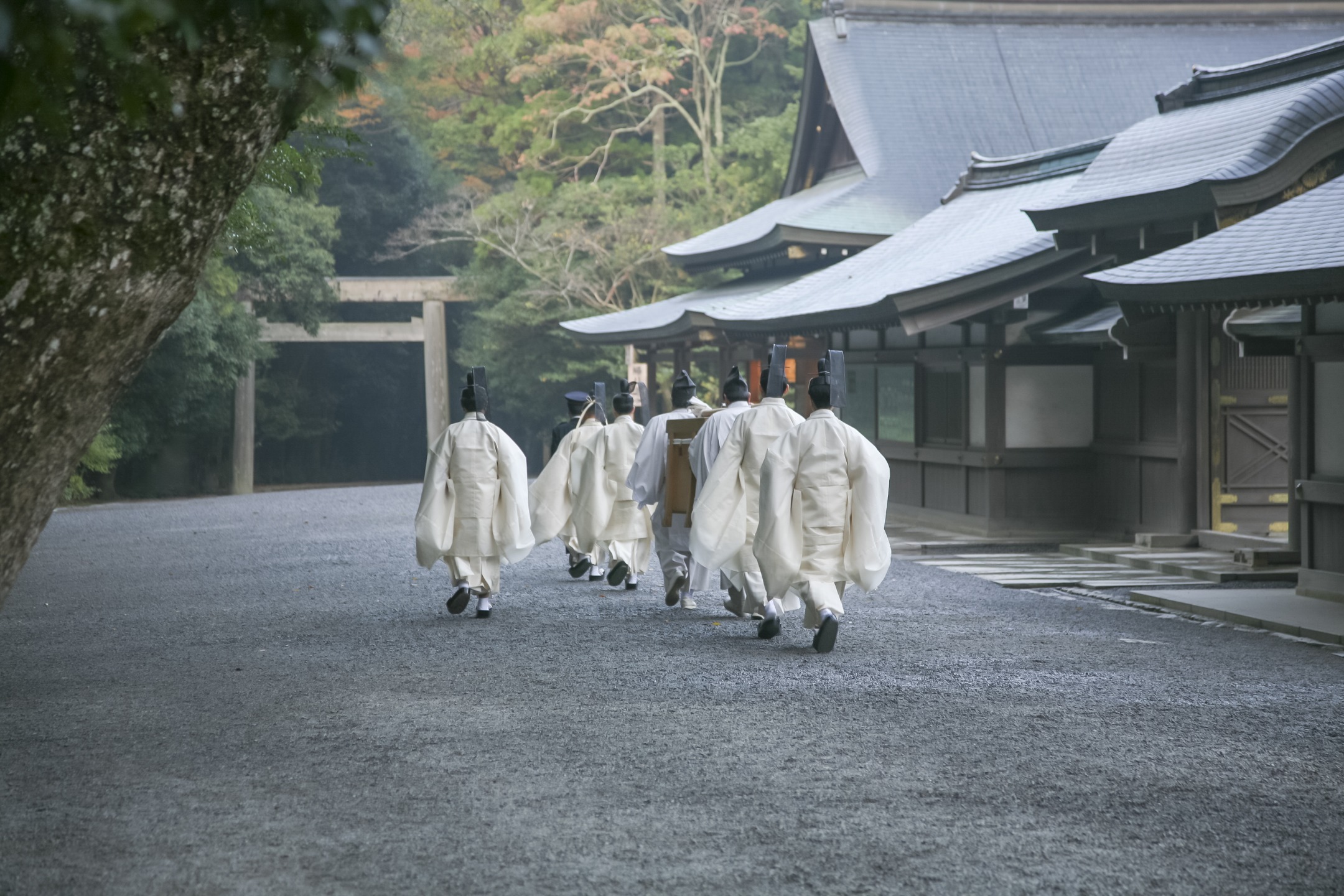
Comprising two main complexes, the Naiku (inner shrine) and the Geku (outer shrine), Ise-Jingu is set within a forest of cedar trees over 700 years old. The atmosphere is austere: no gold ornamentation, but clear wood, thatched roofs and gravel pathways. Processions of white-robed priests mark certain rituals and give tangible expression to the shrine's spiritual life.
Okage-Yokocho and Oharai-Machi
At the entrance to the Naiku, these two pedestrian quarters recreate the ambiance of the Edo and Meiji periods: wooden houses, craft shops, tea stalls. Here you'll find the historic confectionery Akafuku, which has served since the 18th century a mochi covered with red bean paste that has become Ise's iconic sweet.
Meoto-Iwa, the Married Rocks
On the Futami coastline, two rocks emerge from the sea, linked by a massive rope made of rice straw (shimenawa) that symbolizes the union of the founding deities Izanagi and Izanami. A small Shinto shrine is set up on the shore. Between May and July, the sun rises precisely between the two rocks, an iconic scene much favored by photographers.
The Kawasaki Quarter and Seafood Cuisine
A former trading port of Ise, Kawasaki has preserved its wooden warehouses along the river. Shops offer bay produce: oysters, grilled lobsters, abalones. The ama, these women who dive free to gather shellfish and seaweed, sometimes open their huts (amagoya) to visitors to share a charcoal-grilled meal.
Kashikojima and Ago Bay
At the southern tip of the park, Kashikojima opens onto a deeply indented bay dotted with small islands and farming rafts. Mikimoto Island, nicknamed Pearl Island, traces the history of cultured pearls and offers diving demonstrations by ama in traditional white attire. Cruises depart from the port to explore the oyster and pearl farms.
When to Visit
The park can be visited year-round, but certain periods are more favorable:
- April: cherry blossoms blooming around Ise-Jingu.
- May to July: sunrise between the Meoto-Iwa rocks.
- October-November: autumn colors in the cedar forest and mild temperatures.
- Winter: oyster season in Ago Bay, quieter atmosphere in the shrines.
Weekends and Japanese public holidays (especially Golden Week in early May) draw significant crowds to the shrine; weekdays are preferable if possible.
Practical Information
- Recommended visit duration: one day for Ise-Jingu and Meoto-Iwa, two days including Ago Bay and Kashikojima.
- Entry fees: shrine access is free; plan a modest budget for Mikimoto Pearl Island, cruises and meals at amagoya.
- Dress code: comfortable shoes (long gravel pathways at the shrine) and respectable attire recommended for sacred areas.
- Photography: prohibited inside the main precincts of Ise-Jingu.
How to Get There
The park is well served by train from the Kansai region.
- From Kyoto: approximately 3 hours 15 minutes via Gojo Keihan then Tsu, with Kintetsu Ltd Express to Iseshi Station (25-minute transfer).
- From Osaka: Kintetsu Ltd Express from Tsuruhashi to Iseshi, approximately 2 hours.
- On site: local buses between Iseshi, the Naiku, Futami (Meoto-Iwa); Kintetsu train to Kashikojima for Ago Bay.
A Kintetsu Rail Pass can be advantageous if you combine Nara, Osaka and Ise-Shima.
Nearby
Ise-Shima pairs well with other stops in Kansai and Chubu. To the west, Mount Arashiyama and its bamboo groves extend the natural and spiritual dimension of your trip. For an urban immersion after the tranquility of the shrines, the Namba district in Osaka offers striking contrast. Heritage enthusiasts will add Nanzen-ji Temple in Kyoto, and hikers will be interested in the historic Nakasendo trail.
Frequently Asked Questions
Frequently asked questions
One day is sufficient for Ise-Jingu and Meoto-Iwa. Allow two days to add Ago Bay, Kashikojima and Mikimoto Island, with an overnight stay.
No. Meoto-Iwa is located in Mie Prefecture, several hundred kilometers from Mount Fuji. The iconic scene showcases the sunrise between the rocks, without Fuji.
The ama are free-diving women who gather shellfish, abalones and seaweed without bottles. This female tradition, still active in the Shima Peninsula, dates back over two thousand years.
No, access to the Naiku and Geku shrines is free. Some ancillary visits (museums, Mikimoto Island, cruises) do charge admission.
The Shikinen Sengu ritual allows traditional carpentry techniques to be transmitted and symbolically purifies the site. Buildings are completely reconstructed identically on an adjacent plot of land.
Include Ise-Shima in Your Journey
Ise-Shima National Park fits naturally into an itinerary combining Kyoto, Nara and the Kii Peninsula. To craft a tailor-made trip including shrines, ama traditions and pearl farms, explore our Japan vacations.
Interested in this visit?
We can include it in your personalised itinerary.