Fushimi Inari Shrine
Fushimi Inari Shrine
Shinto shrine founded in 711 southeast of Kyoto, famous for its thousands of vermillion torii gates climbing to Mount Inari at 233 meters altitude.
Nicknamed the shrine of 10,000 torii, Fushimi Inari Taisha is the principal shrine dedicated to the goddess Inari in Japan. Located southeast of Kyoto, it is recognized by its mountain trails lined with countless vermillion gates that climb to the summit of Mount Inari, at 233 meters altitude.
Why visit Fushimi Inari
The site combines three interests rarely found together in a single attraction: living Shinto religious heritage, a forest hiking trail, and unique visual staging in Japan. The tunnels of red torii gates chained over several kilometers have marked popular culture: the shrine appears in the film Memoirs of a Geisha and inspired Shigeru Miyamoto for the Star Fox video game series.
Unlike many Kyoto sites, access to the shrine is free and permanent, making it one of the rare attractions accessible early in the morning or late in the evening.
History of the shrine
Fushimi Inari Taisha was founded in 711 by Hata-no-Iroko, a member of a clan of continental origin settled in the Kyoto region. A legend attached to this founding recounts that Hata-no-Iroko shot an arrow at a bowl of rice, which then transformed into a white egret that came to rest at the summit of the mountain. Rice, the staple food and agricultural wealth, thus became the symbol of fertility associated with the place.
The goddess Inari, venerated here, is the result of a fusion of five deities. She is invoked for land fertility, prosperity, wealth and fortune — which explains her continued success among merchants and businesses today.
The edifice was destroyed in 1468 during the Ōnin War, a conflict that ravaged much of Kyoto. It was rebuilt in 1499 and the current main shrine retains the essence of this architecture.
What to see and do on site
The main shrine (Honden)
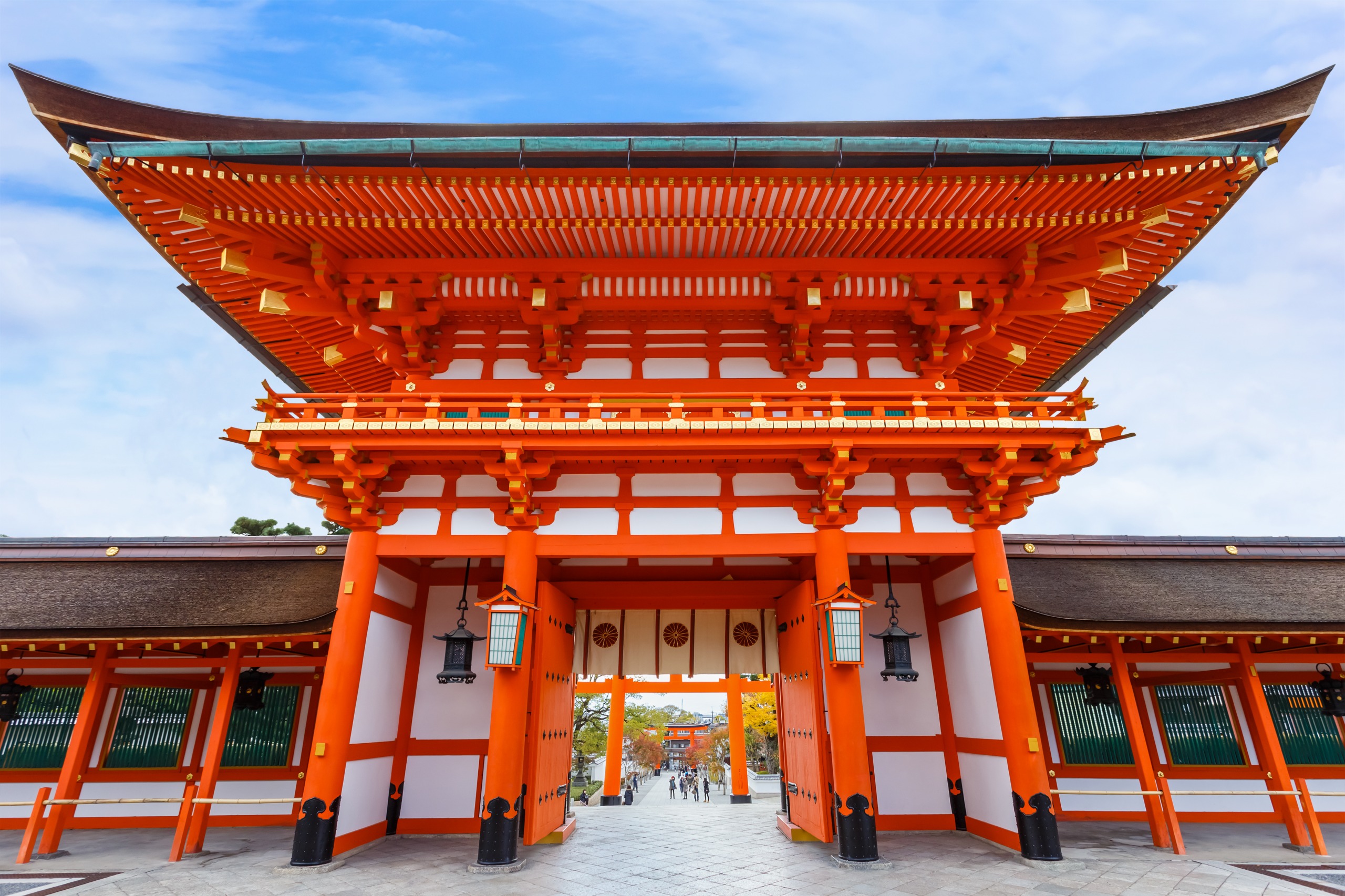
At the foot of the mountain stand the main buildings of the complex: the grand entrance torii, the Romon (red gate offered by Toyotomi Hideyoshi in 1589) and the Honden, the main pavilion where ceremonies take place. This is where most visitors stop, and crowds are dense here.
The Senbon Torii and the climb to the summit
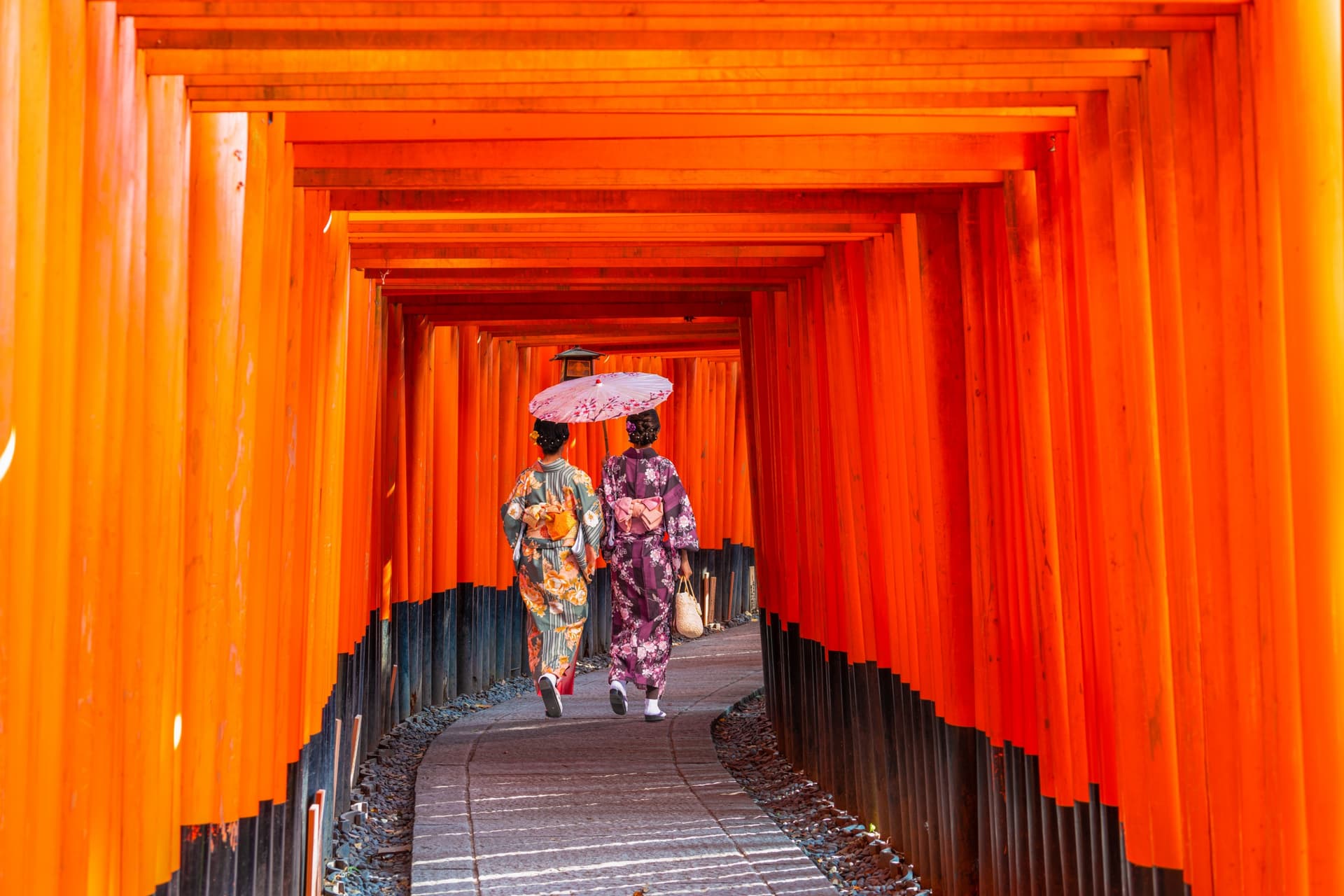
Behind the Honden begins the famous Senbon Torii, a double tunnel of red gates. Each torii has been financed by an individual, company or anonymous group; the donor's name and the date of the offering are inscribed on the back of the pillars. The cost of a torii varies according to its size, ranging between 175,000 and 1.3 million yen, with several years of waiting time.
The trail then climbs through a succession of levels to the Ichinomine temple, the highest point at 233 meters. The complete loop takes approximately 2 to 3 hours of hiking. The higher you go, the rarer the crowds become and the more the trail winds through a forest dotted with small secondary shrines, fox statues (Inari's messengers) and mini votive torii.
Breaks and dining
Several small restaurants, shops and vending machines line the ascent. You'll find local specialties associated with Inari, such as inari-zushi (vinegared rice in a fried tofu pouch) and kitsune udon, as well as amulets and miniature torii.
Practical information
- Access: free, shrine open permanently
- Visit duration: 1 hour for the lower shrine, 2 to 3 hours for the complete loop to the summit
- Equipment: hiking shoes recommended, water in summer, flashlight for evening visits
- Level: steady climb but no technical difficulty, stairs for most of the route
When to go
Fushimi Inari is one of the most visited sites in Kyoto. To enjoy the Senbon Torii without crowds, prioritize a visit early in the morning (before 8 a.m.) or late in the day. Evenings are particularly popular: the gates are illuminated and the atmosphere changes dramatically.
Season-wise, autumn (Japanese maples) and early spring offer the most pleasant hiking conditions. Japanese summer is hot and humid, making the climb more arduous. On January 1st, the shrine welcomes hundreds of thousands of visitors for hatsumōde (the first prayer of the year): absolutely avoid if you're looking for tranquility.
How to get there
The shrine is very well served from central Kyoto:
- By JR train: JR Nara local line from Kyoto Station, exit at Inari Station, approximately 5 minutes travel time. The exit faces directly the grand entrance torii.
- By Keihan train: Keihan Main Line, exit at Fushimi-Inari, a few minutes walk from the shrine.
- By bus: get off at Inaritaishamae stop, approximately 10 minutes walk.
The JR Pass covers the round trip from Kyoto Station, making it the most economical option for travelers with the pass.
Combine with other sites
Several attractions in Kyoto and the region lend themselves well to a broader itinerary:
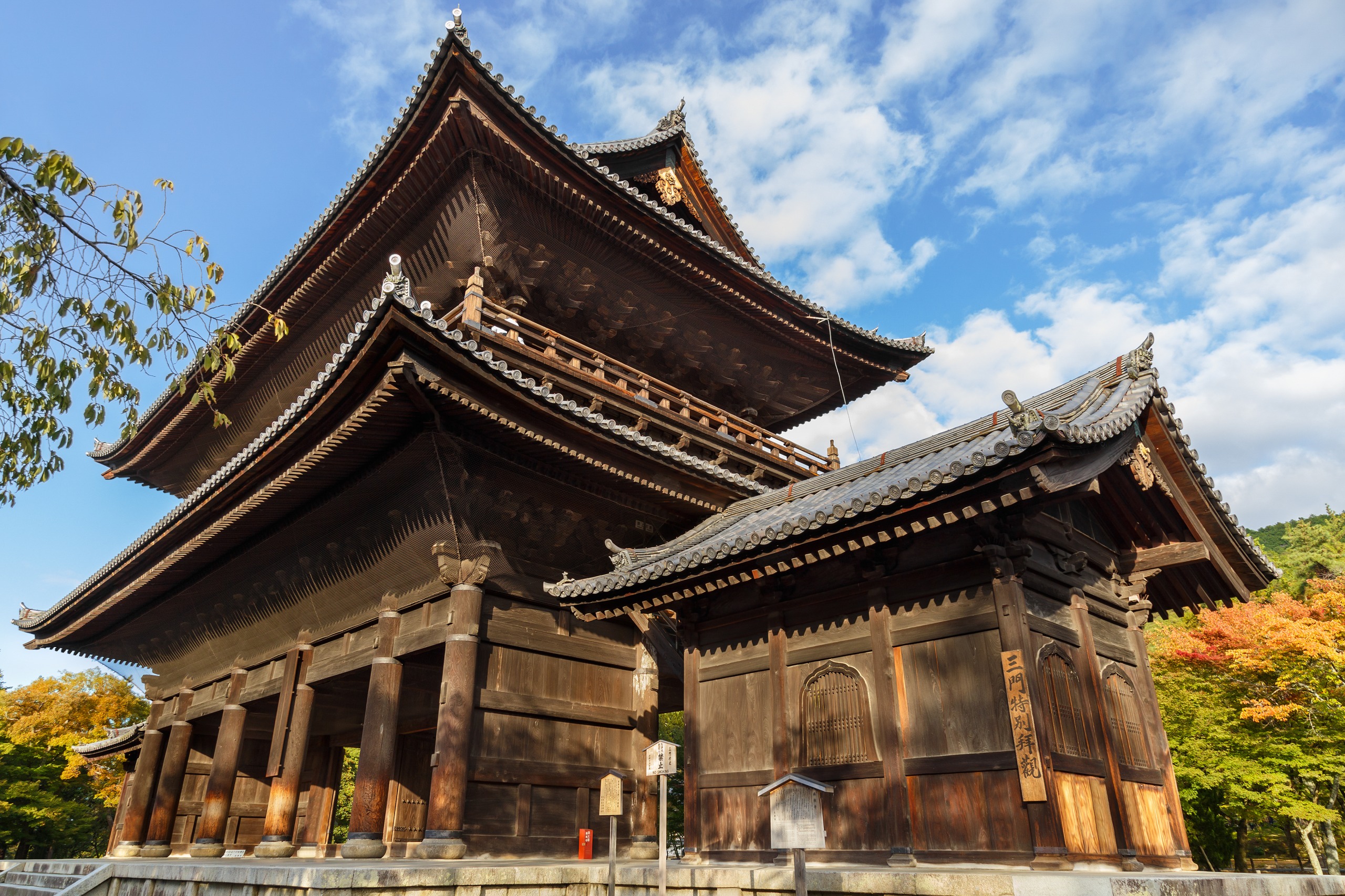
- Nanzen-ji Temple, a major Zen complex in eastern Kyoto
- Mount Arashiyama and its bamboo grove, on the opposite side of the city
- Himeji Castle, accessible by train from Kyoto for a day trip
- The historic Nakasendō route, to extend the heritage experience beyond Kyoto
Frequently asked questions
Frequently asked questions
Allow 1 hour if you stay at the base of the shrine, and 2 to 3 hours for the complete loop to the summit of Mount Inari. A half-day allows you to fully enjoy the site without rushing.
No, access to the shrine and the entire torii gate trail is free, day and night.
Early in the morning before 8 a.m., late evening and at night, the trails are noticeably quieter. Avoid the Japanese New Year period and weekend afternoons.
The ascent is made by stairs and regular trails. No technical difficulty, but the effort is continuous. Closed shoes are recommended.
The fox (kitsune) is the messenger of the goddess Inari. It is found at the entrance of Inari shrines throughout Japan, often depicted with a key or an ear of rice in its mouth.
Continue exploring
Fushimi Inari is often one of the first stops on a Kyoto itinerary, but it takes on full meaning when placed within a broader journey through Japan's shrines, gardens and landscapes. To prepare your stay, consult our trips to Japan, designed with English-speaking specialists of the destination.
Nearby
Interested in this visit?
We can include it in your personalised itinerary.