Ise Shrine
Ise Shrine
Ise Shrine (Ise-Jingū), located in Mie, is the holiest site of Japanese Shintoism. Rebuilt every twenty years, it houses the Naikū and Gekū sanctuaries.
Ise Shrine (Ise-Jingū), located in Ise in Mie Prefecture, is the most important pilgrimage site of Shintoism. The complex comprises 125 wooden buildings of cypress and thatch, distributed around two main sanctuaries: the Naikū and the Gekū. Rebuilt identically every twenty years according to a purification ritual called Shikinen Sengū, this site forms the religious and imperial identity of Japan.
Why Visit Ise Shrine
Ise-Jingū is not a static monument: it is a living sanctuary, rebuilt at regular intervals for over a thousand years. This particularity makes it a unique case in the history of world architecture. The Shinmei-zukuri style, one of Japan's oldest, expresses itself here in its purest form: wooden structure assembled without nails, thatched roof, sober lines.
The site also houses the sacred mirror Yata no Kagami, one of Japan's three imperial regalia, linked to the goddess Amaterasu. The pilgrimage to Ise (Ise-mairi) has remained, since the Edo period, a rite of passage for many Japanese.
History of the Shrine
According to tradition, the original Ise-Jingū shrine was erected by Yamatohime-no-mikoto, daughter of Emperor Suinin, at a date that chronicles place around the beginning of our era. The main buildings as they are known today were supposedly constructed around 690 AD. The site is said to house the sacred mirror Yata no Kagami of the Emperor of Japan, transmitted according to mythology by the goddess Amaterasu.
The reconstruction ritual (Shikinen Sengū) has been performed every twenty years since the Edo and Meiji periods, perpetuating a tradition formalized much earlier. Each reconstruction cycle involves eight consecutive years of work, mobilizing carpenters, joiners and specialized craftsmen. The 62nd reconstruction took place in 2013; the next is expected in 2033.
What to See on the Site
The Inner Sanctuary, Naikū
The Naikū (Kōtai Jingū) is dedicated to Amaterasu-Ōmikami, goddess of the sun and legendary ancestor of the imperial family. To reach it, you cross the Uji-bashi bridge, considered the gateway to the realm of the gods, itself rebuilt every twenty years.
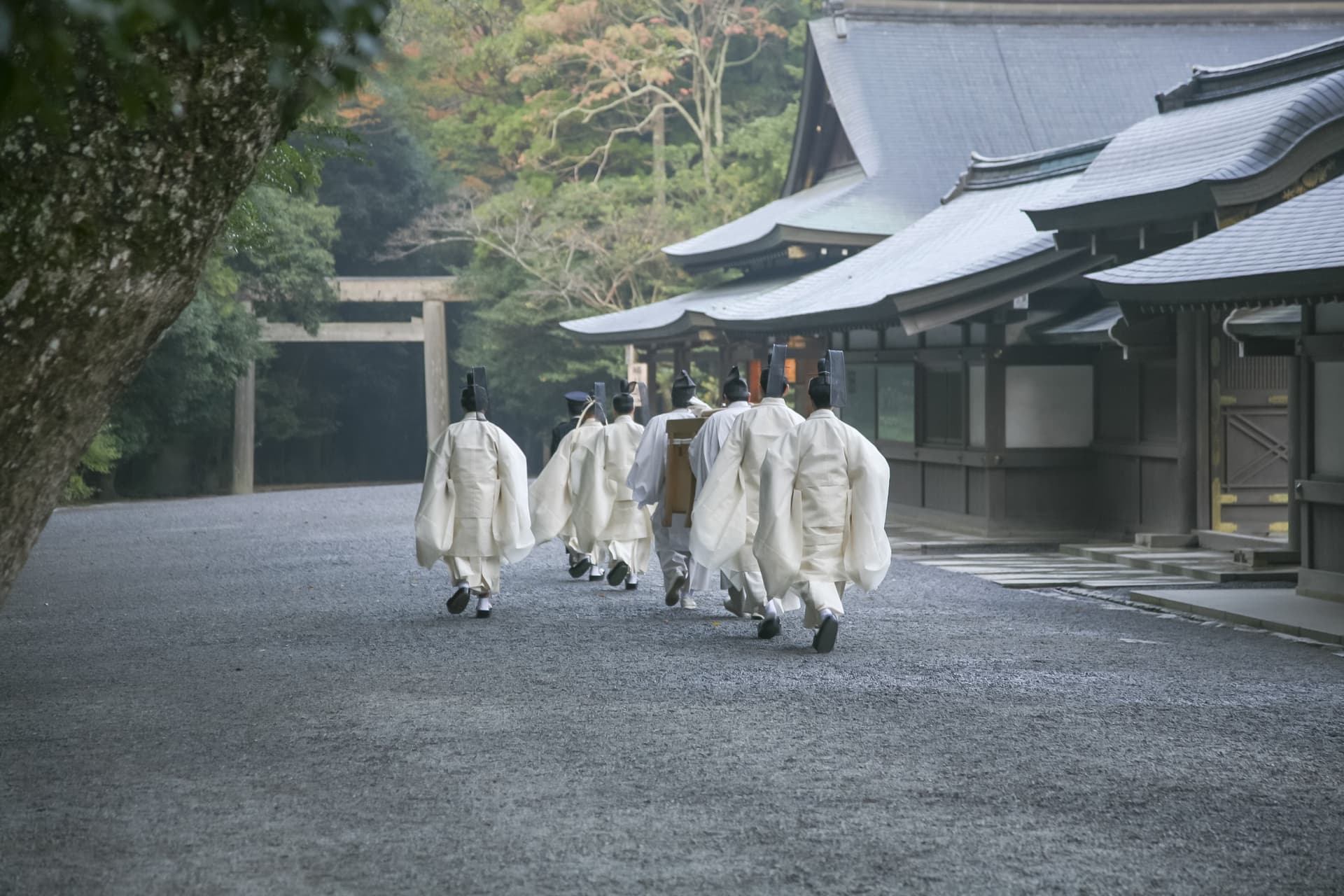
The architecture follows the Shinmei-zukuri style: wooden structure without nails, thatched roof, raised rectangular plan. The Japanese cypress wood (hinoki), used for all buildings, symbolizes purity and sacredness. Access to the Honden, the most sacred enclosure, is restricted to the imperial family and certain Shinto priests; visitors stop before a succession of wooden palisades.
The Outer Sanctuary, Gekū
The Gekū (Toyouke Daijingū) is dedicated to Toyouke-Ōmikami, goddess of food, agriculture and sericulture. It was founded approximately five hundred years after the Naikū, around the 5th century, on the order of Emperor Yūryaku, so that daily offerings could be presented to Amaterasu.
The architectural style follows the codes of the Naikū with some variations of its own. Daily ceremonies (offerings of rice, salt, water, vegetables) are performed here out of public view. Tradition dictates that pilgrims visit the Gekū first before proceeding to the Naikū.
The Kaguraden
The Kaguraden pavilion, present at both sites, is intended for offerings of sacred dances (kagura) and music to the kami during ceremonies. It is also where visitors can purchase amulets (omamori) and talismans specific to Ise-Jingū.
Practical Information
- Dress code: neat, modest attire recommended. Avoid exposed shoulders.
- Etiquette: purify your hands and mouth at the temizuya at the entrance, bow before the torii, do not photograph the interior of sacred enclosures.
- Access to the Honden: restricted, only the outer enclosures are visible to the public.
- Duration of visit: allow half a day to visit both sanctuaries without rushing.
- Admission: free.
When to Visit
The shrine is open year-round. Several periods deserve particular attention:
- Early January: the Grand New Year Festival (Oshogatsu) attracts hundreds of thousands of pilgrims coming to make their wishes for the year.
- November: the Niiname-sai festival, or first harvest festival, features rice offerings at the Gekū.
- Spring and autumn: mild temperatures and favorable light for walking in the forest surrounding the sanctuaries.
- Shikinen Sengū year: the next reconstruction ceremony is expected in 2033 and will give rise to a series of public rites spread over several years.
How to Get There
The nearest station to the Naikū is Isuzugawa Station, served by the Kintetsu Line. From Ise city center, a bus connects the two sanctuaries in about ten minutes. Expect approximately 1.5 hours by train from Nagoya, 1 hour 50 minutes from Osaka-Namba and 2.5 hours from Kyoto, with durations varying depending on connections.
Nearby Attractions
- The Hinjitsukan Museum, a former imperial guest house made of wood.
- Toba Aquarium, one of the most comprehensive in Japan.
- The Meoto Iwa married rocks, connected by a sacred rope and associated with the worship of Izanagi and Izanami.
To further explore Japan's major shrines, you may also be interested in Kasuga Taisha in Nara, Nachi Taisha in Kumano, or Mount Kōya, a major site of Shingon Buddhism.
Frequently Asked Questions
Frequently asked questions
Including Ise in Your Trip
Ise is ideal for a one or two-day stop as part of an itinerary between Kyoto, Nagoya and the Kii Peninsula. To prepare your stay around this shrine and other major sites in the archipelago, consult our Japan tours.
Interested in this visit?
We can include it in your personalised itinerary.