Kongobu
Kongobu
Administrative center of the Shingon Buddhist school at Mount Kōya, Kongōbu-ji is home to the Banryū-tei, Japan's largest dry garden, and UNESCO-listed heritage.
Kongōbu-ji, known as the "Temple of the Diamond Mountain," is the administrative headquarters of the Shingon Buddhist school. Established on the Mount Kōya plateau in Wakayama Prefecture, it is inscribed on the UNESCO World Heritage List as part of the Sacred Sites and Pilgrimage Routes in the Kii Mountains.
Why visit Kongōbu-ji
The temple brings together several points of interest on a single site: a central religious role for the Shingon sect, which oversees several thousand affiliated temples throughout Japan, architectural heritage linked to the Toyotomi, and the Banryū-tei, considered Japan's largest dry garden. The interior paintings, thatched roof, and botanical courtyard make it an essential stop for understanding Japanese esoteric Buddhism.
History
The temple's origins trace back to 816, when the monk Kūkai (known posthumously as Kōbō Daishi) founded the Mount Kōya monastery, the birthplace of the Shingon school. The building was renewed in the 12th century under imperial patronage.
In 1593, the structure was rebuilt as a mausoleum, the Seiganji, dedicated to the mother of daimyō Toyotomi Hideyoshi. A fire severely damaged the complex in 1863. The 1868 merger of the Seiganji and Kōzanji temples gave rise to the present-day Kongōbu-ji, which became the administrative seat of the Koyasan Shingon community.
Today, the temple oversees a network of several thousand affiliated temples throughout the archipelago and remains under the leadership of the Supreme Archbishop of Koyasan Shingon, a position held in recent times by Yukei Matsunaga, considered the 413th abbot in the lineage.
What to see
The Banryū-tei dry garden
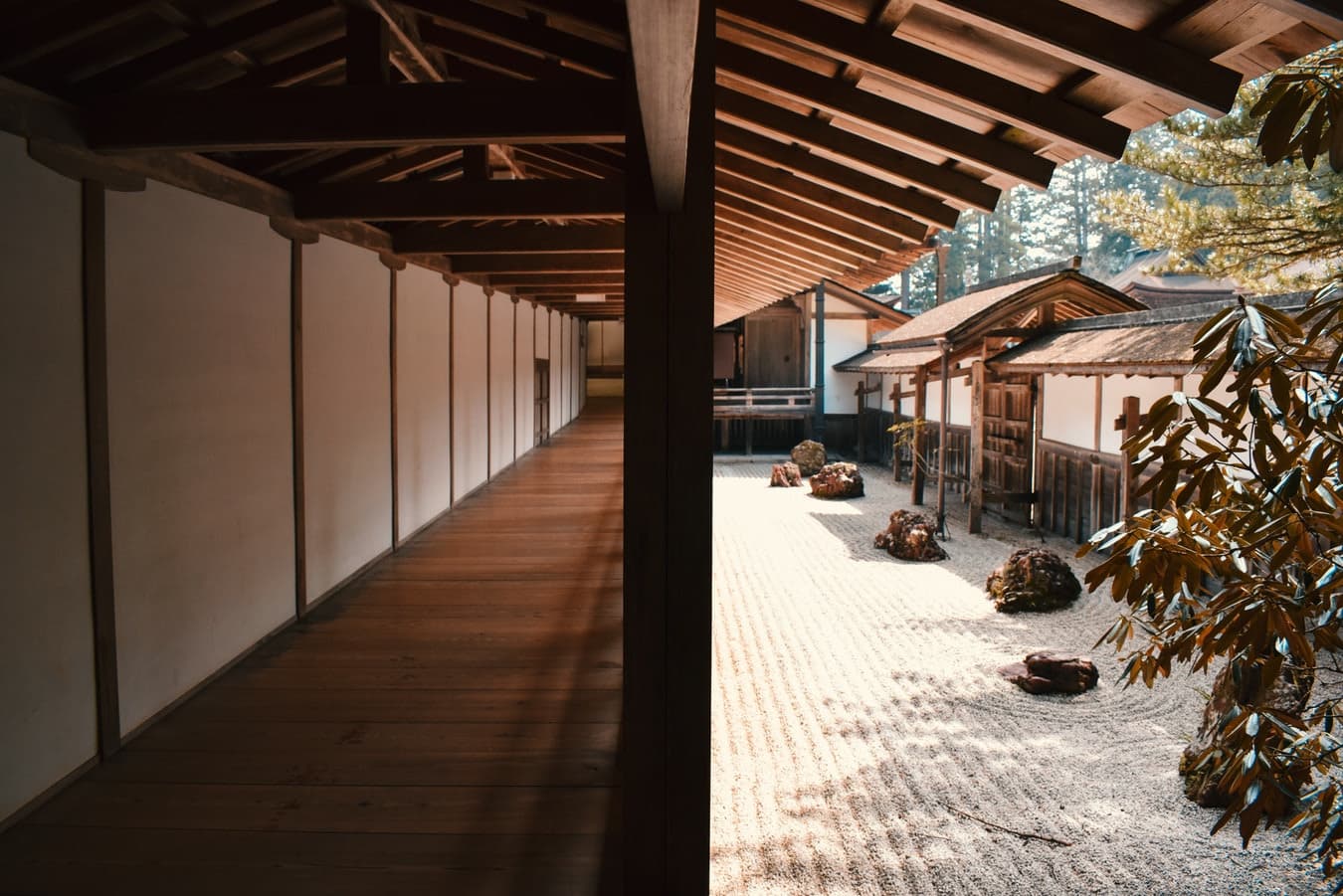
Laid out in 1984 over 2,340 m², the Banryū-tei is a stone and sand garden considered Japan's largest of its kind. One hundred forty granite blocks from the island of Shikoku represent two dragons emerging from a sea of clouds, a protective motif for the sanctuary. The composition echoes, on a grander scale, the Ryōan-ji garden in Kyoto.
The main building
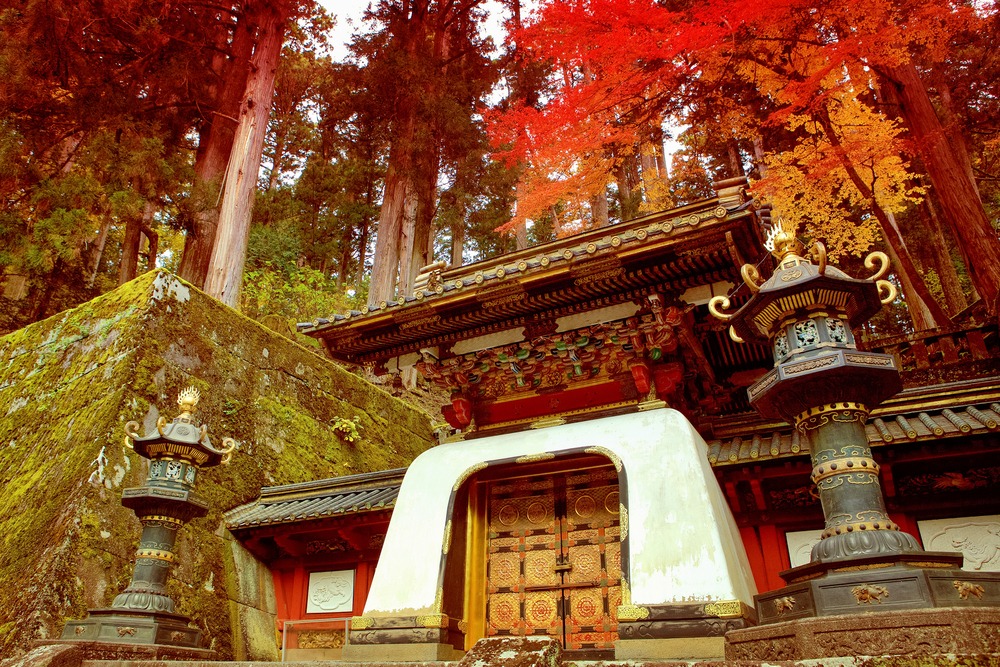
The structure is distinguished by its thatched roof equipped with tensuioke, water buckets placed on the surface to limit the spread of fire. The main gate, dated 1593, was historically reserved for the imperial family and temple leaders; visitors enter through a secondary entrance.
Inside, the Chūmon hall displays a cross-section of a thousand-year-old cedar trunk. Several rooms preserve fusuma paintings attributed to the Kanō school, including works associated with Kanō Tan'yū (17th century). One compartment houses a small altar dedicated to Toyotomi Hidetsugu, Hideyoshi's adopted eldest son.
The Ōhiroma and ceremonies
The grand Ōhiroma hall hosts major Shingon school rituals: the winter solstice festival, the Jōraku-e ceremony, and the flower festival. The Shinbetsuden offers visitors a brief respite with light tea.
The botanical garden
Preserved since the Edo period, the garden brings together four emblematic Japanese tree species: Japanese cedar (sugi), hinoki cypress, red pine, and umbrella pine. Several areas of the temple, notably the kitchen and inner Nakaniwa garden, are visible from the corridors.
Practical information
- Daily opening during daytime hours, with slightly reduced access in winter. Last admission approximately 30 minutes before closing.
- Moderate entrance fee; a combined ticket covers several major Mount Kōya sites (Kongōbu-ji, Danjō Garan, Reihōkan Museum).
- A discount is offered to holders of the Koyasan World Heritage Ticket provided by Nankai Railway.
- Plan for 45 minutes to 1.5 hours of visiting depending on your interest in the paintings and dry garden.
- Appropriate attire is requested; certain halls prohibit photography.
When to visit
Mount Kōya can be visited year-round, but the highland climate dramatically changes the character of the site.
- April to May: Late cherry blossom blooms and mild temperatures, the most comfortable period.
- June to August: Dense vegetation, characteristic misty atmosphere of the plateau; frequent rain in June.
- October to mid-November: Autumn colors (kōyō) particularly striking on temple maples.
- December to March: Snow possible, clear light, low visitor numbers but roads occasionally slowed.
Access
From Osaka, the Nankai Kōya Line connects Namba Station to Gokurakubashi, extended by a funicular to Mount Kōya. On the plateau, several bus lines serve the Senjuinbashi stop, the central point of the monastic village. Kongōbu-ji is within a few minutes' walk from this stop. The Koyasan World Heritage Ticket pass combines train, local bus, and site entries.
Nearby
Mount Kōya encompasses over one hundred temples, several of which allow shukubō lodging. To combine with your visit to Kongōbu-ji:
- The Danjō Garan, the founding complex envisioned by Kūkai, a 5-minute walk away.
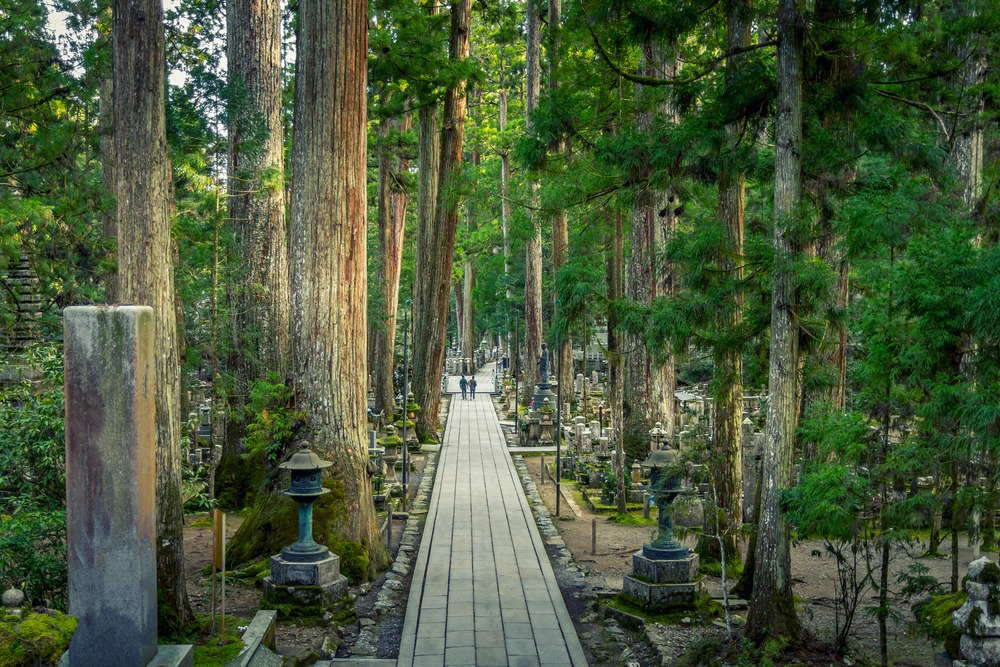
- The Okunoin, Kūkai's mausoleum at the heart of a forest cemetery with over 200,000 graves.
- The Reihōkan Museum, which houses the artistic treasures of Mount Kōya temples.
- To extend a spiritual itinerary: Nachi Taisha and the Ise Shrine, other major stops on the Shinto and Japanese Buddhism pilgrimage. In Nara, Kasuga Taisha rounds out exploration of Kansai's sacred sites.
Frequently asked questions
Frequently asked questions
Plan for 45 minutes to 1.5 hours, longer if you take time to sit before the Banryū-tei and observe the Kanō school paintings.
Yes. A Koyasan combined ticket provides access to Kongōbu-ji, Danjō Garan, and the Reihōkan Museum. The Nankai Koyasan World Heritage Ticket also includes transportation and offers a discount on entry.
The exterior, courtyard, and Banryū-tei garden are free to photograph. Inside, several halls decorated with painted fusuma are off-limits to photography; follow the signage.
It is recommended. A night in shukubō (temple lodging) allows you to attend the morning ceremony and visit the Okunoin early in the morning, when the cemetery is still misty.
Yes, but Mount Kōya peaks at approximately 800 m: snow and below-freezing temperatures are frequent from December to March. Plan for appropriate footwear and check road and funicular conditions.
Including Kongōbu-ji in your journey
Kongōbu-ji naturally fits into a spiritual itinerary around the Kansai region, complementing Nara, Kyoto, and Ise. To plan a bespoke stay combining temples, a monastery night, and major cities, explore our Japan tours.
Interested in this visit?
We can include it in your personalised itinerary.