Kōya
Kōya
A monastic city perched at 800 meters altitude, Koyasan is home to 117 temples, a sacred cemetery, and the unique tradition of overnight stays in a shukubo temple lodge.
Embark on a journey to discover the enchanting monastic city of Koya! Established over twelve centuries ago at the summit of Mount Koya or Koyasan, in Wakayama Prefecture, this complex ranks among the most magical destinations in Japan—whether during cherry blossom season, when autumn paints the landscape in fiery hues, or when snow blankets the peaks in winter. Koya also makes the perfect base for spiritual renewal in harmony with Buddhist tradition.
History
Kobo Daishi founded the Koya monastic complex in 806 atop the mountain of the same name to teach Shingon Buddhism. At its height during the Edo period (1603–1868), the domain counted some 2,000 temples. Beyond the faithful and ordinary citizens, emperors, aristocrats, and political leaders all frequented this sacred site, which over time became an important pilgrimage destination. In 2004, recognizing its remarkable significance, UNESCO inscribed Koya alongside Kumano Sanzan and Yoshino-Omine as a World Heritage Site under the designation "Sacred Sites and Pilgrimage Routes in the Kii Mountain Range."
Discovering Koya
Due to throngs of visitors, Koya has become less tranquil than in years past, and as a tourist you may add to the flow. Yet the complex founded by Kobo Daishi remains open to all. Regardless of your faith, you will be welcomed and can enjoy its many attractions and activities.
Immerse Yourself in Koyasan's Buddhist Universe
Discover Buddhist lay teachings for living a virtuous and wholesome life through Jukai ceremonies. Whatever your religious orientation, receiving and practicing these precepts does not obligate you to convert to Buddhism—unless you choose to. Then turn your hand to sutra copying, which serves as both meditation and an act of devotion. Popular for centuries across East Asia, reproducing Buddhist scriptures allows you to achieve many wholesome goals and cultivate a calm, refreshed mind. Japanese practitioners engage in this for accompanying prayer or wishes, as well as honoring deceased loved ones. You may also explore the Shingon sect's "Ajikan meditation," emptying your mind while contemplating the Sanskrit letter "A".
The mountain offers guided forest walks for inner peace. In the company of a monk, learn to restore your body and spirit's natural energy by engaging the natural environment through conscious use of your five senses. Take in the views, sounds, scents, and sensations while listening to your guide's teachings and stories. In 2007, Koya was designated a "Forest Therapy Center". To participate in this program, you must understand Japanese or be accompanied by a translator.
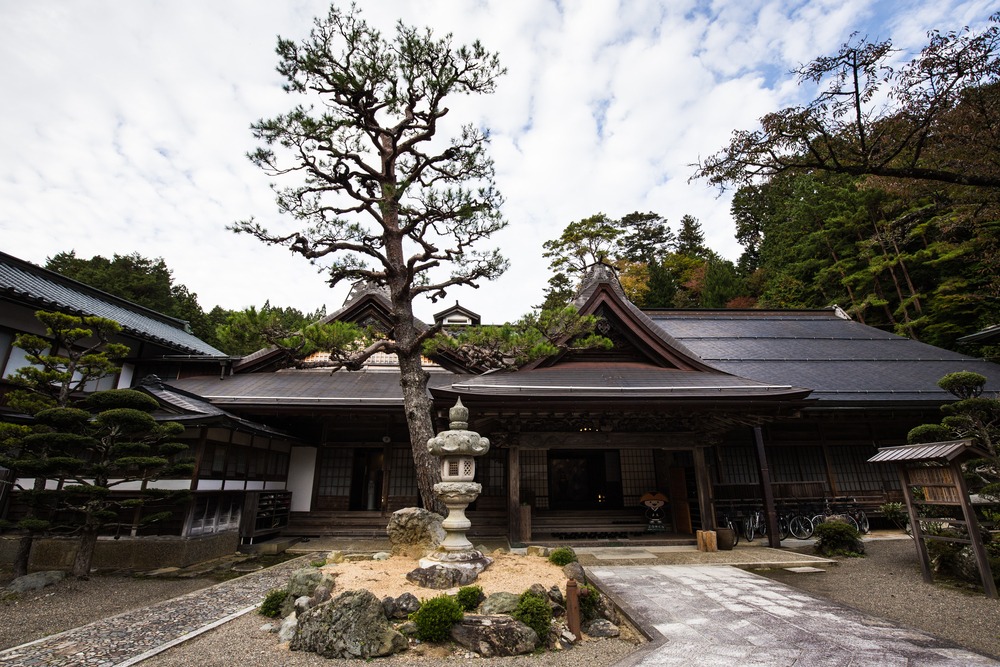
Finally, treat yourself to a stay in a shukubo—temple lodging—to experience the daily life of monks, including morning services and traditional vegetarian cuisine shojin ryori.
Must-See Places at Koya
Among the 117 temples in the complex, Danjo Garan and Okunoin Cemetery are the most sacred sections. Legend holds that Danjo Garan was the first temple built by Kobo Daishi; the Konpon Daito pagoda and Kondo Hall are its most significant structures. Located east of Koya, Okunoin Cemetery houses over 200,000 memorial stupas. In the evening, accompanied by a monk, explore this moving place along stone pathways illuminated by lanterns deep within the cedar forest. Here rest shoguns and feudal lords, writers, poets, and towering figures of Japanese industry, as well as ordinary people. At the end of a long avenue stands the mausoleum of Kobo Daishi, where, legend says, the monk remains in eternal meditation...
Do not miss Kongobu-ji, translated as "Temple of the Diamond Mountain," the principal temple of Koya and headquarters of Shingon Buddhism. Stroll through the vast Banryūtei rock garden. Contemplate the trees and plants of the four seasons in the Kissentei garden, and let yourself be enveloped by the peaceful atmosphere, serenaded by birdsong and flowing water. Visit the Bifukumonin Ryo residence, where the remains of Emperor Toba's consort, Bifukumonin, are preserved. In the Fudouin Hondo, you will find a statue of Kobo Daishi and many Buddhist memorial tablets, while in the Shoin, you can learn sutra copying and taste monastic cuisine.
Climate at Mount Koya
Sweaters and jackets are recommended to cope with the mountain climate. Year-round, Koya averages 11°C. January and February bring colder weather, with temperatures below freezing and occasional snow. You must reach late March before temperatures exceed 10°C. August is the warmest month. The most pleasant time to visit Koya falls in late September.
Koya sits south of Osaka, with 68 kilometers separating the two cities. From Osaka, take a train bound for Hashimoto from one of the Nankai stations (Namba, Shin-Imamiya, or Tengachaya). Upon arriving at Hashimoto, switch trains to reach Gokurabashi, at the foot of Mount Koya. There, board the cable car to reach the summit, then take a bus that serves the complex. Note that certain areas of the mountain are sacred and closed to hiking.
Koya and the mountain are easily explored on foot. Major attractions are not far apart. Buses serve Okunoin Cemetery for those short on time or energy. Some sites like Kongobu-ji temple charge small admission fees. Be sure to purchase the pass (combined ticket) at the tourist information office to access Koya's must-see attractions without paying separately at each site.
Attractions in Kōya
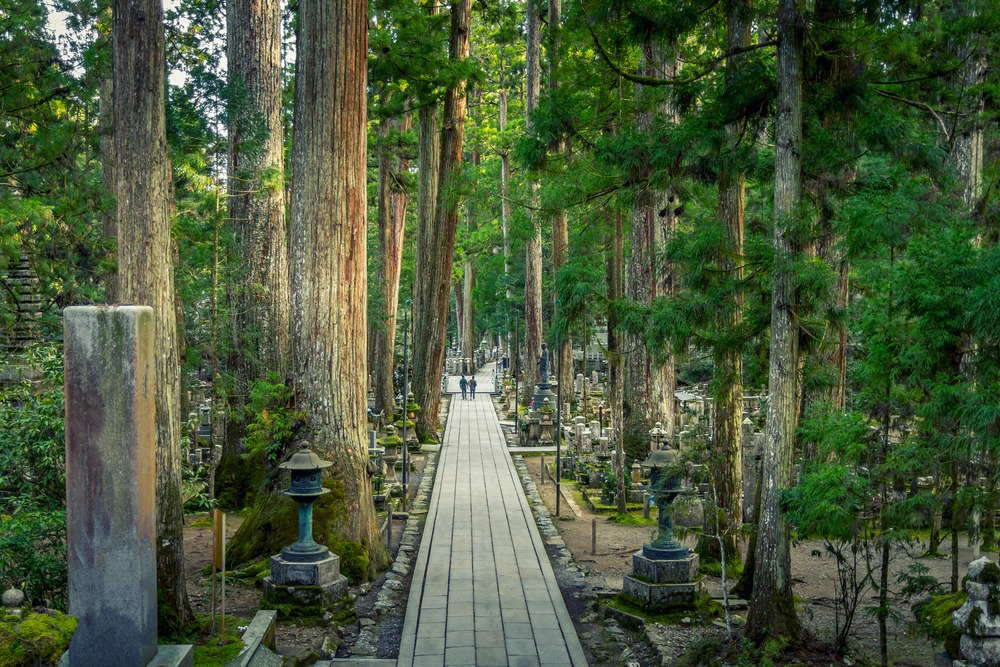
Mont Kōya
Cité monastique du Shingon inscrite à l'UNESCO, le mont Kōya offre temples, cimetière forestier d'Okuno-in et nuits en shukubō, à 2h30 d'Osaka.
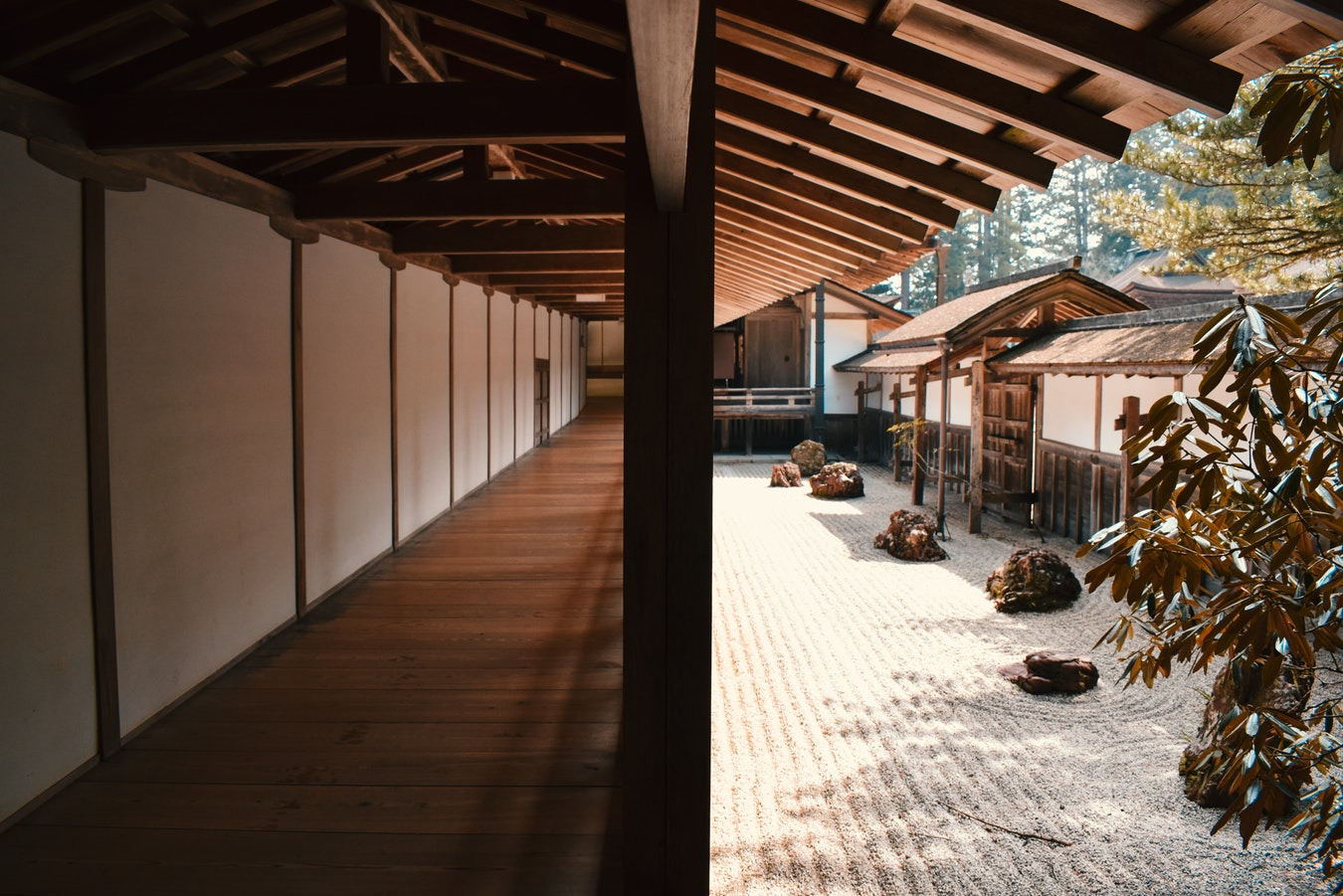
Kongobu
Temple-quartier général de l'école Shingon au mont Kōya, Kongōbu-ji abrite le Banryū-tei, plus vaste jardin sec du Japon, et un patrimoine classé UNESCO.
Want to discover this destination?
Our local advisors design your tailor-made trip.